Synchronicity: Jung’s Theory of Meaningful Coincidence
Synchronicity is Jung’s proposed connection by meaning between an inner event and an outer event without a known causal link. His memorial address for Richard Wilhelm approaches the idea through the I Ching.
In this article
What is synchronicity?
Synchronicity is C. G. Jung’s theory of meaningful coincidence. He proposes that an inner event, such as a dream, and an external event can share a meaning even when there is no demonstrable chain of cause and effect between them. The proposed connection is part of his theory. [2][3][7]
Synchronicity in Jung’s memorial essay for Wilhelm
The English edition of The Secret of the Golden Flower includes Jung’s separate memorial essay for Richard Wilhelm. Discussing Wilhelm’s work on the I Ching, Jung suggests that events close together in time might share qualities that a causal account leaves out. He calls this the synchronistic principle. [1][2][3]
He describes throwing coins or using yarrow stalks to arrive at a hexagram. For Jung, the element of chance raises the question of whether the resulting pattern can characterise the moment of consultation. The memorial essay leaves the reliability of that interpretation to experience. [4][5]
See references (5)
- The Secret of the Golden Flower, printed p. 141, Reader page 140
- The Secret of the Golden Flower, printed p. 142, Reader page 141
- The Secret of the Golden Flower, printed p. 143, Reader page 142
- The Secret of the Golden Flower, printed p. 144, Reader page 143
- The Secret of the Golden Flower, printed p. 145, Reader page 144
Synchronicity in the later essay and letters
In his later essay, Jung develops the hypothesis of an acausal connection and considers the role of archetypes. In a 1958 letter to Karl Schmid, he distinguishes the coincidence of the events from the parallel in their meaning. Both are central to what he proposes. [6][7][2]
The golden scarab in a later example
In Jung’s later account, a patient describes a dream about a golden scarab when a rose chafer comes to the window. The resemblance between the dream object and the beetle gives the coincidence its meaning in Jung’s telling. This Egyptian scarab illustrates the kind of object that appears in the dream. [8][6]
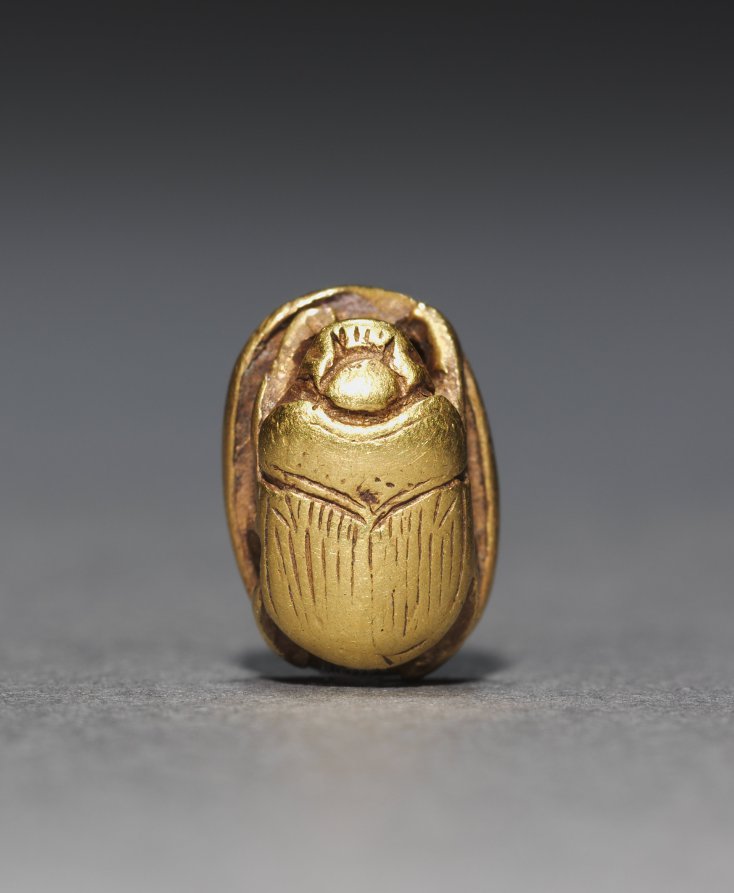
Gold scarab, Egypt, Dynasty 12. The object gives historical context for the image of a gold scarab in Jung’s later case story.
Cleveland Museum of Art, Gift of the John Huntington Art and Polytechnic Trust, 1914.748. CC0. · Image source ↗ · CC0
In the library
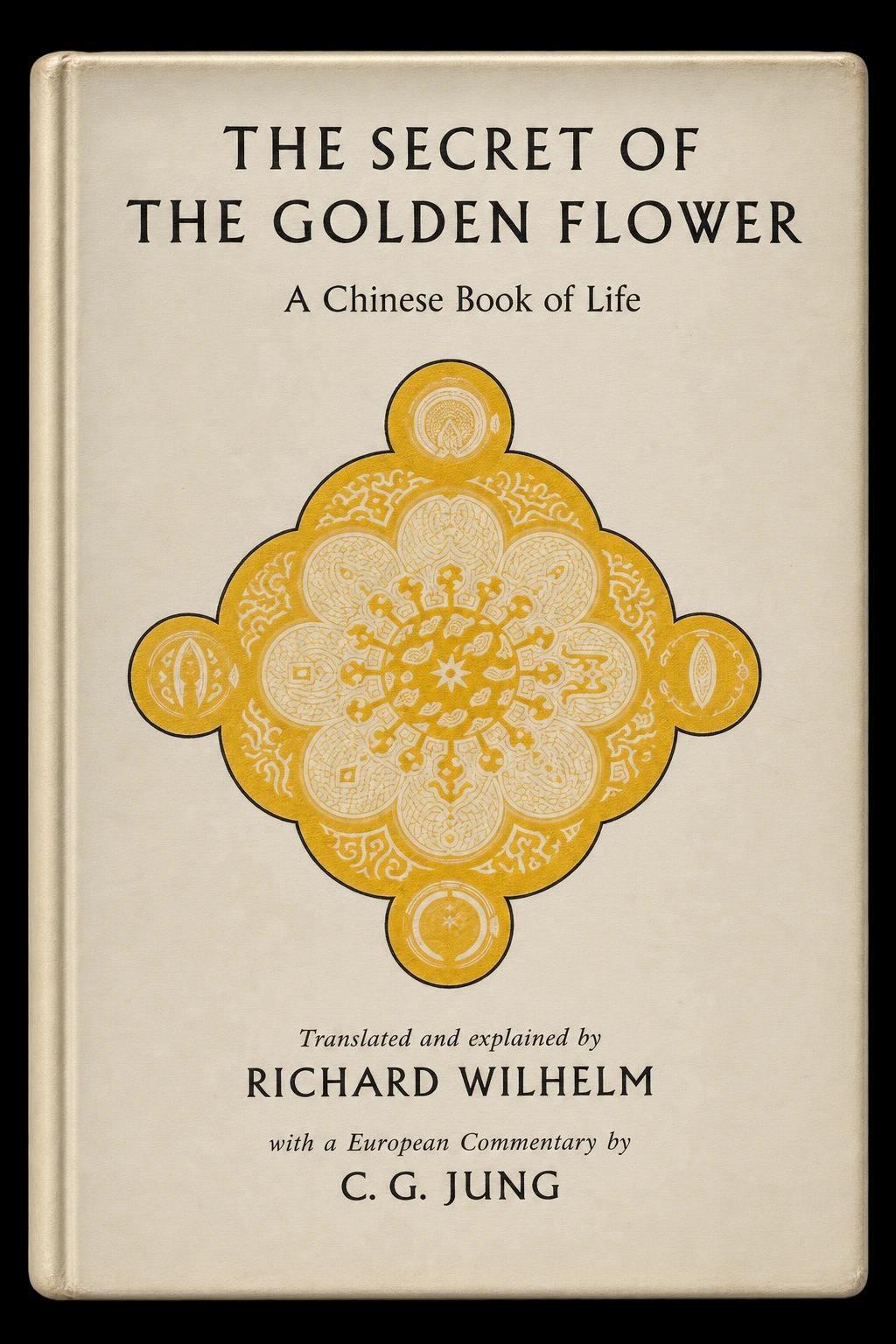
The Secret of the Golden Flower
Reading note
Read the account of Synchronicity in Jung’s commentary in the Wilhelm and Baynes edition.
Sources
See references (8)
- The Secret of the Golden Flower, printed p. 141, Reader page 140The Secret of the Golden Flower: A Chinese Book of Life. Chinese text translated and explained by Richard Wilhelm, English translation by Cary F. Baynes, with separate commentary by C. G. Jung. London, Kegan Paul, Trench, Trubner & Co. Lumitheca Library edition IMJ-0596-E001.Read this page in The Secret of the Golden Flower ↗
- The Secret of the Golden Flower, printed p. 142, Reader page 141The Secret of the Golden Flower: A Chinese Book of Life. Chinese text translated and explained by Richard Wilhelm, English translation by Cary F. Baynes, with separate commentary by C. G. Jung. London, Kegan Paul, Trench, Trubner & Co. Lumitheca Library edition IMJ-0596-E001.Read this page in The Secret of the Golden Flower ↗
- The Secret of the Golden Flower, printed p. 143, Reader page 142The Secret of the Golden Flower: A Chinese Book of Life. Chinese text translated and explained by Richard Wilhelm, English translation by Cary F. Baynes, with separate commentary by C. G. Jung. London, Kegan Paul, Trench, Trubner & Co. Lumitheca Library edition IMJ-0596-E001.Read this page in The Secret of the Golden Flower ↗
- The Secret of the Golden Flower, printed p. 144, Reader page 143The Secret of the Golden Flower: A Chinese Book of Life. Chinese text translated and explained by Richard Wilhelm, English translation by Cary F. Baynes, with separate commentary by C. G. Jung. London, Kegan Paul, Trench, Trubner & Co. Lumitheca Library edition IMJ-0596-E001.Read this page in The Secret of the Golden Flower ↗
- The Secret of the Golden Flower, printed p. 145, Reader page 144The Secret of the Golden Flower: A Chinese Book of Life. Chinese text translated and explained by Richard Wilhelm, English translation by Cary F. Baynes, with separate commentary by C. G. Jung. London, Kegan Paul, Trench, Trubner & Co. Lumitheca Library edition IMJ-0596-E001.Read this page in The Secret of the Golden Flower ↗
- Synchronicity: An Acausal Connecting Principle, Collected Works 8, §§ 843 and 846 ↗C. G. Jung, originally published in 1952. Princeton University Press.
- Letter to Karl Schmid, 11 June 1958, Letters II, pp. 446–447 ↗C. G. Jung, excerpted in The Quotable Jung, edited by Judith R. Harris. Princeton University Press.
- Scarab ↗Cleveland Museum of Art, Gift of the John Huntington Art and Polytechnic Trust, 1914.748. CC0.