Sympathetic magic
Sympathetic magic proposes effects through resemblance or contact. Compare Frazer’s distinction with examples of likenesses and personal objects in two Library books.
In this article
What is sympathetic magic?
Sympathetic magic is a proposed way for action in one place to affect a person or thing elsewhere. The connection can come from resemblance, as when a likeness stands for a person, or from contact, as when a possession is thought to remain linked to its owner. [1][2][3][22]
These explanations focus on the link that is supposed to carry the effect. The same story may also name an attendant spirit or another agent expected to act through that link. [1][4][5][6]
See references (7)
- Human Animals, printed p. 3, Reader page 12
- Human Animals, printed p. 127, Reader page 136
- Human Animals, printed p. 128, Reader page 137
- Human Animals, printed p. 28, Reader page 37
- Human Animals, printed p. 29, Reader page 38
- Human Animals, printed p. 30, Reader page 39
- James George Frazer, The Golden Bough, third edition, part I, vol. 1, chapter III, §1, printed pp. 52–54
Frazer’s distinction between similarity and contact
In The Golden Bough, James George Frazer distinguishes the law of similarity from the law of contact, which he also calls contagion. The first treats an imitation as able to produce a corresponding event. The second treats a connection as persisting after two things are separated. These are Frazer’s categories for the reasoning in the cases he discusses. [22]
Human Animals by Frank Hamel
Frank Hamel’s Human Animals introduces imitation as one explanation for magical action, with an explicit reference to James George Frazer. The book later applies related reasoning to human–animal connections. Resemblance, contact and a shared injury can each be used to explain influence across an apparent separation. [1][7][8][9]
The Rutterkin narrative gives a concrete contact example. Personal objects, including a glove, are linked with the alleged victim through actions involving a cat. Hamel retells the Flower family accusations, so the passage must remain an account of alleged harmful magic within a prosecution narrative. [2][3]
The werewolf chapter describes a wound appearing both on an animal and on the person identified with it. An occult explanation calls this repercussion between connected forms. The story’s recognition device and the later theory of transferred injury should remain distinguishable. [7][8][9]
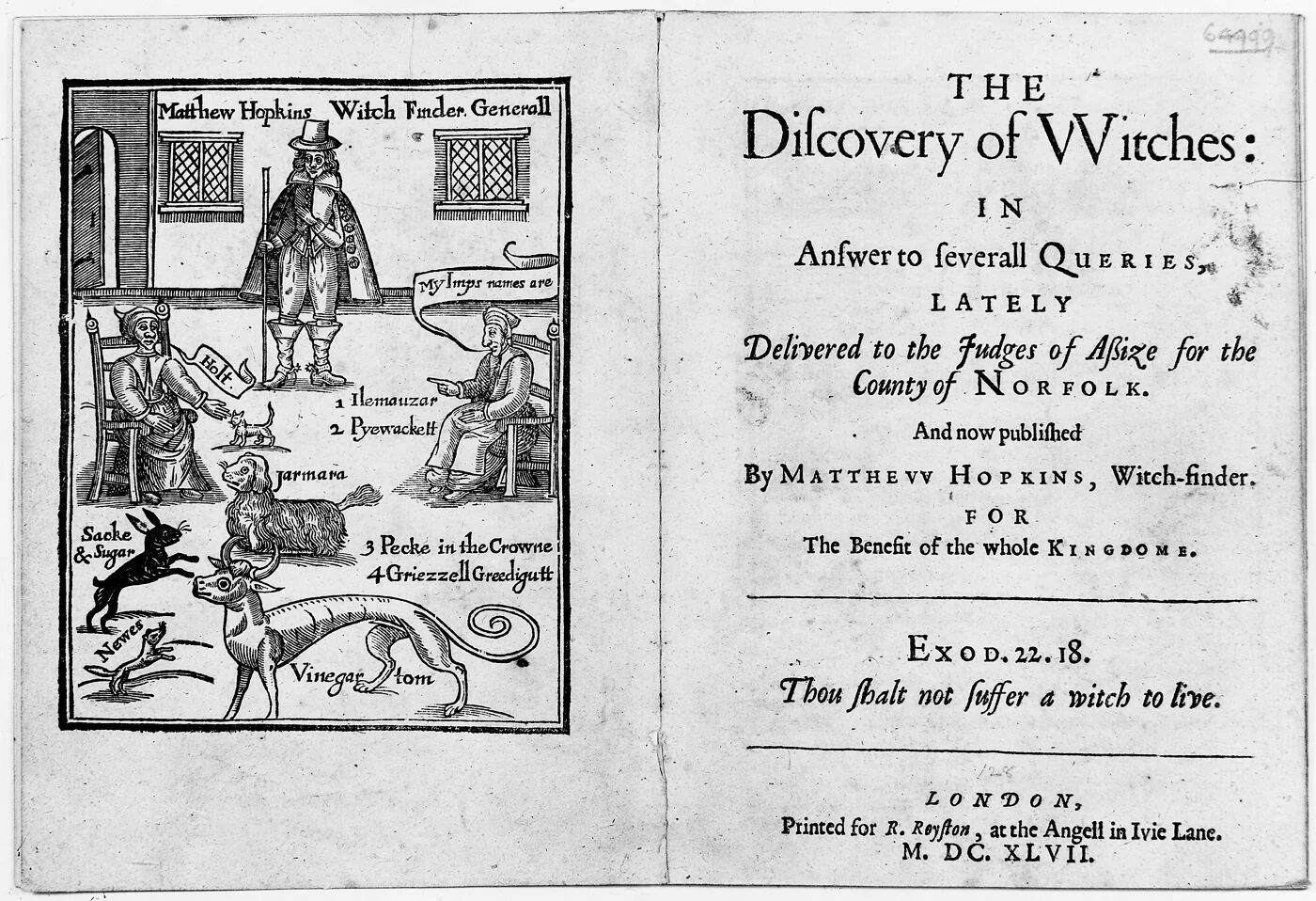
The Discovery of Witches, 1647. This frontispiece shows named creatures from a witch-finder’s allegations, the kind of account that also informs Hamel’s discussion of familiars.
Wellcome Collection, M0014361. Public Domain Mark. · Image source ↗ · Public Domain
Magica Sexualis by Émile Laurent and Paul Nagour
Émile Laurent and Paul Nagour’s Magica Sexualis begins its account of enchantment with a striking symmetry: love and hatred can employ much the same magical methods. A likeness stands for the person whom the operator wants to affect. The book uses the contrasting behaviour of clay and wax in heat to show how a material action can be given an emotional meaning. [15][16]
In a passage attributed to Ibn Khaldun, the substitute is prepared with materials whose symbolism suits the intended person and purpose. Words, movements and a binding knot complete the account. Here the connection is explained through a spirit acting upon the image. Resemblance supplies the target, while an invoked agency is supposed to carry the effect. These are the compilation’s reported explanations of magical action. [16][17]
A later passage gives a different account of sympathy. Through Plotinus, the authors describe attraction between things already related by nature. Their rendering of Ibn Khaldun then distinguishes spirit joined to spirit from spirit joined to a body in talismanic art. The book places these explanations together, but an inherent affinity and an acting spirit need not be the same proposed cause. [18][19]
Hair supplies an example of a personal part standing for the whole. The authors tell of locks hidden in the seams of a bridal garment, with the expectation that the women who supplied them would also marry. The garment connects the desired event with a material trace of each person. The anecdote illustrates the belief’s structure; it does not establish that the promised marriages followed. [20][21]
See references (7)
The link, the likeness and the agent
A familiar answers the question of who or what is supposed to act. Sympathetic magic answers the question of how an act is supposed to affect a particular person. A prosecution narrative can give the familiar the role of acting and a possession the role of linking the act to its target. [10][2][3]
Ceremonial magic may organise invocation through timing, boundaries and named spiritual beings. Its symbolism can include sympathetic correspondences, but a ritual circle is not adequately explained by resemblance alone. Likewise, animal dances can concern social recognition, thanksgiving or hunting without sharing one magical mechanism. [4][5][6][11][12][13]
The Flower family accusations use personal belongings as links. Magica Sexualis gives hair a similar role and also describes a made likeness as a substitute for someone. The distinction between possession and likeness explains how similar accounts can rely on different kinds of connection. [2][3][15][16][17][18][19][20][21]
See references (16)
- Human Animals, printed p. 127, Reader page 136
- Human Animals, printed p. 128, Reader page 137
- Human Animals, printed p. 28, Reader page 37
- Human Animals, printed p. 29, Reader page 38
- Human Animals, printed p. 30, Reader page 39
- Human Animals, printed p. 120, Reader page 129
- Human Animals, printed p. 283, Reader page 292
- Human Animals, printed p. 284, Reader page 293
- Human Animals, printed p. 285, Reader page 294
- Magica Sexualis, printed p. 102, Reader page 110
- Magica Sexualis, printed p. 103, Reader page 111
- Magica Sexualis, Reader page 112
- Magica Sexualis, printed p. 124, Reader page 132
- Magica Sexualis, printed p. 125, Reader page 133
- Magica Sexualis, Reader page 161
- Magica Sexualis, Reader page 162
Read further in the library

Human Animals
Reading note
Frank Hamel collects the particular stories and interpretations discussed here; the account identifies exact printed and Library Reader pages.
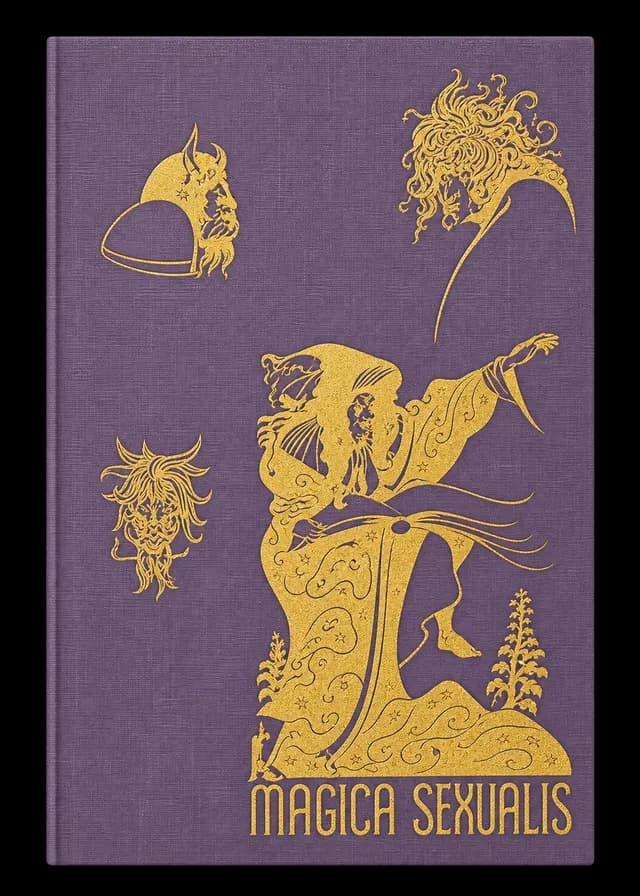
Magica Sexualis
Reading note
The separately titled account draws on exact passages in the consulted Library edition.
Sources
See references (22)
- Human Animals, printed p. 3, Reader page 12Frank Hamel, Human Animals. Frederick A. Stokes Co., New York, undated title page; preface dated London, 1915. Exact printed pages refer to the retained Library scan.Read this page in Human Animals ↗Return to text ↑
- Human Animals, printed p. 127, Reader page 136Frank Hamel, Human Animals. Frederick A. Stokes Co., New York, undated title page; preface dated London, 1915. Exact printed pages refer to the retained Library scan.Read this page in Human Animals ↗Return to text ↑
- Human Animals, printed p. 128, Reader page 137Frank Hamel, Human Animals. Frederick A. Stokes Co., New York, undated title page; preface dated London, 1915. Exact printed pages refer to the retained Library scan.Read this page in Human Animals ↗Return to text ↑
- Human Animals, printed p. 28, Reader page 37Frank Hamel, Human Animals. Frederick A. Stokes Co., New York, undated title page; preface dated London, 1915. Exact printed pages refer to the retained Library scan.Read this page in Human Animals ↗Return to text ↑
- Human Animals, printed p. 29, Reader page 38Frank Hamel, Human Animals. Frederick A. Stokes Co., New York, undated title page; preface dated London, 1915. Exact printed pages refer to the retained Library scan.Read this page in Human Animals ↗Return to text ↑
- Human Animals, printed p. 30, Reader page 39Frank Hamel, Human Animals. Frederick A. Stokes Co., New York, undated title page; preface dated London, 1915. Exact printed pages refer to the retained Library scan.Read this page in Human Animals ↗Return to text ↑
- Human Animals, printed p. 67, Reader page 76Frank Hamel, Human Animals. Frederick A. Stokes Co., New York, undated title page; preface dated London, 1915. Exact printed pages refer to the retained Library scan.Read this page in Human Animals ↗Return to text ↑
- Human Animals, printed p. 68, Reader page 77Frank Hamel, Human Animals. Frederick A. Stokes Co., New York, undated title page; preface dated London, 1915. Exact printed pages refer to the retained Library scan.Read this page in Human Animals ↗Return to text ↑
- Human Animals, printed p. 69, Reader page 78Frank Hamel, Human Animals. Frederick A. Stokes Co., New York, undated title page; preface dated London, 1915. Exact printed pages refer to the retained Library scan.Read this page in Human Animals ↗Return to text ↑
- Human Animals, printed p. 120, Reader page 129Frank Hamel, Human Animals. Frederick A. Stokes Co., New York, undated title page; preface dated London, 1915. Exact printed pages refer to the retained Library scan.Read this page in Human Animals ↗Return to text ↑
- Human Animals, printed p. 283, Reader page 292Frank Hamel, Human Animals. Frederick A. Stokes Co., New York, undated title page; preface dated London, 1915. Exact printed pages refer to the retained Library scan.Read this page in Human Animals ↗Return to text ↑
- Human Animals, printed p. 284, Reader page 293Frank Hamel, Human Animals. Frederick A. Stokes Co., New York, undated title page; preface dated London, 1915. Exact printed pages refer to the retained Library scan.Read this page in Human Animals ↗Return to text ↑
- Human Animals, printed p. 285, Reader page 294Frank Hamel, Human Animals. Frederick A. Stokes Co., New York, undated title page; preface dated London, 1915. Exact printed pages refer to the retained Library scan.Read this page in Human Animals ↗Return to text ↑
- The Discovery of Witches: title page and frontispiece ↗Wellcome Collection, M0014361, archival photograph, December 1955; seventeenth-century publication. Public Domain Mark.
- Magica Sexualis, printed p. 102, Reader page 110Émile Laurent and Paul Nagour, Magica Sexualis, privately printed by Falstaff Press Inc., New York, undated inspected edition. Exact original Library edition IMJ-0105-E001. The work is a historical compilation; its quoted fiction, trial allegations and medical interpretations are not treated as independently verified facts. Current Reader positions are mapped separately from printed pagination.Read this page in Magica Sexualis ↗Return to text ↑
- Magica Sexualis, printed p. 103, Reader page 111Émile Laurent and Paul Nagour, Magica Sexualis, privately printed by Falstaff Press Inc., New York, undated inspected edition. Exact original Library edition IMJ-0105-E001. The work is a historical compilation; its quoted fiction, trial allegations and medical interpretations are not treated as independently verified facts. Current Reader positions are mapped separately from printed pagination.Read this page in Magica Sexualis ↗Return to text ↑
- Magica Sexualis, Reader page 112Émile Laurent and Paul Nagour, Magica Sexualis, privately printed by Falstaff Press Inc., New York, undated inspected edition. Exact original Library edition IMJ-0105-E001. The work is a historical compilation; its quoted fiction, trial allegations and medical interpretations are not treated as independently verified facts. Current Reader positions are mapped separately from printed pagination.Read this page in Magica Sexualis ↗Return to text ↑
- Magica Sexualis, printed p. 124, Reader page 132Émile Laurent and Paul Nagour, Magica Sexualis, privately printed by Falstaff Press Inc., New York, undated inspected edition. Exact original Library edition IMJ-0105-E001. The work is a historical compilation; its quoted fiction, trial allegations and medical interpretations are not treated as independently verified facts. Current Reader positions are mapped separately from printed pagination.Read this page in Magica Sexualis ↗Return to text ↑
- Magica Sexualis, printed p. 125, Reader page 133Émile Laurent and Paul Nagour, Magica Sexualis, privately printed by Falstaff Press Inc., New York, undated inspected edition. Exact original Library edition IMJ-0105-E001. The work is a historical compilation; its quoted fiction, trial allegations and medical interpretations are not treated as independently verified facts. Current Reader positions are mapped separately from printed pagination.Read this page in Magica Sexualis ↗Return to text ↑
- Magica Sexualis, Reader page 161Émile Laurent and Paul Nagour, Magica Sexualis, privately printed by Falstaff Press Inc., New York, undated inspected edition. Exact original Library edition IMJ-0105-E001. The work is a historical compilation; its quoted fiction, trial allegations and medical interpretations are not treated as independently verified facts. Current Reader positions are mapped separately from printed pagination.Read this page in Magica Sexualis ↗Return to text ↑
- Magica Sexualis, Reader page 162Émile Laurent and Paul Nagour, Magica Sexualis, privately printed by Falstaff Press Inc., New York, undated inspected edition. Exact original Library edition IMJ-0105-E001. The work is a historical compilation; its quoted fiction, trial allegations and medical interpretations are not treated as independently verified facts. Current Reader positions are mapped separately from printed pagination.Read this page in Magica Sexualis ↗Return to text ↑
- James George Frazer, The Golden Bough, third edition, part I, vol. 1, chapter III, §1, printed pp. 52–54 ↗James George Frazer. Project Gutenberg transcription.Return to text ↑