Statuvolence
Statuvolence was a nineteenth-century name for a self-directed trance. Compare William Baker Fahnestock’s theory of will with Babbitt’s idea of psychic ethers.
In this article
A self-directed trance
Statuvolence was a nineteenth-century term for a trance the subject was said to bring on through their own will. William Baker Fahnestock called it statuvolism. The term marks a debate about whose action produces the state. [2][3][4]
The Principles of Light and Color by Edwin D. Babbitt
In The Principles of Light and Color, Edwin D. Babbitt calls the state self-psychology. He quotes Fahnestock on directing attention to a familiar place. Babbitt allows an instructor a guiding role, while he attributes the supposed capacity for higher vision to the subject. [4][5][6]
Babbitt distinguishes self-psychology from mesmerism by asking whose influence predominates. He says the subject’s own supposed psychic ethers account for the effects even when the operator remains at a distance. [5][6]
Statuvolism by William Baker Fahnestock
In Statuvolism, William Baker Fahnestock presents the state as an act of will. He explicitly rejects explanations based on animal magnetism, nervous fluid and Od, and credits the subject’s own action for the effects he reports. [2][3]
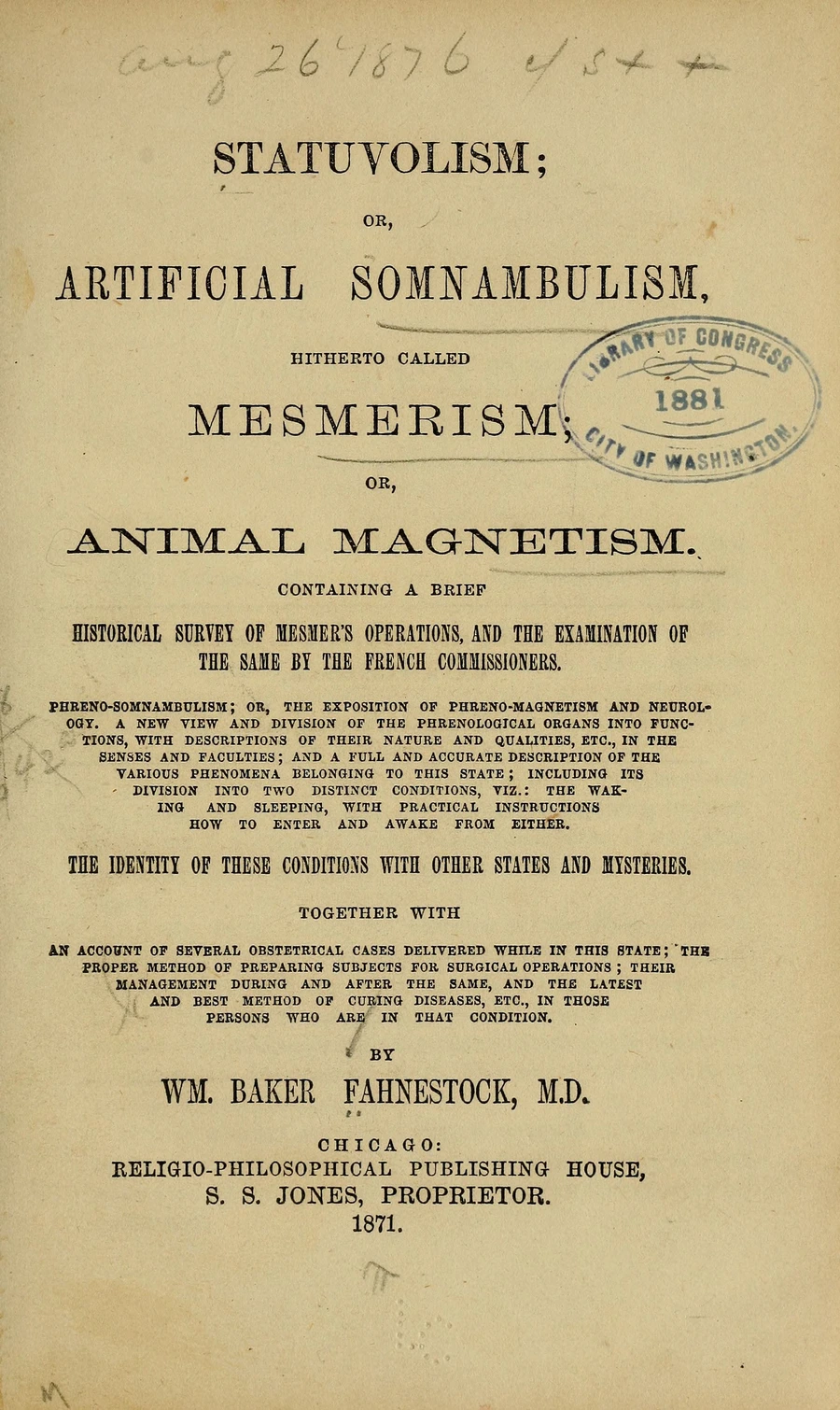
The title page of the 1871 edition puts Fahnestock’s term beside older names for the trance states he discusses.
William Baker Fahnestock, Statuvolism, Chicago, 1871. Library of Congress scan via Internet Archive. · Image source ↗ · Public Domain
See references (2)
How the two accounts understand will
Both writers put the subject’s will at the centre of their accounts. Fahnestock thinks the will itself is sufficient. Babbitt gives it a medium through which to act, which he calls psychic ether. [3][5][6]
In the library
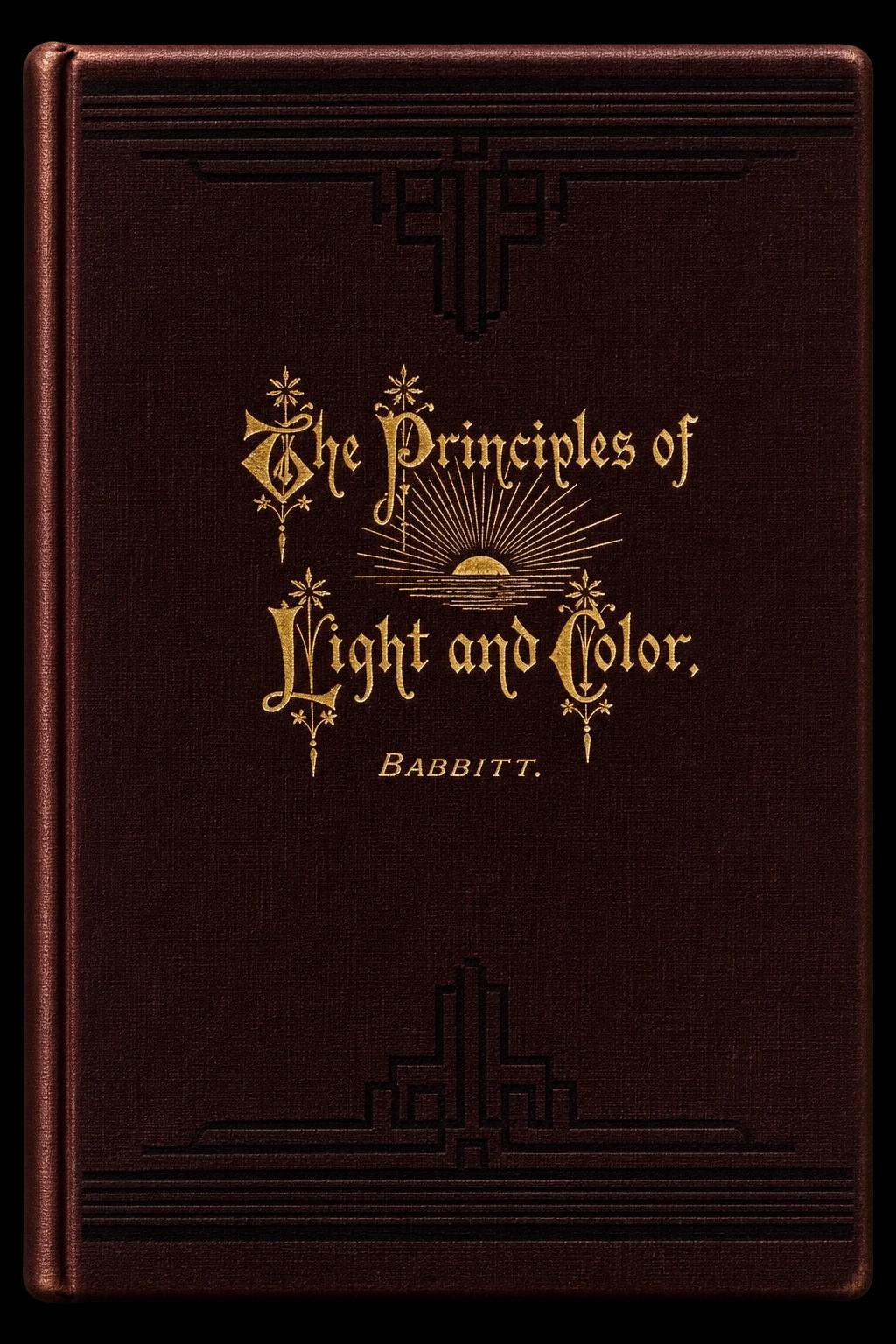
The Principles of Light and Color
Reading note
The separately titled account draws on exact passages in the consulted Library edition.
Sources
See references (6)
- Title page of Statuvolism (1871) ↗William Baker Fahnestock, Statuvolism, Chicago, 1871. Library of Congress scan via Internet Archive.
- Statuvolism, printed p. 39 ↗William Baker Fahnestock, Statuvolism, second edition, Chicago, 1871.
- Statuvolism, printed p. 40 ↗William Baker Fahnestock, Statuvolism, second edition, Chicago, 1871.
- The Principles of Light and Color, printed p. 465, Reader page 473Edwin D. Babbitt, The Principles of Light and Color, second edition, College of Fine Forces, East Orange, New Jersey, 1896. Lumitheca Library edition IMJ-0607-E001.Read this page in The Principles of Light and Color ↗
- The Principles of Light and Color, printed p. 466, Reader page 474Edwin D. Babbitt, The Principles of Light and Color, second edition, College of Fine Forces, East Orange, New Jersey, 1896. Lumitheca Library edition IMJ-0607-E001.Read this page in The Principles of Light and Color ↗
- The Principles of Light and Color, printed p. 469, Reader page 477Edwin D. Babbitt, The Principles of Light and Color, second edition, College of Fine Forces, East Orange, New Jersey, 1896. Lumitheca Library edition IMJ-0607-E001.Read this page in The Principles of Light and Color ↗