Solar Adoration
What is solar adoration in Thelema? Compare the four daily greetings of Liber Resh with the dawn, dusk and midnight scenes in Crowley’s Moonchild.
In this article
What is solar adoration?
Solar adoration is a devotional greeting to the Sun or to a divine figure associated with it. In Aleister Crowley’s Thelema, four points in the day give the practice its rhythm: dawn, noon, sunset and midnight. [1][3][4][5]
Liber Resh vel Helios by Aleister Crowley
Aleister Crowley’s Liber Resh gives each greeting a name and a direction. It addresses Ra in the east at dawn, Ahathoor in the south at noon, Tum in the west at sunset and Khephra in the north at midnight. The solar boat recurs throughout. Crowley connects the cycle with meditation and remembrance of the Great Work. [1]
Moonchild by Aleister Crowley
In Aleister Crowley’s Moonchild, Simon Iff faces east after Lisa’s ordeal and greets Ra in his solar boat. He names Tahuti and Ra-Hoor, and the group joins in his gesture. Lisa feels their shared attention even as she questions what it means. [6][3][7]
The practice travels with the characters, from Cyril’s midnight greeting to Khephra in the countryside to the sunset gathering at the villa. At dawn on May Day, the others greet the Sun and Iliel cannot bring herself to join. The repeated gesture makes that moment of distance visible. [4][8][5][9]
The solar boat in Egyptian art
On this worn New Kingdom stela, a baboon raises its arms before Re in his solar boat. The image belongs to ancient Egyptian ancestor veneration and shows how the solar vessel appeared long before Crowley reused that imagery in Thelema. [2]
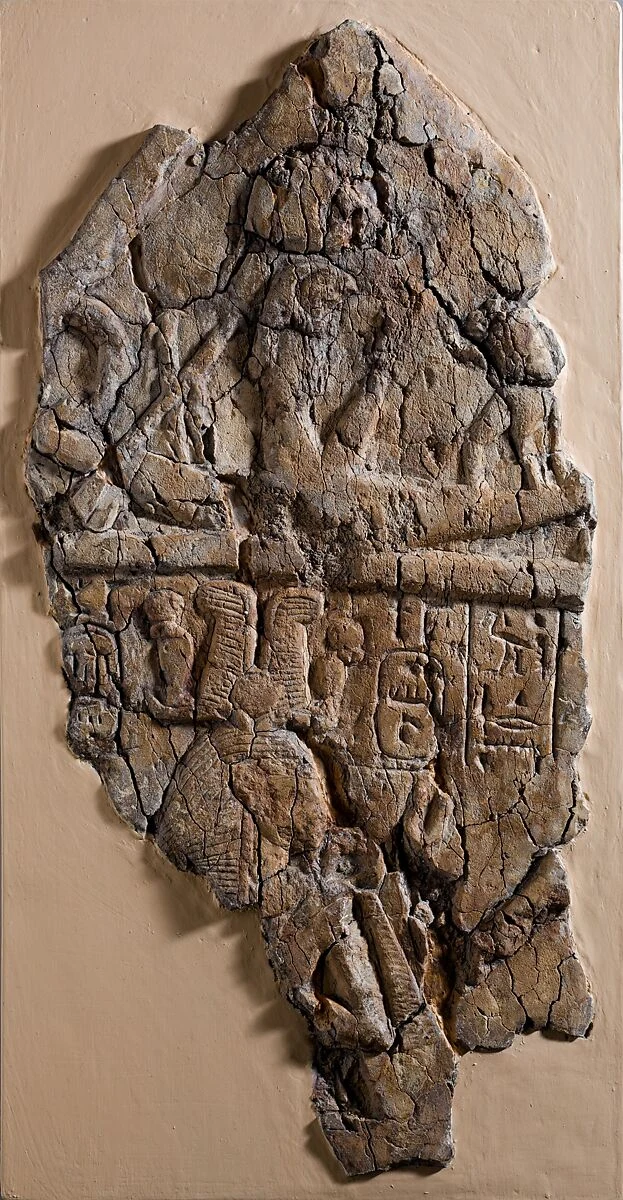
At the top of this Egyptian stela fragment, Re appears in his solar boat with a baboon raising its arms before him.
The Metropolitan Museum of Art, Egyptian Art, Open Access. · Image source ↗ · Public Domain
A daily rhythm in the novel
The dawn scene in Moonchild echoes the boat, prow and helm of Liber Resh. The instruction lays out a cycle to repeat each day. The novel lets the reader see how it feels to join in, and what changes when a character cannot. [1][3][4][5][9]
In the library
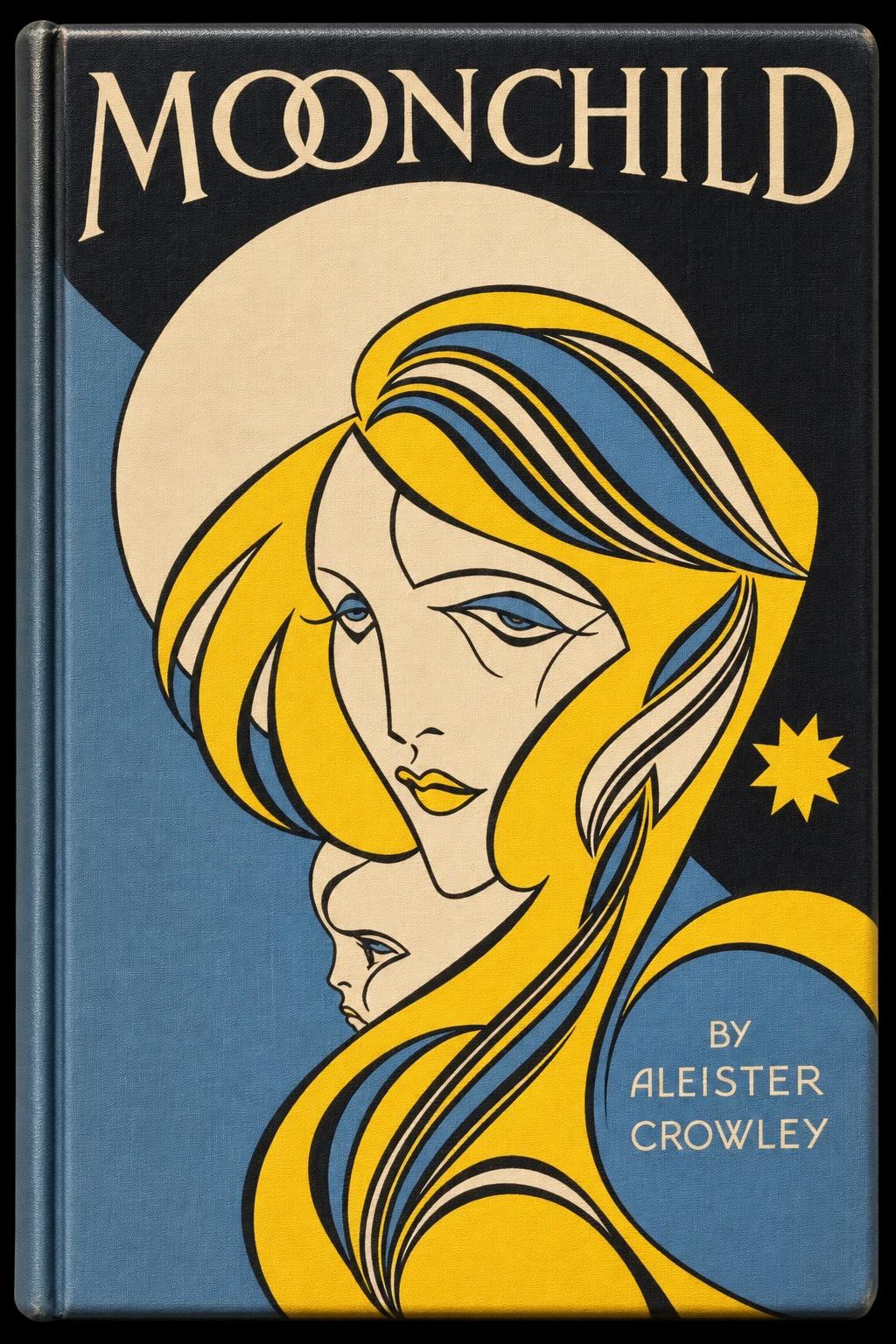
Moonchild
Reading note
The separately titled account draws on exact passages in the consulted Library edition.
Sources
See references (9)
- Liber Resh vel Helios, The Equinox I.6, printed pp. 31–32, §§0–7 ↗Aleister Crowley, The Equinox, vol. I, no. 6, London, 1911. The title leaf precedes the text.
- Stela fragment with the solar barque of Re, Met object 561702 ↗The Metropolitan Museum of Art, Egyptian Art, Open Access.
- Moonchild, Reader page 119Aleister Crowley, Moonchild (Liber LXXXI, The Butterfly Net), Library digital transcription IMJ-0629-E001.Read this page in Moonchild ↗
- Moonchild, Reader page 158Aleister Crowley, Moonchild (Liber LXXXI, The Butterfly Net), Library digital transcription IMJ-0629-E001.Read this page in Moonchild ↗
- Moonchild, Reader page 165Aleister Crowley, Moonchild (Liber LXXXI, The Butterfly Net), Library digital transcription IMJ-0629-E001.Read this page in Moonchild ↗
- Moonchild, Reader page 118Aleister Crowley, Moonchild (Liber LXXXI, The Butterfly Net), Library digital transcription IMJ-0629-E001.Read this page in Moonchild ↗
- Moonchild, Reader page 120Aleister Crowley, Moonchild (Liber LXXXI, The Butterfly Net), Library digital transcription IMJ-0629-E001.Read this page in Moonchild ↗
- Moonchild, Reader page 163Aleister Crowley, Moonchild (Liber LXXXI, The Butterfly Net), Library digital transcription IMJ-0629-E001.Read this page in Moonchild ↗
- Moonchild, Reader page 339Aleister Crowley, Moonchild (Liber LXXXI, The Butterfly Net), Library digital transcription IMJ-0629-E001.Read this page in Moonchild ↗