The Seven Seals of Revelation in Order
Follow the seven seals of Revelation in order, from the Four Horsemen to the silence in heaven, with verse links and illustrated details from Dürer.
In this article
Follow the scroll from the first seal to the seventh
Each opening pairs a passage with a detail from Dürer’s Apocalypse. Chapter 7 sits between the last two openings.
Open the seals in order
1The white horseRevelation 6:1–2
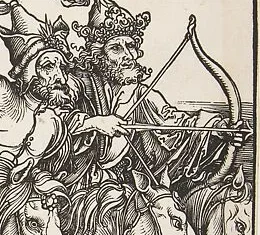
Dürer · Print detail A rider with a bow receives a crown and rides out to conquer.
Read Revelation 6:1–22The red horseRevelation 6:3–4
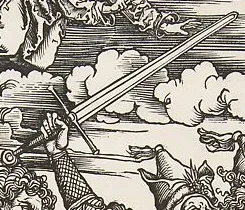
Dürer · Print detail The second rider takes peace from the earth and is given a great sword.
Read Revelation 6:3–43The black horseRevelation 6:5–6
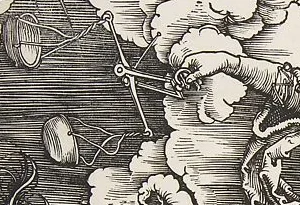
Dürer · Print detail A rider carries scales. A voice announces the price of wheat and barley.
Read Revelation 6:5–64Death on the pale green horseRevelation 6:7–8
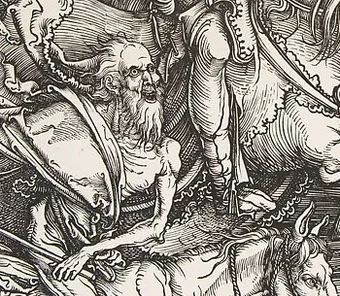
Dürer · Print detail Death rides out with Hades following. Their authority is limited to a quarter of the earth.
Read Revelation 6:7–85The souls beneath the altarRevelation 6:9–11
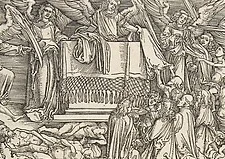
Dürer · Print detail Those who died for their witness ask how long they must wait. They receive white robes.
Read Revelation 6:9–116The earthquake and falling starsRevelation 6:12–17
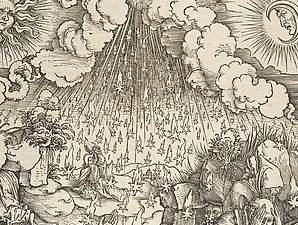
Dürer · Print detail The earth shakes, the sky rolls up and people of every rank seek shelter.
Read Revelation 6:12–17Between seals six and seven, read the interlude in Revelation 7.
7Silence in heavenRevelation 8:1–5
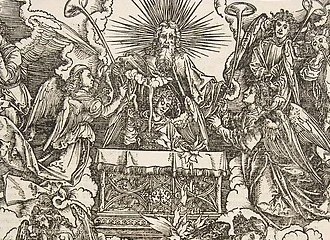
Dürer · Print detail After about half an hour of silence, the vision turns to the altar, incense and seven trumpets. The print depicts the events that follow the silence.
Read Revelation 8:1–5
Who opens the seven seals?
The Lamb opens the seals in Revelation, one by one. The first four bring riders into the vision. The fifth reveals the slain beneath an altar, the sixth brings cosmic upheaval, and the seventh begins with silence in heaven. Six seals open in chapter 6, and the seventh opens in chapter 8, after the intervening vision of chapter 7. [1][2][6][7][8][9]
Chapter 5 begins the scene before anything is opened. The scroll has writing on both sides and seven seals. John weeps when no one can open it. He hears that the Lion of Judah can do so, then sees a Lamb that has been slain. The change from the title he hears to the figure he sees matters for the rest of the passage, because the Lamb both receives the scroll and opens its seals. [1][2]
See references (6)
Seals one to four · The Four Horsemen
Each of the first four openings begins with a summons from one of the four living creatures. The white horse’s rider has a bow, receives a crown and rides out to conquer. The red horse brings the loss of peace and a large sword. The recurring summons holds the scenes together while the colours, objects and actions distinguish them. [2][3][11]
The black horse’s rider carries scales. A voice announces grain prices against a day’s pay and exempts oil and wine from damage. The pale green horse then brings the only rider explicitly named in this sequence, Death, with Hades following. The text specifies limited authority over a quarter of the earth. In a monochrome print, look for the bow, sword, scales and figure of Death to tell the riders apart. [4][5][12]
Dürer shows all four riders in one charge. Doré isolates Death on the pale horse, using darkness and pale linework to direct the eye to the fourth scene. Open the Library plate to compare the shape of Doré’s rider with Dürer’s small detail in the seal guide above. [12][15][5]
Seals five and six · The altar and the earthquake
At the fifth opening, the scene shifts from mounted figures to the souls beneath the altar. Those who were killed for their witness ask how long they must wait before judgment. They receive white robes and are told to rest a little longer. The question about waiting and the gift of the robes give the vision a different pace from the repeated summons of the first four seals. [6][5]
The sixth begins with an earthquake. The sun darkens, the moon reddens, the stars fall and the sky rolls up like a scroll. Mountains and islands move, while people across the social order look for shelter. Dürer holds those two scenes in vertical order. The altar is high in the print, and the falling stars and people among rocks occupy its lower part. [7][13]
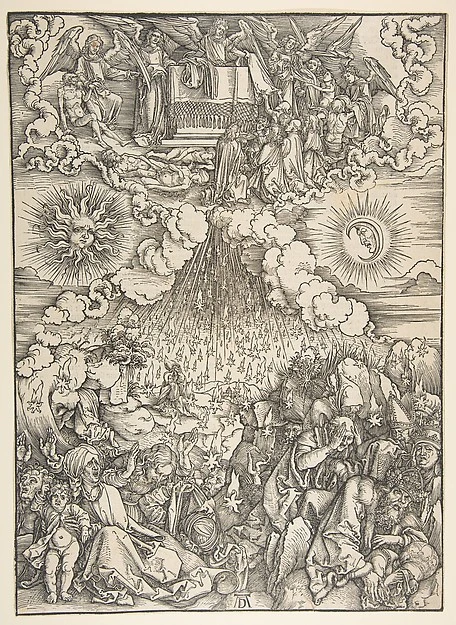
Dürer joins two consecutive openings in one woodcut. The altar above belongs to the fifth seal. Below it the falling stars and people seeking shelter belong to the sixth.
Albrecht Dürer, The Opening of the Fifth and Sixth Seals, ca. 1497/98. Metropolitan Museum of Art, Gift of Mrs. Felix M. Warburg, 1940, 40.139.6(6). Open Access. · Image source ↗ · Public Domain
What happens between the sixth and seventh seals?
The sixth seal ends by asking who can stand before judgment. Chapter 7 first shows four angels holding back the winds until God’s servants are marked. John hears a number, 144,000, and then sees an uncountable multitude from every nation before the throne. These are two consecutive scenes within the chapter, and the sequence itself leaves room for different readings of the groups’ relationship. [7][8]
In chapter 7, a seal is placed on people’s foreheads. In chapter 5, seven seals close the scroll. The shared word has a different object and purpose in each scene. Chapter 7 interrupts the sequence of openings. The Lamb opens the seventh seal at the start of chapter 8. [1][8][9]
Seal seven · Silence in heaven
The first response to the seventh opening is silence in heaven for about half an hour. The passage then gives seven angels trumpets and describes another angel offering incense with the prayers of the holy ones. Fire from the altar is cast onto the earth. The angels prepare to sound the trumpets in the next verse, marking the transition into a new sequence. [9][10]
Dürer gives the eye what the following lines describe: angels, trumpets and motion. The woodcut combines successive actions much as the earlier print combines two seals. Read the silence in the verse, then use the print to see which of the events that follow can be represented by bodies, instruments and marks on the page. [9][10][14]
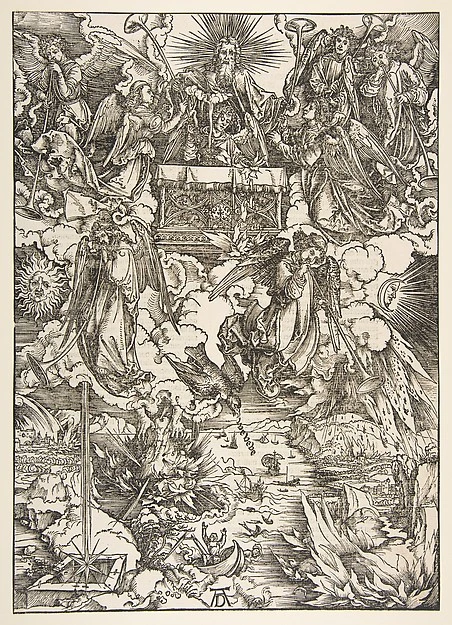
Dürer’s seventh-seal print shows the angels and trumpets and continuing events on earth. The silence that immediately follows the opening has no direct visual equivalent here.
Albrecht Dürer, The Opening of the Seventh Seal, 1511 impression. Metropolitan Museum of Art, Gift of Mrs. Felix M. Warburg, 1940, 40.139.6(8). Open Access. · Image source ↗ · Public Domain
How Lévi redraws the seven seals
The Apocalyptic Key in Éliphas Lévi’s Transcendental Magic puts seven inscribed circles into a single design. The print’s title connects it with St John’s seven seals. Its lettering, radiating centre and arrangement of circular emblems belong to Lévi’s later interpretive framework. Open the entire plate in the Reader to see those elements together, then compare its shape with Revelation’s narrative order. [16][1][9]
Read further in the library
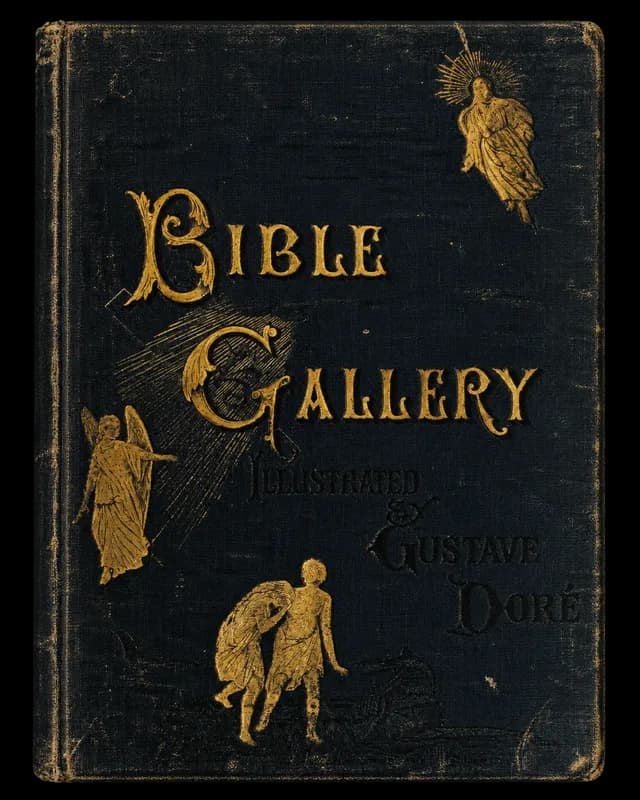
The Bible Gallery
Reading note
Locate the fourth seal in Doré’s Death on the Pale Horse.
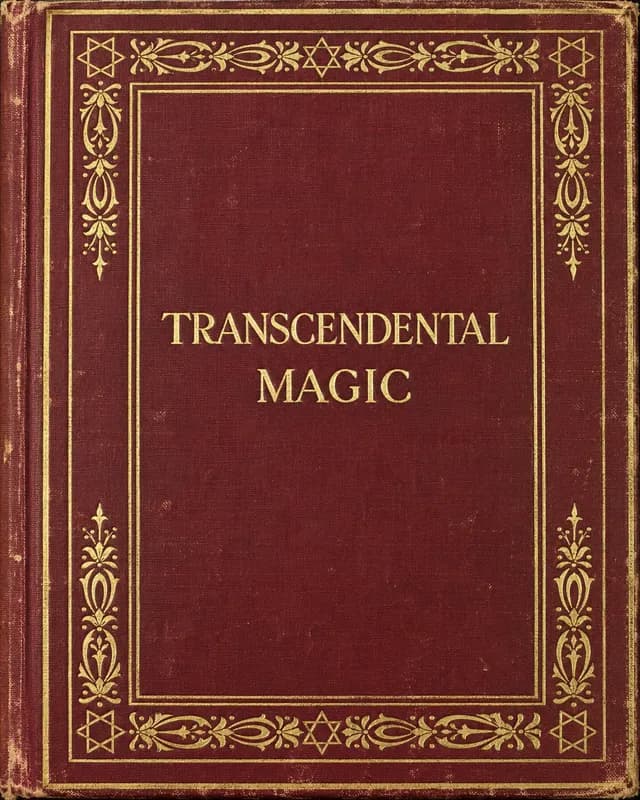
Transcendental Magic
Reading note
See how Lévi’s source edition presents the Apocalyptic Key as one complete plate.
Sources
See references (16)
- Revelation 5:1–14 · The sealed scroll and the Lamb ↗New American Bible, Revised Edition, United States Conference of Catholic Bishops.Return to text ↑
- Revelation 6:1–2 · The white horse ↗New American Bible, Revised Edition, United States Conference of Catholic Bishops.Return to text ↑
- Revelation 6:3–4 · The red horse ↗New American Bible, Revised Edition, United States Conference of Catholic Bishops.Return to text ↑
- Revelation 6:5–6 · The black horse ↗New American Bible, Revised Edition, United States Conference of Catholic Bishops.Return to text ↑
- Revelation 6:7–8 · Death on the pale green horse ↗New American Bible, Revised Edition, United States Conference of Catholic Bishops.Return to text ↑
- Revelation 6:9–11 · The petition beneath the altar ↗New American Bible, Revised Edition, United States Conference of Catholic Bishops.Return to text ↑
- Revelation 6:12–17 · The earthquake and the darkened sky ↗New American Bible, Revised Edition, United States Conference of Catholic Bishops.Return to text ↑
- Revelation 7:1–17 · The servants are sealed ↗New American Bible, Revised Edition, United States Conference of Catholic Bishops.Return to text ↑
- Revelation 8:1–5 · Silence, the censer and the altar ↗New American Bible, Revised Edition, United States Conference of Catholic Bishops.Return to text ↑
- Revelation 8:6–13 · The first trumpets sound ↗New American Bible, Revised Edition, United States Conference of Catholic Bishops.Return to text ↑
- Zechariah 6:1–8 · The four chariots ↗New American Bible, Revised Edition, with the imagery compared in the Revelation 6 notes.Return to text ↑
- Albrecht Dürer · The Four Horsemen ↗Metropolitan Museum of Art, woodcut dated 1498, 19.73.209, Open Access.Return to text ↑
- The Opening of the Fifth and Sixth Seals ↗Albrecht Dürer, The Opening of the Fifth and Sixth Seals, ca. 1497/98. Metropolitan Museum of Art, Gift of Mrs. Felix M. Warburg, 1940, 40.139.6(6). Open Access.Return to text ↑
- The Opening of the Seventh Seal ↗Albrecht Dürer, The Opening of the Seventh Seal, 1511 impression. Metropolitan Museum of Art, Gift of Mrs. Felix M. Warburg, 1940, 40.139.6(8). Open Access.Return to text ↑
- Doré · Death on the Pale Horse, original plateThe Bible Gallery, designs by Gustave Doré, Cassell & Company, Lumitheca edition IMJ-0073-E001, source leaf 413.Read this page in The Bible Gallery ↗Return to text ↑
- Éliphas Lévi · Apocalyptic Key, original plateTranscendental Magic, Lumitheca edition IMJ-0026-E001, source leaf 408. The plate is reproduced in Lévi’s book.Read this page in Transcendental Magic ↗Return to text ↑