The Seven Days of Creation in Genesis
Follow the seven days of creation in Genesis with a verse-linked chart, then see how the garden story begins and why the seventh day is set apart.
In this article
Read the creation week and the garden in order
Compare the first three days with the next three, then follow the seventh day and the start of the garden story.
The seven creation days at a glance
Day 7Completion, rest and blessingGenesis 2:1–3Continue into the garden story
What happens on each of the seven days?
Genesis describes six days of creation followed by a seventh day of rest. The sequence runs from Genesis 1:1 to 2:3, across the modern chapter division. The first six days move from light and darkness to the sky and waters, dry land and plants, the lights in the sky, sea creatures and birds, then land animals and humankind. The seventh brings the sequence to completion, and God blesses the day and makes it holy. [1][2][3][4][5][6][7]
The pattern is easier to follow if you read the repeated phrases alongside the changing subjects. God speaks, the result follows, and the day closes with an evening and morning formula. The first day distinguishes light from darkness. De Leu’s engraving uses light and shadow to picture that distinction and adds a triangular halo characteristic of the print’s Christian reception. [1][6][16]
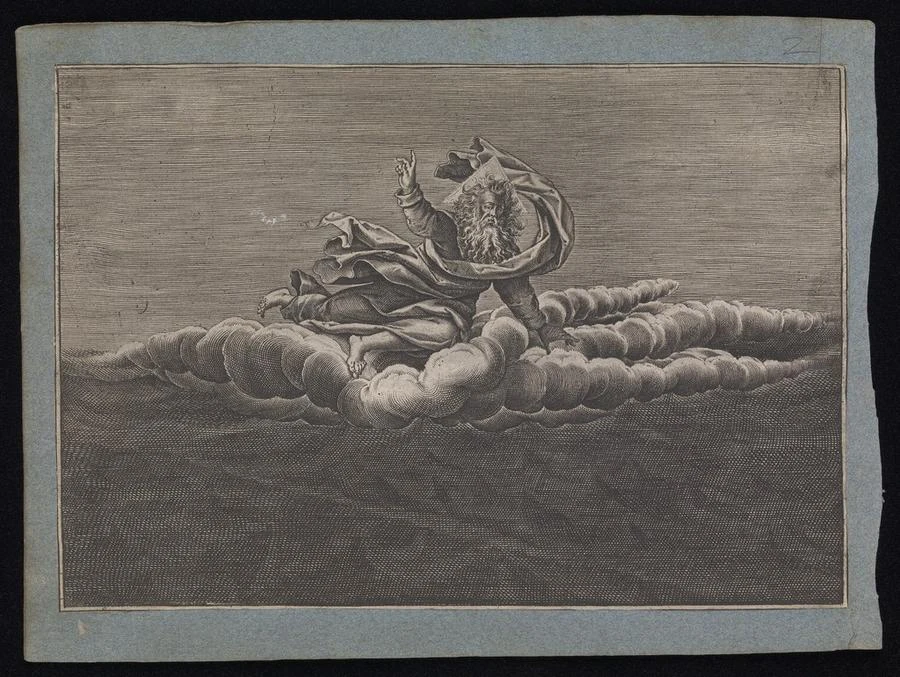
De Leu uses stark contrast to picture the separation of light and darkness. The triangle around God’s head belongs to the engraver’s Christian iconography.
Thomas de Leu after Maerten de Vos, The First Day of Creation, ca. 1600. Wellcome Collection, 15555i. Public Domain Mark. · Image source ↗ · Public Domain
See references (8)
- Genesis 1:1–5 · The opening and the first day
- Genesis 1:6–8 · The expanse and the waters
- Genesis 1:9–13 · Dry land, seas and plants
- Genesis 1:14–19 · Lights to govern day and night
- Genesis 1:20–23 · Creatures of the waters and birds
- Genesis 1:24–31 · Land animals and humankind
- Genesis 2:1–3 · Completion, rest and blessing
- The First Day of Creation
How days one through six correspond
Read days one and four together. Day one names day and night. Day four gives the lights in the sky tasks that include separating day from night and marking seasons, days and years. The chart places these passages opposite each other so that readers can see how the subject returns with a different function. [1][4]
Days two and five bring a second correspondence. The expanse divides the waters on day two. On day five the waters teem with creatures and birds fly across the sky. Day three gathers the waters so that dry land appears and the earth yields vegetation. Day six populates the land with animals, then gives humankind a place and responsibilities within the created world. [2][3][5][6]
The pairing is a way of seeing the chapter’s literary design. Some details cross the two groups. Plants already appear on day three, the birds are blessed on day five, and the food given in the sixth-day speech includes the vegetation already described. The verse links let you see the pattern and its exceptions together. [3][5][6]
What are the animals and humans of day six?
Day six begins with living creatures on land. It then describes humankind in the image of God, male and female, and gives human beings a blessing and a commission. The creation speech ends with food assigned to humans and animals and a judgement on everything God has made. Sadeler puts humans and land animals in a single view. The title supplies the familiar names Adam and Eve, while the passage itself speaks here in terms of humankind. [6][17]
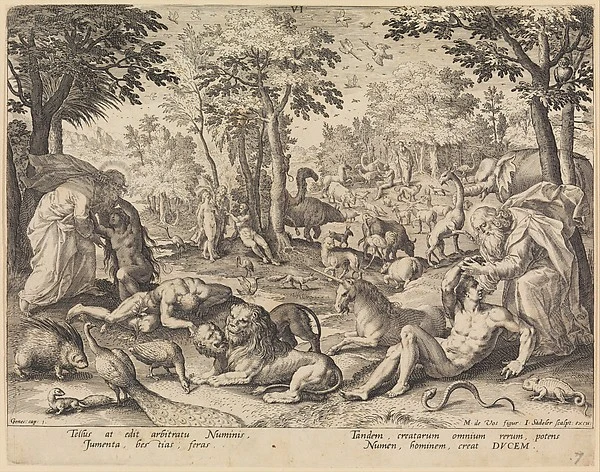
Sadeler combines animals and humans within one design. The title names Adam and Eve, while the verse for day six speaks of humankind as male and female.
Johann Sadeler I after Maerten de Vos, The Sixth Day: The Creation of Animals, Adam and Eve, late 16th century. The Metropolitan Museum of Art, The Elisha Whittelsey Collection, The Elisha Whittelsey Fund, 1951, 51.501.1769(7). Open Access. · Image source ↗ · Public Domain
What happens on the seventh day?
The first three verses of Genesis 2 say that the work is completed, that God rests and that the day is blessed and made holy. The formula about evening and morning that closes each of the first six days is absent here. Read Exodus 20 beside it to see the creation pattern used in a commandment about Sabbath. Deuteronomy 5 gives remembrance of slavery and deliverance from Egypt as the reason for a Sabbath commandment that explicitly includes others’ rest. [7][12][13]
Where does the garden story begin?
Move on at Genesis 2:4. The new scene turns to ground, water and the formation of a human being from dust. God plants a garden and places the human there. The garden account describes its trees and rivers, the work of tending it and the command about the tree of knowledge. Its details belong to that narrative and give the reader a different route into questions raised in the first chapter. [8][9][14]
In verses 18–25 the animals are brought for naming, and the scene turns to the formation of a human companion. The serpent enters in Genesis 3. Dürer’s tree, serpent and fruit therefore mark the story beyond the creation week. When comparing the images, look for the details that locate each one in the text before relying on a generic label such as Creation or Eden. [10][11][18]
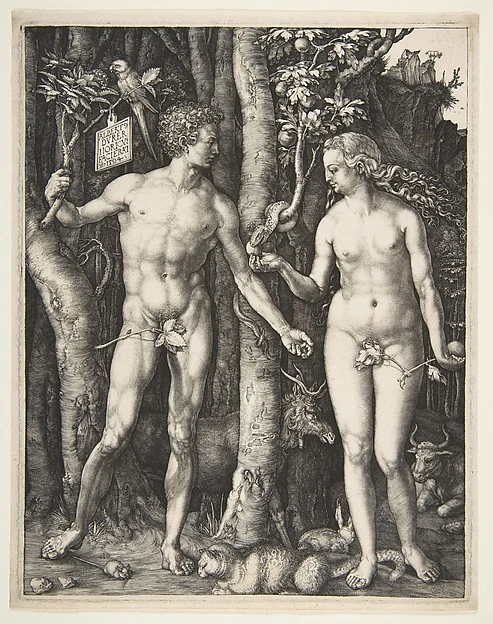
Dürer’s serpent takes the viewer into Genesis 3. The engraving is a useful marker for where the garden story goes after Genesis 2’s account of the garden and its inhabitants.
Albrecht Dürer, Adam and Eve, 1504. The Metropolitan Museum of Art, Fletcher Fund, 1919, 19.73.1. Open Access. · Image source ↗ · Public Domain
See references (6)
Follow creation in Milton and Doré
Raphael recounts the making of the world in Book VII of Paradise Lost. Doré’s pictures turn specific moments into landscapes. Open the original Reader leaves for water finding its courses, creatures and birds appearing, and a quiet seventh evening. Milton and Doré give that evening a scene of its own. In the Genesis passage the seventh day is marked instead by completion, rest and blessing, without an evening-and-morning formula. [15][19][20][21][7]
Read further in the library
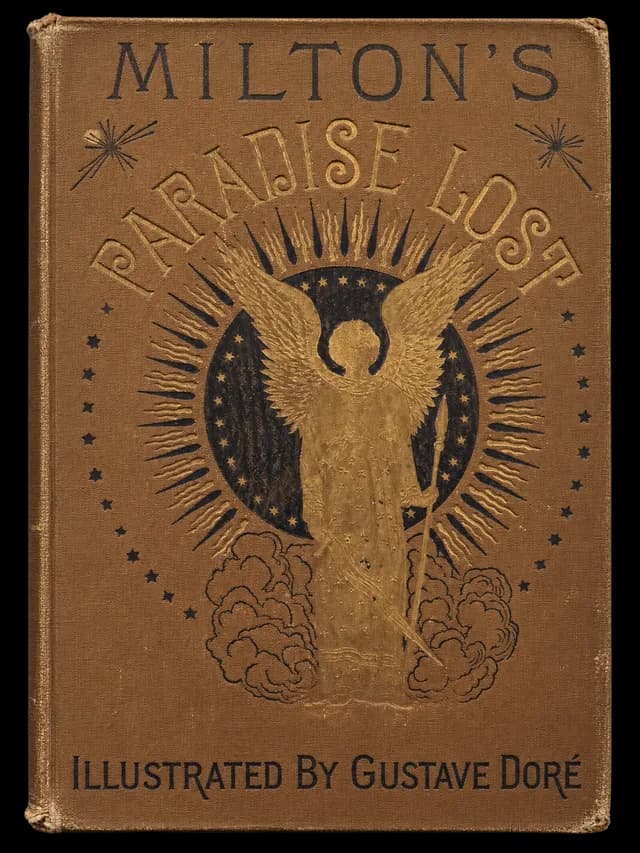
Paradise Lost: Illustrated by Gustave Doré
Reading note
Follow creation and the seventh evening in Book VII of the illustrated Paradise Lost.
Sources
See references (21)
- Genesis 1:1–5 · The opening and the first day ↗New American Bible, Revised Edition, United States Conference of Catholic Bishops.Return to text ↑
- Genesis 1:6–8 · The expanse and the waters ↗New American Bible, Revised Edition, United States Conference of Catholic Bishops.Return to text ↑
- Genesis 1:9–13 · Dry land, seas and plants ↗New American Bible, Revised Edition, United States Conference of Catholic Bishops.Return to text ↑
- Genesis 1:14–19 · Lights to govern day and night ↗New American Bible, Revised Edition, United States Conference of Catholic Bishops.Return to text ↑
- Genesis 1:20–23 · Creatures of the waters and birds ↗New American Bible, Revised Edition, United States Conference of Catholic Bishops.Return to text ↑
- Genesis 1:24–31 · Land animals and humankind ↗New American Bible, Revised Edition, United States Conference of Catholic Bishops.Return to text ↑
- Genesis 2:1–3 · Completion, rest and blessing ↗New American Bible, Revised Edition, United States Conference of Catholic Bishops.Return to text ↑
- Genesis 2:4–7 · The change of scene and the human from dust ↗New American Bible, Revised Edition, United States Conference of Catholic Bishops.Return to text ↑
- Genesis 2:8–17 · The garden, rivers, trees and command ↗New American Bible, Revised Edition, United States Conference of Catholic Bishops.Return to text ↑
- Genesis 2:18–25 · The animals are named and the woman is formed ↗New American Bible, Revised Edition, United States Conference of Catholic Bishops.Return to text ↑
- Genesis 3:1–7 · The serpent and the fruit ↗New American Bible, Revised Edition, United States Conference of Catholic Bishops.Return to text ↑
- Exodus 20:8–11 · The creation pattern and Sabbath ↗New American Bible, Revised Edition, United States Conference of Catholic Bishops.Return to text ↑
- Deuteronomy 5:12–15 · The Sabbath and remembrance of slavery ↗New American Bible, Revised Edition, United States Conference of Catholic Bishops.Return to text ↑
- USCCB introduction to Genesis · Outline and literary context ↗New American Bible, Revised Edition.Return to text ↑
- John Milton · Paradise Lost, Book VII ↗1674 text, University of Toronto Libraries, Representative Poetry Online.Return to text ↑
- The First Day of Creation ↗Thomas de Leu after Maerten de Vos, The First Day of Creation, ca. 1600. Wellcome Collection, 15555i. Public Domain Mark.Return to text ↑
- The Sixth Day: The Creation of Animals, Adam and Eve ↗Johann Sadeler I after Maerten de Vos, The Sixth Day: The Creation of Animals, Adam and Eve, late 16th century. The Metropolitan Museum of Art, The Elisha Whittelsey Collection, The Elisha Whittelsey Fund, 1951, 51.501.1769(7). Open Access.Return to text ↑
- Adam and Eve ↗Albrecht Dürer, Adam and Eve, 1504. The Metropolitan Museum of Art, Fletcher Fund, 1919, 19.73.1. Open Access.Return to text ↑
- Doré · Waters Find Their Courses, Book VIIJohn Milton, Paradise Lost, illustrated by Gustave Doré, Lumitheca edition IMJ-0115-E001, source leaf 207.Read this page in Paradise Lost: Illustrated by Gustave Doré ↗Return to text ↑
- Doré · Life Emerges in the Waters, Book VIIJohn Milton, Paradise Lost, illustrated by Gustave Doré, Lumitheca edition IMJ-0115-E001, source leaf 208.Read this page in Paradise Lost: Illustrated by Gustave Doré ↗Return to text ↑
- Doré · The Seventh Evening in Eden, Book VIIJohn Milton, Paradise Lost, illustrated by Gustave Doré, Lumitheca edition IMJ-0115-E001, source leaf 219.Read this page in Paradise Lost: Illustrated by Gustave Doré ↗Return to text ↑