Serpent transformation
Explore transformations between human and serpent in myth and literature, from Dante’s Agnello to Cadmus and the snake-spouse tales Frank Hamel collected.
In this article
Human and serpent forms
Serpent transformation is a change between human and snake form in myth or literature. It can mark punishment, conceal a spouse’s identity or express a connection to a divine being. [1][2][3][4]
Some stories make the snake’s skin an obstacle to returning to human life. Others make it necessary to survival. What matters is who can change and who controls the objects or conditions that make a return possible. [3][5][6][7]
See references (7)
- Human Animals, printed p. 173, Reader page 182
- Human Animals, printed p. 174, Reader page 183
- Human Animals, printed p. 175, Reader page 184
- Human Animals, printed p. 178, Reader page 187
- Human Animals, printed p. 176, Reader page 185
- Human Animals, printed p. 179, Reader page 188
- Human Animals, printed p. 180, Reader page 189
Dante Alighieri’s Inferno
In Inferno XXV, Dante sees a six-footed serpent spring on Agnello among the thieves. The two bodies cling together and melt like wax, leaving one unfamiliar form. The onlookers know Agnello, but what they see no longer looks like either of the beings that went into the change. [15][16][14]
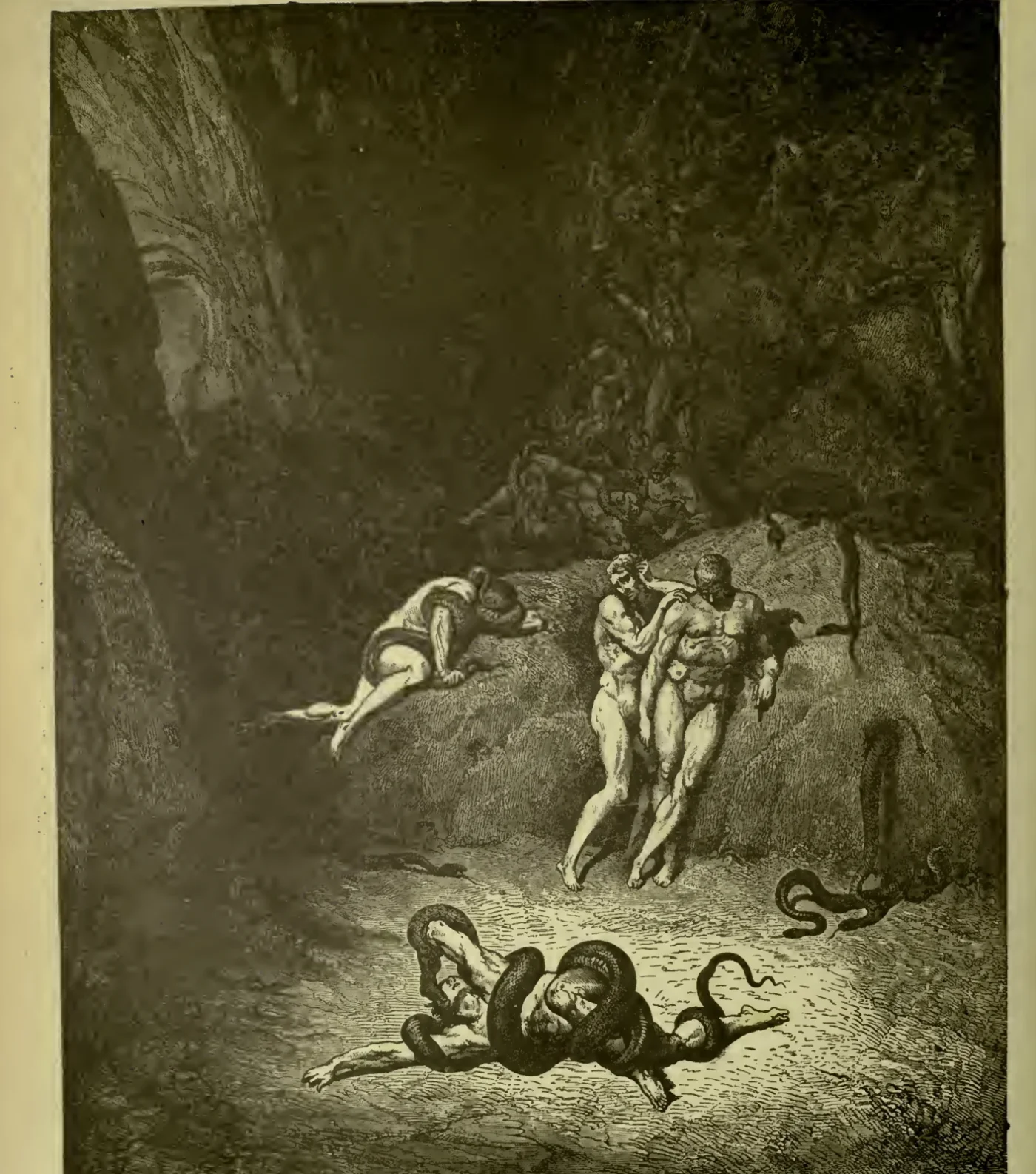
Gustave Doré’s illustration for Inferno XXV. The plate shows the moment Agnello’s companions see him merging with the serpent.
Gustave Doré, 1832–1883, design. Historical public-domain engraving from the Library’s Dante’s Inferno. · Image source ↗ · Public Domain
Human Animals by Frank Hamel
Frank Hamel’s Human Animals opens its serpent chapter with classical transformations, including Cadmus and Harmonia. It then turns to marriage tales and regional religious narratives. Their presence in one chapter creates a comparison of forms, not evidence that their religious meanings were identical. [1][2][3]
The snake-wife whose girdle is burned provides an unusually stark warning about interference. Destroying the object kills rather than liberates her. A reader expecting the familiar ending in which burning a skin restores a human spouse must confront a different relationship between life and covering. [3][5]
The serpent-son stories offer other endings. Some connect the destruction of a covering with release; others make it a violation whose consequences require a difficult search or remedy. Hamel’s naga-spouse material belongs to its own South Asian setting, which should remain named rather than reduced to an interchangeable snake-monster motif. [4][6][7][8][9]
See references (9)
- Human Animals, printed p. 173, Reader page 182
- Human Animals, printed p. 174, Reader page 183
- Human Animals, printed p. 175, Reader page 184
- Human Animals, printed p. 178, Reader page 187
- Human Animals, printed p. 176, Reader page 185
- Human Animals, printed p. 179, Reader page 188
- Human Animals, printed p. 180, Reader page 189
- Human Animals, printed p. 181, Reader page 190
- Human Animals, printed p. 182, Reader page 191
What the human and animal forms share
Swan-maiden stories commonly restore freedom through the recovery of a garment. A snake-wife story may instead make that covering essential to life. Comparing the conditions of return shows why the same human action, taking or burning a covering, can have opposite consequences. [10][11][3][5]
Dante makes the merger a loss of recognisable form. Hamel’s snake-spouse tales turn on a covering the family can keep or destroy. In his external-soul examples, an animal and a person may share a fate while remaining in separate bodies. [12][13][1][4][15][16][3][5]
See references (10)
- Human Animals, printed p. 173, Reader page 182
- Human Animals, printed p. 175, Reader page 184
- Human Animals, printed p. 178, Reader page 187
- Human Animals, printed p. 176, Reader page 185
- Human Animals, printed p. 145, Reader page 154
- Human Animals, printed p. 146, Reader page 155
- Human Animals, printed p. 20, Reader page 29
- Human Animals, printed p. 21, Reader page 30
- Dante’s Inferno, Canto XXV, printed p. 117, Reader page 170
- Dante’s Inferno, Canto XXV, printed p. 118, Reader page 171
Read further in the library

Human Animals
Reading note
Frank Hamel collects the particular stories and interpretations discussed here; the account identifies exact printed and Library Reader pages.
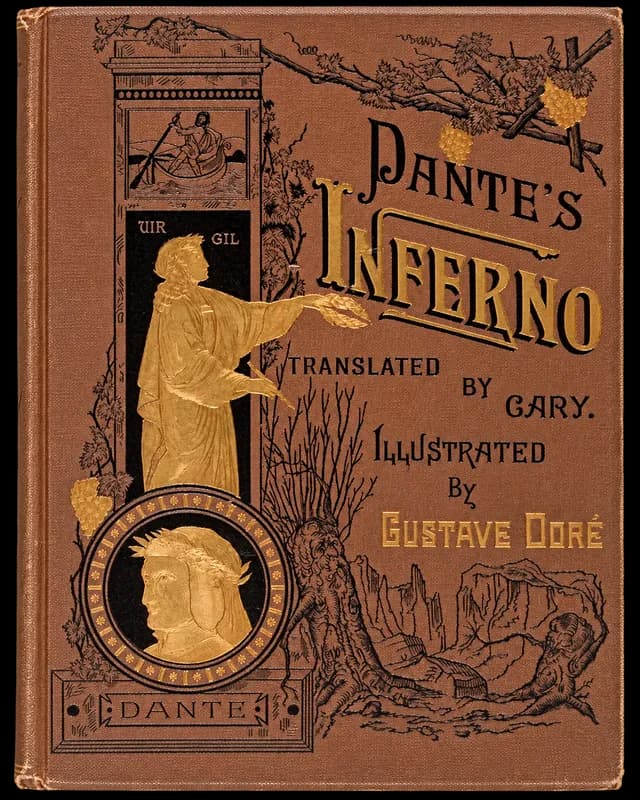
Dante's Inferno
Reading note
Cary’s translation and Gustave Doré’s illustration show Agnello merging with a serpent in Inferno XXV.
Sources
See references (16)
- Human Animals, printed p. 173, Reader page 182Frank Hamel, Human Animals. Frederick A. Stokes Co., New York, undated title page; preface dated London, 1915. Exact printed pages refer to the retained Library scan.Read this page in Human Animals ↗Return to text ↑
- Human Animals, printed p. 174, Reader page 183Frank Hamel, Human Animals. Frederick A. Stokes Co., New York, undated title page; preface dated London, 1915. Exact printed pages refer to the retained Library scan.Read this page in Human Animals ↗Return to text ↑
- Human Animals, printed p. 175, Reader page 184Frank Hamel, Human Animals. Frederick A. Stokes Co., New York, undated title page; preface dated London, 1915. Exact printed pages refer to the retained Library scan.Read this page in Human Animals ↗Return to text ↑
- Human Animals, printed p. 178, Reader page 187Frank Hamel, Human Animals. Frederick A. Stokes Co., New York, undated title page; preface dated London, 1915. Exact printed pages refer to the retained Library scan.Read this page in Human Animals ↗Return to text ↑
- Human Animals, printed p. 176, Reader page 185Frank Hamel, Human Animals. Frederick A. Stokes Co., New York, undated title page; preface dated London, 1915. Exact printed pages refer to the retained Library scan.Read this page in Human Animals ↗Return to text ↑
- Human Animals, printed p. 179, Reader page 188Frank Hamel, Human Animals. Frederick A. Stokes Co., New York, undated title page; preface dated London, 1915. Exact printed pages refer to the retained Library scan.Read this page in Human Animals ↗Return to text ↑
- Human Animals, printed p. 180, Reader page 189Frank Hamel, Human Animals. Frederick A. Stokes Co., New York, undated title page; preface dated London, 1915. Exact printed pages refer to the retained Library scan.Read this page in Human Animals ↗Return to text ↑
- Human Animals, printed p. 181, Reader page 190Frank Hamel, Human Animals. Frederick A. Stokes Co., New York, undated title page; preface dated London, 1915. Exact printed pages refer to the retained Library scan.Read this page in Human Animals ↗Return to text ↑
- Human Animals, printed p. 182, Reader page 191Frank Hamel, Human Animals. Frederick A. Stokes Co., New York, undated title page; preface dated London, 1915. Exact printed pages refer to the retained Library scan.Read this page in Human Animals ↗Return to text ↑
- Human Animals, printed p. 145, Reader page 154Frank Hamel, Human Animals. Frederick A. Stokes Co., New York, undated title page; preface dated London, 1915. Exact printed pages refer to the retained Library scan.Read this page in Human Animals ↗Return to text ↑
- Human Animals, printed p. 146, Reader page 155Frank Hamel, Human Animals. Frederick A. Stokes Co., New York, undated title page; preface dated London, 1915. Exact printed pages refer to the retained Library scan.Read this page in Human Animals ↗Return to text ↑
- Human Animals, printed p. 20, Reader page 29Frank Hamel, Human Animals. Frederick A. Stokes Co., New York, undated title page; preface dated London, 1915. Exact printed pages refer to the retained Library scan.Read this page in Human Animals ↗Return to text ↑
- Human Animals, printed p. 21, Reader page 30Frank Hamel, Human Animals. Frederick A. Stokes Co., New York, undated title page; preface dated London, 1915. Exact printed pages refer to the retained Library scan.Read this page in Human Animals ↗Return to text ↑
- Dante’s Inferno, Doré design for Canto XXV, exact Library image leaf, Reader page 165Dante Alighieri, translated by Henry Francis Cary; Gustave Doré, illustration. Exact retained Gallery source and checksum verified.Read this page in Dante's Inferno ↗Return to text ↑
- Dante’s Inferno, Canto XXV, printed p. 117, Reader page 170Dante Alighieri, translated by Henry Francis Cary.Read this page in Dante's Inferno ↗Return to text ↑
- Dante’s Inferno, Canto XXV, printed p. 118, Reader page 171Dante Alighieri, translated by Henry Francis Cary.Read this page in Dante's Inferno ↗Return to text ↑