Sacred grove
A sacred grove is a stand of trees set apart for worship. Compare ancient groves in Arcadia and Italy with the yew enclosure in Dion Fortune’s novel.
In this article
What makes a grove sacred?
A sacred grove is a group of trees or a stretch of woodland set apart for worship. At Lycosura in Arcadia, Pausanias describes a stone wall around a grove sacred to Despoina. Inside it, an olive and an evergreen oak grow from the same root. [1]
In Strabo’s description of Nemi in Italy, the grove is part of a deep basin. The temple, lake and surrounding slopes all help define the sanctuary. [1][2]
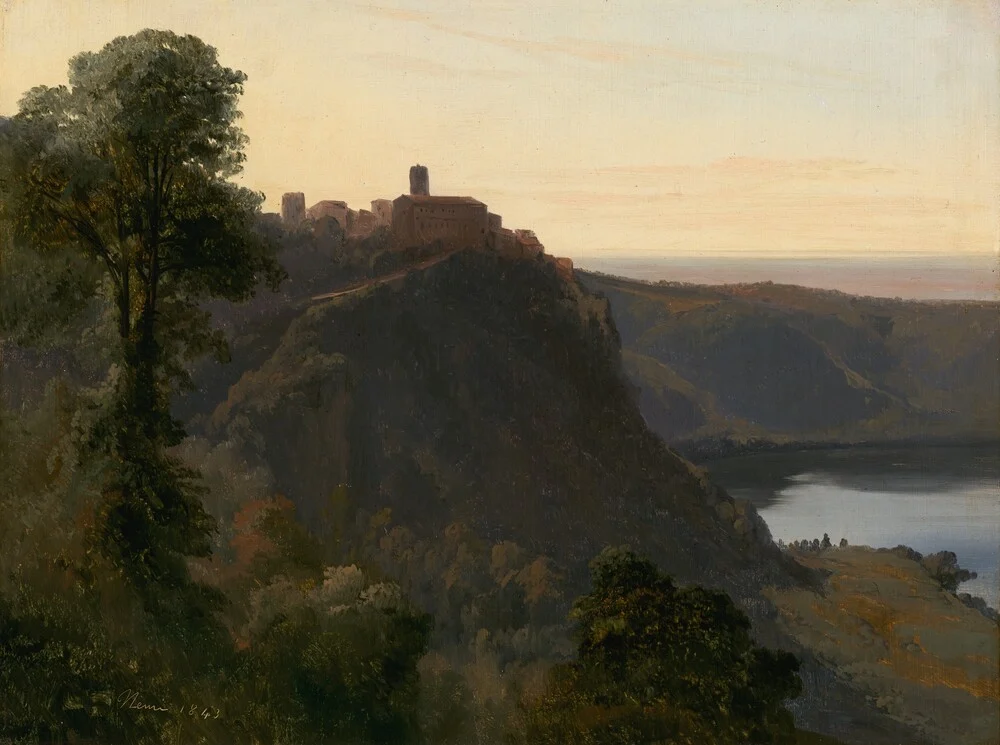
Jules Coignet, View of Lake Nemi, 1843. The lake and wooded slopes give a sense of the setting Strabo describes for the sanctuary of Diana.
Jules Coignet, National Gallery of Art, Washington, Gift of Mrs. John Jay Ide in memory of Mr. and Mrs. William Henry Donner, 1994.52.2. · Image source ↗ · Public Domain
See references (2)
The yew enclosure in The Goat-Foot God
In Dion Fortune’s The Goat-Foot God, Hugh looks for somewhere to honour Pan in the open air, out of sight of the road and neighbours. At Monks Farm, a belt of yews encloses a clearing with an old stone lying in the middle. [4][5][6][7]
Hugh stands the stone upright with help and uses it as an altar. On their wedding night he and Mona enter through an oak door set in the yews. A rabbit sits by the stone as they take their places at opposite ends of the moonlit clearing. [8][9][10]
In Ancient Tales and Folk-lore of Japan
In “The Spirit of the Willow Tree,” Richard Gordon Smith describes a willow that gives shade to villagers and travellers. Heitarō offers other trees to spare it from being cut for a bridge. When the villagers want the willow for a Buddhist temple roof, the fact that it is the tree they value defeats his second offer. [11][12][13]
In “The Camphor Tree Tomb,” the village leaders exempt the shrine’s camphor from a timber permit. The contractor gets it cut down, but the workers cannot move it. The foreman eventually returns, builds a shrine and appoints a caretaker. [14][15][16][17]
See references (7)
- Ancient Tales and Folklore of Japan, Reader page 28
- Ancient Tales and Folklore of Japan, Reader page 31
- Ancient Tales and Folklore of Japan, Reader page 33
- Ancient Tales and Folklore of Japan, Reader page 490
- Ancient Tales and Folklore of Japan, Reader page 491
- Ancient Tales and Folklore of Japan, Reader page 492
- Ancient Tales and Folklore of Japan, Reader page 493
How a grove gets its boundary
The grove at Lycosura is marked by a stone wall, and Pausanias singles out the trees inside. Fortune’s clearing is marked by yews. Hugh uses a door to give the opening into the grove the character of a threshold. [1][6][7][9]
How a sacred tree keeps its place
Fortune’s yews give the rite a place apart. Smith follows disputes over trees already central to village life. The willow is valued as timber for a temple, while the camphor remains the centre of a shrine after it has fallen. [12][13][14][17][6][7]
Read further in the library
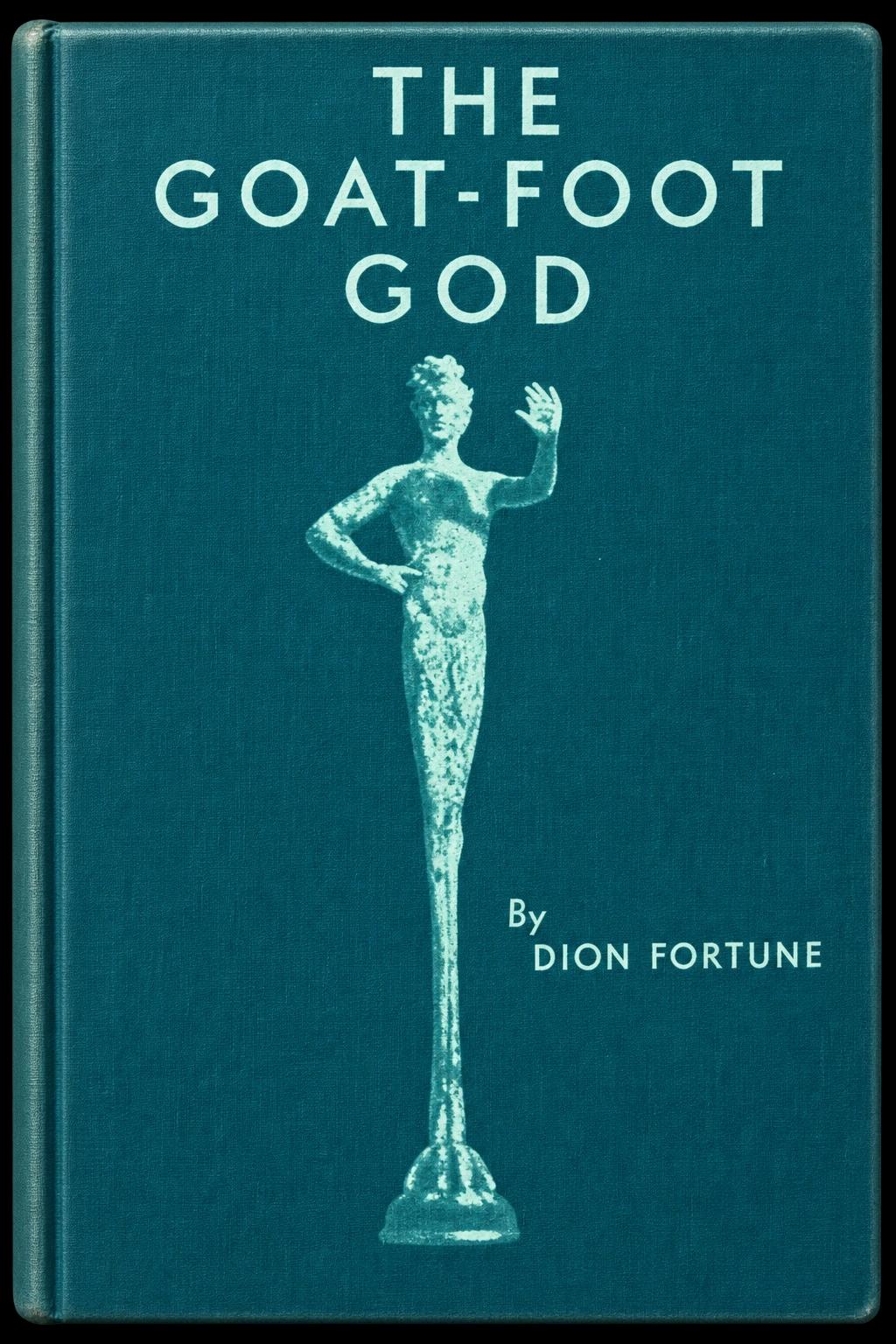
The Goat-Foot God
Reading note
The separately titled account draws on exact passages in the consulted Library edition.
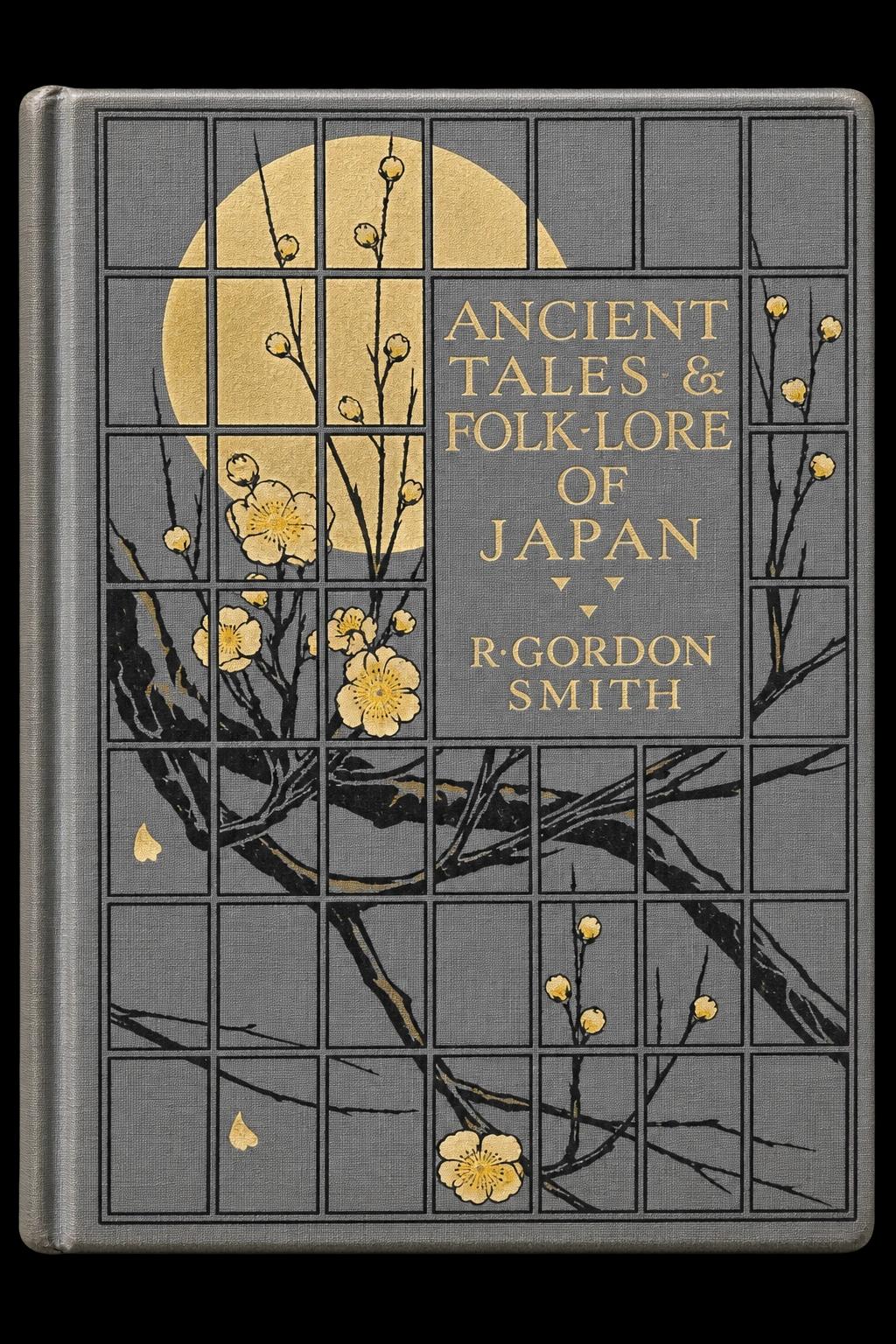
Ancient Tales and Folk-lore of Japan
Reading note
Read Richard Gordon Smith’s account in the verified 1908 Library edition.
Sources
See references (17)
- Pausanias, Description of Greece 8.37.10–11 ↗Pausanias, Description of Greece, Book 8, chapter 37, the sanctuary of Despoina at Lycosura.Return to text ↑
- Strabo, Geography 5.3.12 ↗Strabo, Geography, Book 5, chapter 3, section 12, the sanctuary and lake near Aricia. H. L. Jones translation, LacusCurtius.Return to text ↑
- View of Lake Nemi ↗Jules Coignet, National Gallery of Art, Washington, Gift of Mrs. John Jay Ide in memory of Mr. and Mrs. William Henry Donner, 1994.52.2.
- The Goat-Foot God, Reader page 197Dion Fortune, The Goat-Foot God. Undated digital Library edition IMJ-0643-E001. Numbered references use the Library Reader sequence.Read this page in The Goat-Foot God ↗Return to text ↑
- The Goat-Foot God, Reader page 333Dion Fortune, The Goat-Foot God. Undated digital Library edition IMJ-0643-E001. Numbered references use the Library Reader sequence.Read this page in The Goat-Foot God ↗Return to text ↑
- The Goat-Foot God, Reader page 334Dion Fortune, The Goat-Foot God. Undated digital Library edition IMJ-0643-E001. Numbered references use the Library Reader sequence.Read this page in The Goat-Foot God ↗Return to text ↑
- The Goat-Foot God, Reader page 335Dion Fortune, The Goat-Foot God. Undated digital Library edition IMJ-0643-E001. Numbered references use the Library Reader sequence.Read this page in The Goat-Foot God ↗Return to text ↑
- The Goat-Foot God, Reader page 336Dion Fortune, The Goat-Foot God. Undated digital Library edition IMJ-0643-E001. Numbered references use the Library Reader sequence.Read this page in The Goat-Foot God ↗Return to text ↑
- The Goat-Foot God, Reader page 350Dion Fortune, The Goat-Foot God. Undated digital Library edition IMJ-0643-E001. Numbered references use the Library Reader sequence.Read this page in The Goat-Foot God ↗Return to text ↑
- The Goat-Foot God, Reader page 351Dion Fortune, The Goat-Foot God. Undated digital Library edition IMJ-0643-E001. Numbered references use the Library Reader sequence.Read this page in The Goat-Foot God ↗Return to text ↑
- Ancient Tales and Folklore of Japan, Reader page 28Richard Gordon Smith, Ancient Tales and Folklore of Japan. A. & C. Black, London, 1908. Lumitheca Library edition IMJ-0588-E001.Read this page in Ancient Tales and Folk-lore of Japan ↗Return to text ↑
- Ancient Tales and Folklore of Japan, Reader page 31Richard Gordon Smith, Ancient Tales and Folklore of Japan. A. & C. Black, London, 1908. Lumitheca Library edition IMJ-0588-E001.Read this page in Ancient Tales and Folk-lore of Japan ↗Return to text ↑
- Ancient Tales and Folklore of Japan, Reader page 33Richard Gordon Smith, Ancient Tales and Folklore of Japan. A. & C. Black, London, 1908. Lumitheca Library edition IMJ-0588-E001.Read this page in Ancient Tales and Folk-lore of Japan ↗Return to text ↑
- Ancient Tales and Folklore of Japan, Reader page 490Richard Gordon Smith, Ancient Tales and Folklore of Japan. A. & C. Black, London, 1908. Lumitheca Library edition IMJ-0588-E001.Read this page in Ancient Tales and Folk-lore of Japan ↗Return to text ↑
- Ancient Tales and Folklore of Japan, Reader page 491Richard Gordon Smith, Ancient Tales and Folklore of Japan. A. & C. Black, London, 1908. Lumitheca Library edition IMJ-0588-E001.Read this page in Ancient Tales and Folk-lore of Japan ↗Return to text ↑
- Ancient Tales and Folklore of Japan, Reader page 492Richard Gordon Smith, Ancient Tales and Folklore of Japan. A. & C. Black, London, 1908. Lumitheca Library edition IMJ-0588-E001.Read this page in Ancient Tales and Folk-lore of Japan ↗Return to text ↑
- Ancient Tales and Folklore of Japan, Reader page 493Richard Gordon Smith, Ancient Tales and Folklore of Japan. A. & C. Black, London, 1908. Lumitheca Library edition IMJ-0588-E001.Read this page in Ancient Tales and Folk-lore of Japan ↗Return to text ↑