Pan
Pan is the Greek god of shepherds, flocks and wild places. Read the ancient accounts and discover how Dion Fortune reimagines the goat-footed god.
In this article
What is Pan the god of?
Pan is the Greek god of shepherds, flocks and wild places, especially associated with Arcadia. The Homeric Hymn to Pan follows him through ridges and streams, watching sheep and playing his pipes while nymphs dance. [1]
The same hymn makes Hermes his father. The nurse flees from the newborn’s appearance, but the gods welcome him. Dionysus is especially delighted. The hymn connects Pan’s name with the delight he gives all the gods. [1]
Herodotus gives the god a place in the public life of Athens. An Athenian runner said he met Pan near Mount Parthenion while carrying a message to Sparta. Pan asked why the city neglected him. Herodotus links the encounter to an Athenian sanctuary, sacrifices and a torch race. [2]
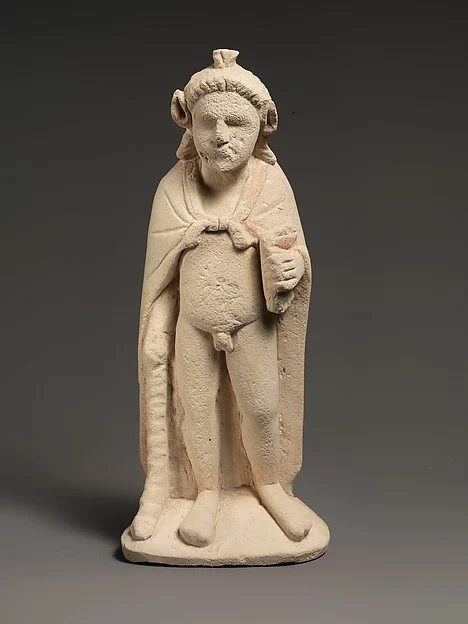
A Hellenistic Cypriot statuette with pipes and a shepherd’s crook, third century BCE. The Met identifies it as Pan or Opaon Melanthios, a Cypriot deity associated with rural life.
The Metropolitan Museum of Art. The Cesnola Collection, Purchased by subscription, 1874–76. 74.51.2735. · Image source ↗ · CC0
See references (2)
Pan in The Goat-Foot God
In The Goat-Foot God, Dion Fortune gives Hugh Paston two ways to understand his invocation. He has released impulses he used to hold back, which he calls the Pan within. He also believes he may have called on the Great God Pan, a force beyond himself. [4][5]
Mona imagines a boat passing through rocks. Pan holds out his shepherd’s crook and shows her where to steer. Wild creatures gather beneath it. At breakfast, her song treats grain, milk and honey as both gifts from Pan and offerings to him. [6][7][8][9]
Pan and Helios in the grove
In the grove at the end of the novel, Hugh associates the god he seeks with Helios at dawn and with Zeus. He understands the three as forms of the All-Father. The appended invocation gives the last word to a priestess who speaks of Pan as life-giving and fearsome. [10][11][12][13]
Pipes, crook and the god’s rural setting
The hymn follows the sound of Pan’s pipes among the hills. Fortune gives Mona the crook as a sign of protection and a guide through treacherous water. The novel gives a shepherd’s tool a new role in a modern character’s vision. [1][6][7]
The Cypriot statuette holds pipes and a crook and wears an animal skin. The Met identifies it as Pan or as Opaon Melanthios. The attributes suggest a god associated with rural life, while the identification remains open. [3]
Read further in the library
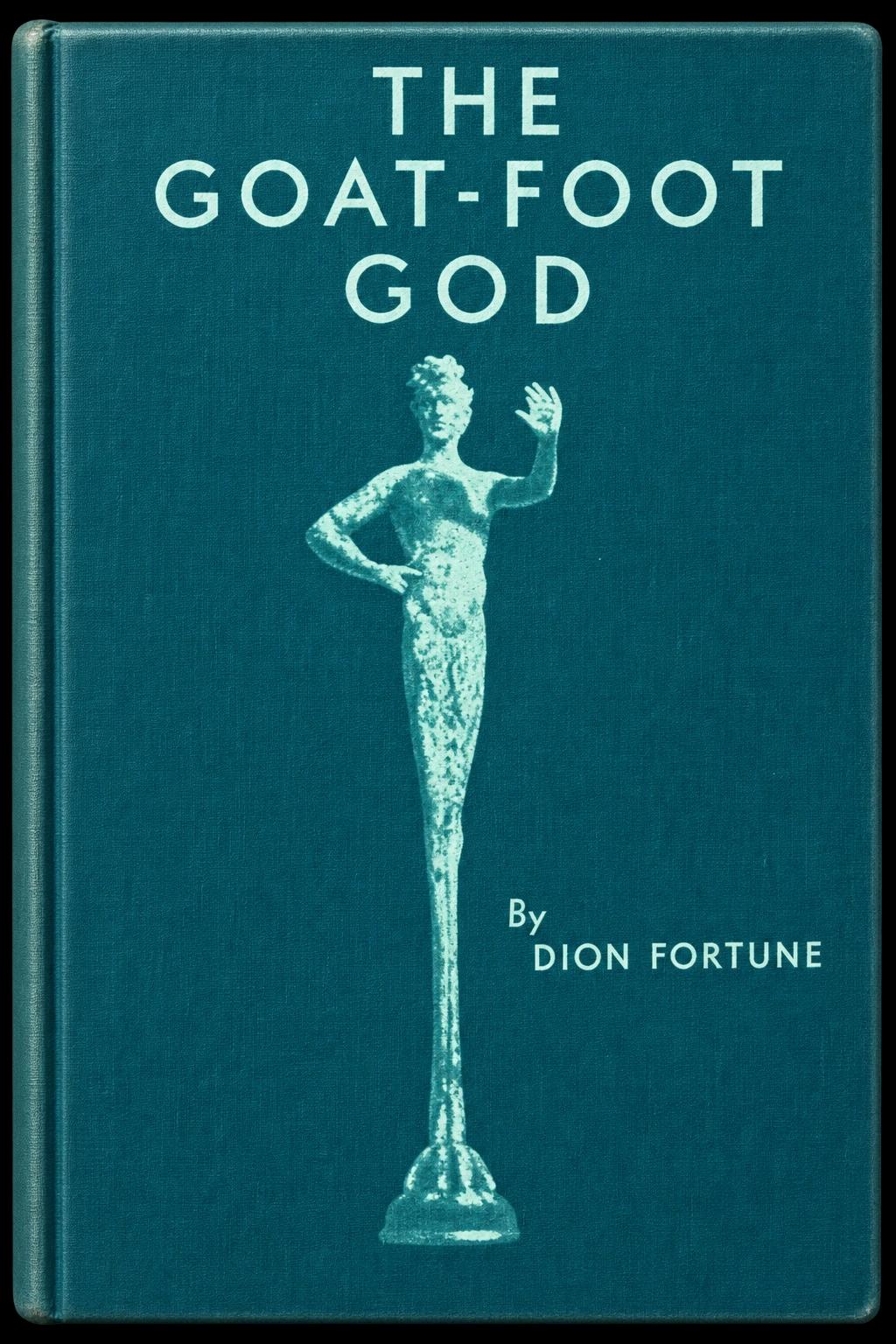
The Goat-Foot God
Reading note
The separately titled account draws on exact passages in the consulted Library edition.
Sources
See references (13)
- Homeric Hymn 19 to Pan, lines 1–49 ↗Anonymous, Homeric Hymn 19 to Pan, Hugh G. Evelyn-White translation (1914), Bibliotheca Polyglotta, University of Oslo.Return to text ↑
- Herodotus, Histories 6.105 ↗Herodotus, Histories, Book 6, chapter 105, G. C. Macaulay translation, Lexundria.Return to text ↑
- Limestone statuette of Pan or Opaon Melanthios ↗The Metropolitan Museum of Art. The Cesnola Collection, Purchased by subscription, 1874–76. 74.51.2735.Return to text ↑
- The Goat-Foot God, Reader page 237Dion Fortune, The Goat-Foot God. Undated digital Library edition IMJ-0643-E001. Numbered references use the Library Reader sequence.Read this page in The Goat-Foot God ↗Return to text ↑
- The Goat-Foot God, Reader page 238Dion Fortune, The Goat-Foot God. Undated digital Library edition IMJ-0643-E001. Numbered references use the Library Reader sequence.Read this page in The Goat-Foot God ↗Return to text ↑
- The Goat-Foot God, Reader page 273Dion Fortune, The Goat-Foot God. Undated digital Library edition IMJ-0643-E001. Numbered references use the Library Reader sequence.Read this page in The Goat-Foot God ↗Return to text ↑
- The Goat-Foot God, Reader page 274Dion Fortune, The Goat-Foot God. Undated digital Library edition IMJ-0643-E001. Numbered references use the Library Reader sequence.Read this page in The Goat-Foot God ↗Return to text ↑
- The Goat-Foot God, Reader page 331Dion Fortune, The Goat-Foot God. Undated digital Library edition IMJ-0643-E001. Numbered references use the Library Reader sequence.Read this page in The Goat-Foot God ↗Return to text ↑
- The Goat-Foot God, Reader page 332Dion Fortune, The Goat-Foot God. Undated digital Library edition IMJ-0643-E001. Numbered references use the Library Reader sequence.Read this page in The Goat-Foot God ↗Return to text ↑
- The Goat-Foot God, Reader page 351Dion Fortune, The Goat-Foot God. Undated digital Library edition IMJ-0643-E001. Numbered references use the Library Reader sequence.Read this page in The Goat-Foot God ↗Return to text ↑
- The Goat-Foot God, Reader page 352Dion Fortune, The Goat-Foot God. Undated digital Library edition IMJ-0643-E001. Numbered references use the Library Reader sequence.Read this page in The Goat-Foot God ↗Return to text ↑
- The Goat-Foot God, Reader page 353Dion Fortune, The Goat-Foot God. Undated digital Library edition IMJ-0643-E001. Numbered references use the Library Reader sequence.Read this page in The Goat-Foot God ↗Return to text ↑
- The Goat-Foot God, Reader page 355Dion Fortune, The Goat-Foot God. Undated digital Library edition IMJ-0643-E001. Numbered references use the Library Reader sequence.Read this page in The Goat-Foot God ↗Return to text ↑