Privacy of thought
Can thoughts stay private in an afterlife described through telepathy? Compare Dresser and Rafferty’s chosen communication with Swedenborg’s disclosure of memory.
In this article
Can thoughts remain private?
Privacy of thought is the ability to keep an inward life to oneself. In accounts of an afterlife with telepathy, the question is how much a person chooses to share. Some stories describe sending a thought on purpose. Others describe a memory or an action becoming visible to someone else. [2][3][4][5][6]
Life Here and Hereafter: Dresser and Rafferty
In Life Here and Hereafter, received through Charlotte E. Dresser and Fred Rafferty, the living questioners ask whether everyone can see what someone is thinking. The reply allows private and intimate thoughts. A listener who has received a lecture can withdraw and think it over without sending each reflection outward. [2][3][4]
The speakers describe thought as something they can direct and emphasize. Someone familiar may be recognizable by how they think, and a thought addressed to several people may need stronger emphasis to reach them all. [4][7]
Other scenes describe impressions being visible without a chosen message. Visitors say they read a living person’s thoughts in their aura, and the teacher of Mental Processes says some retained patterns can be seen. These scenes leave open how much a person can keep private in other circumstances. [5][6][4]
Heaven and Its Wonders and Hell by Emanuel Swedenborg
In Heaven and Its Wonders and Hell, Emanuel Swedenborg describes actions disclosed with their circumstances and intentions. The information is drawn from the person’s own inward memory. Disclosure makes the moral direction of a life visible within his account. [8][9][10][11]
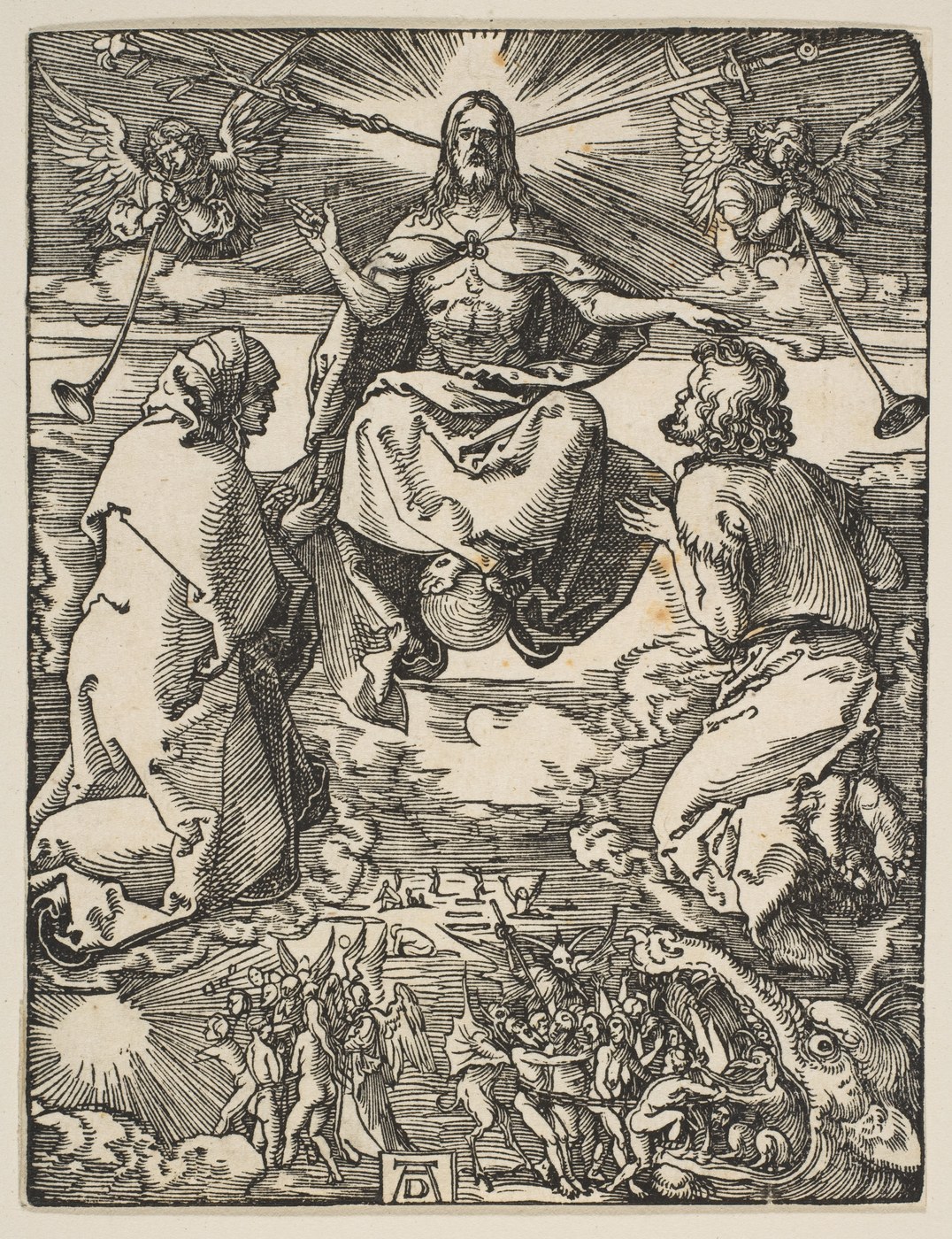
Albrecht Dürer, The Last Judgment from The Small Passion, ca. 1510. The woodcut gives Christian judgment a public scene of accountability.
The Metropolitan Museum of Art. Gift of Junius Spencer Morgan, 1919. Accession 19.73.206. Public Domain (CC0). · Image source ↗ · CC0
A private reflection and the disclosure of a life
Dresser and Rafferty’s example concerns whether someone has to broadcast their thinking while reflecting on a lecture. Swedenborg describes what an enduring memory can reveal about earlier actions. The first concerns everyday communication, and the second has a place in a religious account of accountability. [5][2][6][4][8][9][10][11]
See references (8)
- Life Here and Hereafter, Reader page 99
- Life Here and Hereafter, Reader page 258
- Life Here and Hereafter, Reader page 79
- Life Here and Hereafter, Reader page 246
- Heaven and Its Wonders and Hell, printed p. 401, Reader page 408
- Heaven and Its Wonders and Hell, printed p. 402, Reader page 409
- Heaven and Its Wonders and Hell, printed p. 403, Reader page 410
- Heaven and Its Wonders and Hell, printed p. 404, Reader page 411
Read further in the library

Life Here and Hereafter
Reading note
The separately titled account draws on exact passages in the consulted Library edition.

Heaven and Its Wonders and Hell
Reading note
Separately attributed comparison with exact previously researched Library passages.
Sources
See references (11)
- The Last Judgment, from "The Small Passion" ↗The Metropolitan Museum of Art; object record 19.73.206
- Life Here and Hereafter, Reader page 99Charlotte E. Dresser and Fred Rafferty, Life Here and Hereafter, edited by Fred Rafferty. Modern transcription reproducing the Author’s Edition, San Jose, California, 1927. Exact selected Library edition IMJ-0447-E001; original PageIDs and current Reader positions verified. Communications and their claimed spiritual origins remain attributed to this source.Read this page in Life Here and Hereafter ↗Return to text ↑
- Life Here and Hereafter, Reader page 257Charlotte E. Dresser and Fred Rafferty, Life Here and Hereafter, edited by Fred Rafferty. Modern transcription reproducing the Author’s Edition, San Jose, California, 1927. Exact selected Library edition IMJ-0447-E001; original PageIDs and current Reader positions verified. Communications and their claimed spiritual origins remain attributed to this source.Read this page in Life Here and Hereafter ↗Return to text ↑
- Life Here and Hereafter, Reader page 258Charlotte E. Dresser and Fred Rafferty, Life Here and Hereafter, edited by Fred Rafferty. Modern transcription reproducing the Author’s Edition, San Jose, California, 1927. Exact selected Library edition IMJ-0447-E001; original PageIDs and current Reader positions verified. Communications and their claimed spiritual origins remain attributed to this source.Read this page in Life Here and Hereafter ↗Return to text ↑
- Life Here and Hereafter, Reader page 79Charlotte E. Dresser and Fred Rafferty, Life Here and Hereafter, edited by Fred Rafferty. Modern transcription reproducing the Author’s Edition, San Jose, California, 1927. Exact selected Library edition IMJ-0447-E001; original PageIDs and current Reader positions verified. Communications and their claimed spiritual origins remain attributed to this source.Read this page in Life Here and Hereafter ↗Return to text ↑
- Life Here and Hereafter, Reader page 246Charlotte E. Dresser and Fred Rafferty, Life Here and Hereafter, edited by Fred Rafferty. Modern transcription reproducing the Author’s Edition, San Jose, California, 1927. Exact selected Library edition IMJ-0447-E001; original PageIDs and current Reader positions verified. Communications and their claimed spiritual origins remain attributed to this source.Read this page in Life Here and Hereafter ↗Return to text ↑
- Life Here and Hereafter, Reader page 259Charlotte E. Dresser and Fred Rafferty, Life Here and Hereafter, edited by Fred Rafferty. Modern transcription reproducing the Author’s Edition, San Jose, California, 1927. Exact selected Library edition IMJ-0447-E001; original PageIDs and current Reader positions verified. Communications and their claimed spiritual origins remain attributed to this source.Read this page in Life Here and Hereafter ↗Return to text ↑
- Heaven and Its Wonders and Hell, printed p. 401, Reader page 408Emanuel Swedenborg, Heaven and Its Wonders and Hell, From Things Heard and Seen, translated by J. C. Ager. American Swedenborg Printing and Publishing Society, New York, 1916. Latin original first published in 1758. Numbered sections and exact pages refer to this consulted edition. Claims of spiritual experience remain attributed.Read this page in Heaven and Its Wonders and Hell ↗Return to text ↑
- Heaven and Its Wonders and Hell, printed p. 402, Reader page 409Emanuel Swedenborg, Heaven and Its Wonders and Hell, From Things Heard and Seen, translated by J. C. Ager. American Swedenborg Printing and Publishing Society, New York, 1916. Latin original first published in 1758. Numbered sections and exact pages refer to this consulted edition. Claims of spiritual experience remain attributed.Read this page in Heaven and Its Wonders and Hell ↗Return to text ↑
- Heaven and Its Wonders and Hell, printed p. 403, Reader page 410Emanuel Swedenborg, Heaven and Its Wonders and Hell, From Things Heard and Seen, translated by J. C. Ager. American Swedenborg Printing and Publishing Society, New York, 1916. Latin original first published in 1758. Numbered sections and exact pages refer to this consulted edition. Claims of spiritual experience remain attributed.Read this page in Heaven and Its Wonders and Hell ↗Return to text ↑
- Heaven and Its Wonders and Hell, printed p. 404, Reader page 411Emanuel Swedenborg, Heaven and Its Wonders and Hell, From Things Heard and Seen, translated by J. C. Ager. American Swedenborg Printing and Publishing Society, New York, 1916. Latin original first published in 1758. Numbered sections and exact pages refer to this consulted edition. Claims of spiritual experience remain attributed.Read this page in Heaven and Its Wonders and Hell ↗Return to text ↑