Pō
Pō can mean night, ancestral darkness or a realm of gods and the dead in Hawaiian traditions. See its uses in the Kumulipo and Kalākaua.
In this article
What does pō mean?
Pō is the Hawaiian word for night or darkness. In chants and stories, it can name the darkness from which life begins or a realm of the gods and the dead. Its meaning depends on what the passage describes. [1][2][4]
In the Kumulipo, the darkness of the opening is where births begin. The first living things named in Queen Liliʻuokalani’s English translation include coral. [2]
The First Era of the Kumulipo, translated by Liliʻuokalani
In Queen Liliʻuokalani’s 1897 translation of the First Era of the Kumulipo, night itself is born as the sky and earth change. The verses then name births in the sea, including coral, and pair some of them with births on land. The pairs continue through successive generations. [2]
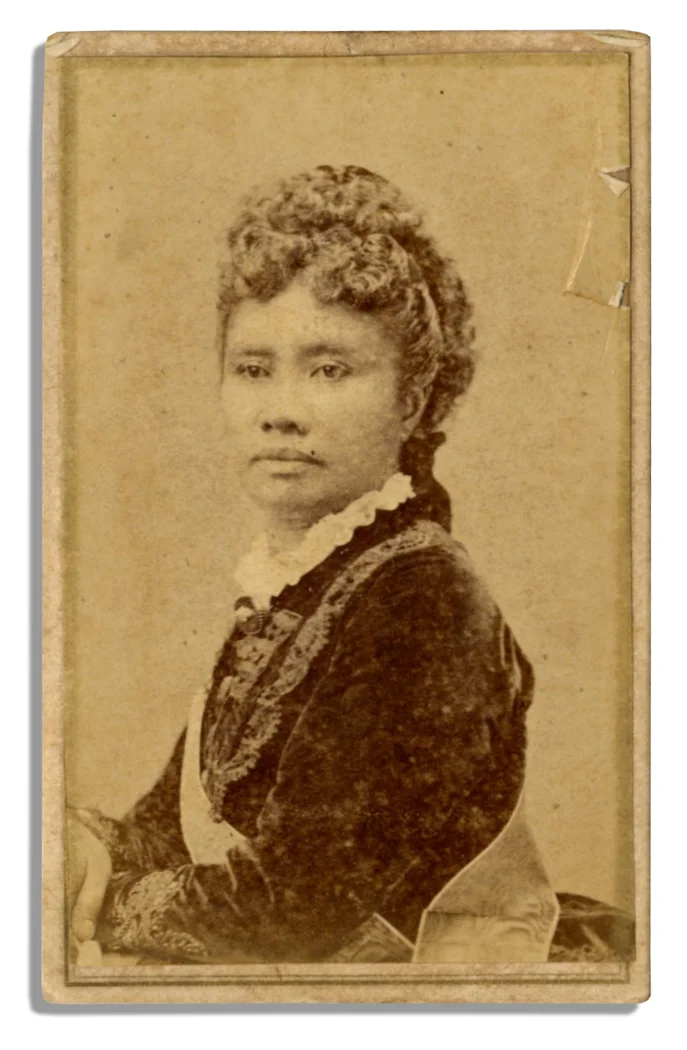
Liliʻuokalani, photographed by Menzies Dickson. Her English translation of the Kumulipo was published in 1897.
Menzies Dickson, nineteenth-century carte de visite of Liliʻuokalani, via Wikimedia Commons. · Image source ↗ · Public Domain
The Legends and Myths of Hawaii by David Kalākaua
In the introduction to David Kalākaua’s volume, Rollin Mallory Daggett reproduces a chant addressing the akua of the great night. Elsewhere the introduction describes Pō as a realm of the dead and records Milu and Manua as possible rulers in different accounts. [5][6][4]
In the Hāʻupu episode, the farthest reaches of Pō are a measure of the darkness of a storm. In Hiʻiaka’s descent, Pō is a place she can enter to ask Milu if Lohiʻau’s spirit has arrived. [7][8]
The darkness of origins and the realm of Milu
The Kumulipo describes life beginning in darkness through a series of births. In the Lohiʻau story, the realm of the dead has a ruler who can answer a visitor. The context tells us whether Pō is the setting of a genealogy or a place reached on a journey. [8][2][1]
Read further in the library
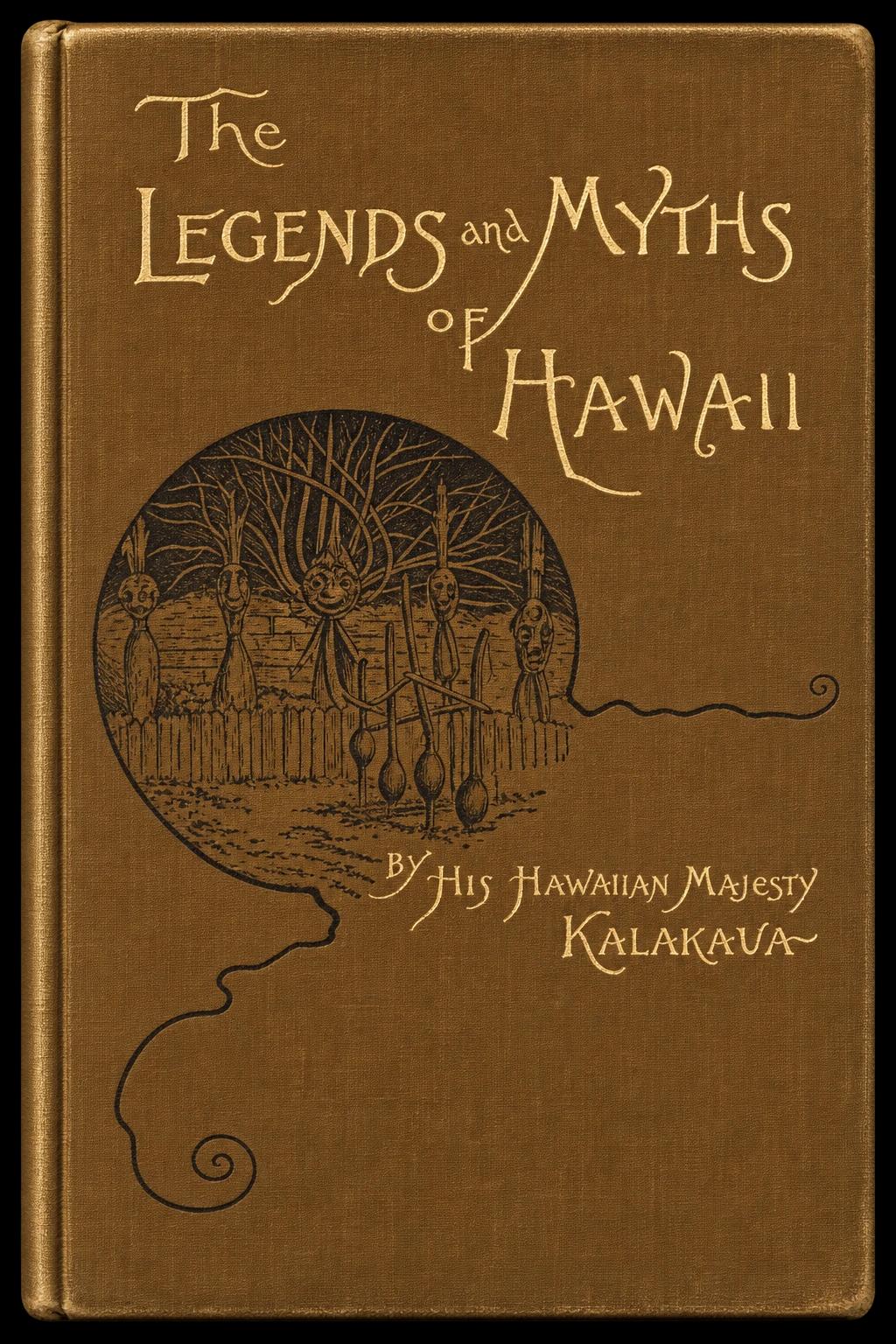
The Legends and Myths of Hawaii
Reading note
The separately titled account draws on exact passages in the consulted Library edition.
Sources
See references (8)
- Pō in the Hawaiian Dictionary ↗Mary Kawena Pukui and Samuel H. Elbert, Hawaiian Dictionary, revised edition, University of Hawaiʻi Press, 1986, via Wehewehe Wikiwiki.Return to text ↑
- The Kumulipo, Queen Liliʻuokalani’s 1897 translation, First Era, printed pp. 1–2 ↗Queen Liliʻuokalani’s English translation of the Kumulipo, published in 1897, “The First Era.”Return to text ↑
- Liliʻuokalani, photographed by Menzies Dickson ↗Menzies Dickson, nineteenth-century carte de visite of Liliʻuokalani, via Wikimedia Commons.
- The Legends and Myths of Hawaii, Reader page 40David Kalākaua, The Legends and Myths of Hawaii, edited with an introduction by Rollin Mallory Daggett, Charles L. Webster & Company, 1888. Exact Library edition IMJ-0646-E001. When the introduction or a signed editorial passage is used, its author is identified in the article.Read this page in The Legends and Myths of Hawaii ↗Return to text ↑
- The Legends and Myths of Hawaii, Reader page 36David Kalākaua, The Legends and Myths of Hawaii, edited with an introduction by Rollin Mallory Daggett, Charles L. Webster & Company, 1888. Exact Library edition IMJ-0646-E001. When the introduction or a signed editorial passage is used, its author is identified in the article.Read this page in The Legends and Myths of Hawaii ↗Return to text ↑
- The Legends and Myths of Hawaii, Reader page 37David Kalākaua, The Legends and Myths of Hawaii, edited with an introduction by Rollin Mallory Daggett, Charles L. Webster & Company, 1888. Exact Library edition IMJ-0646-E001. When the introduction or a signed editorial passage is used, its author is identified in the article.Read this page in The Legends and Myths of Hawaii ↗Return to text ↑
- The Legends and Myths of Hawaii, Reader page 96David Kalākaua, The Legends and Myths of Hawaii, edited with an introduction by Rollin Mallory Daggett, Charles L. Webster & Company, 1888. Exact Library edition IMJ-0646-E001. When the introduction or a signed editorial passage is used, its author is identified in the article.Read this page in The Legends and Myths of Hawaii ↗Return to text ↑
- The Legends and Myths of Hawaii, Reader page 496David Kalākaua, The Legends and Myths of Hawaii, edited with an introduction by Rollin Mallory Daggett, Charles L. Webster & Company, 1888. Exact Library edition IMJ-0646-E001. When the introduction or a signed editorial passage is used, its author is identified in the article.Read this page in The Legends and Myths of Hawaii ↗Return to text ↑