Hawaiian genealogical chants
Hawaiian genealogical chants carry descent, place and chiefly standing in performed verse. Explore the Kumulipo and Kamahualele’s chant.
In this article
How a mele koʻihonua carries descent
A mele koʻihonua is a Hawaiian genealogical chant. It records relationships across generations in words meant to be voiced and remembered. A chiefly chant can trace descent through human ancestors, gods and the births of other living things. [1][3][2]
Koʻihonua is one of several forms of chant listed by Kahoʻiwai. A mele inoa honours someone through a name. Genealogy can establish a chief’s standing, while a name chant can praise that person through deeds, places and personal allusions. [1][6][7]
Genealogy in the Kumulipo, translated by Liliʻuokalani
Queen Liliʻuokalani introduces the Kumulipo in her 1897 English translation as a chant connected with the birth and ancestry of a high chief. The First Era starts in Pō, before human generations, and names births in sea and on land. Later generations carry the genealogy forward to the chiefly line. [2][3]
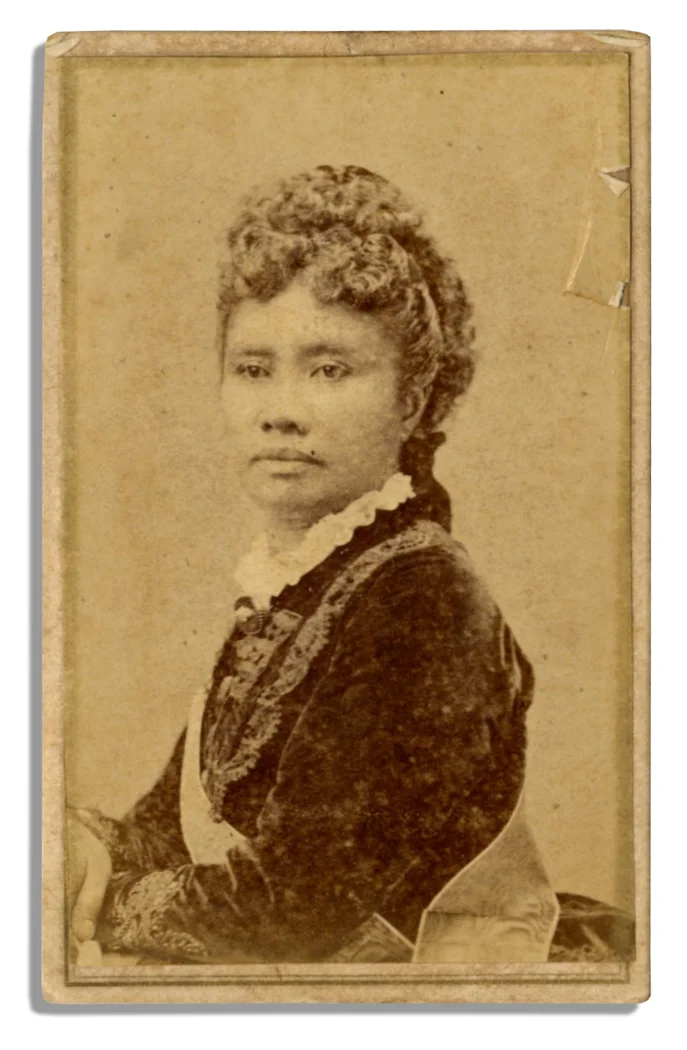
Liliʻuokalani, photographed by Menzies Dickson. Her 1897 translation is one way the Kumulipo reached readers in English.
Menzies Dickson, nineteenth-century carte de visite of Liliʻuokalani, via Wikimedia Commons. · Image source ↗ · Public Domain
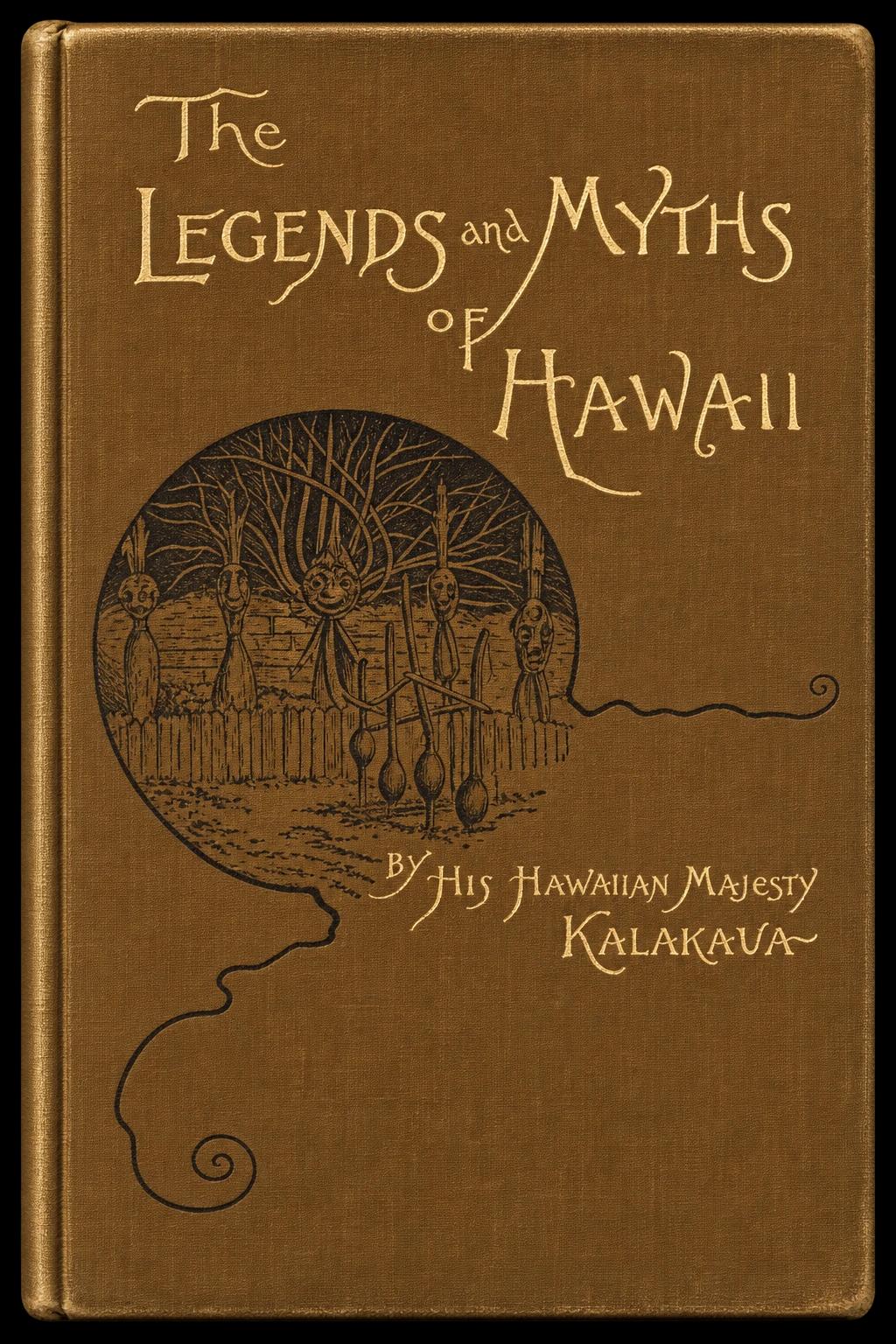
The Legends and Myths of Hawaii by David Kalākaua
In his introduction to David Kalākaua’s volume, Rollin Mallory Daggett describes specialists who kept chiefly genealogies. He recounts that chiefs presented their genealogies publicly to establish their claims to rank. [8][6][9]
When Moʻikeha’s party sights Hawaiʻi, Kamahualele greets the land in chant. The chapter prints verses in which Hawaiʻi rises out of Pō and other islands are born to named parents. [10][11][12]
See references (6)
Genealogy at landfall and in performance
In the voyaging chapter, Kamahualele marks an arrival by reciting where the land comes from. In the Kumulipo, successive births place a chiefly line in the wider history of life. In September 2025, five hālau performed the full Kumulipo at ʻIolani Palace in honour of Liliʻuokalani. [10][11][3][2][4][13]
See references (6)
- The Kumulipo, introduction to the 1897 translation
- The Kumulipo, Queen Liliʻuokalani’s 1897 translation, First Era, printed pp. 1–2
- Kumulipo performance at ʻIolani Palace
- The Legends and Myths of Hawaii, Reader page 126
- The Legends and Myths of Hawaii, Reader page 127
- Hālau perform all 2,102 lines of the Kumulipo at ʻIolani Palace
Read further in the library
The Legends and Myths of Hawaii
Reading note
The separately titled account draws on exact passages in the consulted Library edition.
Sources
See references (13)
- Oli in Kahoʻiwai ↗Kahoʻiwai, University of Hawaiʻi, Hawaiian and English discussion of oli and kinds of mele.Return to text ↑
- The Kumulipo, introduction to the 1897 translation ↗Queen Liliʻuokalani’s introduction to her 1897 English translation of the Kumulipo.Return to text ↑
- The Kumulipo, Queen Liliʻuokalani’s 1897 translation, First Era, printed pp. 1–2 ↗Queen Liliʻuokalani’s English translation of the Kumulipo, published in 1897, “The First Era.”Return to text ↑
- Kumulipo performance at ʻIolani Palace ↗University of Hawaiʻi, 2025 account of a planned Kumulipo performance with kumu and haumāna.Return to text ↑
- Liliʻuokalani, photographed by Menzies Dickson ↗Menzies Dickson, nineteenth-century carte de visite of Liliʻuokalani, via Wikimedia Commons.
- The Legends and Myths of Hawaii, Reader page 23David Kalākaua, The Legends and Myths of Hawaii, edited with an introduction by Rollin Mallory Daggett, Charles L. Webster & Company, 1888. Exact Library edition IMJ-0646-E001. When the introduction or a signed editorial passage is used, its author is identified in the article.Read this page in The Legends and Myths of Hawaii ↗Return to text ↑
- The Legends and Myths of Hawaii, Reader page 204David Kalākaua, The Legends and Myths of Hawaii, edited with an introduction by Rollin Mallory Daggett, Charles L. Webster & Company, 1888. Exact Library edition IMJ-0646-E001. When the introduction or a signed editorial passage is used, its author is identified in the article.Read this page in The Legends and Myths of Hawaii ↗Return to text ↑
- The Legends and Myths of Hawaii, Reader page 22David Kalākaua, The Legends and Myths of Hawaii, edited with an introduction by Rollin Mallory Daggett, Charles L. Webster & Company, 1888. Exact Library edition IMJ-0646-E001. When the introduction or a signed editorial passage is used, its author is identified in the article.Read this page in The Legends and Myths of Hawaii ↗Return to text ↑
- The Legends and Myths of Hawaii, Reader page 24David Kalākaua, The Legends and Myths of Hawaii, edited with an introduction by Rollin Mallory Daggett, Charles L. Webster & Company, 1888. Exact Library edition IMJ-0646-E001. When the introduction or a signed editorial passage is used, its author is identified in the article.Read this page in The Legends and Myths of Hawaii ↗Return to text ↑
- The Legends and Myths of Hawaii, Reader page 126David Kalākaua, The Legends and Myths of Hawaii, edited with an introduction by Rollin Mallory Daggett, Charles L. Webster & Company, 1888. Exact Library edition IMJ-0646-E001. When the introduction or a signed editorial passage is used, its author is identified in the article.Read this page in The Legends and Myths of Hawaii ↗Return to text ↑
- The Legends and Myths of Hawaii, Reader page 127David Kalākaua, The Legends and Myths of Hawaii, edited with an introduction by Rollin Mallory Daggett, Charles L. Webster & Company, 1888. Exact Library edition IMJ-0646-E001. When the introduction or a signed editorial passage is used, its author is identified in the article.Read this page in The Legends and Myths of Hawaii ↗Return to text ↑
- The Legends and Myths of Hawaii, Reader page 128David Kalākaua, The Legends and Myths of Hawaii, edited with an introduction by Rollin Mallory Daggett, Charles L. Webster & Company, 1888. Exact Library edition IMJ-0646-E001. When the introduction or a signed editorial passage is used, its author is identified in the article.Read this page in The Legends and Myths of Hawaii ↗Return to text ↑
- Hālau perform all 2,102 lines of the Kumulipo at ʻIolani Palace ↗Hawaiʻi Public RadioReturn to text ↑