Ouroboros
The ouroboros is a serpent with its tail in its mouth. See an ancient carved charm and Freeman Benjamin Dowd’s later reading of the serpent as a circle of change.
In this article
What is an ouroboros?
An ouroboros is a serpent shown with its tail in its mouth. Its body closes into a circle, which can suggest enclosure, continuity or return. On an ancient carved stone it surrounds an invocation. In a nineteenth-century esoteric reading published in 1900, it becomes an image of the soul and the changing body. [1][2][3]
Ancient carved gems
On a carnelian intaglio in the Walters Art Museum, the serpent curves around three ring signs and an inscription. The stone dates to the third through sixth centuries. One line invokes Iao as lord of all, and the other contains seven vowels. Here the serpent encloses specific words and signs, so reading the image involves more than identifying its circular shape. [1]
A gem in the Getty Museum, dated about 100–250 CE, uses the same enclosing form around a different scene. A serpent circles figures the museum identifies as Chnoubis, Isis and Nephthys. The two stones show the ouroboros framing different combinations of words, figures and signs. [12]
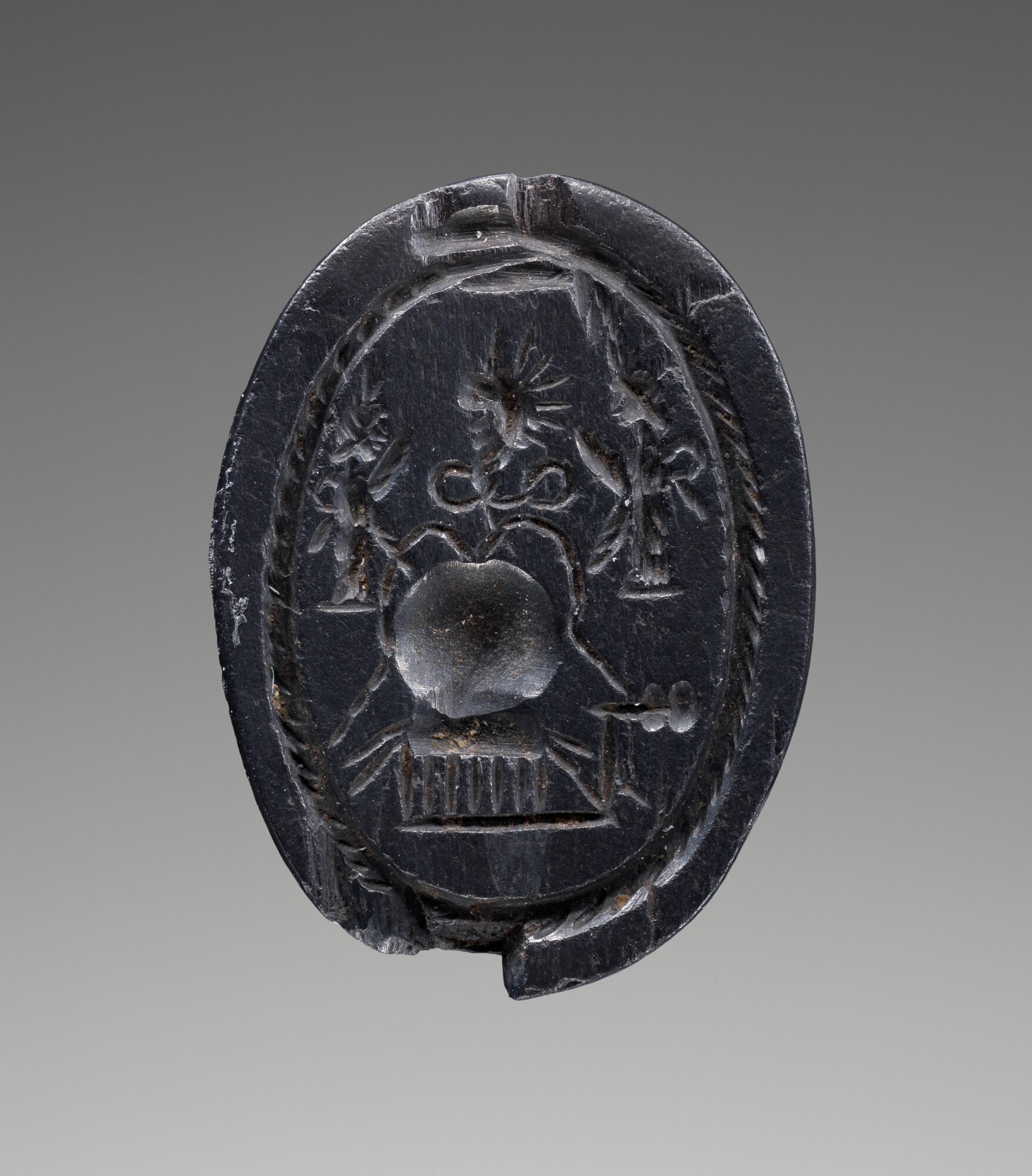
Magical Gem, about 100–250 CE, J. Paul Getty Museum. The serpent frames Chnoubis, Isis and Nephthys.
J. Paul Getty Museum. Public-domain image distributed by The Last Museum. · Image source ↗ · Public Domain
Evolution of Immortality
Freeman Benjamin Dowd, writing as Rosicruciæ in Evolution of Immortality, proposed that the ouroboros was inspired by the curved shape of an embryo at about a month. He builds his reading of the symbol around that resemblance. The carved gems above record the symbol’s use in ancient settings. Dowd’s proposed origin comes from his own reading of the resemblance. [2][4][3]
Two embryological illustrations and a description credited to Louis Crusius give Dowd a visual analogy. He reads the curved shape as the body circling the soul, then uses the enclosing outline to imagine time and consciousness without beginning or end. [5][4][3][6]
The serpent also represents forces that dissolve existing forms and make change possible. The author contrasts a stable centre with an increasingly turbulent circumference. The same force can appear destructive or ordered according to its expression. His interpretation moves from the visible circle towards a moral and metaphysical model of the person. [7][8]
The ego’s return to the circle represents a union with the whole. Dowd brings in the rod of Moses and a Christ-spirit that can pass beyond ordinary limits. The circle has become a way of explaining what he believes the person can become. [9][10][11]
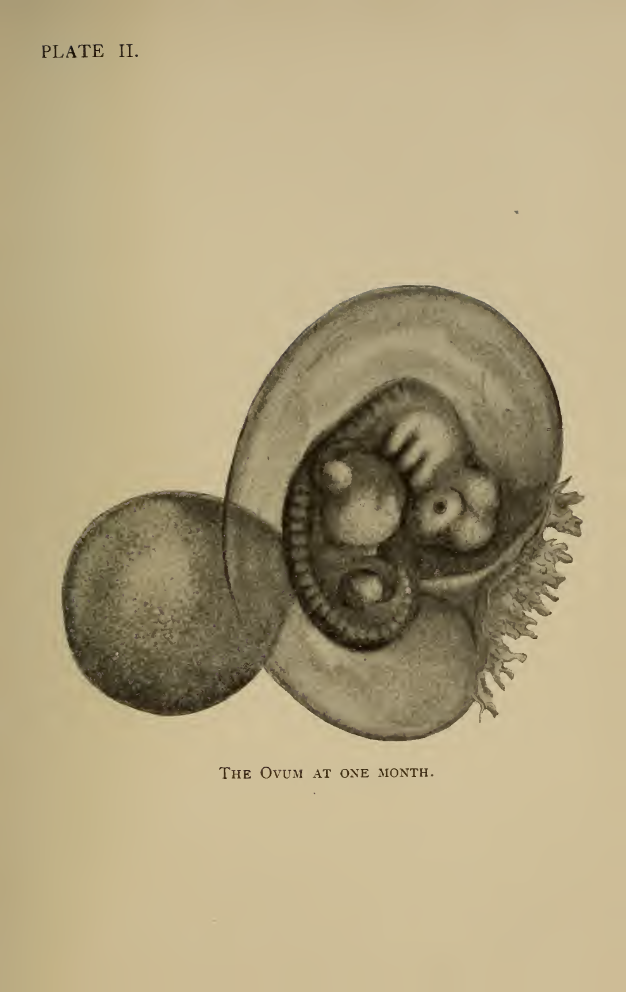
Plate II, The Ovum at One Month, Evolution of Immortality (1900). Dowd uses the curved figure as a visual analogy for the tail-biting serpent.
Evolution of Immortality, Eulian Publishing Company, Salem, 1900. Library of Congress copy digitised by the Internet Archive. Public domain historical publication. · Image source ↗ · Public Domain
See references (10)
- Evolution of Immortality, printed p. 108, Reader page 105
- Evolution of Immortality, printed p. 112, Reader page 110
- Evolution of Immortality, printed p. 111, Reader page 109
- Evolution of Immortality, Plate I, Reader page 108
- Evolution of Immortality, Plate II, Reader page 111
- Evolution of Immortality, printed p. 109, Reader page 106
- Evolution of Immortality, printed p. 110, Reader page 107
- Evolution of Immortality, printed p. 113, Reader page 112
- Evolution of Immortality, printed p. 114, Reader page 113
- Evolution of Immortality, printed p. 115, Reader page 114
Read further in the library
Evolution of Immortality
Reading note
The Wisdom of the Serpent interprets circular form, time and transformation through scripture and historical embryological illustrations.
Sources
See references (13)
- Intaglio with an Ouroboros and Three Ring Signs, 3rd–6th century, Walters Art Museum 42.875 ↗The Walters Art Museum, object 42.875. Anonymous artist; brown mottled carnelian. Museum purchase, 1942.Return to text ↑
- Evolution of Immortality, printed p. 108, Reader page 105Rosicruciæ (catalogued as Freeman Benjamin Dowd), Evolution of Immortality. Eulian Publishing Company, Salem, 1900.Read this page in Evolution of Immortality ↗Return to text ↑
- Evolution of Immortality, printed p. 112, Reader page 110Rosicruciæ (catalogued as Freeman Benjamin Dowd), Evolution of Immortality. Eulian Publishing Company, Salem, 1900.Read this page in Evolution of Immortality ↗Return to text ↑
- Evolution of Immortality, printed p. 111, Reader page 109Rosicruciæ (catalogued as Freeman Benjamin Dowd), Evolution of Immortality. Eulian Publishing Company, Salem, 1900.Read this page in Evolution of Immortality ↗Return to text ↑
- Evolution of Immortality, Plate I, Reader page 108Rosicruciæ (catalogued as Freeman Benjamin Dowd), Evolution of Immortality. Eulian Publishing Company, Salem, 1900.Read this page in Evolution of Immortality ↗Return to text ↑
- Evolution of Immortality, Plate II, Reader page 111Rosicruciæ (catalogued as Freeman Benjamin Dowd), Evolution of Immortality. Eulian Publishing Company, Salem, 1900.Read this page in Evolution of Immortality ↗Return to text ↑
- Evolution of Immortality, printed p. 109, Reader page 106Rosicruciæ (catalogued as Freeman Benjamin Dowd), Evolution of Immortality. Eulian Publishing Company, Salem, 1900.Read this page in Evolution of Immortality ↗Return to text ↑
- Evolution of Immortality, printed p. 110, Reader page 107Rosicruciæ (catalogued as Freeman Benjamin Dowd), Evolution of Immortality. Eulian Publishing Company, Salem, 1900.Read this page in Evolution of Immortality ↗Return to text ↑
- Evolution of Immortality, printed p. 113, Reader page 112Rosicruciæ (catalogued as Freeman Benjamin Dowd), Evolution of Immortality. Eulian Publishing Company, Salem, 1900.Read this page in Evolution of Immortality ↗Return to text ↑
- Evolution of Immortality, printed p. 114, Reader page 113Rosicruciæ (catalogued as Freeman Benjamin Dowd), Evolution of Immortality. Eulian Publishing Company, Salem, 1900.Read this page in Evolution of Immortality ↗Return to text ↑
- Evolution of Immortality, printed p. 115, Reader page 114Rosicruciæ (catalogued as Freeman Benjamin Dowd), Evolution of Immortality. Eulian Publishing Company, Salem, 1900.Read this page in Evolution of Immortality ↗Return to text ↑
- Magical Gem, about 100–250 CE, J. Paul Getty Museum ↗J. Paul Getty Museum. Public-domain image distributed by The Last Museum.Return to text ↑
- Magical Gem image and public-domain statement ↗J. Paul Getty Museum image listing via The Last Museum.