Ofuda
Ofuda are Japanese sacred tokens bearing writing or imagery. Learn how they are venerated at home and how Hearn uses them in the Peony Lantern story.
In this article
What is an ofuda?
An ofuda is a Japanese sacred token bearing writing or imagery, often on paper or wood. Shrines and temples issue them for purposes including veneration and protection. An ofuda may be placed at a household shrine or attached near an entrance. [3][1][4]
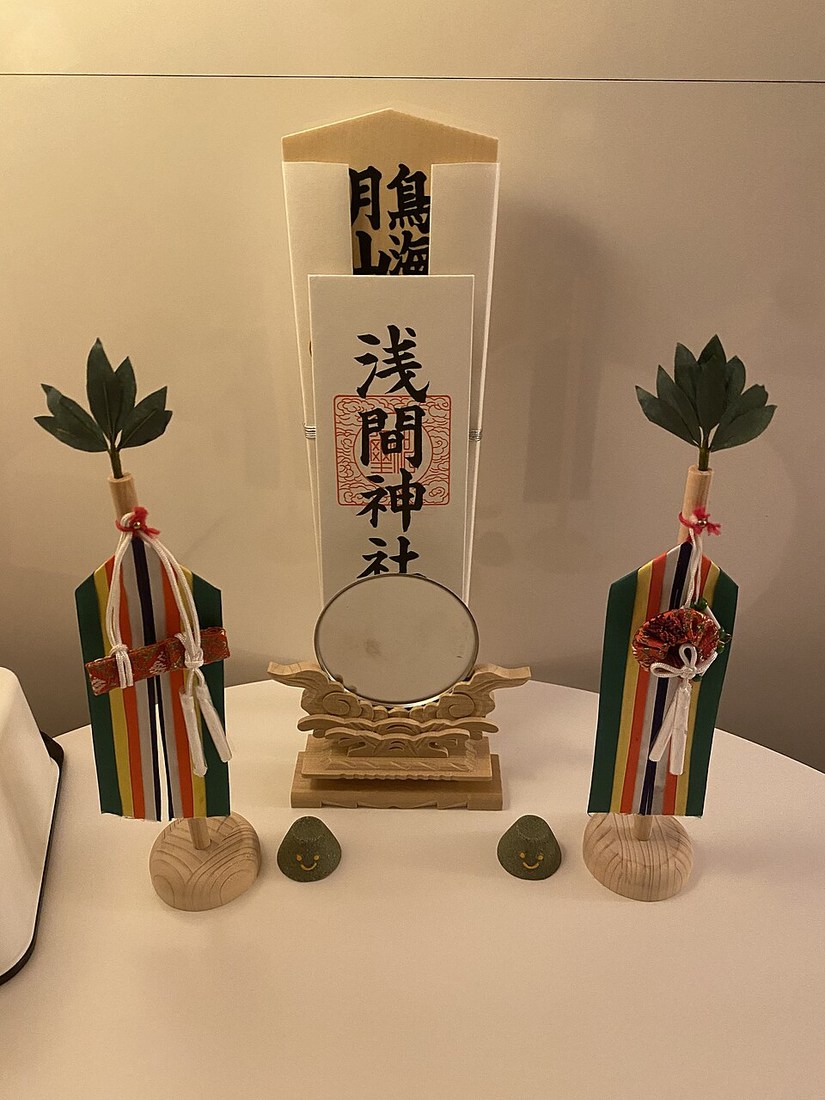
Inscribed ofuda in a contemporary arrangement, photographed by Immanuelle in 2024.
Photograph by Immanuelle, via Wikimedia Commons, CC BY 4.0. Resized and converted to JPEG. · Image source ↗ · CC BY 4.0
Ofuda in Himeji Jinja’s account
Himeji Jinja describes its ofuda as representations of the kami for veneration at home. In the same guide, it describes omamori as amulets that can be carried for the support of the kami. Placement helps explain how each object is used. [1]
In Ghostly Japan by Lafcadio Hearn
In Lafcadio Hearn’s Peony Lantern tale, a priest gives Shinzaburō ofuda along with a small image and a scripture. Hearn’s note describes written or printed paper strips and inscriptions stamped or burned onto wood, with examples placed above doors, on walls and in household shrines. [5][6][3]
In the story the written tokens bar the visitors at the openings of the house. O-Yoné enlists the servant Tomozō to remove them and take away the protective image Shinzaburō wears. She treats the two protections as obstacles that must each be dealt with. [3][4][7][8]
The women enter after Tomozō removes the writing from a small window. Yūsai spots the gap while investigating Shinzaburō’s death. The missing strip helps him work out how the household’s defences were opened from within. [9][10][7][8]
A place for the sacred at home
Hearn’s story gives the strip of writing a protective job at each opening of the house. Himeji Jinja describes an object kept for continuing veneration. The same type of sacred token can have a different role in each account. [3][1][6][7][8]
Read further in the library
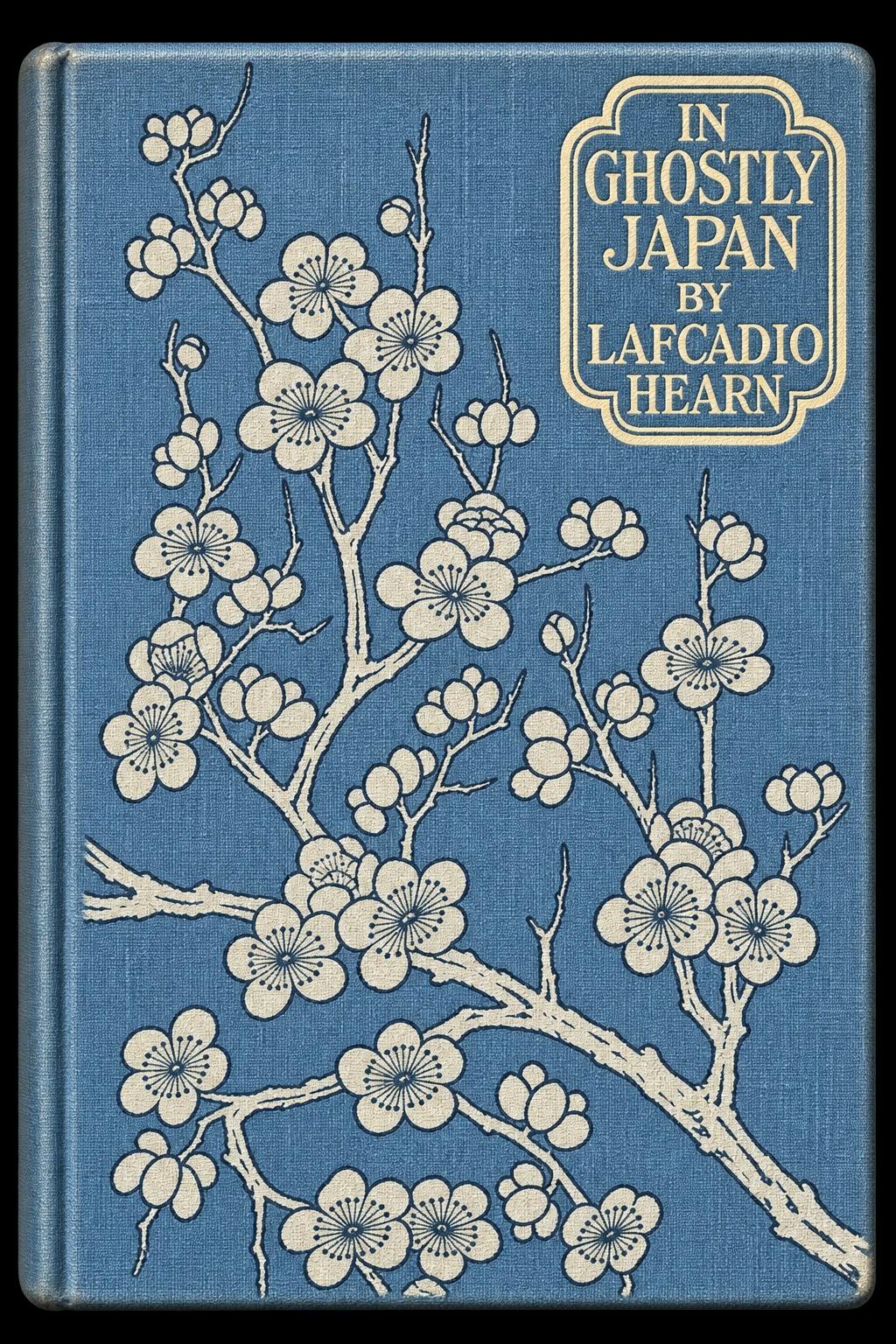
In Ghostly Japan
Reading note
The separately titled account draws on exact passages in the consulted Library edition.
Sources
See references (10)
- Himeji Jinja: Omamori, Goshuin, Ofuda ↗The shrine’s own explanation of portable amulets and home veneration, directly read. Descriptive comparison only; current prices and advice are not reproduced.Return to text ↑
- Immanuelle, Ofuda at hostel, 15 June 2024 ↗Photograph by Immanuelle, via Wikimedia Commons, CC BY 4.0. Resized and converted to JPEG.
- In Ghostly Japan, Reader page 97Lafcadio Hearn, In Ghostly Japan, Little, Brown, and Company, Boston, 1899. Exact consulted Library edition IMJ-0654-E001, with title page visually checked. Persistent PageIDs and current Reader positions are verified from the supplied edition. Embedded stories, translations and quotations are attributed to Hearn’s presentation unless an original source has separately been consulted.Read this page in In Ghostly Japan ↗Return to text ↑
- In Ghostly Japan, Reader page 98Lafcadio Hearn, In Ghostly Japan, Little, Brown, and Company, Boston, 1899. Exact consulted Library edition IMJ-0654-E001, with title page visually checked. Persistent PageIDs and current Reader positions are verified from the supplied edition. Embedded stories, translations and quotations are attributed to Hearn’s presentation unless an original source has separately been consulted.Read this page in In Ghostly Japan ↗Return to text ↑
- In Ghostly Japan, Reader page 95Lafcadio Hearn, In Ghostly Japan, Little, Brown, and Company, Boston, 1899. Exact consulted Library edition IMJ-0654-E001, with title page visually checked. Persistent PageIDs and current Reader positions are verified from the supplied edition. Embedded stories, translations and quotations are attributed to Hearn’s presentation unless an original source has separately been consulted.Read this page in In Ghostly Japan ↗Return to text ↑
- In Ghostly Japan, Reader page 96Lafcadio Hearn, In Ghostly Japan, Little, Brown, and Company, Boston, 1899. Exact consulted Library edition IMJ-0654-E001, with title page visually checked. Persistent PageIDs and current Reader positions are verified from the supplied edition. Embedded stories, translations and quotations are attributed to Hearn’s presentation unless an original source has separately been consulted.Read this page in In Ghostly Japan ↗Return to text ↑
- In Ghostly Japan, Reader page 105Lafcadio Hearn, In Ghostly Japan, Little, Brown, and Company, Boston, 1899. Exact consulted Library edition IMJ-0654-E001, with title page visually checked. Persistent PageIDs and current Reader positions are verified from the supplied edition. Embedded stories, translations and quotations are attributed to Hearn’s presentation unless an original source has separately been consulted.Read this page in In Ghostly Japan ↗Return to text ↑
- In Ghostly Japan, Reader page 106Lafcadio Hearn, In Ghostly Japan, Little, Brown, and Company, Boston, 1899. Exact consulted Library edition IMJ-0654-E001, with title page visually checked. Persistent PageIDs and current Reader positions are verified from the supplied edition. Embedded stories, translations and quotations are attributed to Hearn’s presentation unless an original source has separately been consulted.Read this page in In Ghostly Japan ↗Return to text ↑
- In Ghostly Japan, Reader page 107Lafcadio Hearn, In Ghostly Japan, Little, Brown, and Company, Boston, 1899. Exact consulted Library edition IMJ-0654-E001, with title page visually checked. Persistent PageIDs and current Reader positions are verified from the supplied edition. Embedded stories, translations and quotations are attributed to Hearn’s presentation unless an original source has separately been consulted.Read this page in In Ghostly Japan ↗Return to text ↑
- In Ghostly Japan, Reader page 108Lafcadio Hearn, In Ghostly Japan, Little, Brown, and Company, Boston, 1899. Exact consulted Library edition IMJ-0654-E001, with title page visually checked. Persistent PageIDs and current Reader positions are verified from the supplied edition. Embedded stories, translations and quotations are attributed to Hearn’s presentation unless an original source has separately been consulted.Read this page in In Ghostly Japan ↗Return to text ↑