Nagas
Nāgas are serpent beings in Hindu and Buddhist traditions. Read about the rulers of Patala, Bhima’s gift of strength and Muccalinda’s shelter for the Buddha.
In this article
What are nāgas?
Nāgas are serpent beings in Hindu and Buddhist stories and art. They can appear as snakes, as humans or with features of both. Some dwell near water or in hidden realms such as Patala. Named nāgas help, threaten or shelter others according to the story in which they appear. [4][5][1][6][7][8][9][2]
See references (8)
- Udana 2.1, Muccalinda Sutta, translated by Thanissaro Bhikkhu
- Bhagavata Purana 5.24.31, translated by A. C. Bhaktivedanta Swami Prabhupada
- Indian Myth and Legend, Reader page 131
- Indian Myth and Legend, Reader page 132
- Indian Myth and Legend, Reader page 262
- Indian Myth and Legend, Reader page 263
- Indian Myth and Legend, Reader page 443
- Indian Myth and Legend, Reader page 444
Muccalinda in Udana 2.1
In the Muccalinda Sutta (Udāna 2.1), translated by Thanissaro Bhikkhu, Muccalinda wraps his coils around the newly awakened Buddha and holds his hood over him during a seven-day storm. When the sky clears, he takes the form of a young man and pays homage. [1][12]
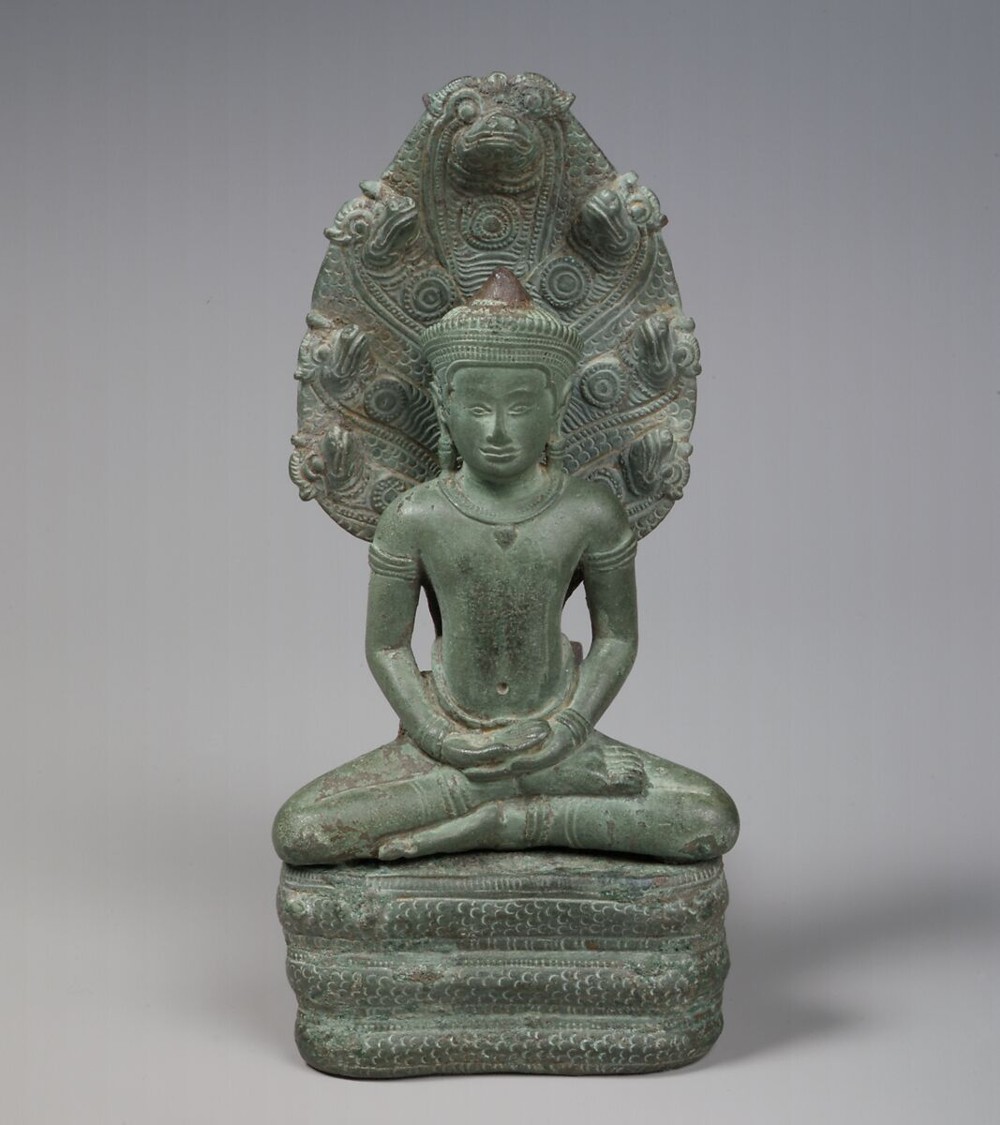
The Buddha sits on Muccalinda’s coils under the nāga’s sheltering hood in this twelfth-century Cambodian bronze.
The Metropolitan Museum of Art, Gift of Cynthia Hazen Polsky, 1987. Open Access. · Image source ↗ · CC0
Patala’s serpents in Bhagavata Purana 5.24.31
In A. C. Bhaktivedanta Swami Prabhupada’s translation of Bhāgavata Purāṇa 5.24.31, Vāsuki is one of several serpent rulers who live in Patala below Rasatala. The gems on their hoods light their surroundings. [2]
Indian Myth and Legend by Donald A. Mackenzie
In Indian Myth and Legend, Donald A. Mackenzie describes partly human, partly serpent inhabitants of the underworld. His introductory chapter links Shesha, Vasuki and Karkotaka, and associates them with Ravana. The Purāṇa and the individual stories here give the figures distinct names and roles. [4][5][8][9]
Duryodhana poisons Bhima and throws him into the Ganges. The nāgas’ bites counteract the poison in the story. After Bhima breaks free, their community receives him and gives him a draught of extraordinary strength. [6][7]
Ulupi seeks a jewel from the serpent realm that can revive Arjuna, and it takes a struggle to obtain it. A different nāga, Karkotaka, bites Nala and changes his appearance to conceal him from danger. [10][11][8][9]
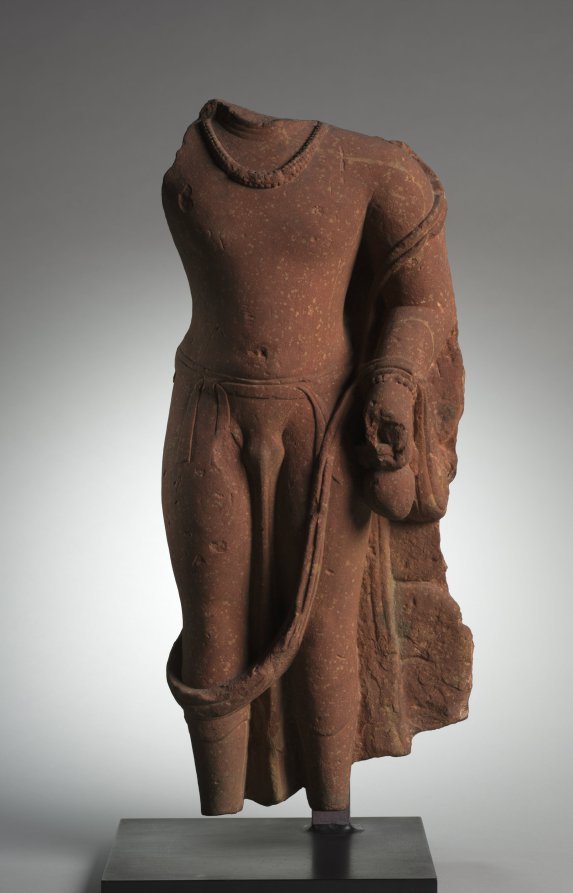
A fourth-century nāga from Mathura holds a small vessel. A serpent coil crosses the surviving part of the figure.
Cleveland Museum of Art, Purchase from the J. H. Wade Fund, 1943.661. Public domain image, CC0; resized and converted to JPEG. · Image source ↗ · CC0
See references (8)
- Indian Myth and Legend, Reader page 131
- Indian Myth and Legend, Reader page 132
- Indian Myth and Legend, Reader page 262
- Indian Myth and Legend, Reader page 263
- Indian Myth and Legend, Reader page 443
- Indian Myth and Legend, Reader page 444
- Indian Myth and Legend, Reader page 400
- Indian Myth and Legend, Reader page 401
Shelter, strength and concealment
Muccalinda’s shelter protects someone at rest. Bhima’s gift restores the strength his enemies tried to take away. Karkotaka uses a bite to protect Nala indirectly. The stories use serpent power to meet different needs. [7][9][1][4][2][6][10][11]
See references (8)
- Udana 2.1, Muccalinda Sutta, translated by Thanissaro Bhikkhu
- Bhagavata Purana 5.24.31, translated by A. C. Bhaktivedanta Swami Prabhupada
- Indian Myth and Legend, Reader page 131
- Indian Myth and Legend, Reader page 262
- Indian Myth and Legend, Reader page 263
- Indian Myth and Legend, Reader page 444
- Indian Myth and Legend, Reader page 400
- Indian Myth and Legend, Reader page 401
Read further in the library
Indian Myth and Legend
Reading note
The separately titled account draws on exact passages in the consulted Library edition.
Sources
See references (12)
- Udana 2.1, Muccalinda Sutta, translated by Thanissaro Bhikkhu ↗Complete short discourse directly read, including the seven-day storm, protective naga, human appearance and concluding verses. The episode is kept within its Buddhist setting.Return to text ↑
- Bhagavata Purana 5.24.31, translated by A. C. Bhaktivedanta Swami Prabhupada ↗Verse directly consulted for Vasuki and other named serpent inhabitants of Patala. The names are not treated as interchangeable identities.Return to text ↑
- Naga (Serpent Divinity), 300s CE ↗Cleveland Museum of Art, Purchase from the J. H. Wade Fund, 1943.661. Public domain image, CC0; resized and converted to JPEG.
- Indian Myth and Legend, Reader page 131Donald A. Mackenzie, Indian Myth and Legend, Gresham Publishing Company Limited, London, undated consulted impression. Library edition IMJ-0649-E001. Persistent PageIDs and current Reader positions verified against the supplied PDF and cached Reader manifest. Embedded translations are Mackenzie’s presentation unless a separately consulted primary text is named.Read this page in Indian Myth and Legend ↗Return to text ↑
- Indian Myth and Legend, Reader page 132Donald A. Mackenzie, Indian Myth and Legend, Gresham Publishing Company Limited, London, undated consulted impression. Library edition IMJ-0649-E001. Persistent PageIDs and current Reader positions verified against the supplied PDF and cached Reader manifest. Embedded translations are Mackenzie’s presentation unless a separately consulted primary text is named.Read this page in Indian Myth and Legend ↗Return to text ↑
- Indian Myth and Legend, Reader page 262Donald A. Mackenzie, Indian Myth and Legend, Gresham Publishing Company Limited, London, undated consulted impression. Library edition IMJ-0649-E001. Persistent PageIDs and current Reader positions verified against the supplied PDF and cached Reader manifest. Embedded translations are Mackenzie’s presentation unless a separately consulted primary text is named.Read this page in Indian Myth and Legend ↗Return to text ↑
- Indian Myth and Legend, Reader page 263Donald A. Mackenzie, Indian Myth and Legend, Gresham Publishing Company Limited, London, undated consulted impression. Library edition IMJ-0649-E001. Persistent PageIDs and current Reader positions verified against the supplied PDF and cached Reader manifest. Embedded translations are Mackenzie’s presentation unless a separately consulted primary text is named.Read this page in Indian Myth and Legend ↗Return to text ↑
- Indian Myth and Legend, Reader page 443Donald A. Mackenzie, Indian Myth and Legend, Gresham Publishing Company Limited, London, undated consulted impression. Library edition IMJ-0649-E001. Persistent PageIDs and current Reader positions verified against the supplied PDF and cached Reader manifest. Embedded translations are Mackenzie’s presentation unless a separately consulted primary text is named.Read this page in Indian Myth and Legend ↗Return to text ↑
- Indian Myth and Legend, Reader page 444Donald A. Mackenzie, Indian Myth and Legend, Gresham Publishing Company Limited, London, undated consulted impression. Library edition IMJ-0649-E001. Persistent PageIDs and current Reader positions verified against the supplied PDF and cached Reader manifest. Embedded translations are Mackenzie’s presentation unless a separately consulted primary text is named.Read this page in Indian Myth and Legend ↗Return to text ↑
- Indian Myth and Legend, Reader page 400Donald A. Mackenzie, Indian Myth and Legend, Gresham Publishing Company Limited, London, undated consulted impression. Library edition IMJ-0649-E001. Persistent PageIDs and current Reader positions verified against the supplied PDF and cached Reader manifest. Embedded translations are Mackenzie’s presentation unless a separately consulted primary text is named.Read this page in Indian Myth and Legend ↗Return to text ↑
- Indian Myth and Legend, Reader page 401Donald A. Mackenzie, Indian Myth and Legend, Gresham Publishing Company Limited, London, undated consulted impression. Library edition IMJ-0649-E001. Persistent PageIDs and current Reader positions verified against the supplied PDF and cached Reader manifest. Embedded translations are Mackenzie’s presentation unless a separately consulted primary text is named.Read this page in Indian Myth and Legend ↗Return to text ↑
- Buddha Sheltered by a Naga, Cambodia, 12th century, The Met 1987.424.19a, b ↗The Metropolitan Museum of Art, Gift of Cynthia Hazen Polsky, 1987. Open Access.Return to text ↑