Māui
Māui is a culture hero in Polynesian traditions. Explore the capture of the sun and how Hawaiian and Māori accounts give his deeds local settings.
In this article
Why does Māui slow the sun?
Māui is a hero of Polynesian oral traditions whose deeds change the conditions of daily life. In Hawaiʻi and Aotearoa, people tell of him slowing the sun to make the day last longer. In some Māori accounts, his fishing helps explain the shape and names of the islands. [1][2]
In one Hawaiian account, Māui catches the sun on Haleakalā so Hina has daylight to dry her kapa. In Māori tradition, Te Ika-a-Māui, the fish of Māui, is a name for the North Island of Aotearoa. [2][1]
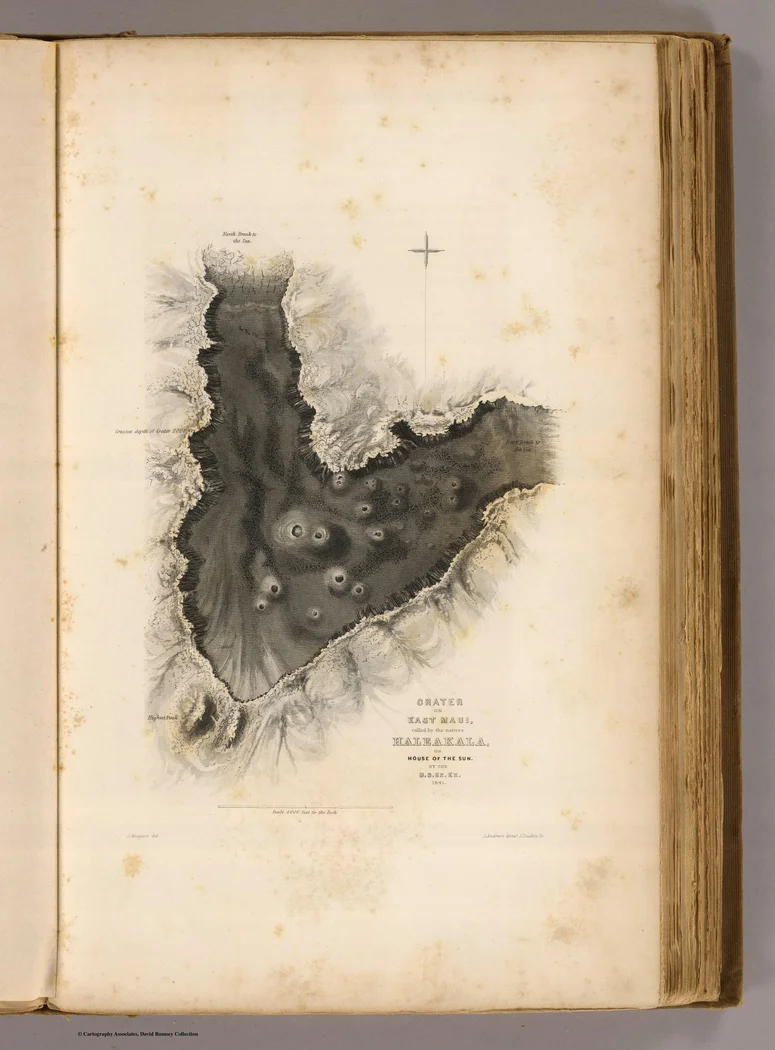
Haleakalā on East Maui, drawn during the U.S. Exploring Expedition in 1841. The summit is the setting for a Hawaiian account of Māui and the sun.
Joseph Drayton and J. Andrews, U.S. Exploring Expedition, 1841 survey plate, via Wikimedia Commons. · Image source ↗ · Public Domain
See references (2)
The Legends and Myths of Hawaii by David Kalākaua
In the opening to the story of Kahawali in David Kalākaua’s volume, Māui catches the sun and holds it still while his wife finishes making kapa. The brief account gives the act a domestic purpose: she needs longer to finish the work already in her hands. [4]
The following sunlight story is about Kana. When a ruler in Kahiki withholds the light, Kana crosses the sea to demand its return. [4][5]
Who needs the extra daylight?
In the Haleakalā account shared by the National Park Service, the kapa maker is Māui’s mother Hina. In Kalākaua’s short version she is his wife. Both stories give the extra daylight to a kapa maker, with a different family relationship in each. [4][2]
Read further in the library
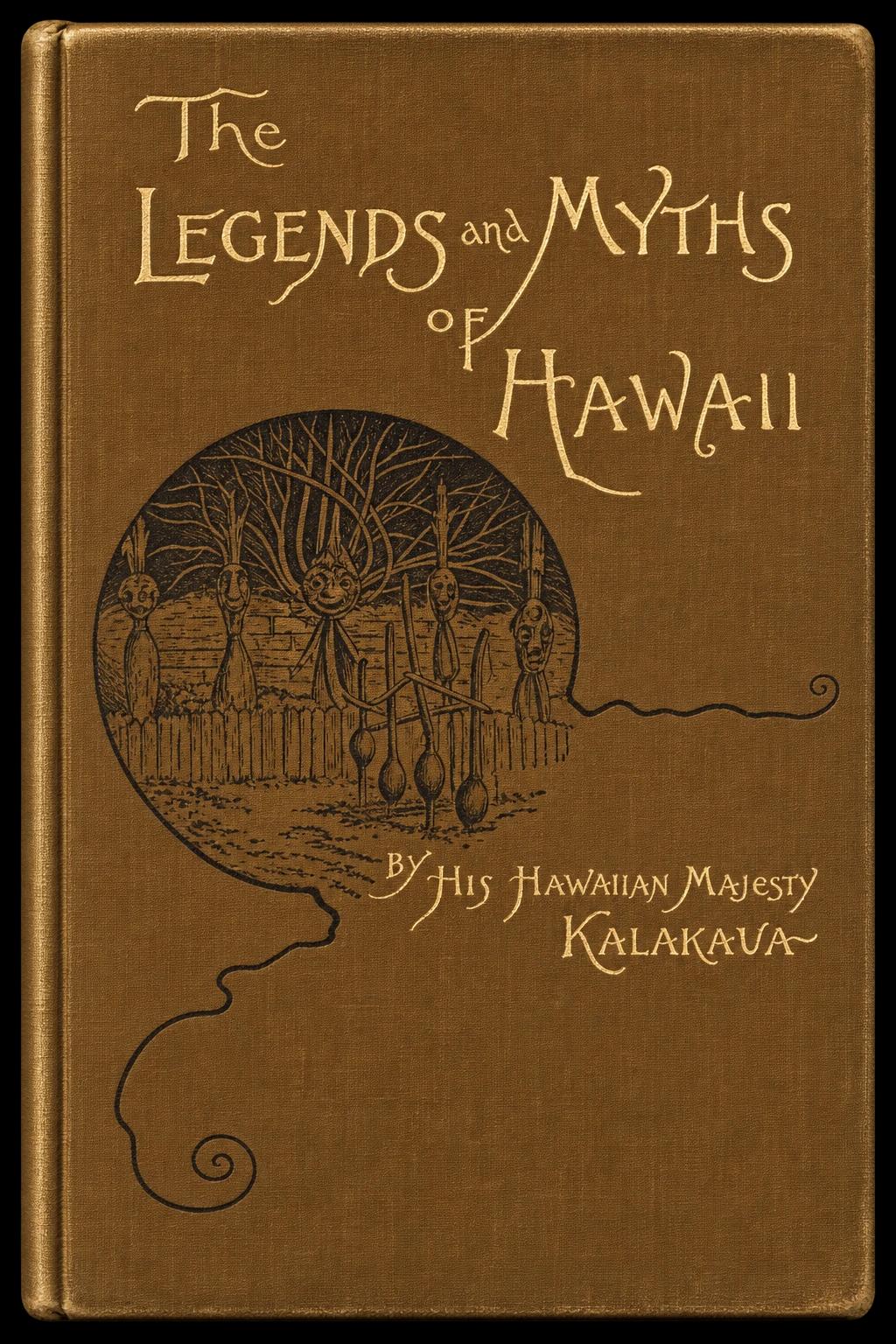
The Legends and Myths of Hawaii
Reading note
The separately titled account draws on exact passages in the consulted Library edition.
Sources
See references (5)
- Māui in Māori tradition ↗Te Ahukaramū Charles Royal, Te Ara – the Encyclopedia of New Zealand, “Māui.”Return to text ↑
- Haleakalā Highway Cultural Landscape ↗National Park Service, historical landscape article and its account of Māui and Hina.Return to text ↑
- Haleakalā, U.S. Exploring Expedition drawing, 1841 ↗Joseph Drayton and J. Andrews, U.S. Exploring Expedition, 1841 survey plate, via Wikimedia Commons.
- The Legends and Myths of Hawaii, Reader page 505David Kalākaua, The Legends and Myths of Hawaii, edited with an introduction by Rollin Mallory Daggett, Charles L. Webster & Company, 1888. Exact Library edition IMJ-0646-E001. When the introduction or a signed editorial passage is used, its author is identified in the article.Read this page in The Legends and Myths of Hawaii ↗Return to text ↑
- The Legends and Myths of Hawaii, printed p. 503, Reader page 506David Kalākaua, The Legends and Myths of Hawaii, edited with an introduction by Rollin Mallory Daggett, Charles L. Webster & Company, 1888. Exact Library edition IMJ-0646-E001. When the introduction or a signed editorial passage is used, its author is identified in the article.Read this page in The Legends and Myths of Hawaii ↗Return to text ↑