Hina in Hawaiian traditions
Hina names several figures in Hawaiian traditions. Explore connections with kapa, fishing, chiefly families and the story of Hina’s rescue.
In this article
Hina in stories of kapa and fishing
Hina is a name carried by several figures in Hawaiian traditions. One appears in a story about making kapa, a cloth beaten from inner bark. Another is named in a family of fishing akua. A figure’s relatives, work and home help tell these accounts apart. [1][2][5]
In the Haleakalā story shared by the National Park Service, Māui slows the sun so his mother Hina has time to dry her kapa. In a fishing tradition, Hinapukuiʻa and Kūʻulakai are the parents of ʻAiʻai, who is associated with nets and fishing shrines. [2][3]
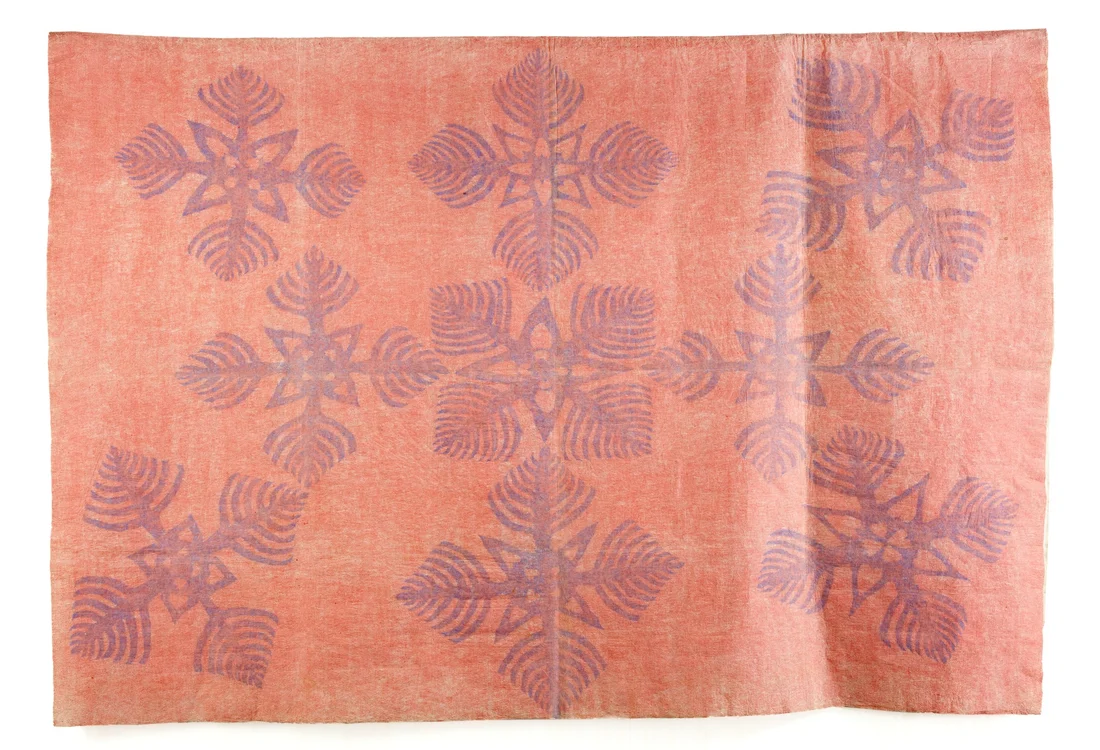
Late nineteenth-century Hawaiian kapa moe, a sleeping cover made from paper mulberry bark. Kapa making is associated with Hina in some traditions.
Unrecorded Hawaiian maker, Kapa moe, late nineteenth century. Los Angeles County Museum of Art, M.2010.106, via Wikimedia Commons. · Image source ↗ · Public Domain
The Legends and Myths of Hawaii by David Kalākaua
In his introduction to David Kalākaua’s volume, Rollin Mallory Daggett names Hina as the wife of Kūʻula, the fishing akua. He says that people appealed to her when Kūʻula withheld his help with the catch. [6]
In the story of Hāʻupu, Hina is a chiefess and the mother of Kana and Niheu. Kaupeʻepeʻe abducts her at the shore. She asks him to send her home to her children and returns only after a siege destroys the stronghold where he holds her. [7][5][8][9][10]
See references (6)
How the stories identify Hina
Kahoʻiwai identifies the Hina of its fishing tradition by the name Hinapukuiʻa and by her son ʻAiʻai. In Kalākaua’s Hāʻupu story, Kana and Niheu are the sons who seek her. The accounts give each Hina a different family and a different reason for telling her story. [6][5][8][2]
Read further in the library
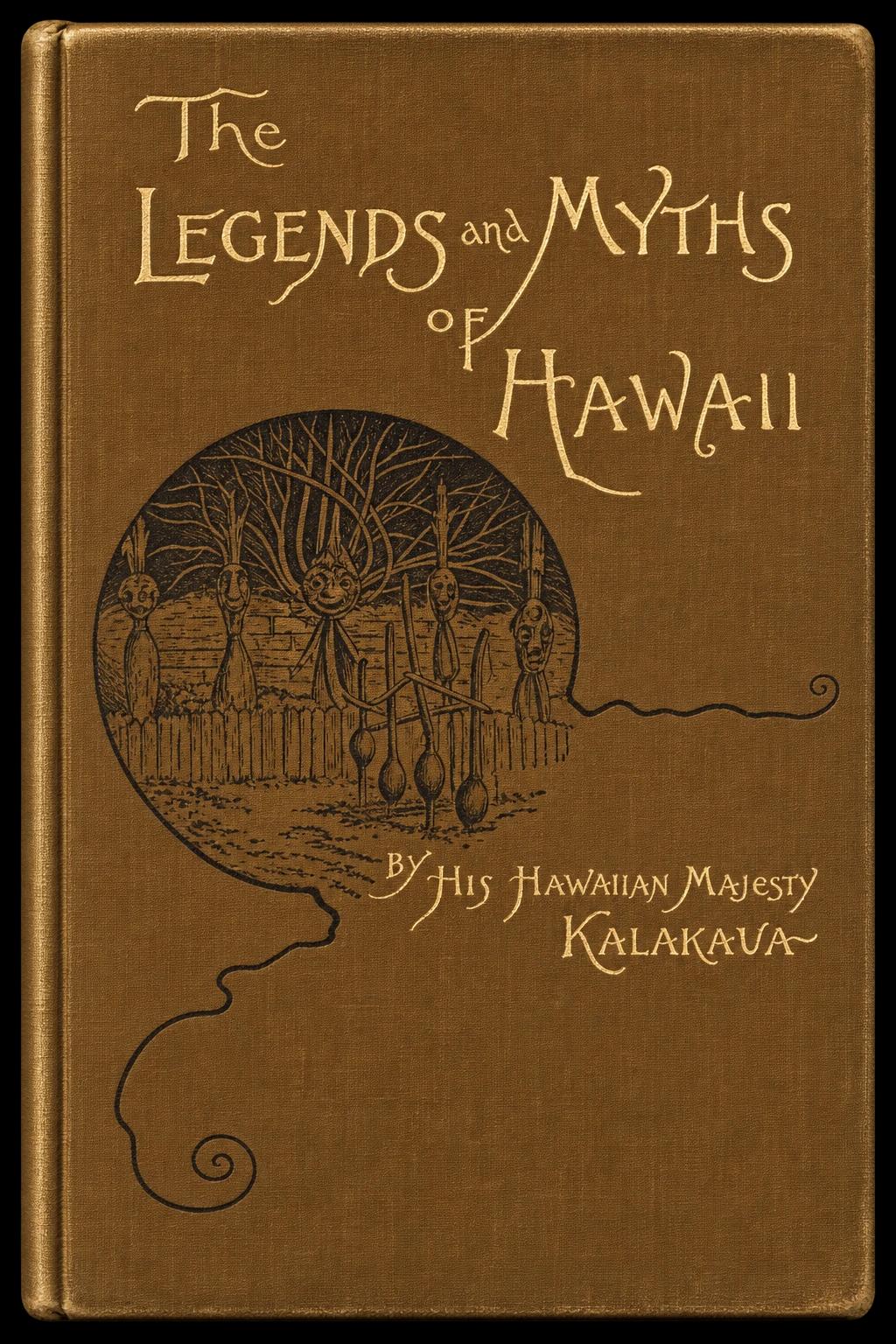
The Legends and Myths of Hawaii
Reading note
The separately titled account draws on exact passages in the consulted Library edition.
Sources
See references (10)
- Hana kapa ↗Kahoʻiwai, University of Hawaiʻi, bilingual entry on making kapa and its association with Hina.Return to text ↑
- Lawaiʻa ↗Kahoʻiwai, University of Hawaiʻi, entry on fishing and traditions of Kūʻulakai, Hinapukuiʻa and ʻAiʻai.Return to text ↑
- Haleakalā Highway Cultural Landscape ↗National Park Service, historical landscape article and its account of Māui and Hina.Return to text ↑
- Kapa moe, late nineteenth century ↗Unrecorded Hawaiian maker, Kapa moe, late nineteenth century. Los Angeles County Museum of Art, M.2010.106, via Wikimedia Commons.
- The Legends and Myths of Hawaii, Reader page 83David Kalākaua, The Legends and Myths of Hawaii, edited with an introduction by Rollin Mallory Daggett, Charles L. Webster & Company, 1888. Exact Library edition IMJ-0646-E001. When the introduction or a signed editorial passage is used, its author is identified in the article.Read this page in The Legends and Myths of Hawaii ↗Return to text ↑
- The Legends and Myths of Hawaii, Reader page 45David Kalākaua, The Legends and Myths of Hawaii, edited with an introduction by Rollin Mallory Daggett, Charles L. Webster & Company, 1888. Exact Library edition IMJ-0646-E001. When the introduction or a signed editorial passage is used, its author is identified in the article.Read this page in The Legends and Myths of Hawaii ↗Return to text ↑
- The Legends and Myths of Hawaii, Reader page 82David Kalākaua, The Legends and Myths of Hawaii, edited with an introduction by Rollin Mallory Daggett, Charles L. Webster & Company, 1888. Exact Library edition IMJ-0646-E001. When the introduction or a signed editorial passage is used, its author is identified in the article.Read this page in The Legends and Myths of Hawaii ↗Return to text ↑
- The Legends and Myths of Hawaii, Reader page 86David Kalākaua, The Legends and Myths of Hawaii, edited with an introduction by Rollin Mallory Daggett, Charles L. Webster & Company, 1888. Exact Library edition IMJ-0646-E001. When the introduction or a signed editorial passage is used, its author is identified in the article.Read this page in The Legends and Myths of Hawaii ↗Return to text ↑
- The Legends and Myths of Hawaii, Reader page 96David Kalākaua, The Legends and Myths of Hawaii, edited with an introduction by Rollin Mallory Daggett, Charles L. Webster & Company, 1888. Exact Library edition IMJ-0646-E001. When the introduction or a signed editorial passage is used, its author is identified in the article.Read this page in The Legends and Myths of Hawaii ↗Return to text ↑
- The Legends and Myths of Hawaii, Reader page 97David Kalākaua, The Legends and Myths of Hawaii, edited with an introduction by Rollin Mallory Daggett, Charles L. Webster & Company, 1888. Exact Library edition IMJ-0646-E001. When the introduction or a signed editorial passage is used, its author is identified in the article.Read this page in The Legends and Myths of Hawaii ↗Return to text ↑