Mantra Awakening
Mantra awakening in Tantra concerns the consciousness and power of a mantra. Read Arthur Avalon’s account of mantra-caitanya.
In this article
What makes a mantra awakened?
Mantra awakening is a Tantric idea about what makes a sacred formula effective. In Arthur Avalon’s account, a syllable can sound the same when recited in two different states. Its awakening depends on the presence of mantra-caitanya, or mantra consciousness. [2][3][4]
The Serpent Power in Arthur Avalon’s translation
In The Serpent Power, Arthur Avalon uses raṃ, the seed syllable of fire, to show how a mantra has audible and subtle forms. The spoken syllable expresses a power that the tradition associates with fire. [3][5][4]
Awakening concerns the practitioner’s relation to that power. Avalon calls a mantra effective when its utterance is animated by creative thought and accompanied by mantra consciousness. He describes the movement of the lips alone as insufficient. [5][4]
Avalon situates these claims within a tradition of initiation and instruction. His account gives particular weight to what the practitioner brings to recitation and to the conditions under which the formula is used. [2][3][4]
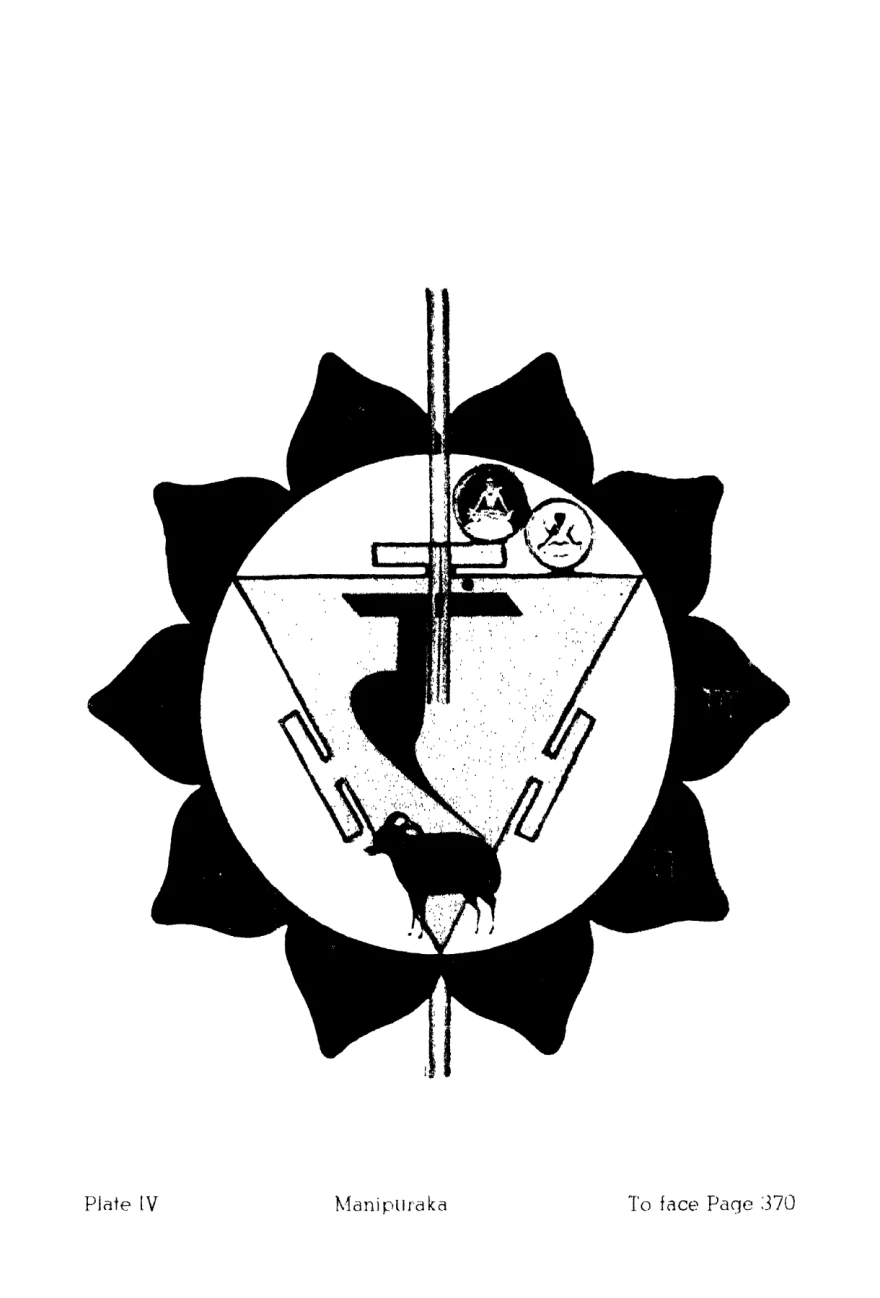
Plate IV shows Maṇipūra, the navel lotus associated with fire. The fire syllable belongs to this centre in the book’s account.
Illustrator unrecorded. The Serpent Power, Plate IV. Library facsimile, compared with the 1924 second edition. · Image source ↗ · Public Domain
Distinctions and comparisons
Bīja names a seed syllable such as raṃ. Mantra-caitanya concerns the consciousness through which a syllable is understood to act. The fire example identifies a bīja and explains what its audible form expresses. Awakening is a separate question about its use. [2][4][6]
In the library
The Serpent Power
Reading note
Separately attributed primary Library account, cited on exact verified Reader leaves.
Sources
See references (6)
- The Serpent Power, Plate IV, Reader page 386Illustrator unrecorded. The Serpent Power, Plate IV. Library facsimile, compared with the 1924 second edition.Read this page in The Serpent Power ↗
- The Serpent Power, Reader page 98Arthur Avalon (Sir John Woodroffe), The Serpent Power, fifth enlarged edition, Ganesh & Co., Madras, 1953. Includes Pūrṇānanda’s Ṣaṭ-cakra-nirūpaṇa, Pādukā-pañcaka and Kālīcaraṇa’s commentary. Exact Library edition IMJ-0608-E001.Read this page in The Serpent Power ↗
- The Serpent Power, printed p. 84, Reader page 99Arthur Avalon (Sir John Woodroffe), The Serpent Power, fifth enlarged edition, Ganesh & Co., Madras, 1953. Includes Pūrṇānanda’s Ṣaṭ-cakra-nirūpaṇa, Pādukā-pañcaka and Kālīcaraṇa’s commentary. Exact Library edition IMJ-0608-E001.Read this page in The Serpent Power ↗
- The Serpent Power, printed p. 97, Reader page 112Arthur Avalon (Sir John Woodroffe), The Serpent Power, fifth enlarged edition, Ganesh & Co., Madras, 1953. Includes Pūrṇānanda’s Ṣaṭ-cakra-nirūpaṇa, Pādukā-pañcaka and Kālīcaraṇa’s commentary. Exact Library edition IMJ-0608-E001.Read this page in The Serpent Power ↗
- The Serpent Power, printed p. 96, Reader page 111Arthur Avalon (Sir John Woodroffe), The Serpent Power, fifth enlarged edition, Ganesh & Co., Madras, 1953. Includes Pūrṇānanda’s Ṣaṭ-cakra-nirūpaṇa, Pādukā-pañcaka and Kālīcaraṇa’s commentary. Exact Library edition IMJ-0608-E001.Read this page in The Serpent Power ↗
- The Serpent Power, printed p. 366, Reader page 381Arthur Avalon (Sir John Woodroffe), The Serpent Power, fifth enlarged edition, Ganesh & Co., Madras, 1953. Includes Pūrṇānanda’s Ṣaṭ-cakra-nirūpaṇa, Pādukā-pañcaka and Kālīcaraṇa’s commentary. Exact Library edition IMJ-0608-E001.Read this page in The Serpent Power ↗