Mandrake
Mandrake is a plant of the nightshade family. Trace its human-shaped root and legendary scream through herbals, Genesis, Josephus and Shakespeare.
In this article
Understanding mandrake
Mandrake is a name for plants in the genus Mandragora, part of the nightshade family. The thick root sometimes branches in ways that suggest a human body. In European folklore and illustrated herbals it can appear as a small figure, a charm or a dangerous plant that cries when uprooted. [1][6][5]
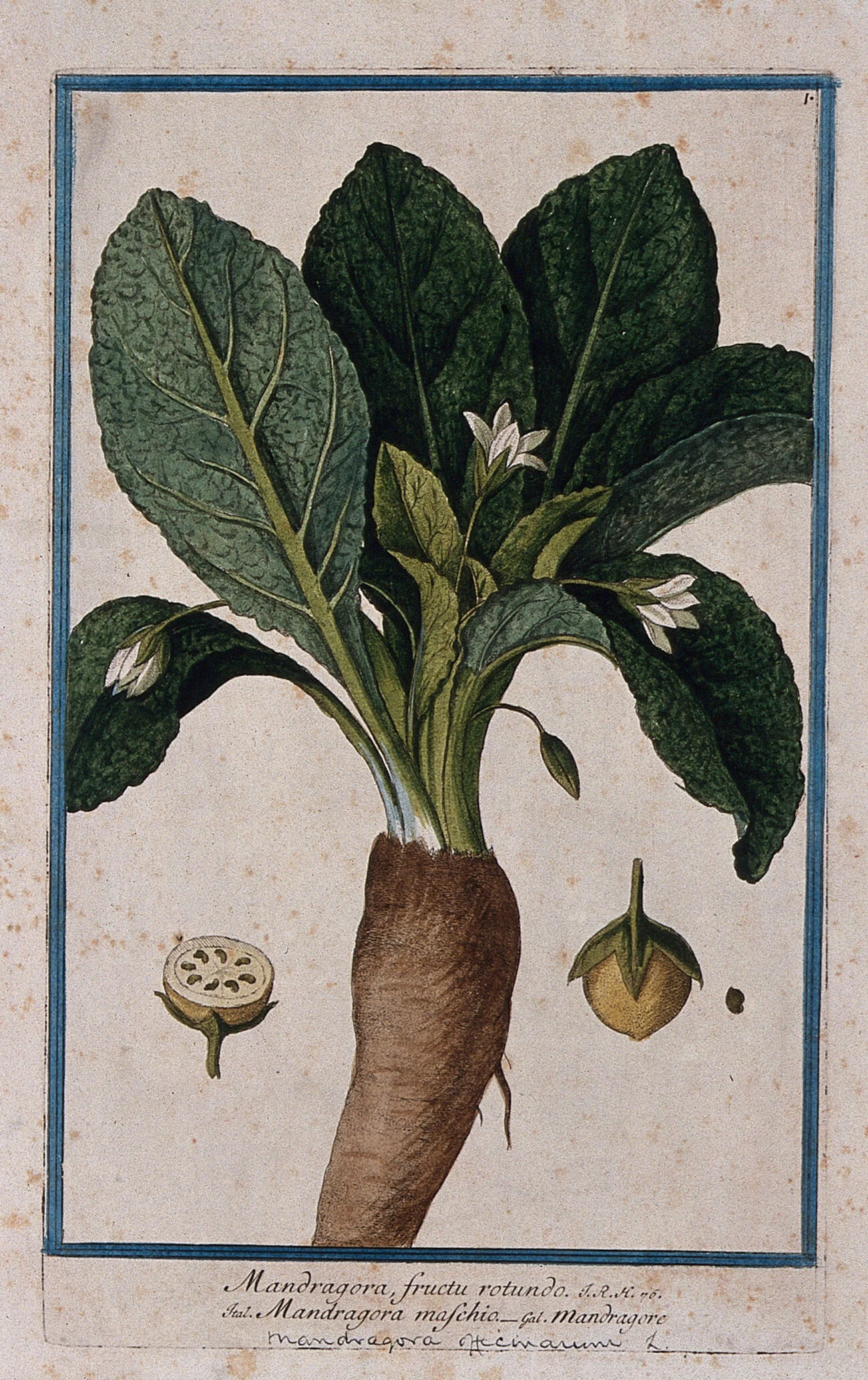
M. Bouchard, Mandragora officinarum (1772). The etching shows the plant’s leaves, flowers, fruit and root.
Wellcome Collection, V0042709EL. Rome: Bouchard et Gravier, 1772. Public Domain. · Image source ↗ · Public Domain
Mandrake in text and folklore
Genesis: the mandrakes and Rachel
In Genesis 30:14–24, Reuben brings mandrakes to Leah and Rachel asks for them. The sisters bargain over a night with Jacob. Later God is said to remember Rachel, hear her and open her womb. The plants are part of the exchange, while the narrative attributes Rachel’s conception to God. [3]
The Jewish War by Flavius Josephus
In The Jewish War VII.6.3, Josephus describes a root called Baaras near Machaerus. In William Whiston’s translation, it looks fiery, is dangerous to touch, and is removed in an account where a dog dies. Josephus credits it with expelling demons. This passage gives no scream and identifies the root as Baaras. [2]
Romeo and Juliet by William Shakespeare
In Romeo and Juliet, Act IV, scene 3, William Shakespeare has Juliet imagine waking among the dead. She compares the sounds that could drive her mad to the cries of mandrakes pulled from the ground. The play makes the scream part of her fear of the tomb. [4]
Magica Sexualis by Émile Laurent and Paul Nagour
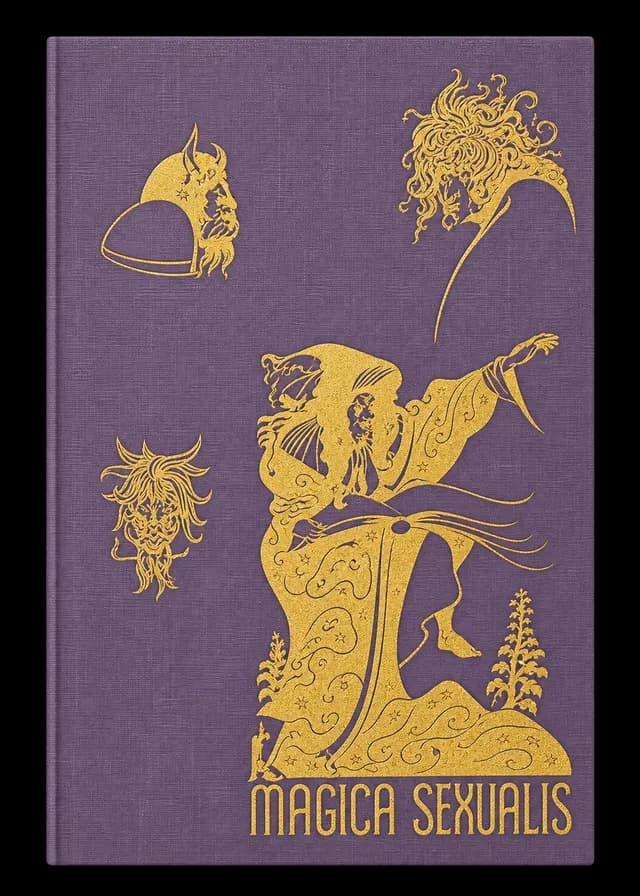
In Magica Sexualis, Émile Laurent and Paul Nagour place mandrake among vegetable talismans. They connect the root’s human shape with stories of fertility and good fortune. They suggest a scream might once have been a person’s reaction to the plant’s effects, then recount the legend in which the uprooted plant itself cries. [7][8][9]
Their supposed quotation from Josephus includes a dog and a horn sounded to drown the cry. Those last details about the cry do not appear in the checked Whiston passage. They also cite Rachel for the plant’s association with fertility. [8][9]
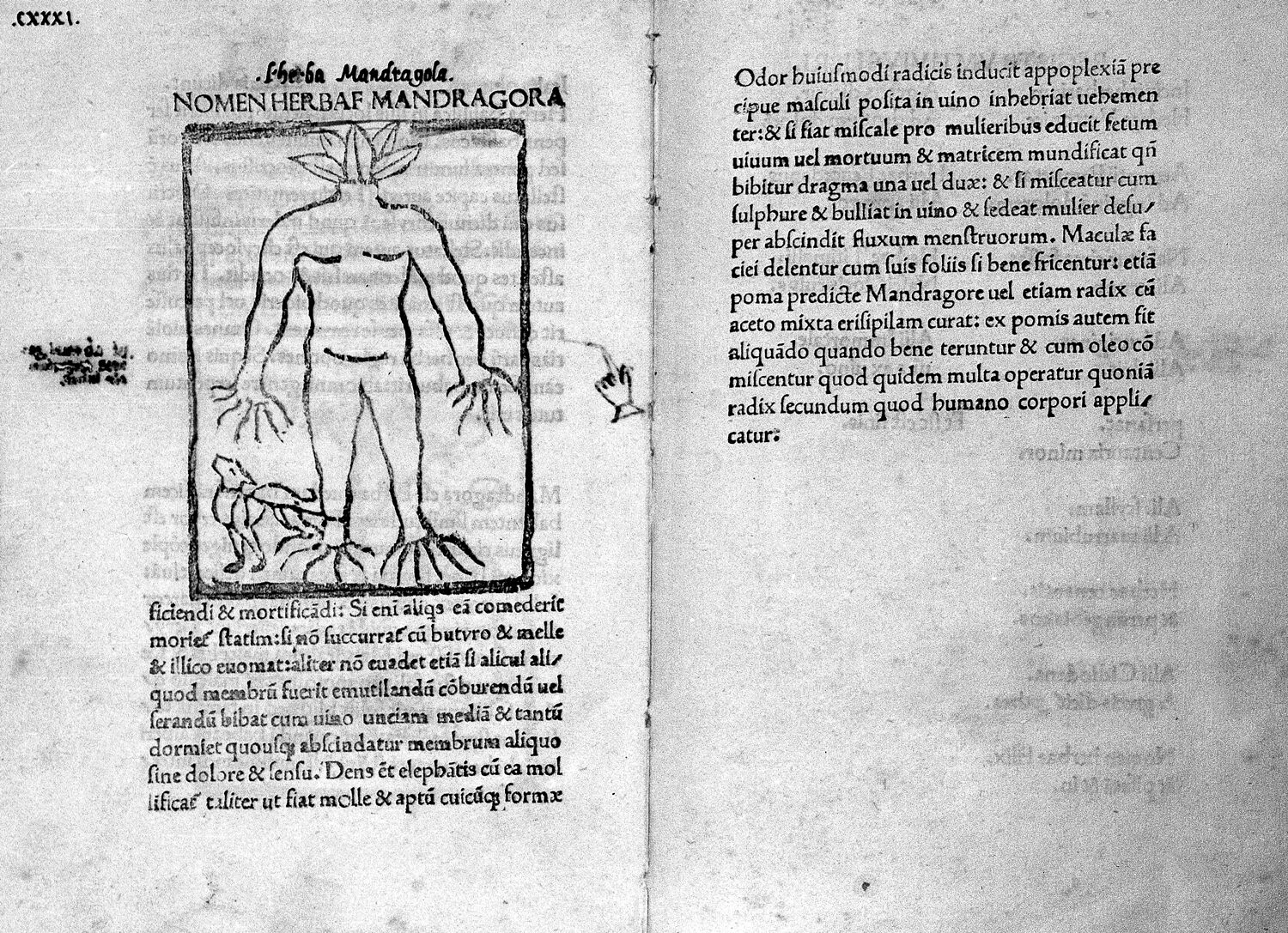
Mandrake in the herbal attributed to Apuleius (1483). A dog stands beside a human-shaped root. Wellcome archival photograph, 1947.
Wellcome Collection, M0009834, catalogue e4a6rabg. Public Domain. · Image source ↗ · Public Domain
The scream and the root from Baaras
The dog links the Baaras story with later mandrake lore, while Shakespeare gives the scream a clear place in drama. Laurent and Nagour bring those strands together with Genesis and its association with conception. The botanical drawing and the herbal’s human figure show two different ways of picturing the root. [8][2][4][9][3]
Read further in the library
Magica Sexualis
Reading note
The separately titled account draws on exact passages in the consulted Library edition.
Sources
See references (9)
- Kew, Plants of the World Online: Mandragora officinarum L. ↗Royal Botanic Gardens, Kew, Plants of the World Online. Accepted species and classification in Mandragora, Solanaceae, directly checked. This taxonomic record does not authenticate legendary properties or identify Josephus’s Baaras.Return to text ↑
- Flavius Josephus, The Jewish War VII.6.3: the root Baaras ↗Flavius Josephus, The Jewish War, Book VII, chapter VI, section 3, William Whiston translation, retained Perseus text. The selected root paragraph directly read; whole book not newly read. The root is called Baaras; the inspected passage does not name Mandragora or mention a scream or a horn. Classical chapter/section citation, not an invented printed page or Library leaf.Return to text ↑
- Genesis 30:14–24, King James Version: the mandrakes and Rachel ↗Genesis 30:14–24, King James Version. Selected verses directly read. Mandrakes is this translation’s rendering; no independent identification of the ancient Hebrew plant or clinical fertility effect claimed.Return to text ↑
- William Shakespeare, Romeo and Juliet, Act IV, scene 3: Juliet’s mandrake image ↗William Shakespeare, Romeo and Juliet, Act IV, scene 3, Juliet’s tomb soliloquy, Folger reading text. Selected speech directly read. A dramatic reference to mandrake shrieks, not botanical testimony.Return to text ↑
- Wellcome Collection: Bouchard’s mandrake botanical etching, 1772 ↗Wellcome catalogue mf3gc266 and IIIF image, actual image inspected. Coloured etching by M. Bouchard, Rome: Bouchard et Gravier, 1772. Digital image marked Public Domain.Return to text ↑
- Wellcome Collection: mandrake woodcut in the Herbarium attributed to Apuleius ↗Wellcome catalogue e4a6rabg, archival photograph M0009834 and IIIF manifest b33334857. Book dated 1483 in the catalogue; photograph dated 20 January 1947. Actual spread inspected, including anthropomorphic root and dog. Digital image Public Domain. The catalogue’s broader priority claim about printed illustrations is not adopted.Return to text ↑
- Magica Sexualis, Reader page 171Émile Laurent and Paul Nagour, Magica Sexualis, privately printed by Falstaff Press Inc., New York, undated inspected edition. Exact original Library edition IMJ-0105-E001. The work is a historical compilation; its quoted fiction, trial allegations and medical interpretations are not treated as independently verified facts. Current Reader positions are mapped separately from printed pagination.Read this page in Magica Sexualis ↗Return to text ↑
- Magica Sexualis, Reader page 172Émile Laurent and Paul Nagour, Magica Sexualis, privately printed by Falstaff Press Inc., New York, undated inspected edition. Exact original Library edition IMJ-0105-E001. The work is a historical compilation; its quoted fiction, trial allegations and medical interpretations are not treated as independently verified facts. Current Reader positions are mapped separately from printed pagination.Read this page in Magica Sexualis ↗Return to text ↑
- Magica Sexualis, printed p. 165, Reader page 173Émile Laurent and Paul Nagour, Magica Sexualis, privately printed by Falstaff Press Inc., New York, undated inspected edition. Exact original Library edition IMJ-0105-E001. The work is a historical compilation; its quoted fiction, trial allegations and medical interpretations are not treated as independently verified facts. Current Reader positions are mapped separately from printed pagination.Read this page in Magica Sexualis ↗Return to text ↑