Makahiki
Makahiki is a Hawaiian season honouring Lono, with offerings, games and a pause in warfare. Explore its timing, rituals and living observances.
In this article
When does Makahiki begin?
Makahiki is a Hawaiian season honouring Lono, the akua associated with rain and cultivation. The appearance of Makaliʻi, the Pleiades, marks its opening in accounts of the season. Observances can extend over several lunar months. [1][3]
An image of Lono called the akua loa travels between districts, where people bring offerings. Makahiki is also a time for games, feasting and restrictions on warfare. The Hawaiian Cultural Center describes how fishing restrictions change when the season ends. [2][3]
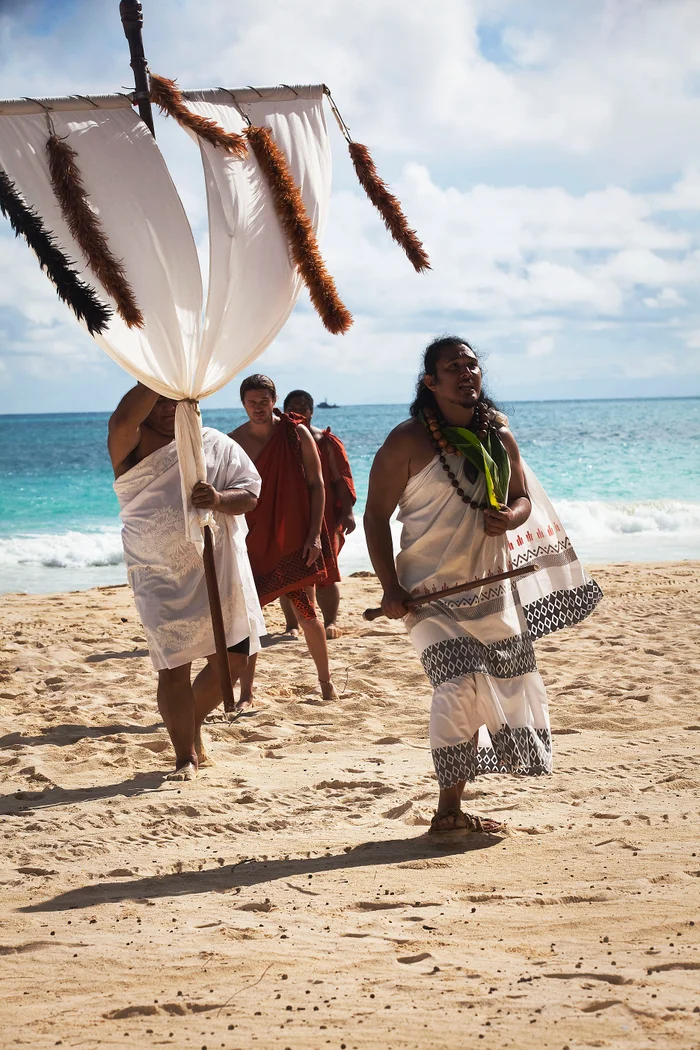
Participants in a Makahiki procession at Waimānalo on 20 November 2010. The carried form of Lono is draped with white cloth and flowers.
United States Marine Corps, 20 November 2010, via Wikimedia Commons. · Image source ↗ · Public Domain
Makahiki in Hawaiian Antiquities by David Malo
In chapter XXXVI of Hawaiian Antiquities, translated by N. B. Emerson, David Malo describes four days of rest when people stayed home and put aside their usual work. He also gives a four-month reckoning for the wider season. [1]
The Legends and Myths of Hawaii by David Kalākaua
In David Kalākaua’s account of Waahia’s visit to Kauaʻi, five days of feasting follow the winter solstice. People bring offerings, decorate images, perform hula and recite the name chants of chiefs. At Kauhola, a five-day feast of Lono is the setting for Kamehameha’s tournament. [5][6]
In “The Destruction of the Temples,” Kekuaokalani devotes five days set apart from the regular calendar to Lono during his resistance to the ending of kapu. The narrator describes it as the last annual festival held under the old religious authority. [7][8]
How a feast fits into the season
The five days in Kalākaua are the duration of particular gatherings. Malo’s four days refer to a period of rest within the season, while his four-month reckoning covers the wider observance. [5][6][7][8][1]
The Hawaiian Cultural Center describes another ceremony: the Kōkō o Maoloha, a net filled with food. If the food fell freely when the net was shaken, that was taken as a sign that the coming season would be fruitful. [5][6][3]
Today, practitioners still watch for the seasonal signs of Makahiki. At Puʻuhonua o Hōnaunau, local schoolchildren take part in an annual games tournament. [9]
See references (7)
- Hawaiian Antiquities, chapter XXXVI, §§ 1–6, printed pp. 186–187
- Makahiki: A Change of Season
- The Legends and Myths of Hawaii, Reader page 204
- The Legends and Myths of Hawaii, Reader page 400
- The Legends and Myths of Hawaii, Reader page 446
- The Legends and Myths of Hawaii, Reader page 447
- Kau Makaliʻi, Season of the Makahiki Ritual
Read further in the library
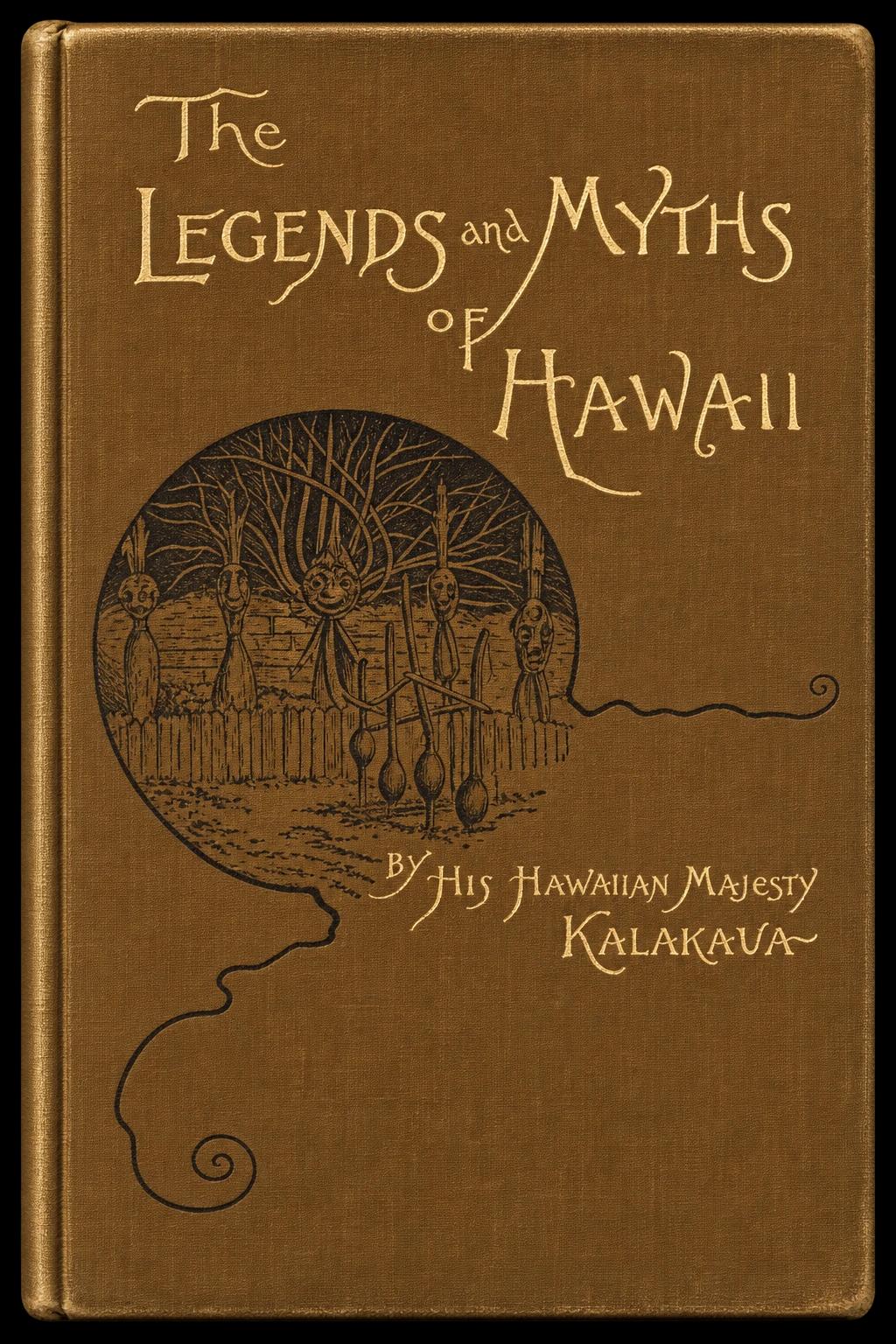
The Legends and Myths of Hawaii
Reading note
The separately titled account draws on exact passages in the consulted Library edition.
Sources
See references (9)
- Hawaiian Antiquities, chapter XXXVI, §§ 1–6, printed pp. 186–187 ↗David Malo, Hawaiian Antiquities (Moolelo Hawaii), translated by N. B. Emerson, Hawaiian Gazette, 1903. “The Makahiki,” opening sections on the season and concentrated observance.Return to text ↑
- Lono in Kahoʻiwai ↗Kahoʻiwai, University of Hawaiʻi, bilingual Hawaiian cultural vocabulary and associated sources.Return to text ↑
- Makahiki: A Change of Season ↗Kaʻiwakīloumoku Hawaiian Cultural Center, Kamehameha Schools, sections on the akua loa, the Maoloha net and the closing of Makahiki.Return to text ↑
- Makahiki procession at Waimānalo, November 2010 ↗United States Marine Corps, 20 November 2010, via Wikimedia Commons.
- The Legends and Myths of Hawaii, Reader page 204David Kalākaua, The Legends and Myths of Hawaii, edited with an introduction by Rollin Mallory Daggett, Charles L. Webster & Company, 1888. Exact Library edition IMJ-0646-E001. When the introduction or a signed editorial passage is used, its author is identified in the article.Read this page in The Legends and Myths of Hawaii ↗Return to text ↑
- The Legends and Myths of Hawaii, Reader page 400David Kalākaua, The Legends and Myths of Hawaii, edited with an introduction by Rollin Mallory Daggett, Charles L. Webster & Company, 1888. Exact Library edition IMJ-0646-E001. When the introduction or a signed editorial passage is used, its author is identified in the article.Read this page in The Legends and Myths of Hawaii ↗Return to text ↑
- The Legends and Myths of Hawaii, Reader page 446David Kalākaua, The Legends and Myths of Hawaii, edited with an introduction by Rollin Mallory Daggett, Charles L. Webster & Company, 1888. Exact Library edition IMJ-0646-E001. When the introduction or a signed editorial passage is used, its author is identified in the article.Read this page in The Legends and Myths of Hawaii ↗Return to text ↑
- The Legends and Myths of Hawaii, Reader page 447David Kalākaua, The Legends and Myths of Hawaii, edited with an introduction by Rollin Mallory Daggett, Charles L. Webster & Company, 1888. Exact Library edition IMJ-0646-E001. When the introduction or a signed editorial passage is used, its author is identified in the article.Read this page in The Legends and Myths of Hawaii ↗Return to text ↑
- Kau Makaliʻi, Season of the Makahiki Ritual ↗National Park ServiceReturn to text ↑