Lono
Lono is a Hawaiian akua associated with rain, cultivation and the Makahiki season. Follow his named forms, offerings and stories in Kalākaua.
In this article
Lono and the growing season
Lono is an akua, or deity, associated with rain and cultivation in Native Hawaiian traditions. Cloud and thunder are among his signs. During Makahiki, communities honoured Lono with offerings, games and periods of peace. [1][2]
An image of Lono called the akua loa travelled through districts during Makahiki. At Hōnaunau, a standing wooden kiʻi, or carved image, near Hale o Keawe is identified by the National Park Service as Lono-o-makahiki. [1][2][3]
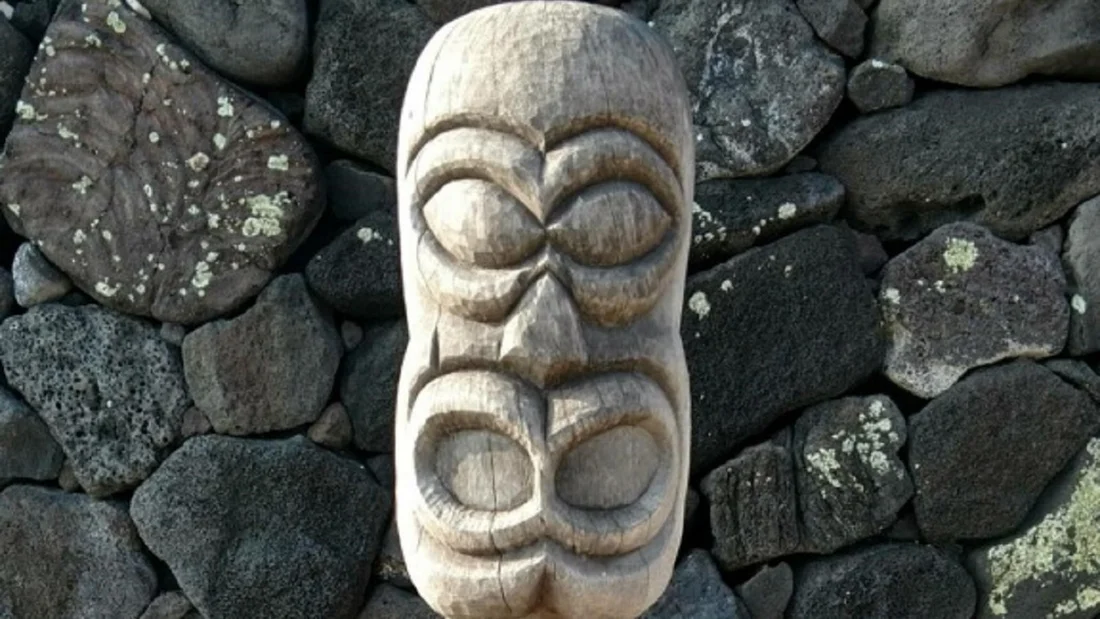
The National Park Service identifies this kiʻi near Hale o Keawe at Hōnaunau as Lono-o-makahiki. It stands in the park’s Royal Grounds.
National Park Service / Walsh. No claim to the original U.S. Government work. · Image source ↗ · Public Domain
The Legends and Myths of Hawaii by David Kalākaua
In his introduction to David Kalākaua’s book, Rollin Mallory Daggett prints a creation chant in which Lono dwells in water. The chant names Lono with Kāne and Kū as heaven and earth come into being. [4][5]
In the story of Waahia’s visit to Kauaʻi, people deck an image of Lono with flower and feather lei. They bring animal and plant offerings, perform hula and hear chants celebrating their chiefs. [6]
In the story of Kīha-pū, the chief hears a blast from a cave on Mauna Kea during a storm. He takes it as a sign that Lono has sounded the sacred conch. The conch later serves both to summon people and in battle. [7]
Lono in a local feast and across an island
Kalākaua’s Kauaʻi story describes a feast in one place. The Hawaiian Cultural Center follows the akua loa through several districts. The procession gathered offerings at district boundaries, and the season’s restrictions changed as Lono’s circuit came to an end. [6][2]
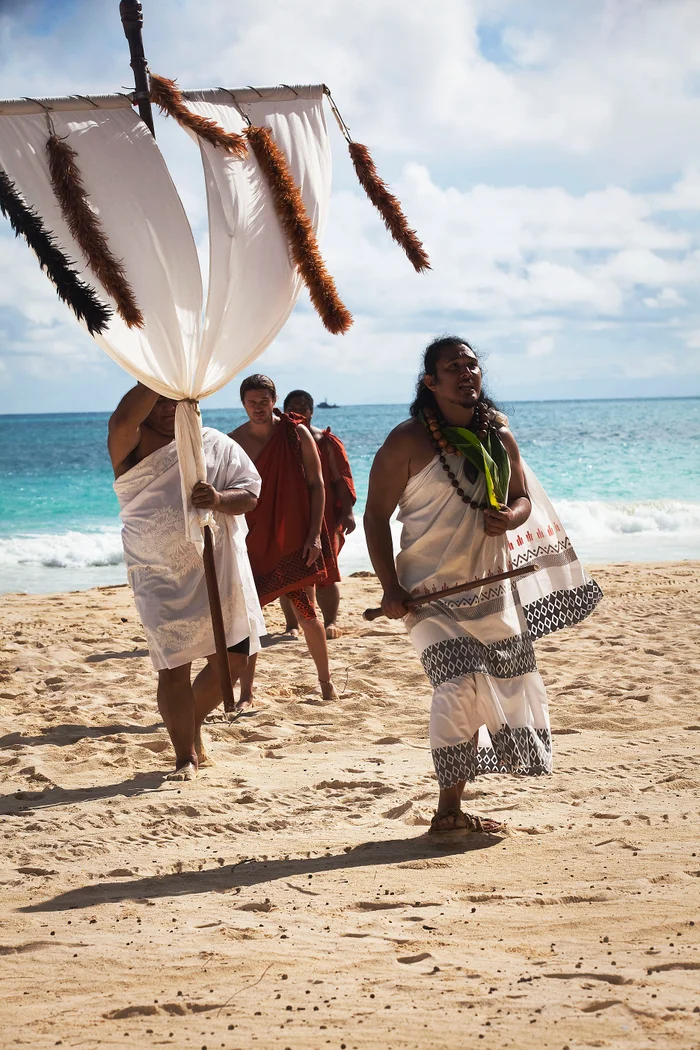
Participants carry an image of Lono draped in white cloth and flowers at a Makahiki observance in Waimānalo in 2010.
United States Marine Corps, 20 November 2010, via Wikimedia Commons. · Image source ↗ · Public Domain
Read further in the library
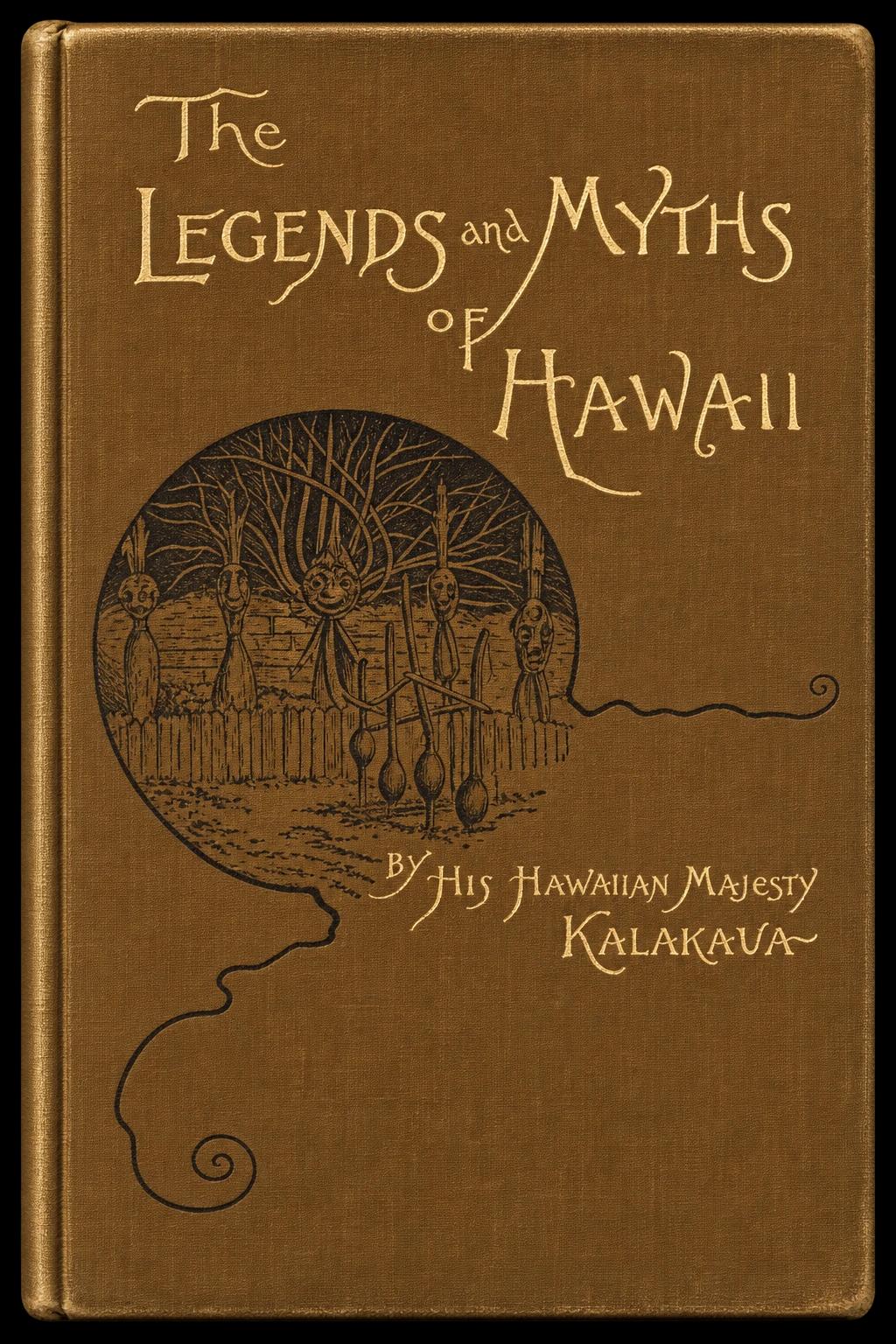
The Legends and Myths of Hawaii
Reading note
The separately titled account draws on exact passages in the consulted Library edition.
Sources
See references (8)
- Lono in Kahoʻiwai ↗Kahoʻiwai, University of Hawaiʻi, bilingual Hawaiian cultural vocabulary and associated sources.Return to text ↑
- Makahiki: A Change of Season ↗Kaʻiwakīloumoku Hawaiian Cultural Center, Kamehameha Schools, sections on the akua loa, the Maoloha net and the closing of Makahiki.Return to text ↑
- Lono-o-makahiki at Puʻuhonua o Hōnaunau ↗National Park Service / Walsh. No claim to the original U.S. Government work.Return to text ↑
- The Legends and Myths of Hawaii, Reader page 36David Kalākaua, The Legends and Myths of Hawaii, edited with an introduction by Rollin Mallory Daggett, Charles L. Webster & Company, 1888. Exact Library edition IMJ-0646-E001. When the introduction or a signed editorial passage is used, its author is identified in the article.Read this page in The Legends and Myths of Hawaii ↗Return to text ↑
- The Legends and Myths of Hawaii, Reader page 37David Kalākaua, The Legends and Myths of Hawaii, edited with an introduction by Rollin Mallory Daggett, Charles L. Webster & Company, 1888. Exact Library edition IMJ-0646-E001. When the introduction or a signed editorial passage is used, its author is identified in the article.Read this page in The Legends and Myths of Hawaii ↗Return to text ↑
- The Legends and Myths of Hawaii, Reader page 204David Kalākaua, The Legends and Myths of Hawaii, edited with an introduction by Rollin Mallory Daggett, Charles L. Webster & Company, 1888. Exact Library edition IMJ-0646-E001. When the introduction or a signed editorial passage is used, its author is identified in the article.Read this page in The Legends and Myths of Hawaii ↗Return to text ↑
- The Legends and Myths of Hawaii, Reader page 256David Kalākaua, The Legends and Myths of Hawaii, edited with an introduction by Rollin Mallory Daggett, Charles L. Webster & Company, 1888. Exact Library edition IMJ-0646-E001. When the introduction or a signed editorial passage is used, its author is identified in the article.Read this page in The Legends and Myths of Hawaii ↗Return to text ↑
- Makahiki procession at Waimānalo, November 2010 ↗United States Marine Corps, 20 November 2010, via Wikimedia Commons.