Magical rebound
Magical rebound is the idea that a magical effect comes back to its sender. Compare Jules Bois’s warning with Besant and Leadbeater’s thought-forms.
In this article
Understanding magical rebound
Magical rebound is the idea that an intended magical effect reaches the person who set it in motion. In one account, an enchanter trying to influence someone else becomes captivated by their image. In another, a projected thought-form is said to come back after meeting an unreceptive person. [3][1]
Thought-Forms by Annie Besant and Charles Webster Leadbeater
In Thought-Forms, Annie Besant and Charles Webster Leadbeater say that a directed thought-form requires a sympathetic response from material in the recipient’s aura. Without it, the form rebounds. The authors say a hostile form returns along the path it took to a sender whose own material can respond to it. [1][2]
The facing plate shows two clouds of affection. It gives a sense of how the authors pictured thought-forms. Their description of a returning form is on the preceding pages. [2]
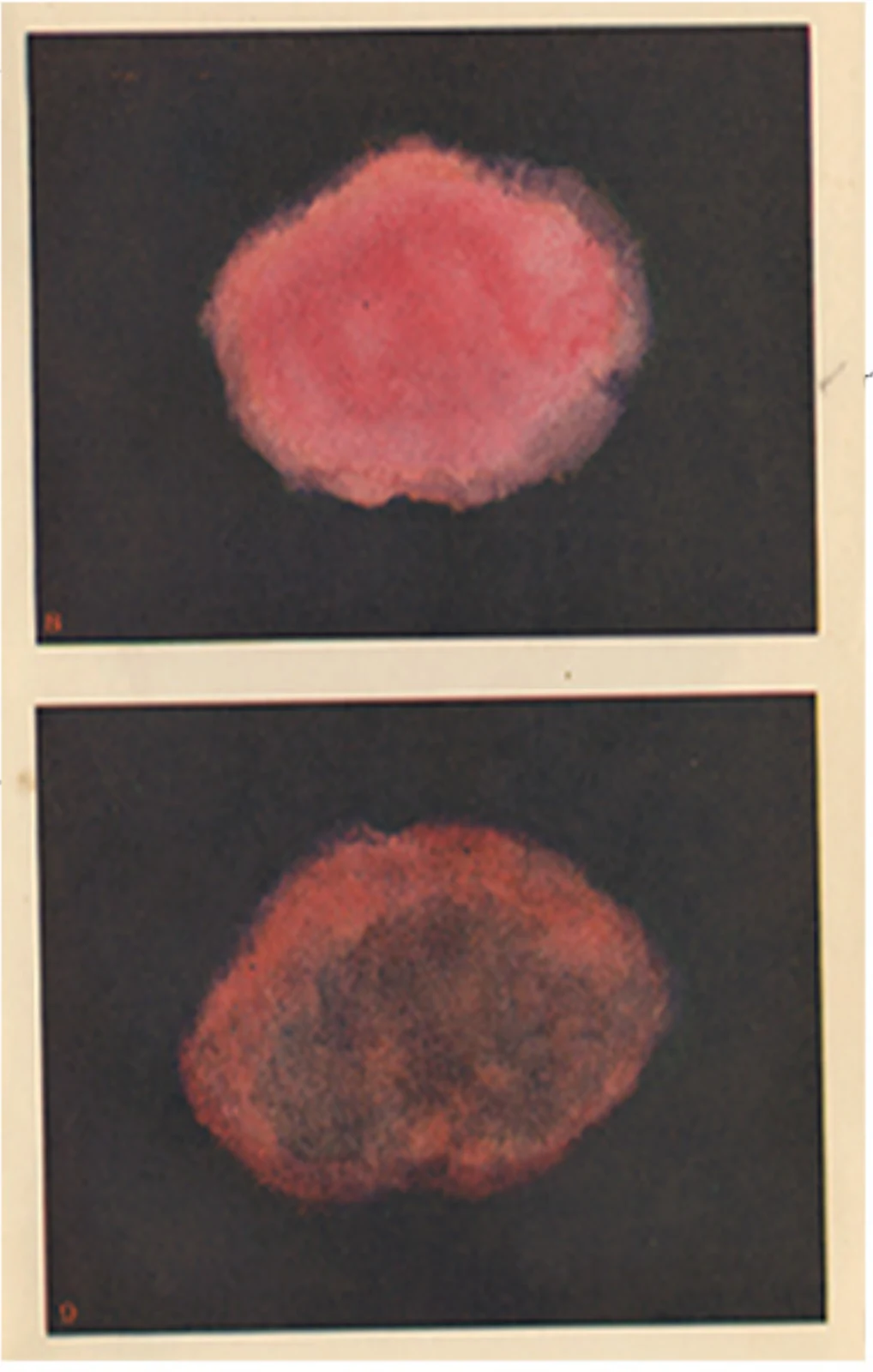
Two affection clouds from Thought-Forms, figs. 8–9, facing printed p. 40. They show what the authors thought they saw, while the account of rebound appears in the text.
Annie Besant and C. W. Leadbeater, Thought-Forms. Historical plate in the consulted Library edition IMJ-0021-E001. Public Domain. · Image source ↗ · Public Domain
Magica Sexualis by Émile Laurent and Paul Nagour
In Magica Sexualis, Émile Laurent and Paul Nagour quote Jules Bois on someone trying to awaken passion in another person. The would-be enchanter becomes increasingly absorbed in that person’s image and may fall in love instead. Bois presents the reversal as the enchanter’s own desire turning inward. [3][4][5]
Two ways a spell is said to turn back
Besant and Leadbeater’s account depends on a projected form meeting an unreceptive aura. In Bois’s account the reversal can happen entirely in the person trying to work the enchantment. Both make the person seeking control vulnerable, for different reasons. [3][1][2]
Read further in the library
Thought-Forms
Reading note
Separately attributed primary Library account, cited on exact verified Reader leaves.
Magica Sexualis
Reading note
The separately titled account draws on exact passages in the consulted Library edition.
Sources
See references (5)
- Annie Besant and C. W. Leadbeater, Thought-Forms, printed pages 38–39, Reader page 22Annie Besant and Charles Webster Leadbeater, Thought-Forms, Library edition IMJ-0021-E001. Actual original page image re-viewed. Printed pagination distinguished from original PageID and current presented Reader position, recomputed locally. Theosophical claims remain attributed.Read this page in Thought-Forms ↗Return to text ↑
- Annie Besant and C. W. Leadbeater, Thought-Forms, printed page 40 and facing figures 8–9, Reader page 23Annie Besant and Charles Webster Leadbeater, Thought-Forms, Library edition IMJ-0021-E001. Actual original page image re-viewed. Printed pagination distinguished from original PageID and current presented Reader position, recomputed locally. Theosophical claims remain attributed.Read this page in Thought-Forms ↗Return to text ↑
- Magica Sexualis, Reader page 120Émile Laurent and Paul Nagour, Magica Sexualis, privately printed by Falstaff Press Inc., New York, undated inspected edition. Exact original Library edition IMJ-0105-E001. The work is a historical compilation; its quoted fiction, trial allegations and medical interpretations are not treated as independently verified facts. Current Reader positions are mapped separately from printed pagination.Read this page in Magica Sexualis ↗Return to text ↑
- Magica Sexualis, Reader page 117Émile Laurent and Paul Nagour, Magica Sexualis, privately printed by Falstaff Press Inc., New York, undated inspected edition. Exact original Library edition IMJ-0105-E001. The work is a historical compilation; its quoted fiction, trial allegations and medical interpretations are not treated as independently verified facts. Current Reader positions are mapped separately from printed pagination.Read this page in Magica Sexualis ↗Return to text ↑
- Magica Sexualis, Reader page 118Émile Laurent and Paul Nagour, Magica Sexualis, privately printed by Falstaff Press Inc., New York, undated inspected edition. Exact original Library edition IMJ-0105-E001. The work is a historical compilation; its quoted fiction, trial allegations and medical interpretations are not treated as independently verified facts. Current Reader positions are mapped separately from printed pagination.Read this page in Magica Sexualis ↗Return to text ↑