Luminous passions
Luminous passions in Camille Flammarion’s Lumen are feelings made visible as bodily light. Compare them with the affection plates in Thought-Forms.
In this article
Understanding luminous passions
Luminous passions are feelings that show as light from parts of the body. Camille Flammarion gives this faculty to the inhabitants of an imagined world in Lumen. Rocks, flowers and animals also shine there, so the glowing body belongs to a whole luminous landscape. [2][3][4]
See references (3)
Lumen by Camille Flammarion
In Lumen, Camille Flammarion describes rocks storing daylight and releasing it after dark. White flowers shine like fireflies. On some other worlds in the book, several suns provide constant daylight. Here the glow comes from the world’s rocks and living things. [2][3][5][6]
The narrator describes a warm, electrically charged atmosphere and says that certain passions light up parts of an inhabitant’s body. He uses the glow-worms of a summer meadow as his comparison, making bodily light an expression of attraction. [3][4]
Thought-Forms by Annie Besant and C. W. Leadbeater
In Thought-Forms, Annie Besant and Charles Webster Leadbeater give two clouds of affection different colours. They read the pink of figure 8 as gentle, unselfish feeling. In figure 9 they see brown-grey mixed with the red of affection and interpret it as self-interest. In the foreword, Besant credits the artists and describes the difficulty of conveying light with ordinary pigments. [1][8][7]
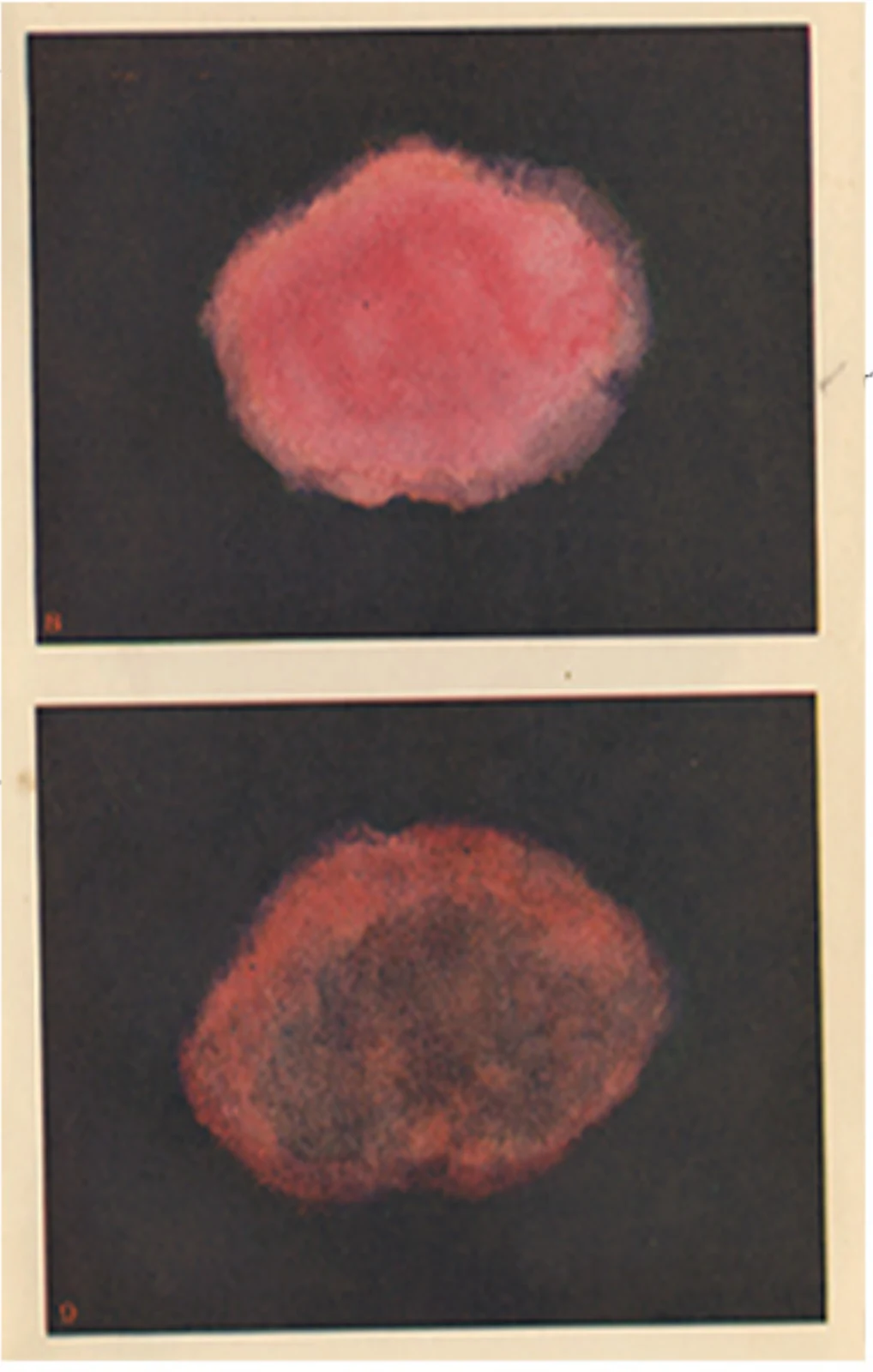
Affection clouds in Thought-Forms (Library edition, 1905), figs. 8–9. Besant and Leadbeater interpret the darker mixture as affection coloured by self-interest.
Annie Besant and C. W. Leadbeater, Thought-Forms (1901). Historical public-domain plate retained from the Library edition. The artists’ interpretation is part of the book’s account. · Image source ↗ · Public Domain
Light from a body and colour in a thought-form
Flammarion imagines light coming from a living body. Besant and Leadbeater describe colours in forms they say they perceived clairvoyantly and ask artists to paint them. The two books give feeling a visible appearance through different kinds of image. [1][8][7][2][3][4]
Read further in the library
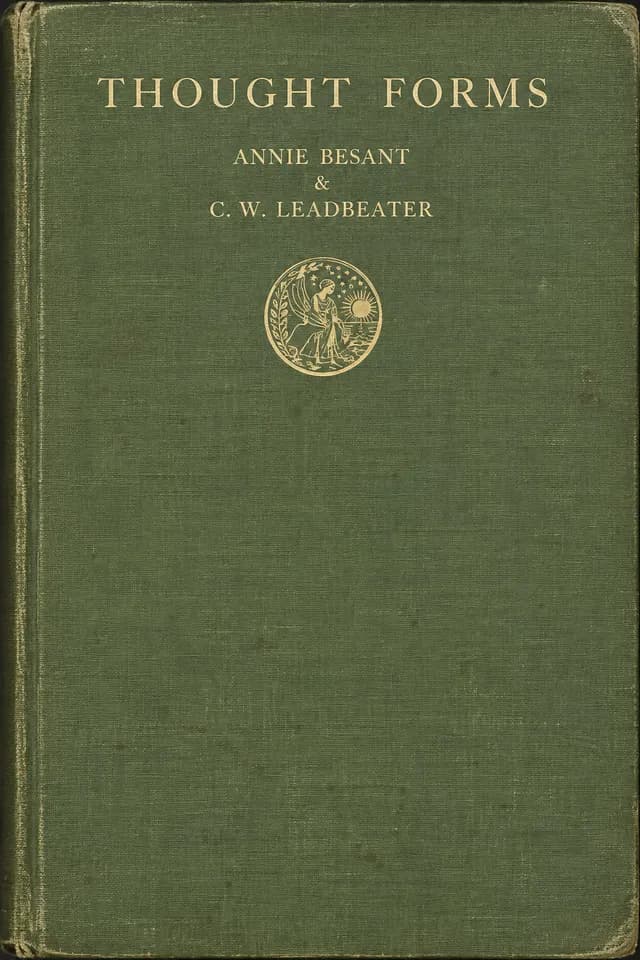
Thought-Forms
Reading note
Separately attributed primary Library account, cited on exact verified Reader leaves.
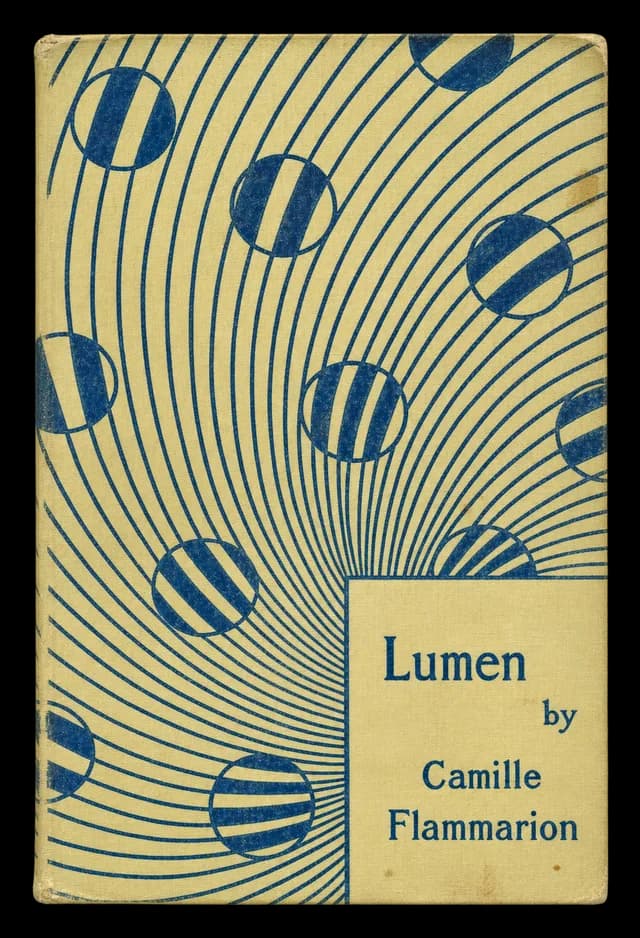
Lumen
Reading note
The separately titled account draws on exact passages in the consulted Library edition.
Sources
See references (8)
- Thought-Forms (1905), printed p. 40 and figs. 8–9, Reader page 23Exact source retained from the earlier attributed Thought-forms account.Read this page in Thought-Forms ↗Return to text ↑
- Lumen, Reader page 213Camille Flammarion, Lumen, authorised English translation by A. A. M. and R. M., Dodd, Mead and Company, New York, 1897. Exact selected Library edition IMJ-0398-E001. Lumen and Quaerens are speakers in the dialogue; claims made by the narrator are attributed to this text. Original PageIDs and current Reader positions are verified separately from printed pagination.Read this page in Lumen ↗Return to text ↑
- Lumen, Reader page 214Camille Flammarion, Lumen, authorised English translation by A. A. M. and R. M., Dodd, Mead and Company, New York, 1897. Exact selected Library edition IMJ-0398-E001. Lumen and Quaerens are speakers in the dialogue; claims made by the narrator are attributed to this text. Original PageIDs and current Reader positions are verified separately from printed pagination.Read this page in Lumen ↗Return to text ↑
- Lumen, Reader page 215Camille Flammarion, Lumen, authorised English translation by A. A. M. and R. M., Dodd, Mead and Company, New York, 1897. Exact selected Library edition IMJ-0398-E001. Lumen and Quaerens are speakers in the dialogue; claims made by the narrator are attributed to this text. Original PageIDs and current Reader positions are verified separately from printed pagination.Read this page in Lumen ↗Return to text ↑
- Lumen, Reader page 203Camille Flammarion, Lumen, authorised English translation by A. A. M. and R. M., Dodd, Mead and Company, New York, 1897. Exact selected Library edition IMJ-0398-E001. Lumen and Quaerens are speakers in the dialogue; claims made by the narrator are attributed to this text. Original PageIDs and current Reader positions are verified separately from printed pagination.Read this page in Lumen ↗Return to text ↑
- Lumen, Reader page 204Camille Flammarion, Lumen, authorised English translation by A. A. M. and R. M., Dodd, Mead and Company, New York, 1897. Exact selected Library edition IMJ-0398-E001. Lumen and Quaerens are speakers in the dialogue; claims made by the narrator are attributed to this text. Original PageIDs and current Reader positions are verified separately from printed pagination.Read this page in Lumen ↗Return to text ↑
- Annie Besant’s foreword, original Library page, Reader page 4Exact source retained from the earlier attributed Thought-forms account.Read this page in Thought-Forms ↗Return to text ↑
- Thought-Forms (1905), printed p. 41, Reader page 24Exact source retained from the earlier attributed Thought-forms account.Read this page in Thought-Forms ↗Return to text ↑