Love philtres
A love philtre is a potion believed to create or retain love. Compare Ovid’s criticism with the stories collected in Magica Sexualis.
In this article
Understanding love philtres
A love philtre is a potion or other preparation believed to create, redirect or retain a particular person’s love. Historical accounts can attribute its effect to ritual words or symbols as well as to the drink itself. In fiction, the potion gives a story a way to show desire changing suddenly. [3][4][5][1][6][7][8][9][10]
See references (9)
- Ovid, Ars Amatoria II.99–108: charms, potions and being lovable
- Magica Sexualis, Reader page 118
- Magica Sexualis, Reader page 131
- Magica Sexualis, Reader page 136
- Magica Sexualis, printed p. 124, Reader page 132
- Magica Sexualis, printed p. 125, Reader page 133
- Magica Sexualis, Reader page 138
- Magica Sexualis, Reader page 148
- Magica Sexualis, Reader page 149
Ars Amatoria by Ovid
In The Art of Love, Book II, lines 99–108, Ovid asks why Medea failed to keep Jason and Circe failed to keep Ulysses if charms can preserve love. He warns that philtres can cause harm. He then tells the lover to cultivate qualities that make a person worth loving. [1]
Circe in a Renaissance etching
Léon Davent’s Circe Drinking, after Parmigianino, shows the enchantress Ovid names. She is in the lower of two compositions mounted on a single album leaf. [2]
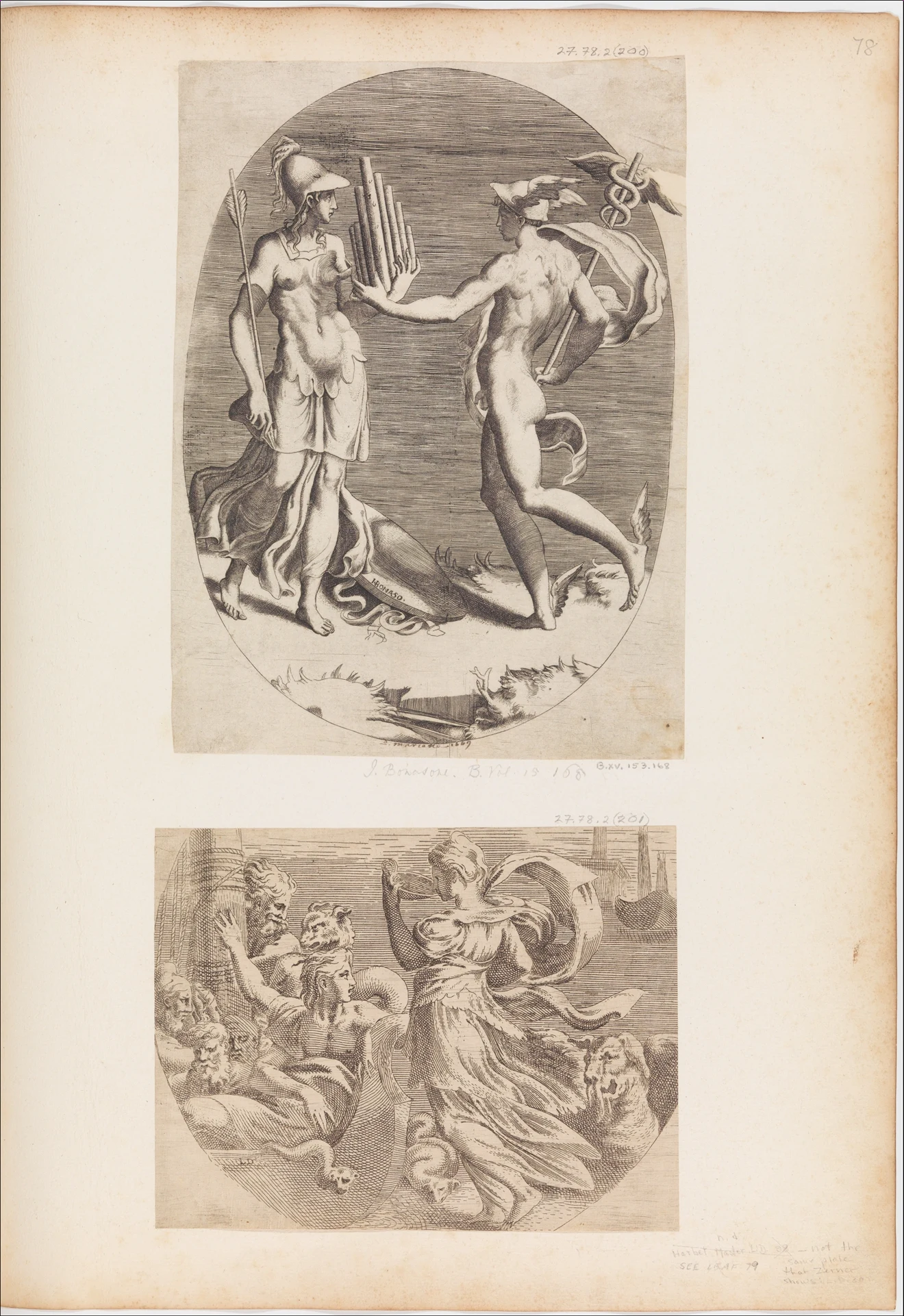
Léon Davent after Parmigianino, Circe Drinking (ca. 1540–45). The lower etching on the album leaf shows Circe.
The Metropolitan Museum of Art, 27.78.2(201). Harris Brisbane Dick Fund, 1927. CC0. · Image source ↗ · CC0
Magica Sexualis by Émile Laurent and Paul Nagour
In Magica Sexualis, Émile Laurent and Paul Nagour include love drinks among charms, images, verses and talismans, in part through a summary attributed to Jules Bois. Elsewhere they report papyrus material through writers including Marcellin Berthelot and use it to bring names, spirits and symbolic affinities into the discussion of potions. [3][11][4][6][7]
The book turns from alleged historical practices to a literary example, Wagner’s Tristan. It also acknowledges Ovid’s refusal to trust charms, then dismisses his remarks as a passing mood. [9][10][5]
See references (8)
Where the two accounts put agency
The compilation explores how a drink or rite was said to affect another person’s feelings. Ovid uses the stories of Medea and Circe to challenge that promise. His advice puts the responsibility on the person who wants to be loved. [5][1][3][11][4]
Read further in the library
Magica Sexualis
Reading note
The separately titled account draws on exact passages in the consulted Library edition.
Sources
See references (11)
- Ovid, Ars Amatoria II.99–108: charms, potions and being lovable ↗Publius Ovidius Naso, Ars Amatoria, Book II, lines 99–108. Original Latin directly consulted in The Latin Library transcription; own paraphrase, no copied modern translation. This selected passage rejects magical means of retaining love, invokes Medea and Circe, warns against philtres and turns to being lovable.Return to text ↑
- The Metropolitan Museum of Art: Circe Drinking, Léon Davent, ca. 1540–45 ↗The Metropolitan Museum of Art, accession 27.78.2(201), Circe Drinking, Léon Davent, after Parmigianino, ca. 1540–45, etching. Official API record and full album-leaf image inspected. Circe is the lower composition; a different print appears above. isPublicDomain true, CC0.Return to text ↑
- Magica Sexualis, Reader page 118Émile Laurent and Paul Nagour, Magica Sexualis, privately printed by Falstaff Press Inc., New York, undated inspected edition. Exact original Library edition IMJ-0105-E001. The work is a historical compilation; its quoted fiction, trial allegations and medical interpretations are not treated as independently verified facts. Current Reader positions are mapped separately from printed pagination.Read this page in Magica Sexualis ↗Return to text ↑
- Magica Sexualis, Reader page 131Émile Laurent and Paul Nagour, Magica Sexualis, privately printed by Falstaff Press Inc., New York, undated inspected edition. Exact original Library edition IMJ-0105-E001. The work is a historical compilation; its quoted fiction, trial allegations and medical interpretations are not treated as independently verified facts. Current Reader positions are mapped separately from printed pagination.Read this page in Magica Sexualis ↗Return to text ↑
- Magica Sexualis, Reader page 136Émile Laurent and Paul Nagour, Magica Sexualis, privately printed by Falstaff Press Inc., New York, undated inspected edition. Exact original Library edition IMJ-0105-E001. The work is a historical compilation; its quoted fiction, trial allegations and medical interpretations are not treated as independently verified facts. Current Reader positions are mapped separately from printed pagination.Read this page in Magica Sexualis ↗Return to text ↑
- Magica Sexualis, printed p. 124, Reader page 132Émile Laurent and Paul Nagour, Magica Sexualis, privately printed by Falstaff Press Inc., New York, undated inspected edition. Exact original Library edition IMJ-0105-E001. The work is a historical compilation; its quoted fiction, trial allegations and medical interpretations are not treated as independently verified facts. Current Reader positions are mapped separately from printed pagination.Read this page in Magica Sexualis ↗Return to text ↑
- Magica Sexualis, printed p. 125, Reader page 133Émile Laurent and Paul Nagour, Magica Sexualis, privately printed by Falstaff Press Inc., New York, undated inspected edition. Exact original Library edition IMJ-0105-E001. The work is a historical compilation; its quoted fiction, trial allegations and medical interpretations are not treated as independently verified facts. Current Reader positions are mapped separately from printed pagination.Read this page in Magica Sexualis ↗Return to text ↑
- Magica Sexualis, Reader page 138Émile Laurent and Paul Nagour, Magica Sexualis, privately printed by Falstaff Press Inc., New York, undated inspected edition. Exact original Library edition IMJ-0105-E001. The work is a historical compilation; its quoted fiction, trial allegations and medical interpretations are not treated as independently verified facts. Current Reader positions are mapped separately from printed pagination.Read this page in Magica Sexualis ↗Return to text ↑
- Magica Sexualis, Reader page 148Émile Laurent and Paul Nagour, Magica Sexualis, privately printed by Falstaff Press Inc., New York, undated inspected edition. Exact original Library edition IMJ-0105-E001. The work is a historical compilation; its quoted fiction, trial allegations and medical interpretations are not treated as independently verified facts. Current Reader positions are mapped separately from printed pagination.Read this page in Magica Sexualis ↗Return to text ↑
- Magica Sexualis, Reader page 149Émile Laurent and Paul Nagour, Magica Sexualis, privately printed by Falstaff Press Inc., New York, undated inspected edition. Exact original Library edition IMJ-0105-E001. The work is a historical compilation; its quoted fiction, trial allegations and medical interpretations are not treated as independently verified facts. Current Reader positions are mapped separately from printed pagination.Read this page in Magica Sexualis ↗Return to text ↑
- Magica Sexualis, Reader page 119Émile Laurent and Paul Nagour, Magica Sexualis, privately printed by Falstaff Press Inc., New York, undated inspected edition. Exact original Library edition IMJ-0105-E001. The work is a historical compilation; its quoted fiction, trial allegations and medical interpretations are not treated as independently verified facts. Current Reader positions are mapped separately from printed pagination.Read this page in Magica Sexualis ↗Return to text ↑