Lipika, the Recorders of Karma
Who are the Lipika in Theosophy? Compare Blavatsky’s recorders of karma and the Ring Pass-Not with the four beings on Hodson’s fiery cross.
In this article
What do the Lipika record?
The Lipika are heavenly recorders in Theosophical accounts of karma. They are said to keep track of actions and their consequences across lives. The record also has a cosmic role in accounts of how a universe takes shape. [4][5][6][2][3]
The Secret Doctrine by H. P. Blavatsky
In The Secret Doctrine, H. P. Blavatsky describes the Lipika as recording actions and making the plan of a universe available to its builders. She also assigns them a role in drawing the Ring Pass-Not, which marks a limit between manifested existence and pure spirit. [2][3]
The Kingdom of the Gods by Geoffrey Hodson
In The Kingdom of the Gods, Geoffrey Hodson calls the Lipika archangels of time and law. He describes four recorders, compares them with the Christian Recording Angel and gives their planetary representatives a role in the administration of karma. [7][4][5][6]
Hodson arranges the four on the ends of the horizontal arms of a fiery cross. Those arms meet a vertical axis at the centre, where he places the Logos. He gives the rotating cross a role in formation and uses it to locate the recorders in relation to the directions. [5][8][6]
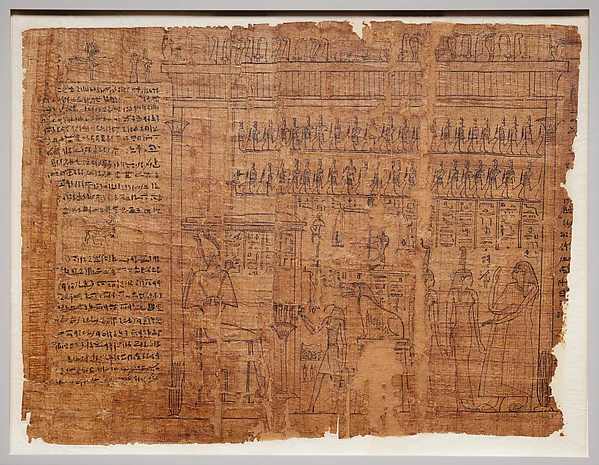
This Egyptian funerary papyrus depicts judgment before Osiris. The baboons are emblems of Thoth in the museum’s identification. The image provides context for a separate tradition of recording and judgment.
Part of a funerary papyrus showing the judgment before Osiris. The Metropolitan Museum of Art. Purchase, Fletcher Fund and The Guide Foundation Inc. Gift, 1966. · Image source ↗ · CC0
The ring and the cross
Blavatsky’s ring gives the manifested world a limit. Hodson’s cross positions four recorders around an axis. Both descriptions extend record keeping to the scale of a universe and give the recorders different places within it. [5][8][6][2][3]
In the library
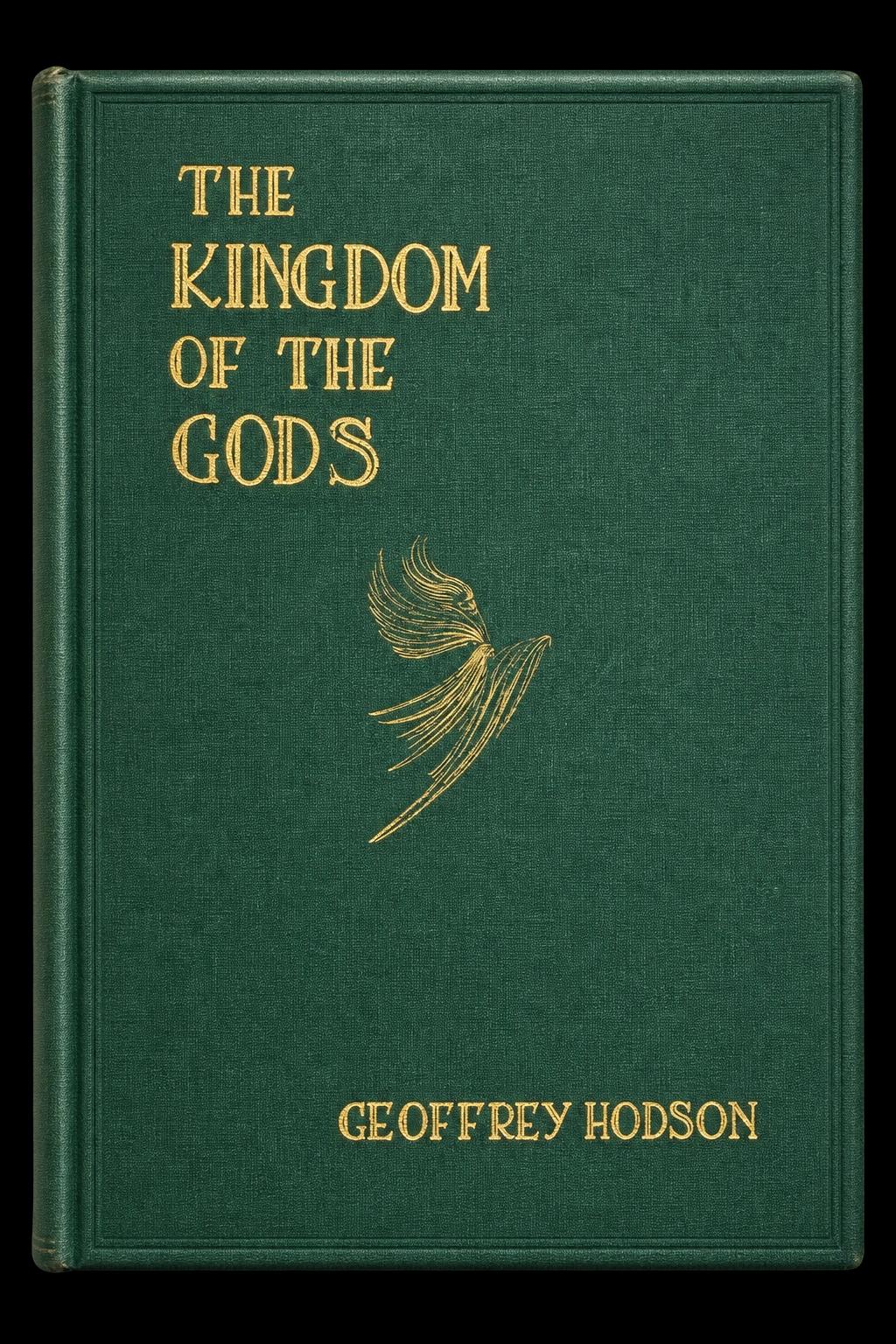
The Kingdom of the Gods
Reading note
The separately titled account draws on exact passages in the consulted Library edition.
Sources
See references (8)
- Part of a funerary papyrus showing the judgment before Osiris ↗Part of a funerary papyrus showing the judgment before Osiris. The Metropolitan Museum of Art. Purchase, Fletcher Fund and The Guide Foundation Inc. Gift, 1966.
- The Secret Doctrine, vol. I, pp. 103–105 ↗H. P. Blavatsky, The Secret Doctrine, first edition, 1888, vol. I, pp. 103–105, Theosophical University Press transcription.
- The Secret Doctrine, vol. I, pp. 128–130 ↗H. P. Blavatsky, The Secret Doctrine, first edition, 1888, vol. I, pp. 128–130, Theosophical University Press transcription.
- The Kingdom of the Gods, Reader page 64Geoffrey Hodson, The Kingdom of the Gods, Theosophical Publishing House, first published 1952, thirteenth reprint 2007. Lumitheca Library edition IMJ-0606-E001.Read this page in The Kingdom of the Gods ↗
- The Kingdom of the Gods, Reader page 65Geoffrey Hodson, The Kingdom of the Gods, Theosophical Publishing House, first published 1952, thirteenth reprint 2007. Lumitheca Library edition IMJ-0606-E001.Read this page in The Kingdom of the Gods ↗
- The Kingdom of the Gods, Reader page 67Geoffrey Hodson, The Kingdom of the Gods, Theosophical Publishing House, first published 1952, thirteenth reprint 2007. Lumitheca Library edition IMJ-0606-E001.Read this page in The Kingdom of the Gods ↗
- The Kingdom of the Gods, Reader page 63Geoffrey Hodson, The Kingdom of the Gods, Theosophical Publishing House, first published 1952, thirteenth reprint 2007. Lumitheca Library edition IMJ-0606-E001.Read this page in The Kingdom of the Gods ↗
- The Kingdom of the Gods, Reader page 66Geoffrey Hodson, The Kingdom of the Gods, Theosophical Publishing House, first published 1952, thirteenth reprint 2007. Lumitheca Library edition IMJ-0606-E001.Read this page in The Kingdom of the Gods ↗