Kīha-pū
Kīha-pū is a named Hawaiian conch trumpet associated with Waipiʻo. Explore how its voice is acquired, lost and recovered in two accounts.
In this article
What is Kīha-pū?
Kīha-pū is a named Hawaiian pū, or shell trumpet, associated with the chiefs of Waipiʻo. Its sound carries across the valley. In the stories, a blast can summon people, disturb a ceremony or announce the return of a prized object. [1][2][4][5]
A dog named Puapualenalena helps recover the conch in both accounts below. The chief who needs the dog’s help and the person holding the conch differ between the two stories. [2][6][7]
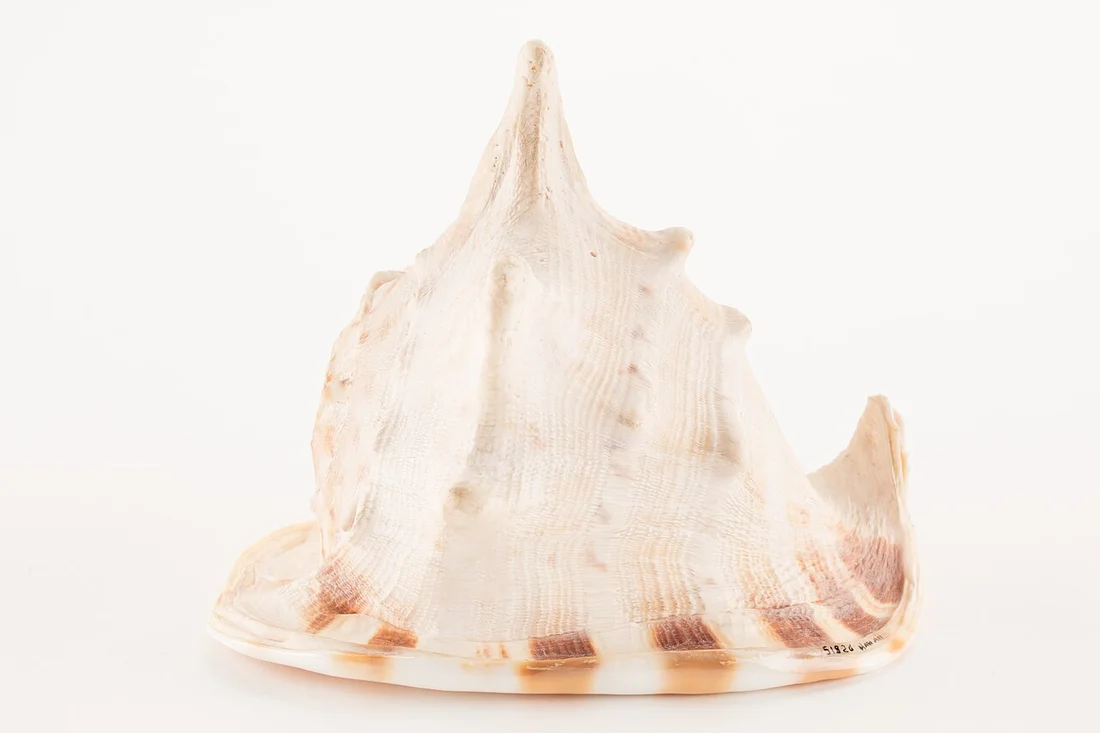
A Hawaiian pū in Auckland War Memorial Museum, accession 1985.173. This instrument illustrates the form of a conch trumpet.
Auckland War Memorial Museum Tāmaki Paenga Hira, object 1985.173. Resized and converted to WebP. · Image source ↗ · CC BY 4.0
See references (6)
The Legends and Myths of Hawaii by David Kalākaua
In David Kalākaua’s The Legends and Myths of Hawaii, Kiha leaves the shell in a cave near the summit of Mauna Kea. He hears a blast during a storm and takes it as a sign that Lono has sounded the conch. After Ika steals it, Kiha consults the priests at Paʻakalani. [8][5][9]
Puapualenalena carries the shell back, lays it at Kiha’s feet and dies. Kiha rouses Waipiʻo by sounding the conch. The story ends the episode with its rededication to Lono. [6][10][7][11]
See references (7)
- The Legends and Myths of Hawaii, Reader page 256
- The Legends and Myths of Hawaii, Reader page 265
- The Legends and Myths of Hawaii, Reader page 267
- The Legends and Myths of Hawaii, Reader page 255
- The Legends and Myths of Hawaii, Reader page 261
- The Legends and Myths of Hawaii, Reader page 266
- The Legends and Myths of Hawaii, Reader page 268
Kīha-pū in Unwritten Literature of Hawaii by Nathaniel B. Emerson
In Unwritten Literature of Hawaii, Nathaniel B. Emerson describes Kāne sounding a conch so loudly in Waipiʻo that priests cannot conduct their rites. Līloa enlists Puapualenalena, who recovers the shell. Emerson also discusses the instrument identified as Kīha-pū in his time. [2]
Who has the conch and why must it be recovered?
Kalākaua’s story follows a chief trying to recover his own trumpet from Ika. In Emerson’s account, Līloa seeks it because Kāne’s use of it interrupts worship. Puapualenalena retrieves the conch in both accounts. [5][7][2]
Read further in the library
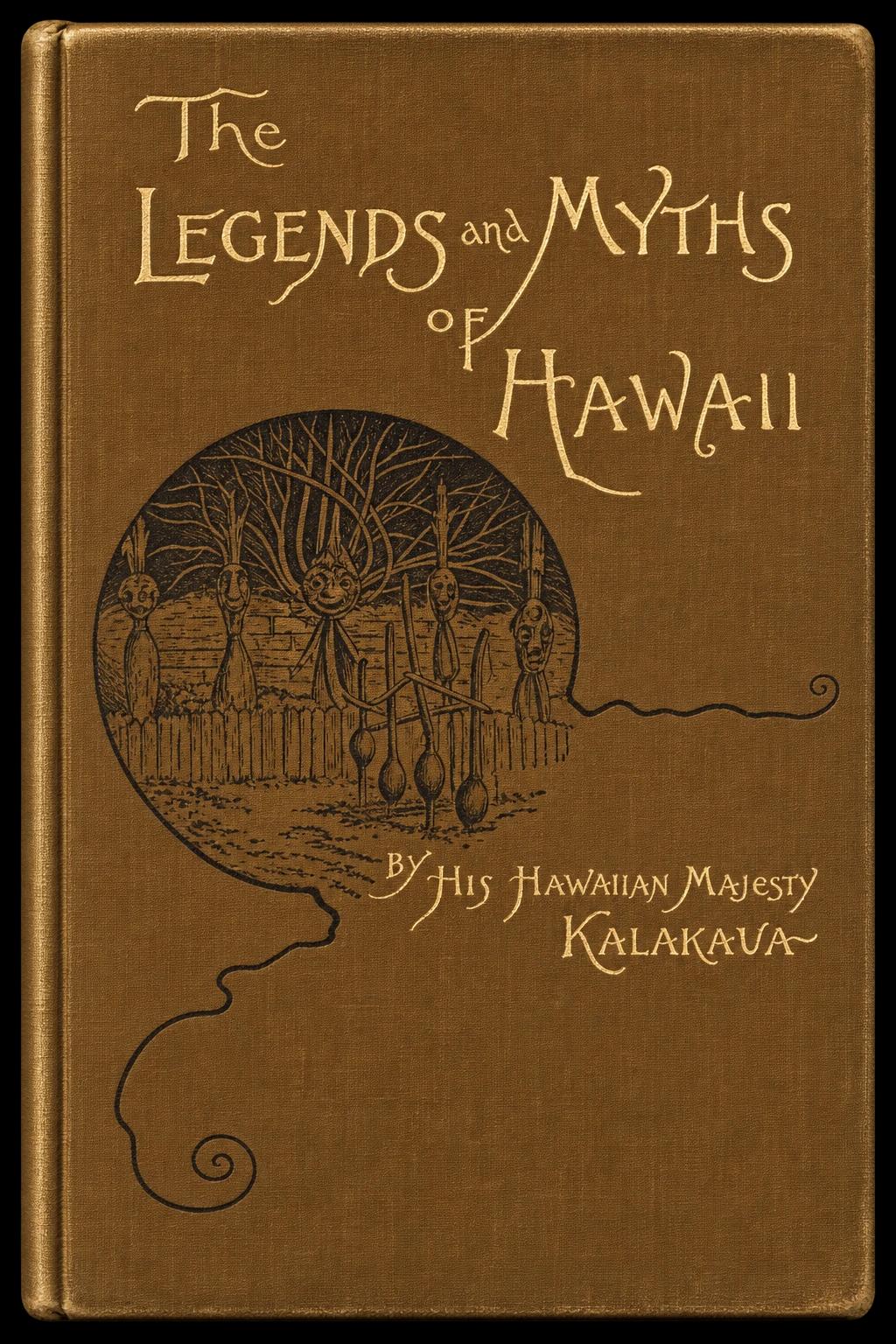
The Legends and Myths of Hawaii
Reading note
The separately titled account draws on exact passages in the consulted Library edition.
Sources
See references (11)
- Hawaiian pū, Spencer Museum of Art ↗Spencer Museum of Art, object 41314, catalogue discussion of the shell horn.Return to text ↑
- Unwritten Literature of Hawaii, chapter XVIII, printed pp. 130–132 ↗Nathaniel B. Emerson, Unwritten Literature of Hawaii, Bureau of American Ethnology Bulletin 38, 1909, chapter XVIII, Kīha-pū and Puapualenalena.Return to text ↑
- Hawaiian pū, Auckland War Memorial Museum 1985.173 ↗Auckland War Memorial Museum Tāmaki Paenga Hira, object 1985.173. Resized and converted to WebP.
- The Legends and Myths of Hawaii, Reader page 253David Kalākaua, The Legends and Myths of Hawaii, edited with an introduction by Rollin Mallory Daggett, Charles L. Webster & Company, 1888. Exact Library edition IMJ-0646-E001. When the introduction or a signed editorial passage is used, its author is identified in the article.Read this page in The Legends and Myths of Hawaii ↗Return to text ↑
- The Legends and Myths of Hawaii, Reader page 256David Kalākaua, The Legends and Myths of Hawaii, edited with an introduction by Rollin Mallory Daggett, Charles L. Webster & Company, 1888. Exact Library edition IMJ-0646-E001. When the introduction or a signed editorial passage is used, its author is identified in the article.Read this page in The Legends and Myths of Hawaii ↗Return to text ↑
- The Legends and Myths of Hawaii, Reader page 265David Kalākaua, The Legends and Myths of Hawaii, edited with an introduction by Rollin Mallory Daggett, Charles L. Webster & Company, 1888. Exact Library edition IMJ-0646-E001. When the introduction or a signed editorial passage is used, its author is identified in the article.Read this page in The Legends and Myths of Hawaii ↗Return to text ↑
- The Legends and Myths of Hawaii, Reader page 267David Kalākaua, The Legends and Myths of Hawaii, edited with an introduction by Rollin Mallory Daggett, Charles L. Webster & Company, 1888. Exact Library edition IMJ-0646-E001. When the introduction or a signed editorial passage is used, its author is identified in the article.Read this page in The Legends and Myths of Hawaii ↗Return to text ↑
- The Legends and Myths of Hawaii, Reader page 255David Kalākaua, The Legends and Myths of Hawaii, edited with an introduction by Rollin Mallory Daggett, Charles L. Webster & Company, 1888. Exact Library edition IMJ-0646-E001. When the introduction or a signed editorial passage is used, its author is identified in the article.Read this page in The Legends and Myths of Hawaii ↗Return to text ↑
- The Legends and Myths of Hawaii, Reader page 261David Kalākaua, The Legends and Myths of Hawaii, edited with an introduction by Rollin Mallory Daggett, Charles L. Webster & Company, 1888. Exact Library edition IMJ-0646-E001. When the introduction or a signed editorial passage is used, its author is identified in the article.Read this page in The Legends and Myths of Hawaii ↗Return to text ↑
- The Legends and Myths of Hawaii, Reader page 266David Kalākaua, The Legends and Myths of Hawaii, edited with an introduction by Rollin Mallory Daggett, Charles L. Webster & Company, 1888. Exact Library edition IMJ-0646-E001. When the introduction or a signed editorial passage is used, its author is identified in the article.Read this page in The Legends and Myths of Hawaii ↗Return to text ↑
- The Legends and Myths of Hawaii, Reader page 268David Kalākaua, The Legends and Myths of Hawaii, edited with an introduction by Rollin Mallory Daggett, Charles L. Webster & Company, 1888. Exact Library edition IMJ-0646-E001. When the introduction or a signed editorial passage is used, its author is identified in the article.Read this page in The Legends and Myths of Hawaii ↗Return to text ↑