Karkotaka
Karkotaka is the nāga who bites Nala and changes his appearance. Read how the disguise protects the exiled king and what finally restores him.
In this article
Who is Karkotaka?
Karkotaka is a nāga in the Mahābhārata who helps the exiled king Nala by changing his appearance. Nala rescues him from a fire, and the serpent bites him. Karkotaka explains that the change will keep Nala from being recognised and that the venom is meant to torment the being possessing him. [3][4][5][6]
Indian Myth and Legend by Donald A. Mackenzie
In Indian Myth and Legend, Donald A. Mackenzie says the sage Narada cursed Karkotaka to remain motionless until Nala came. The serpent shrinks so Nala can carry him away from the fire. On the way out, he tells Nala to count his steps, then bites him and makes him unrecognisable. [3][4]
Karkotaka sends him to serve Rituparna as a charioteer named Vahuka. When Nala learns the secret of dice, Kali leaves his body and describes the pain the serpent’s venom has caused him. Nala remains in disguise. [4][5]
At the reunion with Damayanti, Nala remembers Karkotaka and puts on the garment he was given, regaining his former appearance. A footnote also links the serpent with Vasuka and Shesha. That is Mackenzie’s identification. [4][6][3]
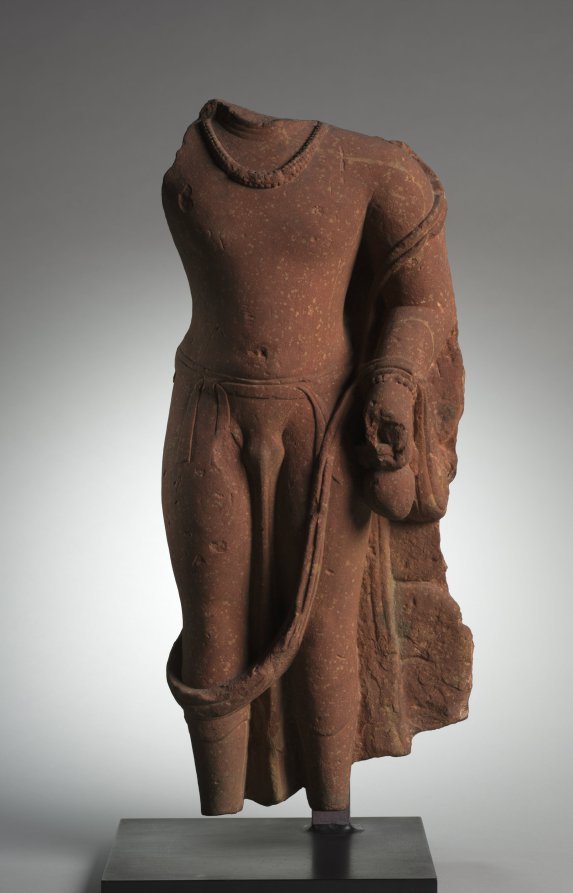
A fourth-century serpent divinity from Mathura. The sculpture shows nāga imagery. Its individual identity is unknown.
Cleveland Museum of Art, Purchase from the J. H. Wade Fund, 1943.661. Public domain image, CC0; resized and converted to JPEG. · Image source ↗ · CC0
Karkotaka in the Mahabharata, Vana Parva LXVI
In Vana Parva LXVI, translated by Kisari Mohan Ganguli, Karkotaka sends Nala to Rituparna to exchange knowledge of horses for knowledge of dice. He gives him two pieces of celestial cloth that will restore his appearance when he puts them on while remembering the serpent. [1]
A disguise, an escape and a return
Mackenzie puts the bite just before the tenth step. Ganguli puts it at that step and describes two pieces of cloth. Both give Nala’s recovery several stages. The protective bite, Kali’s departure and the return of Nala’s familiar appearance happen at different moments. Other Nagas, such as those who help Bhima, use their power for a different kind of restoration. [4][5][1][7][8]
Read further in the library
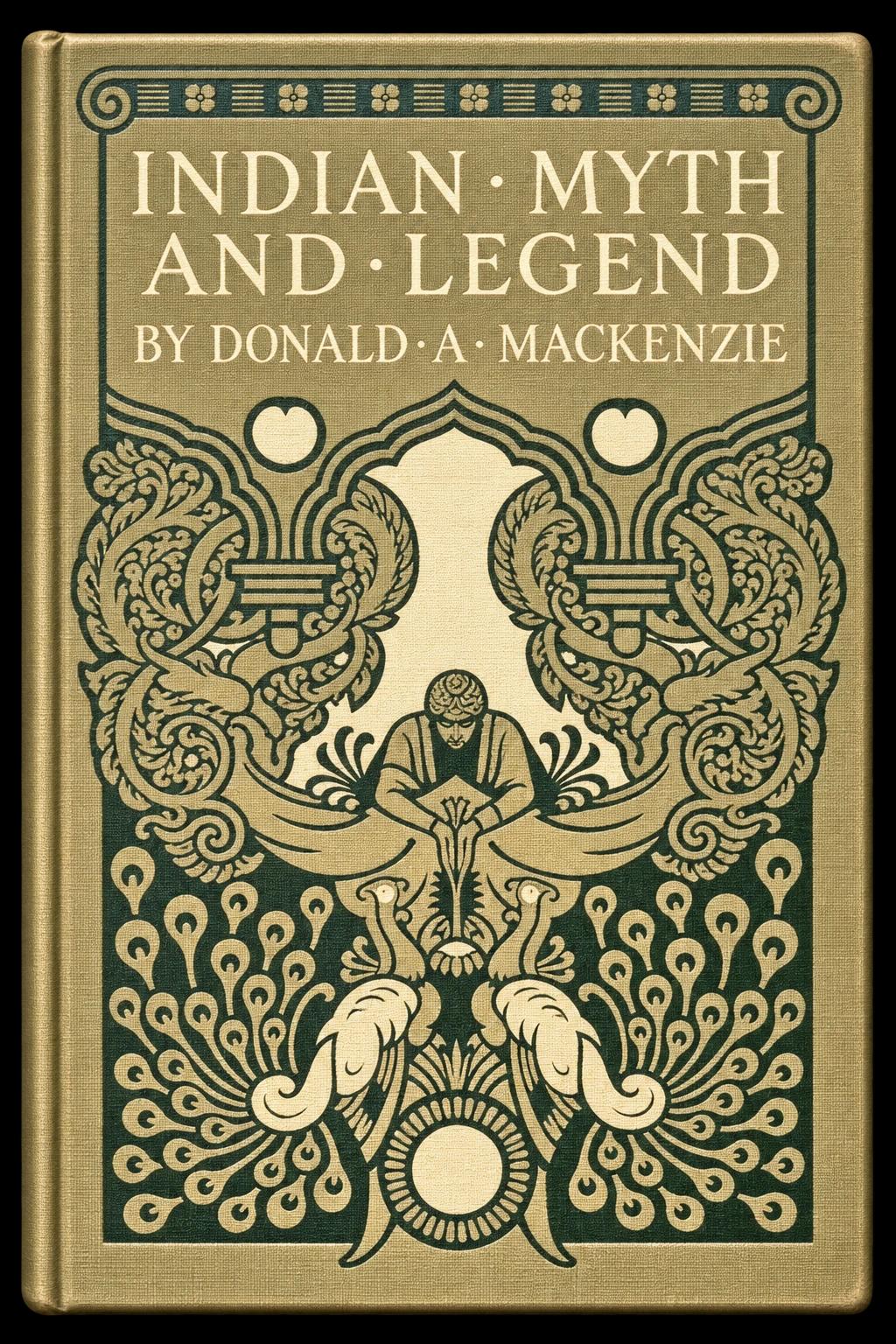
Indian Myth and Legend
Reading note
The separately titled account draws on exact passages in the consulted Library edition.
Sources
See references (8)
- Mahabharata, Vana Parva LXVI, translated by Kisari Mohan Ganguli ↗Complete short Karkotaka section directly read. The bite at the tenth step, the venom’s target, instructions about Rituparna and two pieces of celestial cloth were checked.Return to text ↑
- Naga (Serpent Divinity), 300s CE ↗Cleveland Museum of Art, Purchase from the J. H. Wade Fund, 1943.661. Public domain image, CC0; resized and converted to JPEG.
- Indian Myth and Legend, Reader page 443Donald A. Mackenzie, Indian Myth and Legend, Gresham Publishing Company Limited, London, undated consulted impression. Library edition IMJ-0649-E001. Persistent PageIDs and current Reader positions verified against the supplied PDF and cached Reader manifest. Embedded translations are Mackenzie’s presentation unless a separately consulted primary text is named.Read this page in Indian Myth and Legend ↗Return to text ↑
- Indian Myth and Legend, Reader page 444Donald A. Mackenzie, Indian Myth and Legend, Gresham Publishing Company Limited, London, undated consulted impression. Library edition IMJ-0649-E001. Persistent PageIDs and current Reader positions verified against the supplied PDF and cached Reader manifest. Embedded translations are Mackenzie’s presentation unless a separately consulted primary text is named.Read this page in Indian Myth and Legend ↗Return to text ↑
- Indian Myth and Legend, Reader page 452Donald A. Mackenzie, Indian Myth and Legend, Gresham Publishing Company Limited, London, undated consulted impression. Library edition IMJ-0649-E001. Persistent PageIDs and current Reader positions verified against the supplied PDF and cached Reader manifest. Embedded translations are Mackenzie’s presentation unless a separately consulted primary text is named.Read this page in Indian Myth and Legend ↗Return to text ↑
- Indian Myth and Legend, Reader page 460Donald A. Mackenzie, Indian Myth and Legend, Gresham Publishing Company Limited, London, undated consulted impression. Library edition IMJ-0649-E001. Persistent PageIDs and current Reader positions verified against the supplied PDF and cached Reader manifest. Embedded translations are Mackenzie’s presentation unless a separately consulted primary text is named.Read this page in Indian Myth and Legend ↗Return to text ↑
- Indian Myth and Legend, Reader page 262Donald A. Mackenzie, Indian Myth and Legend, Gresham Publishing Company Limited, London, undated consulted impression. Library edition IMJ-0649-E001. Persistent PageIDs and current Reader positions verified against the supplied PDF and cached Reader manifest. Embedded translations are Mackenzie’s presentation unless a separately consulted primary text is named.Read this page in Indian Myth and Legend ↗Return to text ↑
- Indian Myth and Legend, Reader page 263Donald A. Mackenzie, Indian Myth and Legend, Gresham Publishing Company Limited, London, undated consulted impression. Library edition IMJ-0649-E001. Persistent PageIDs and current Reader positions verified against the supplied PDF and cached Reader manifest. Embedded translations are Mackenzie’s presentation unless a separately consulted primary text is named.Read this page in Indian Myth and Legend ↗Return to text ↑