Kaigen
Kaigen is the Buddhist eye-opening ceremony. Learn how it consecrates a household altar or image, from Hearn’s proverb to the Great Buddha of Tōdai-ji.
In this article
What is kaigen?
Kaigen, or eye-opening, is a Buddhist ritual for consecrating an image or other object for worship. Painting the pupils can form part of the ceremony for a statue. In Japanese Sōtō Zen, eye-opening can also mark the installation of a household altar or memorial tablet. [4][5][1][2]
The Great Buddha’s consecration in 752
The Great Buddha at Tōdai-ji received its eye-opening in 752, with the monk Bodhisena presiding. The ceremony drew imperial and monastic participants. The Nara National Museum’s Shōsō-in glossary describes the ceremony, and objects associated with it include brushes and other materials for painting the pupils. [2]
The temple records that work to recast the statue’s head began in 1686. The renewed image was rededicated in 1692. [6][7]
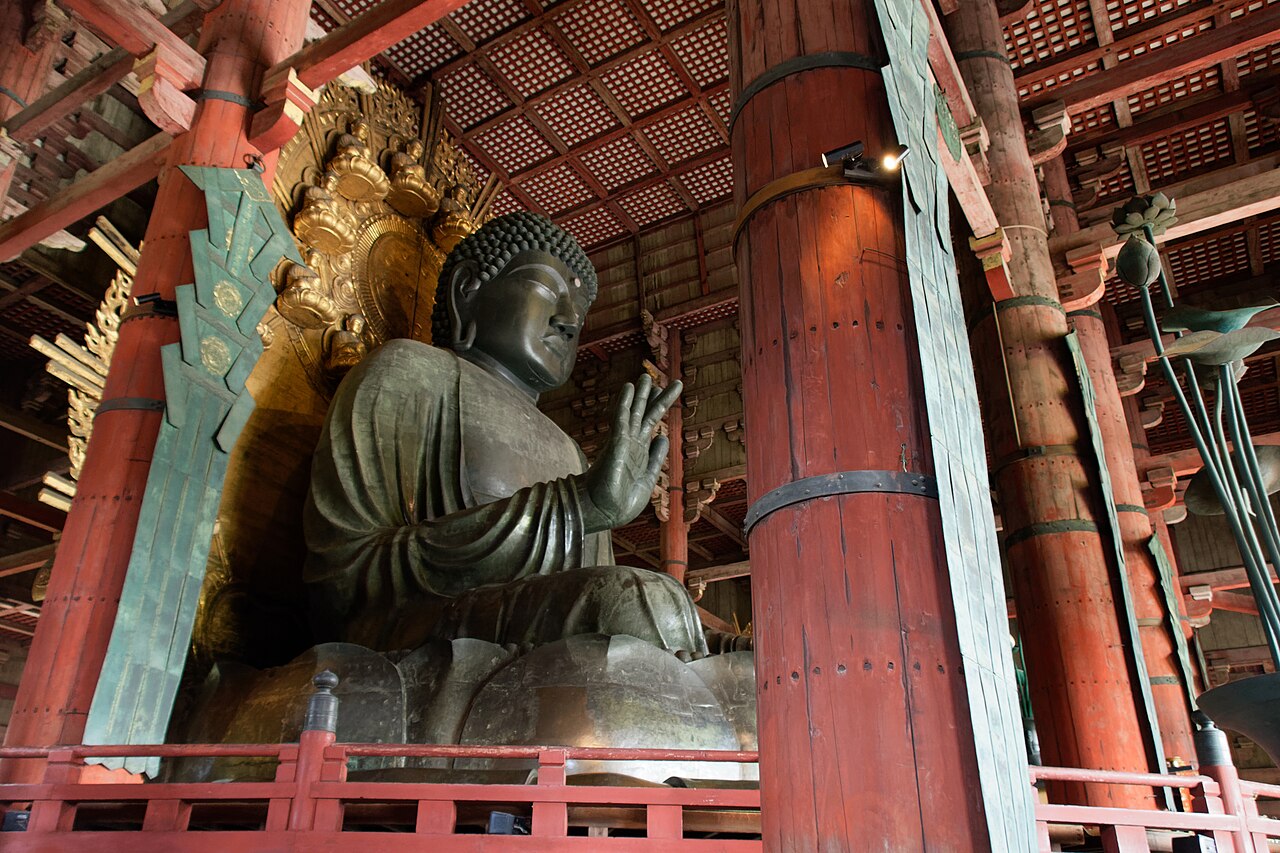
Vairocana at Tōdai-ji as photographed in 2016. The first eye-opening took place in 752. The present head dates from later restoration.
Gilles Desjardins / Wikimedia Commons, CC BY-SA 4.0. Resized. · Image source ↗ · CC BY-SA 4.0
Eye-opening in Sotoshu’s household account
Sōtō Zen’s household guide explains that a temple priest may be asked to conduct eye-opening for a new altar, its principal image or a memorial tablet. The guide also discusses reconsecration after work on an object. It describes the ceremony as giving life to the image and establishing a sacred place. [1]
In Ghostly Japan by Lafcadio Hearn
In Japanese Buddhist Proverbs, Lafcadio Hearn records a saying about making a Buddha without putting in its soul. He explains that the Buddha here is an image that has been made but has yet to undergo kaigen. The saying applies to any task that appears finished while an essential step is still missing. [4][5]
Hearn describes the consecrated image as receiving the presence of the being it represents. His explanation shows why the proverb treats an image’s completion and its consecration as two distinct moments. [5][4]
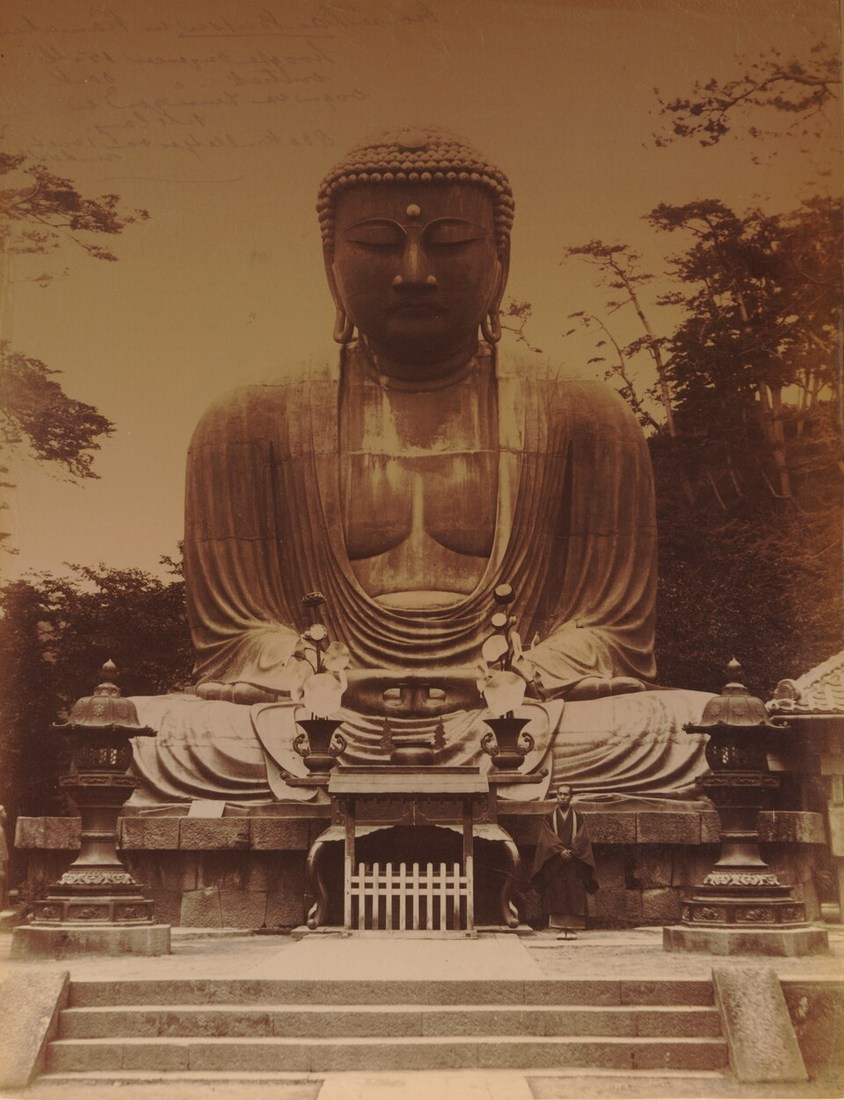
Kusakabe Kimbei photographed the Great Buddha at Kamakura around 1890. The separate consecration account below concerns the Vairocana statue at Tōdai-ji in Nara.
Kusakabe Kimbei, circa 1890, KITLV 110621, via Wikimedia Commons. Public domain; resized and converted to JPEG. · Image source ↗ · Public Domain
See references (2)
From a household altar to the Great Buddha
The Nara dedication made consecration a public event. Sōtō guidance places it within continuing household practice. Hearn’s proverb takes the shared distinction into everyday speech: making an object is one step, and giving it a place in worship is another. [5][1][4][2]
Read further in the library
In Ghostly Japan
Reading note
The separately titled account draws on exact passages in the consulted Library edition.
Sources
See references (7)
- Sotoshu: The Butsudan, A Family Buddha Altar, section When a New Buddha Altar is Purchased ↗The institution’s own description of the eye-opening ceremony, directly read. It includes images, tablets, refurbishment and replacement within its particular altar practice.Return to text ↑
- Nara National Museum: Consecration Ceremony of the Great Buddha, Shosoin Treasures glossary ↗Museum’s own account of the 752 Todaiji ceremony and preserved ritual implements, directly read. The historic event is distinct from the photograph of Kamakura used for general image context.Return to text ↑
- Kusakabe Kimbei, Buddha statue at Daibutsu, Kamakura, Japan, circa 1890 ↗Kusakabe Kimbei, circa 1890, KITLV 110621, via Wikimedia Commons. Public domain; resized and converted to JPEG.
- In Ghostly Japan, Reader page 167Lafcadio Hearn, In Ghostly Japan, Little, Brown, and Company, Boston, 1899. Exact consulted Library edition IMJ-0654-E001, with title page visually checked. Persistent PageIDs and current Reader positions are verified from the supplied edition. Embedded stories, translations and quotations are attributed to Hearn’s presentation unless an original source has separately been consulted.Read this page in In Ghostly Japan ↗Return to text ↑
- In Ghostly Japan, Reader page 168Lafcadio Hearn, In Ghostly Japan, Little, Brown, and Company, Boston, 1899. Exact consulted Library edition IMJ-0654-E001, with title page visually checked. Persistent PageIDs and current Reader positions are verified from the supplied edition. Embedded stories, translations and quotations are attributed to Hearn’s presentation unless an original source has separately been consulted.Read this page in In Ghostly Japan ↗Return to text ↑
- Tōdai-ji, History, 17th and 18th centuries: recasting and rededication ↗Tōdai-jiReturn to text ↑
- Gilles Desjardins, Daibutsu at Tōdai-ji, Nara, 2016 ↗Gilles Desjardins / Wikimedia Commons, CC BY-SA 4.0. Resized.Return to text ↑