Intuition
Intuition is understanding that seems to arrive at once. Compare Arundale’s idea of direct knowledge with Steiner’s examples of unnoticed impressions.
In this article
Understanding the concept
Intuition is understanding or recognition that seems to arrive without a visible chain of reasoning. Some spiritual writers take it to be a kind of direct knowledge. The experience of coming to a conclusion suddenly can feel the same whether its origin is obvious, unnoticed or attributed to a deeper consciousness. [6][7][8][1][2][3][4]
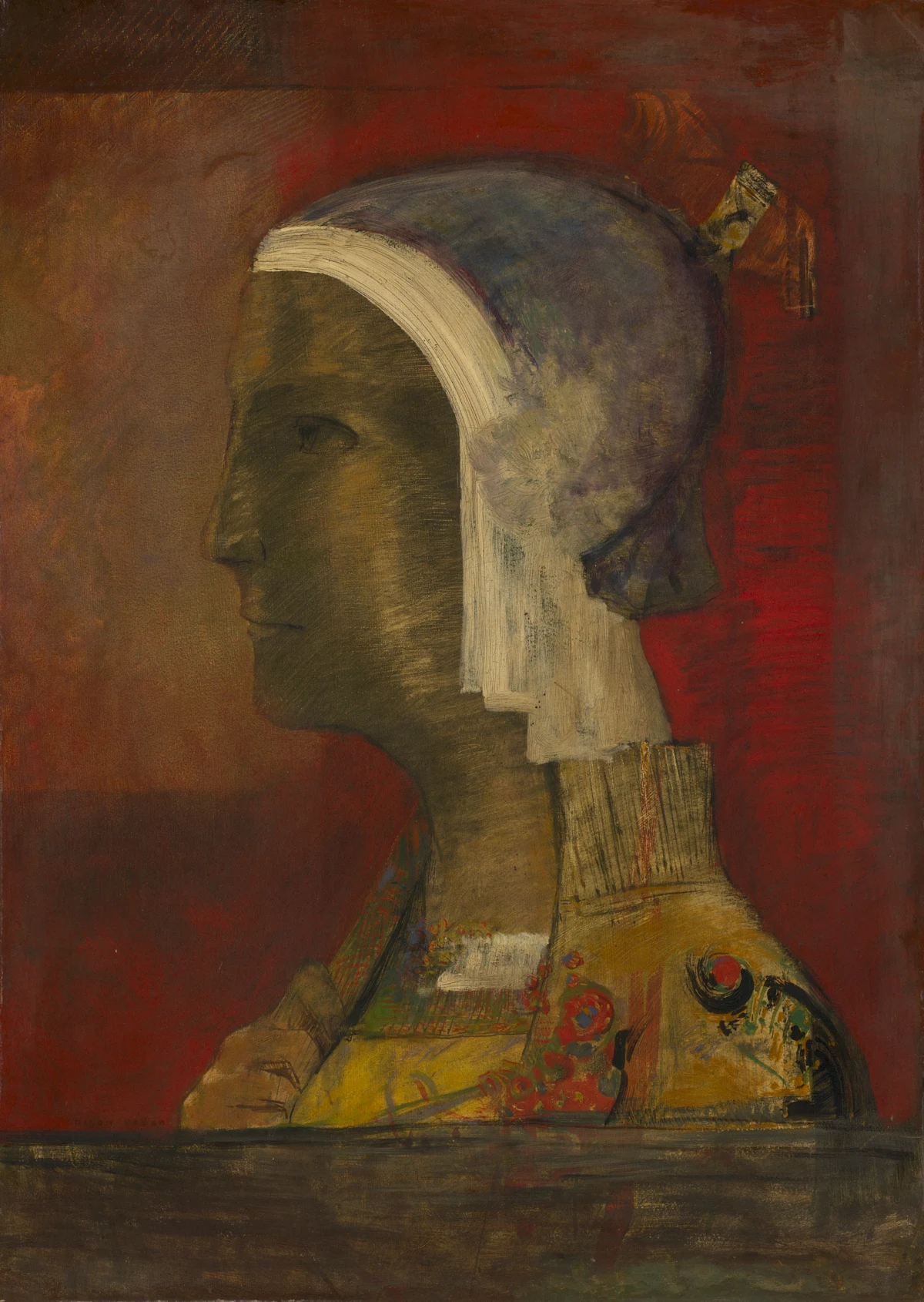
Odilon Redon, Symbolic Head, ca. 1890. The framing draws the eye inward, a quality the Cleveland Museum of Art connects with the Symbolist interest in an inner life.
The Cleveland Museum of Art, Gift of the Mildred Andrews Fund, 1988.91. CC0. Resized and converted to WebP without crop or recolouring. · Image source ↗ · CC0
See references (7)
- Knowledge of the Higher Worlds and Its Attainment, Reader page 77
- Knowledge of the Higher Worlds and Its Attainment, Reader page 78
- Knowledge of the Higher Worlds and Its Attainment, Reader page 129
- Knowledge of the Higher Worlds and Its Attainment, Reader page 130
- Kundalini: An Occult Experience, printed p. 5, Reader page 21
- Kundalini: An Occult Experience, printed p. 65, Reader page 67
- Kundalini: An Occult Experience, printed p. 66, Reader page 68
Kundalini: An Occult Experience by George S. Arundale
George S. Arundale says Kundalini brings the higher and lower bodies into closer contact. He values a clearer intuition above clairvoyance. For him the greater change is in how a person knows, as waking awareness takes on what he calls Buddhic and later Nirvanic consciousness. [9][7][8]
Arundale trusts an impression he takes to come from a depth beyond private desires. In the introduction he lets his experiences stand without corroboration and acknowledges the influence of the observer’s own disposition. [7][8][11][12]
The practical aim is service. He wants insight to help a person recognize another’s needs and insists that advice be offered with discretion. An eagerness to help can get in the way. [10]
See references (6)
- Kundalini: An Occult Experience, printed p. 65, Reader page 67
- Kundalini: An Occult Experience, printed p. 66, Reader page 68
- Kundalini: An Occult Experience, printed p. 64, Reader page 66
- Kundalini: An Occult Experience, printed p. 67, Reader page 69
- Kundalini: An Occult Experience, printed p. xv, Reader page 11
- Kundalini: An Occult Experience, Reader page 15
Knowledge of the Higher Worlds by Rudolf Steiner
Rudolf Steiner gives two examples of thoughts that seem to arise on their own. A railway passenger remembers someone after overlooking a resemblance seen from the carriage. Another person thinks a death was foreseen after forgetting an earlier glimpse of a report about the illness. Steiner asks students to stay willing to give up an idea when sound reasoning calls for it. [1][2][3][4]
Where a sudden thought comes from
Arundale describes an ideal of insight free from private distortion. Steiner describes how a sight or a phrase may leave an impression whose source never became clear to the observer. The force or speed of an impression alone leaves that question open. [7][8][1][2][3][4][9][10]
See references (8)
- Knowledge of the Higher Worlds and Its Attainment, Reader page 77
- Knowledge of the Higher Worlds and Its Attainment, Reader page 78
- Knowledge of the Higher Worlds and Its Attainment, Reader page 129
- Knowledge of the Higher Worlds and Its Attainment, Reader page 130
- Kundalini: An Occult Experience, printed p. 65, Reader page 67
- Kundalini: An Occult Experience, printed p. 66, Reader page 68
- Kundalini: An Occult Experience, printed p. 64, Reader page 66
- Kundalini: An Occult Experience, printed p. 67, Reader page 69
Read further in the library
Knowledge of the Higher Worlds and Its Attainment
Reading note
Separately attributed primary Library account, cited on exact verified Reader leaves.

Kundalini: An Occult Experience
Reading note
The separately titled account draws on exact passages in the consulted Library edition.
Sources
See references (12)
- Knowledge of the Higher Worlds and Its Attainment, Reader page 77Rudolf Steiner, Knowledge of the Higher Worlds and Its Attainment, authorized English translation by G. Metaxa, edited by Harry Collison, Anthroposophic Press, New York City. Exact Library edition IMJ-0513-E001. No publication year is visible on the inspected title page; the repository assigns 1932. Claims of supersensible perception remain attributed to Steiner.Read this page in Knowledge of the Higher Worlds and Its Attainment ↗Return to text ↑
- Knowledge of the Higher Worlds and Its Attainment, Reader page 78Rudolf Steiner, Knowledge of the Higher Worlds and Its Attainment, authorized English translation by G. Metaxa, edited by Harry Collison, Anthroposophic Press, New York City. Exact Library edition IMJ-0513-E001. No publication year is visible on the inspected title page; the repository assigns 1932. Claims of supersensible perception remain attributed to Steiner.Read this page in Knowledge of the Higher Worlds and Its Attainment ↗Return to text ↑
- Knowledge of the Higher Worlds and Its Attainment, Reader page 129Rudolf Steiner, Knowledge of the Higher Worlds and Its Attainment, authorized English translation by G. Metaxa, edited by Harry Collison, Anthroposophic Press, New York City. Exact Library edition IMJ-0513-E001. No publication year is visible on the inspected title page; the repository assigns 1932. Claims of supersensible perception remain attributed to Steiner.Read this page in Knowledge of the Higher Worlds and Its Attainment ↗Return to text ↑
- Knowledge of the Higher Worlds and Its Attainment, Reader page 130Rudolf Steiner, Knowledge of the Higher Worlds and Its Attainment, authorized English translation by G. Metaxa, edited by Harry Collison, Anthroposophic Press, New York City. Exact Library edition IMJ-0513-E001. No publication year is visible on the inspected title page; the repository assigns 1932. Claims of supersensible perception remain attributed to Steiner.Read this page in Knowledge of the Higher Worlds and Its Attainment ↗Return to text ↑
- Odilon Redon, Symbolic Head, c. 1890, Cleveland Museum of Art, 1988.91 ↗Cleveland Museum of Art, Gift of the Mildred Andrews Fund. Collection API identifies the image as CC0.
- Kundalini: An Occult Experience, printed p. 5, Reader page 21George S. Arundale, Kundalini: An Occult Experience, The Theosophical Publishing House, Adyar, Madras, India, 1938. Consulted Library edition IMJ-0227-E001.Read this page in Kundalini: An Occult Experience ↗Return to text ↑
- Kundalini: An Occult Experience, printed p. 65, Reader page 67George S. Arundale, Kundalini: An Occult Experience, The Theosophical Publishing House, Adyar, Madras, India, 1938. Consulted Library edition IMJ-0227-E001.Read this page in Kundalini: An Occult Experience ↗Return to text ↑
- Kundalini: An Occult Experience, printed p. 66, Reader page 68George S. Arundale, Kundalini: An Occult Experience, The Theosophical Publishing House, Adyar, Madras, India, 1938. Consulted Library edition IMJ-0227-E001.Read this page in Kundalini: An Occult Experience ↗Return to text ↑
- Kundalini: An Occult Experience, printed p. 64, Reader page 66George S. Arundale, Kundalini: An Occult Experience, The Theosophical Publishing House, Adyar, Madras, India, 1938. Consulted Library edition IMJ-0227-E001.Read this page in Kundalini: An Occult Experience ↗Return to text ↑
- Kundalini: An Occult Experience, printed p. 67, Reader page 69George S. Arundale, Kundalini: An Occult Experience, The Theosophical Publishing House, Adyar, Madras, India, 1938. Consulted Library edition IMJ-0227-E001.Read this page in Kundalini: An Occult Experience ↗Return to text ↑
- Kundalini: An Occult Experience, printed p. xv, Reader page 11George S. Arundale, Kundalini: An Occult Experience, The Theosophical Publishing House, Adyar, Madras, India, 1938. Consulted Library edition IMJ-0227-E001.Read this page in Kundalini: An Occult Experience ↗Return to text ↑
- Kundalini: An Occult Experience, Reader page 15George S. Arundale, Kundalini: An Occult Experience, The Theosophical Publishing House, Adyar, Madras, India, 1938. Consulted Library edition IMJ-0227-E001.Read this page in Kundalini: An Occult Experience ↗Return to text ↑