How to Read the Tao Te Ching for the First Time
Start with seven Tao Te Ching chapters on water, empty space and action. Compare two translations and open each chapter at its exact Reader page.
In this article
Find a chapter to begin with
Choose an image or question you recognise. Each selection opens at the start of the chapter in Walter Gorn Old’s edition.
- Chapter 1
Naming the Way
The opening tests what can be said or named about the Way.
Open in the Reader - Chapter 8
Water and conduct
Look for the highest good compared to water and its willingness to take the low place.
Open in the Reader - Chapter 11
The use of empty space
Thirty spokes meet at a wheel hub. Then look at what a vessel and a room have in common.
Open in the Reader - Chapter 37
Acting without forcing
The Way acts without contrivance. The chapter turns that idea towards a ruler’s conduct.
Open in the Reader - Chapter 48
Learning by doing less
The pursuit of learning is set beside the daily lessening involved in following the Way.
Open in the Reader - Chapter 64
Small beginnings
Find the first step of the long journey alongside a young shoot and the beginnings of a building.
Open in the Reader - Chapter 78
Softness and strength
Water returns as something yielding that overcomes what is hard.
Open in the Reader
Three passages in two translations
Compare the short phrases below. The chapter guide follows the rest of each passage and shows where the translators’ choices matter.
Chapter 1 · The Way
- James Legge
- “that can be trodden” keeps the language of walking.
- Walter Gorn Old
- “the subject of discussion” foregrounds what can be talked about.
Chapter 8 · The water image
- James Legge
- “The highest excellence” introduces the analogy.
- Walter Gorn Old
- “The greatest virtue” gives the comparison a different emphasis.
Chapter 11 · The open centre
- James Legge
- “the empty space (for the axle)” makes the purpose of the opening explicit.
- Walter Gorn Old
- “where nothing exists” leads into the contrast between existence and non-existence.
Where should you start?
Start with chapter 8 if you want a concrete image. It compares excellent conduct to water, which helps other things and settles in places people avoid. Then try chapter 11, where the open spaces in a wheel, a vessel and a room make each useful. Return to chapter 1 when you want to see what the book does with the word ‘Way’ itself. The chapters are short enough to read in that order and then revisit. [8][7][10][9][6]
On the first pass, pick out one image and follow the sentence that draws a lesson from it. Then read the same chapter in another translation and ask where you felt the argument change. Water is a good test case. Both translators retain the image, while their choices of ‘virtue’ and ‘excellence’ make the implied quality sound different in English. [8][7]
Why the chapter number is your best reference
Tao Te Ching and Daodejing are romanisations of the same Chinese title. The received text is commonly divided into 81 chapters. Chapters 1–37 are associated with the Way, and 38–81 begin with a chapter about virtue or power. Both parts return to both themes. Older finds complicate that ordering: the Mawangdui manuscripts put the part corresponding to chapters 38–81 first, and the Guodian slips preserve a different selection and sequence. [1][2]
The work is traditionally attributed to Laozi. The surviving manuscripts and the history of its transmission make the question of authorship more complicated than a single date or life story. Chen Hongshou’s painting shows the later figure of Laozi riding an ox. Keep that image as part of the book’s reception while using the chapter numbers to find passages across editions. [1][3]
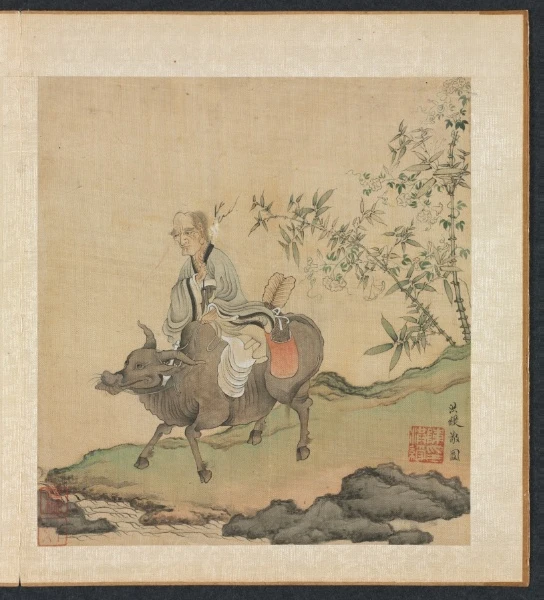
Chen Hongshou pictures Laozi riding toward the left beside water. The album leaf belongs to the much later visual tradition surrounding the figure of Laozi.
Chen Hongshou, ink and colour on silk, 1598–1652. Cleveland Museum of Art, John L. Severance Fund, 1979.27.1.2. CC0. · Image source ↗ · CC0
Chapter 1 · Naming the Way
Legge opens with a Tao that can be ‘trodden.’ The English verb retains the image of a path. Old speaks instead of the Tao as a ‘subject of discussion,’ making the first distinction sound more like a limit on argument or definition. Both versions immediately turn from the Way to what can be named. Read the first two sentences together before trying to settle a single English definition of Tao. [5][6]
The facsimile makes another difference visible. Old gives the chapter the title ‘Marking Out the Path’ and separates his commentary from the translation. When his commentary draws on other religious vocabularies, treat that as Old’s reading. Returning to the opening page is a simple way to check where the translation ends and the commentary begins. [6][2][4]
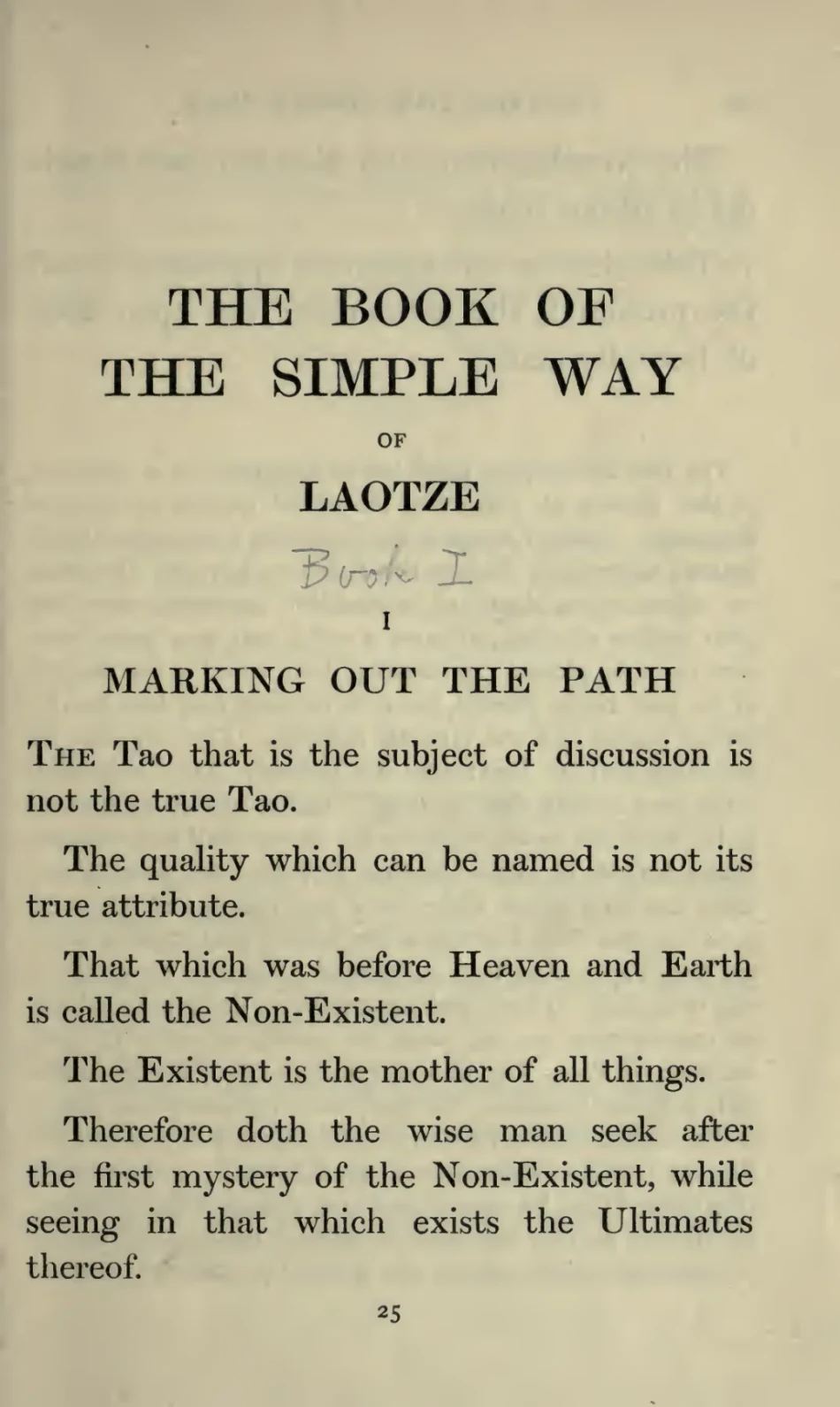
Old supplies a chapter title and sets the translation in larger type. The first chapter’s commentary begins on the following page.
Laozi, translated by Walter Gorn Old, 1904, printed page 25. Public-domain text and Library facsimile. · Image source ↗ · Public Domain
Chapter 8 · Water and conduct
Look at what water does before supplying an abstract meaning. It benefits many things and goes to low places. The rest of the chapter carries the example into conduct, including dwelling, relations and timing. Read chapter 78 after this one to see how the same substance can support a different argument about the strength of what yields. [7][8][17]
See references (3)
Chapter 11 · What can an empty space do?
The image begins with the spokes, then puts the work of the wheel at the empty centre. Both translations extend the point to a vessel and a room. Legge supplies the practical detail of the axle in parentheses. Old’s final sentence makes the relation between existence and non-existence explicit. See how that conclusion arises from the three useful things before carrying it into chapter 1. [9][10][6]
- Wheel
- The spokes make the structure. The opening at the centre gives the axle a place.
- Vessel
- The clay encloses an interior. That interior gives the vessel room to hold things.
- Room
- Walls define a space, and its openings let people in and light through.
Chapter 37 · Acting without forcing
This chapter moves from the Way to the conduct of rulers. It depicts things changing of their own accord under certain conditions. In Old, the ruler can allow things to take shape, and simplicity checks the desire that may arise in the process. Read the whole chapter before taking ‘non-action’ as a slogan. The difficulty is deciding which intervention would distort what could develop on its own. [11][12]
See references (2)
Chapter 48 · What can be reduced?
Legge makes the gaining associated with learning answer to a daily lessening associated with the Way. Old gives the process a strongly personal emphasis by discussing bodily and mental distress. Underline the thing that increases and the thing that decreases in each translation. Then compare chapter 37 to see how both chapters move from a practice of restraint to governing. [13][14][12]
Chapter 64 · The first step and the work before it
The long journey is one of three examples of large things beginning small. A tree grows from a young shoot and a tall structure begins with a heap of earth. The opening lines advise attending to things early. Later lines describe how grasping at them and becoming careless near completion can spoil the work. The famous journey line sits between these two parts of the argument. [15][16]
See references (2)
Chapter 78 · What gives yielding things strength?
Water in chapter 8 gives the reader an example of conduct. In chapter 78 it gives the reader a problem: something soft can prevail over what is hard. The chapter then asks what someone responsible for a state must be able to bear. Read that move from physical image to public responsibility before comparing the final lines in the two translations. [17][18][8]
Read further in the library
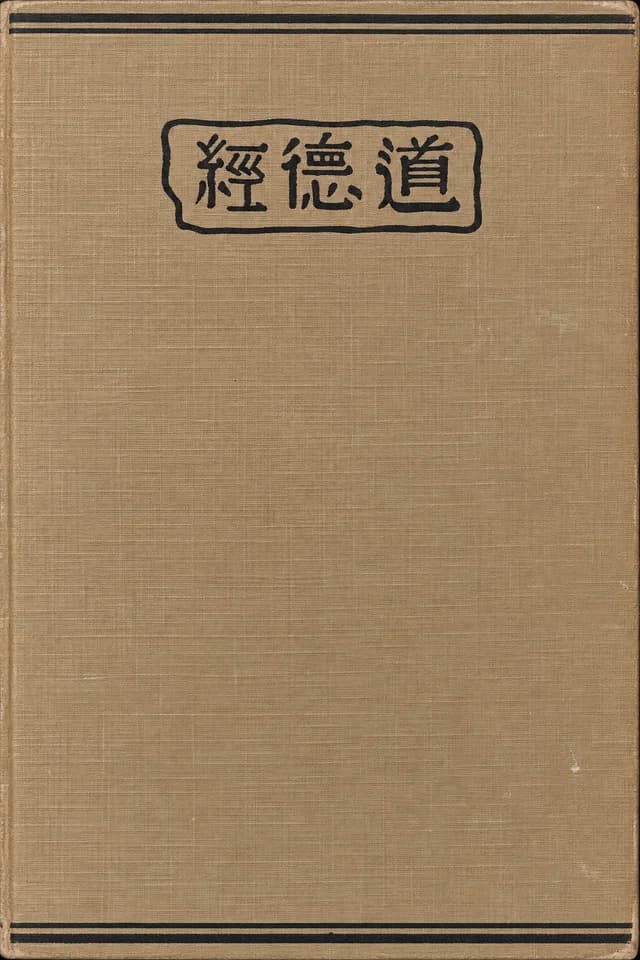
The Book of the Simple Way
Reading note
Read the complete text with Walter Gorn Old’s chapter titles and commentary.
Sources
See references (18)
- Stanford Encyclopedia of Philosophy · Laozi and the early manuscripts ↗Alan K. L. Chan on received divisions, the Mawangdui manuscripts and the Guodian bamboo texts.Return to text ↑
- Wellcome Collection · Walter Gorn Old’s 1904 edition ↗Bibliographic record for The Book of the Simple Way of Laotze, with Old’s introduction and commentary.Return to text ↑
- Laozi Riding an Ox ↗Chen Hongshou, ink and colour on silk, 1598–1652. Cleveland Museum of Art, John L. Severance Fund, 1979.27.1.2. CC0.Return to text ↑
- The opening of The Book of the Simple Way ↗Laozi, translated by Walter Gorn Old, 1904, printed page 25. Public-domain text and Library facsimile.Return to text ↑
- Legge · chapter 1 ↗James Legge’s 1891 translation in The Texts of Taoism, reproduced by the Internet Classics Archive.Return to text ↑
- Old · chapter 1, printed page 25Walter Gorn Old, The Book of the Simple Way, 1904, printed page 25.Read this page in The Book of the Simple Way ↗Return to text ↑
- Legge · chapter 8 ↗James Legge’s 1891 translation in The Texts of Taoism, reproduced by the Internet Classics Archive.Return to text ↑
- Old · chapter 8, printed page 35Walter Gorn Old, The Book of the Simple Way, 1904, printed page 35.Read this page in The Book of the Simple Way ↗Return to text ↑
- Legge · chapter 11 ↗James Legge’s 1891 translation in The Texts of Taoism, reproduced by the Internet Classics Archive.Return to text ↑
- Old · chapter 11, printed page 40Walter Gorn Old, The Book of the Simple Way, 1904, printed page 40.Read this page in The Book of the Simple Way ↗Return to text ↑
- Legge · chapter 37 ↗James Legge’s 1891 translation in The Texts of Taoism, reproduced by the Internet Classics Archive.Return to text ↑
- Old · chapter 37, printed page 85Walter Gorn Old, The Book of the Simple Way, 1904, printed page 85.Read this page in The Book of the Simple Way ↗Return to text ↑
- Legge · chapter 48 ↗James Legge’s 1891 translation in The Texts of Taoism, reproduced by the Internet Classics Archive.Return to text ↑
- Old · chapter 48, printed page 108Walter Gorn Old, The Book of the Simple Way, 1904, printed page 108.Read this page in The Book of the Simple Way ↗Return to text ↑
- Legge · chapter 64 ↗James Legge’s 1891 translation in The Texts of Taoism, reproduced by the Internet Classics Archive.Return to text ↑
- Old · chapter 64, printed page 143Walter Gorn Old, The Book of the Simple Way, 1904, printed page 143.Read this page in The Book of the Simple Way ↗Return to text ↑
- Legge · chapter 78 ↗James Legge’s 1891 translation in The Texts of Taoism, reproduced by the Internet Classics Archive.Return to text ↑
- Old · chapter 78, printed page 172Walter Gorn Old, The Book of the Simple Way, 1904, printed page 172.Read this page in The Book of the Simple Way ↗Return to text ↑