Helios
Helios is the Sun personified in Greek myth. Explore the ancient charioteer and the sun god Dion Fortune introduces in The Goat-Foot God.
In this article
Why is Helios a witness?
Helios is the Sun personified in Greek myth. In Homeric Hymn 31, Selene, the Moon, and Eos, the Dawn, are his sisters. Horses draw his chariot across the sky as his light reaches mortals and gods. [1]
In the Homeric Hymn to Demeter, Demeter asks Helios what happened to Persephone. He saw Hades take her and can tell Demeter that Zeus approved. His view from the sky makes him a witness when almost no one else knows where she went. [2]
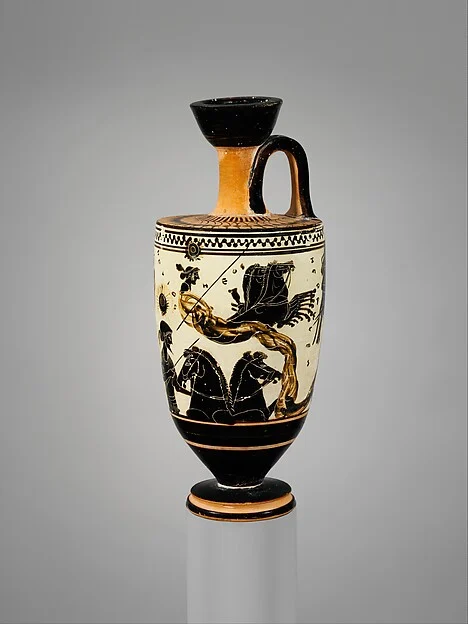
Helios drives a four-horse chariot on this Attic oil flask, attributed to the Sappho Painter, around 500 BCE. An inscription names him.
Sappho Painter. The Metropolitan Museum of Art. Rogers Fund, 1941. 41.162.29. · Image source ↗ · CC0
See references (2)
Helios at the end of The Goat-Foot God
In Dion Fortune’s The Goat-Foot God, Hugh Paston invokes Pan in the grove and sees a light he first takes for dawn. He comes to identify it with Helios, whom he calls an older sun than Apollo. Recalling Jelkes’s words about the unity of the gods, Hugh understands Zeus, Pan and Helios as faces of the All-Father. [4][5][6]
Hugh feels himself summoned to carry life back towards the earth. Fortune brings in the Christian image of the Annunciation to describe his sense of becoming a messenger. One encounter brings together images Hugh knows from several traditions. [5][6][7]
The charioteer and the light Hugh encounters
The hymn and the painted flask give Helios a body, horses and a route across the sky. In Fortune’s grove, Hugh first knows him by a change in the light. He then feels himself drawn into the event, as if he could take part in carrying the Sun’s vitality back to earth. [1][2][3][5][6]
Read further in the library
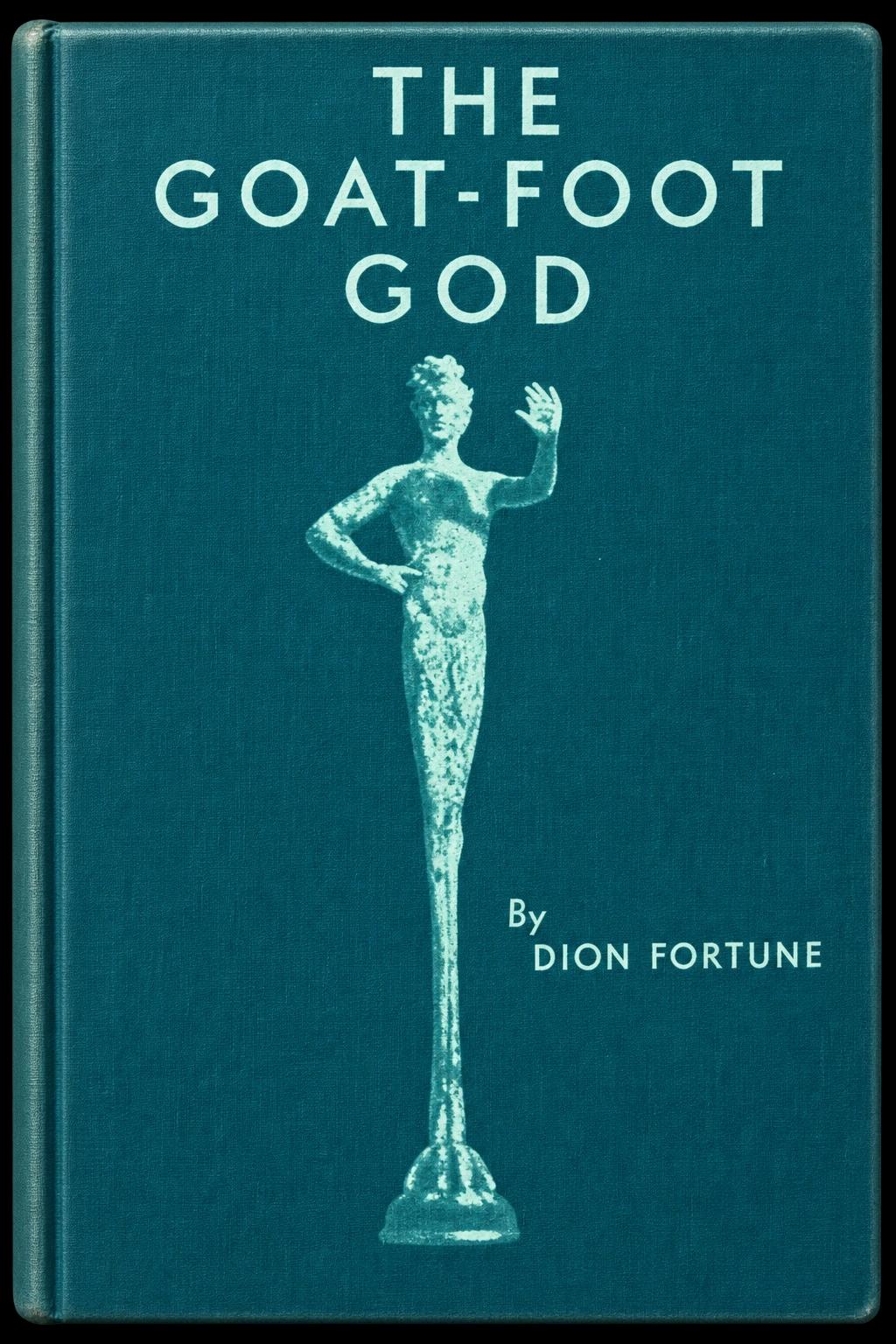
The Goat-Foot God
Reading note
The separately titled account draws on exact passages in the consulted Library edition.
Sources
See references (7)
- Homeric Hymn 31, To Helios ↗Anonymous, Homeric Hymn 31, H. G. Evelyn-White translation (1914).Return to text ↑
- Homeric Hymn to Demeter, lines 62–89 ↗Homeric Hymn to Demeter, the encounter with Helios, H. G. Evelyn-White translation (1914), University of Oslo.Return to text ↑
- Terracotta lekythos (oil flask) ↗Sappho Painter. The Metropolitan Museum of Art. Rogers Fund, 1941. 41.162.29.Return to text ↑
- The Goat-Foot God, Reader page 351Dion Fortune, The Goat-Foot God. Undated digital Library edition IMJ-0643-E001. Numbered references use the Library Reader sequence.Read this page in The Goat-Foot God ↗Return to text ↑
- The Goat-Foot God, Reader page 352Dion Fortune, The Goat-Foot God. Undated digital Library edition IMJ-0643-E001. Numbered references use the Library Reader sequence.Read this page in The Goat-Foot God ↗Return to text ↑
- The Goat-Foot God, Reader page 353Dion Fortune, The Goat-Foot God. Undated digital Library edition IMJ-0643-E001. Numbered references use the Library Reader sequence.Read this page in The Goat-Foot God ↗Return to text ↑
- The Goat-Foot God, Reader page 354Dion Fortune, The Goat-Foot God. Undated digital Library edition IMJ-0643-E001. Numbered references use the Library Reader sequence.Read this page in The Goat-Foot God ↗Return to text ↑