Haunted objects
Haunted objects carry a presence from place to place in folklore. Compare two versions of the deadly robe legend and the records of the 1657 Edo fire.
In this article
What makes an object haunted?
A haunted object is a possession said to carry a presence or influence with it. A garment, portrait or keepsake can link events in different rooms or households, especially when a story associates it with someone who has died. [3][4][5][6]
Psychometry is the separate claim that touching a belonging can reveal something about its owner or past. A haunted-object story attributes what happens to the object’s presence. [4][5][6][8]
In Ghostly Japan by Lafcadio Hearn
In the story Furisode, Lafcadio Hearn sees a long-sleeved robe in a second-hand shop and recalls a legend. A young woman commissions a garment to resemble the clothes of a samurai she once saw. After her death the robe goes to a temple. It is sold and returned as its successive wearers also die. [3][4][5]
The clergy burn the robe. In Hearn’s version, blazing characters from a Nichiren Buddhist invocation take hold of the roof, and the fire sweeps through Edo. Hearn dates it to 1655 and expresses doubt about another version that makes the samurai a transformed water creature. [6][7][2]
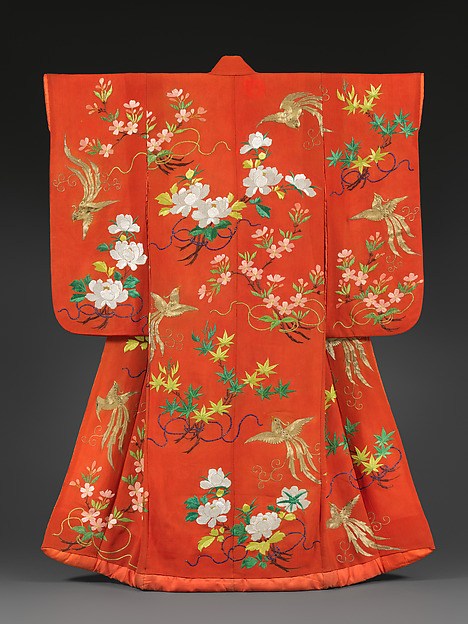
This nineteenth-century furisode in the Met’s collection shows the long sleeves that give the garment its name.
Unidentified Japanese maker. The Metropolitan Museum of Art. Purchase, Anonymous Gift, 2018. CC0. · Image source ↗ · CC0
In Ancient Tales and Folk-lore of Japan
Richard Gordon Smith tells a version of the Edo fire legend in Ancient Tales and Folklore of Japan. After three families give the same dress to a temple in succession, the clergy conclude it holds the spirit of the first owner, O Same. A gust carries a burning sleeve into the ceiling during a ceremony and starts the fire. [9][10][11][22][23]
Other objects in the book serve as tokens of recognition. O Ko’s mother recognises a hairpin she put in her daughter’s coffin, and in another story Yoichi leaves a marked flute after visiting Ichibei. Its sound heralds a later apparition. [12][13][14][15][16][17][18]
In The Kakemono Ghost of Aki Province, an artist hangs a portrait of O Kimi after her death and sees her step out of it night after night. The appearances cease after he gives the scroll to a temple, whose priests pray for her. [19][20]
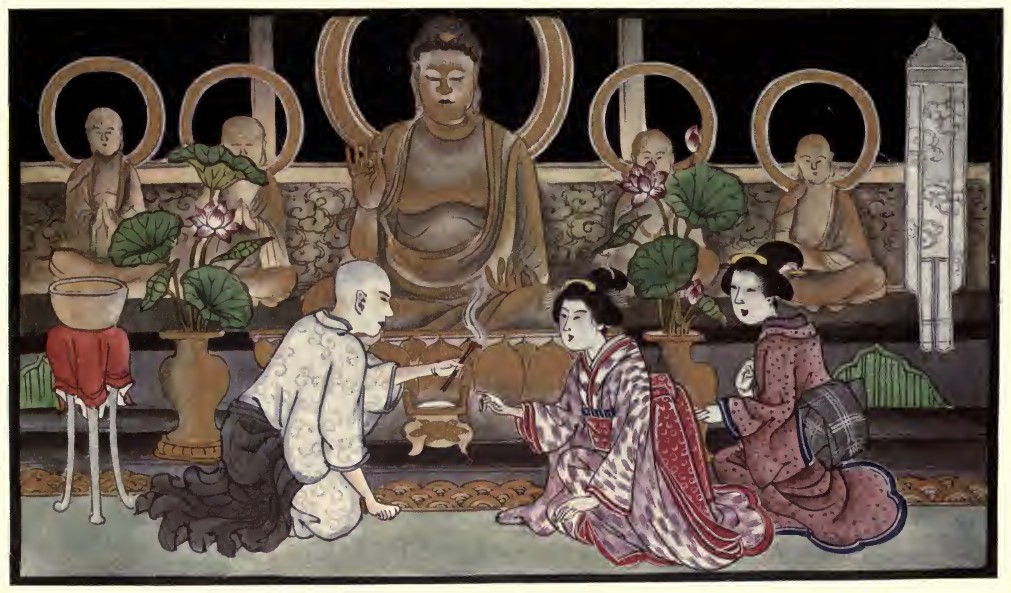
The original plate for Smith’s tale shows O Same meeting the young priest before the dress passes to the temple.
Mo-No-Yuki, after a sketch by Richard Gordon Smith, 1908. Reoriented and cropped from the California Digital Library scan. · Image source ↗ · Public Domain
See references (14)
- Ancient Tales and Folklore of Japan, Reader page 129
- Ancient Tales and Folklore of Japan, Reader page 130
- Ancient Tales and Folklore of Japan, Reader page 131
- Ancient Tales and Folklore of Japan, Reader page 25
- Ancient Tales and Folklore of Japan, Reader page 26
- Ancient Tales and Folklore of Japan, Reader page 27
- Ancient Tales and Folklore of Japan, Reader page 54
- Ancient Tales and Folklore of Japan, Reader page 55
- Ancient Tales and Folklore of Japan, Reader page 56
- Ancient Tales and Folklore of Japan, Reader page 57
- Ancient Tales and Folklore of Japan, Reader page 323
- Ancient Tales and Folklore of Japan, Reader page 332
- Mo-No-Yuki, O Same sees the handsome young priest, plate facing printed p. 82, Library Reader p. 125
- Ancient Tales and Folklore of Japan, plate facing printed p. 82, Reader page 125
The date of the Great Fire of Meireki
The Tokyo Metropolitan Library dates the Great Fire of Meireki to 1657, two years after Hearn’s date. The library describes the reconstruction of Edo and records the fire’s association with the furisode story. [2]
Did a haunted kimono start the Great Fire of Meireki?
The historical record also identifies Ekō-in as a memorial to those who died. Hearn gives the fire flying characters as its origin, while Smith gives it a burning sleeve carried by the wind. Both are explanations within the legend. [9][10][11][12][13][14][15][16][17][18][19][20][3][4][5][21]
See references (16)
- In Ghostly Japan, Reader page 16
- In Ghostly Japan, Reader page 17
- In Ghostly Japan, Reader page 18
- Ancient Tales and Folklore of Japan, Reader page 129
- Ancient Tales and Folklore of Japan, Reader page 130
- Ancient Tales and Folklore of Japan, Reader page 131
- Ancient Tales and Folklore of Japan, Reader page 25
- Ancient Tales and Folklore of Japan, Reader page 26
- Ancient Tales and Folklore of Japan, Reader page 27
- Ancient Tales and Folklore of Japan, Reader page 54
- Ancient Tales and Folklore of Japan, Reader page 55
- Ancient Tales and Folklore of Japan, Reader page 56
- Ancient Tales and Folklore of Japan, Reader page 57
- Ancient Tales and Folklore of Japan, Reader page 323
- Ancient Tales and Folklore of Japan, Reader page 332
- Ekoin Temple
The Other World, edited by Frederick George Lee
In The Other World, Frederick George Lee quotes a classification in which a medium is said to learn about someone through hair, handwriting or worn clothes. The object’s role in this account is to provide a connection to information about a person. [8]
Garment, portrait and keepsake
Hearn’s robe brings trouble into each home to which it passes. Smith’s portrait is the place from which O Kimi repeatedly emerges. His hairpin serves a different role: it gives a mother something she can recognise. [3][4][6][2][5][8]
Read further in the library
In Ghostly Japan
Reading note
The separately titled account draws on exact passages in the consulted Library edition.
The Other World
Reading note
Separately attributed comparison with exact previously researched Library passages.
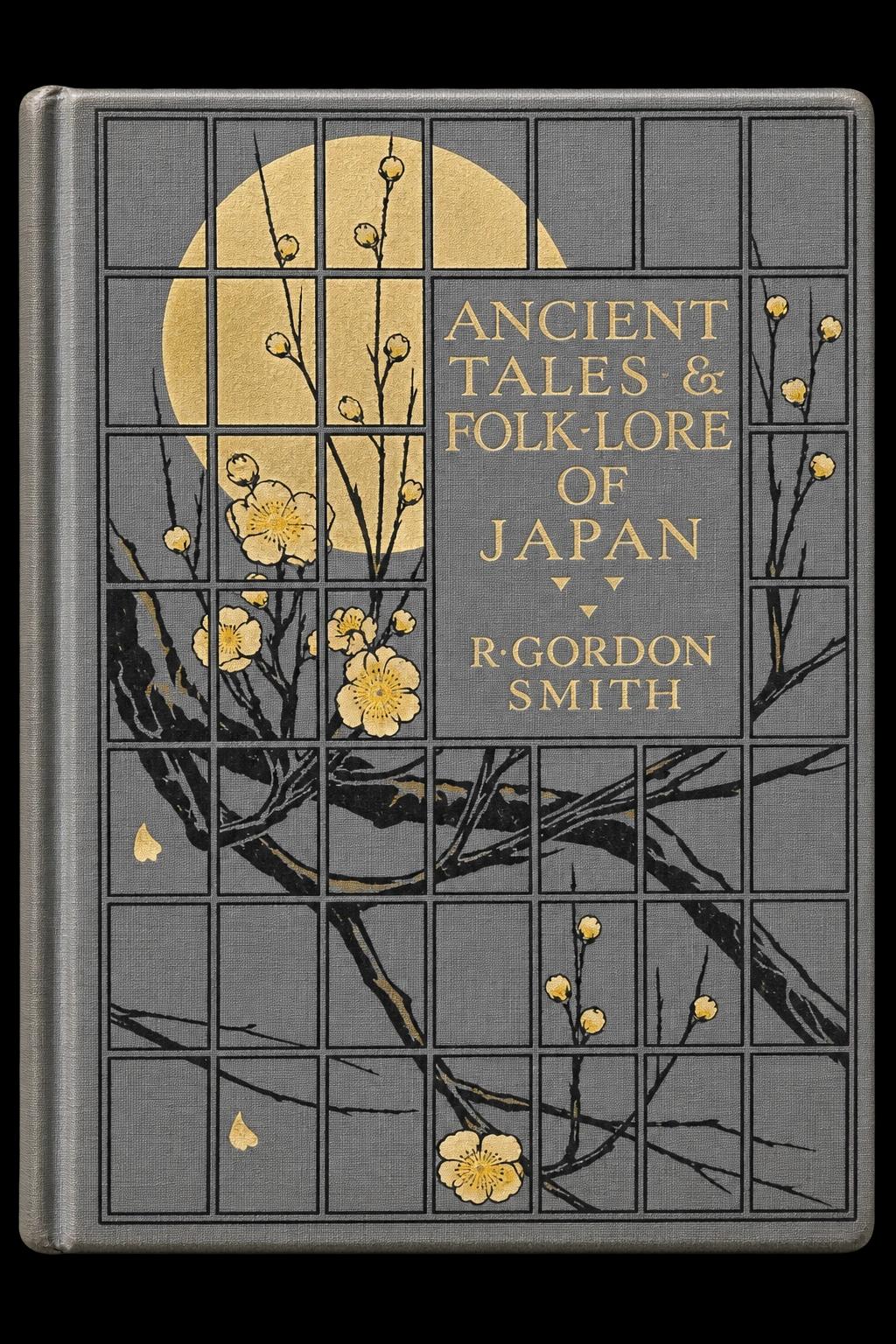
Ancient Tales and Folk-lore of Japan
Reading note
Read Richard Gordon Smith’s separately attributed tale in its Library edition.
Sources
See references (23)
- Unidentified Japanese maker, Long-Sleeved Robe (Furisode) with Phoenixes, Cherry Blossoms, Peonies, and Maple Branches, mid-19th century ↗Historical image identity and public-domain status checked against the retained source metadata. Purchase, Anonymous Gift, 2018
- Reconstruction of the city after the Great Fire of Meireki ↗Tokyo Metropolitan Library’s own historical exhibit, directly consulted. It dates the disaster to 1657, Meireki 3. Its translated month/day wording is not adopted as a verified Gregorian conversion.Return to text ↑
- In Ghostly Japan, Reader page 16Lafcadio Hearn, In Ghostly Japan, Little, Brown, and Company, Boston, 1899. Exact consulted Library edition IMJ-0654-E001, with title page visually checked. Persistent PageIDs and current Reader positions are verified from the supplied edition. Embedded stories, translations and quotations are attributed to Hearn’s presentation unless an original source has separately been consulted.Read this page in In Ghostly Japan ↗Return to text ↑
- In Ghostly Japan, Reader page 17Lafcadio Hearn, In Ghostly Japan, Little, Brown, and Company, Boston, 1899. Exact consulted Library edition IMJ-0654-E001, with title page visually checked. Persistent PageIDs and current Reader positions are verified from the supplied edition. Embedded stories, translations and quotations are attributed to Hearn’s presentation unless an original source has separately been consulted.Read this page in In Ghostly Japan ↗Return to text ↑
- In Ghostly Japan, Reader page 18Lafcadio Hearn, In Ghostly Japan, Little, Brown, and Company, Boston, 1899. Exact consulted Library edition IMJ-0654-E001, with title page visually checked. Persistent PageIDs and current Reader positions are verified from the supplied edition. Embedded stories, translations and quotations are attributed to Hearn’s presentation unless an original source has separately been consulted.Read this page in In Ghostly Japan ↗Return to text ↑
- In Ghostly Japan, Reader page 19Lafcadio Hearn, In Ghostly Japan, Little, Brown, and Company, Boston, 1899. Exact consulted Library edition IMJ-0654-E001, with title page visually checked. Persistent PageIDs and current Reader positions are verified from the supplied edition. Embedded stories, translations and quotations are attributed to Hearn’s presentation unless an original source has separately been consulted.Read this page in In Ghostly Japan ↗Return to text ↑
- In Ghostly Japan, Reader page 20Lafcadio Hearn, In Ghostly Japan, Little, Brown, and Company, Boston, 1899. Exact consulted Library edition IMJ-0654-E001, with title page visually checked. Persistent PageIDs and current Reader positions are verified from the supplied edition. Embedded stories, translations and quotations are attributed to Hearn’s presentation unless an original source has separately been consulted.Read this page in In Ghostly Japan ↗Return to text ↑
- The Other World, Reader page 449Frederick George Lee, editor, The Other World; or, Glimpses of the Supernatural, two volumes, Henry S. King and Co., London, 1875. Exact consulted Library edition IMJ-0657-E001. Narratives and embedded quotations are attributed to this compilation; an original author is not represented as independently consulted merely because Lee quotes them. Reader positions are verified separately from printed pagination.Read this page in The Other World ↗Return to text ↑
- Ancient Tales and Folklore of Japan, Reader page 129Richard Gordon Smith, Ancient Tales and Folklore of Japan. A. & C. Black, London, 1908. Lumitheca Library edition IMJ-0588-E001.Read this page in Ancient Tales and Folk-lore of Japan ↗Return to text ↑
- Ancient Tales and Folklore of Japan, Reader page 130Richard Gordon Smith, Ancient Tales and Folklore of Japan. A. & C. Black, London, 1908. Lumitheca Library edition IMJ-0588-E001.Read this page in Ancient Tales and Folk-lore of Japan ↗Return to text ↑
- Ancient Tales and Folklore of Japan, Reader page 131Richard Gordon Smith, Ancient Tales and Folklore of Japan. A. & C. Black, London, 1908. Lumitheca Library edition IMJ-0588-E001.Read this page in Ancient Tales and Folk-lore of Japan ↗Return to text ↑
- Ancient Tales and Folklore of Japan, Reader page 25Richard Gordon Smith, Ancient Tales and Folklore of Japan. A. & C. Black, London, 1908. Lumitheca Library edition IMJ-0588-E001.Read this page in Ancient Tales and Folk-lore of Japan ↗Return to text ↑
- Ancient Tales and Folklore of Japan, Reader page 26Richard Gordon Smith, Ancient Tales and Folklore of Japan. A. & C. Black, London, 1908. Lumitheca Library edition IMJ-0588-E001.Read this page in Ancient Tales and Folk-lore of Japan ↗Return to text ↑
- Ancient Tales and Folklore of Japan, Reader page 27Richard Gordon Smith, Ancient Tales and Folklore of Japan. A. & C. Black, London, 1908. Lumitheca Library edition IMJ-0588-E001.Read this page in Ancient Tales and Folk-lore of Japan ↗Return to text ↑
- Ancient Tales and Folklore of Japan, Reader page 54Richard Gordon Smith, Ancient Tales and Folklore of Japan. A. & C. Black, London, 1908. Lumitheca Library edition IMJ-0588-E001.Read this page in Ancient Tales and Folk-lore of Japan ↗Return to text ↑
- Ancient Tales and Folklore of Japan, Reader page 55Richard Gordon Smith, Ancient Tales and Folklore of Japan. A. & C. Black, London, 1908. Lumitheca Library edition IMJ-0588-E001.Read this page in Ancient Tales and Folk-lore of Japan ↗Return to text ↑
- Ancient Tales and Folklore of Japan, Reader page 56Richard Gordon Smith, Ancient Tales and Folklore of Japan. A. & C. Black, London, 1908. Lumitheca Library edition IMJ-0588-E001.Read this page in Ancient Tales and Folk-lore of Japan ↗Return to text ↑
- Ancient Tales and Folklore of Japan, Reader page 57Richard Gordon Smith, Ancient Tales and Folklore of Japan. A. & C. Black, London, 1908. Lumitheca Library edition IMJ-0588-E001.Read this page in Ancient Tales and Folk-lore of Japan ↗Return to text ↑
- Ancient Tales and Folklore of Japan, Reader page 323Richard Gordon Smith, Ancient Tales and Folklore of Japan. A. & C. Black, London, 1908. Lumitheca Library edition IMJ-0588-E001.Read this page in Ancient Tales and Folk-lore of Japan ↗Return to text ↑
- Ancient Tales and Folklore of Japan, Reader page 332Richard Gordon Smith, Ancient Tales and Folklore of Japan. A. & C. Black, London, 1908. Lumitheca Library edition IMJ-0588-E001.Read this page in Ancient Tales and Folk-lore of Japan ↗Return to text ↑
- Ekoin Temple ↗National Diet LibraryReturn to text ↑
- Mo-No-Yuki, O Same sees the handsome young priest, plate facing printed p. 82, Library Reader p. 125 ↗Mo-No-Yuki, after a sketch by Richard Gordon Smith, 1908. Reoriented and cropped from the California Digital Library scan.Return to text ↑
- Ancient Tales and Folklore of Japan, plate facing printed p. 82, Reader page 125Plate by Mo-No-Yuki, after a sketch by Richard Gordon SmithRead this page in Ancient Tales and Folk-lore of Japan ↗Return to text ↑