Psychometry
Psychometry is the claimed ability to learn about someone or the past through an object. Read Grant’s account and the Dentons’ experiments with specimens.
In this article
What is psychometry?
Psychometry is the claimed ability to learn about a person or a past scene by handling an associated object. In nineteenth-century Spiritualism, a letter, lock of hair or piece of clothing could serve as the link. The practitioner supposedly receives details beyond what they could read or infer from the object itself. [5][6][3]
Psychometrics is the separate field of designing and evaluating psychological and educational measurements. [4]
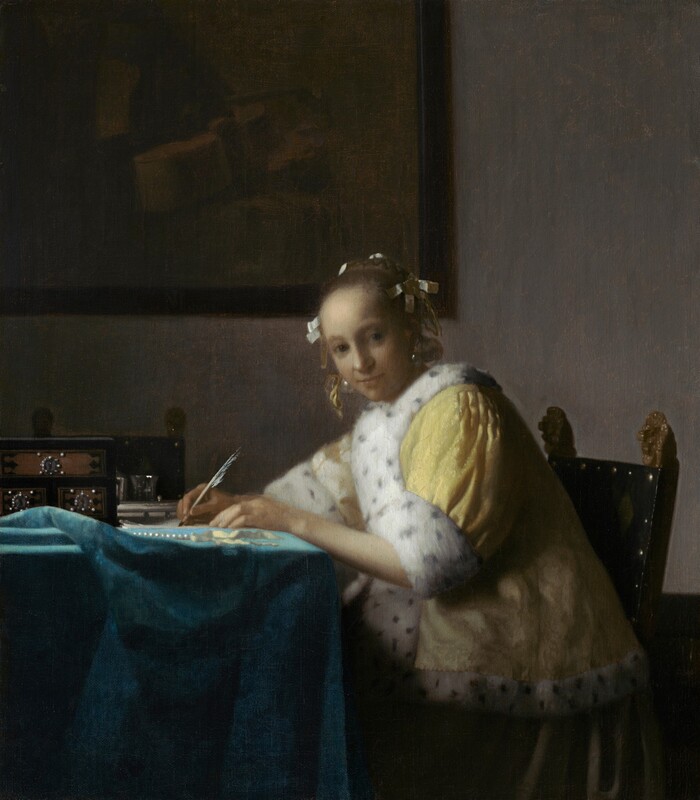
Vermeer’s A Lady Writing, around 1665. In Grant’s account handwriting is one of the objects said to link a medium to its owner.
National Gallery of Art, Washington, 1962.10.1. Gift of Harry Waldron Havemeyer and Horace Havemeyer, Jr., in memory of their father, Horace Havemeyer. Public Domain. · Image source ↗ · Public Domain
The Other World, edited by Frederick George Lee
In The Other World, Frederick George Lee quotes T. Grant’s 1872 paper A Scientific View of Modern Spiritualism. In Grant’s classification of mediumship, a psychometric medium supposedly describes someone’s character by coming into sympathetic contact with their sphere through hair, handwriting or worn clothes. [5][6]
Grant also says some people can read a sealed letter or a concealed motto. He distinguishes these claims from pictorial mediumship, where an image may convey a spiritual idea instead of describing a material event. [6][7]
The Soul of Things by William and Elizabeth M. F. Denton
William and Elizabeth M. F. Denton’s The Soul of Things (1863) connects character reading from unseen letters with Joseph Rodes Buchanan’s research and the reported impressions of Anne Denton Cridge. The book asks whether minerals, fossils or archaeological objects could also preserve impressions. It describes a specimen as the occasion for a panoramic vision of the past. [2][3]
From a person’s belongings to a specimen’s past
Grant’s account asks what a belonging can disclose about its owner. The Dentons ask what a specimen might preserve about a whole setting. In either case, assessing a particular reading would require a record of what the reader already knew, what they could see and any guesses that failed. [6][5][2][3]
Read further in the library
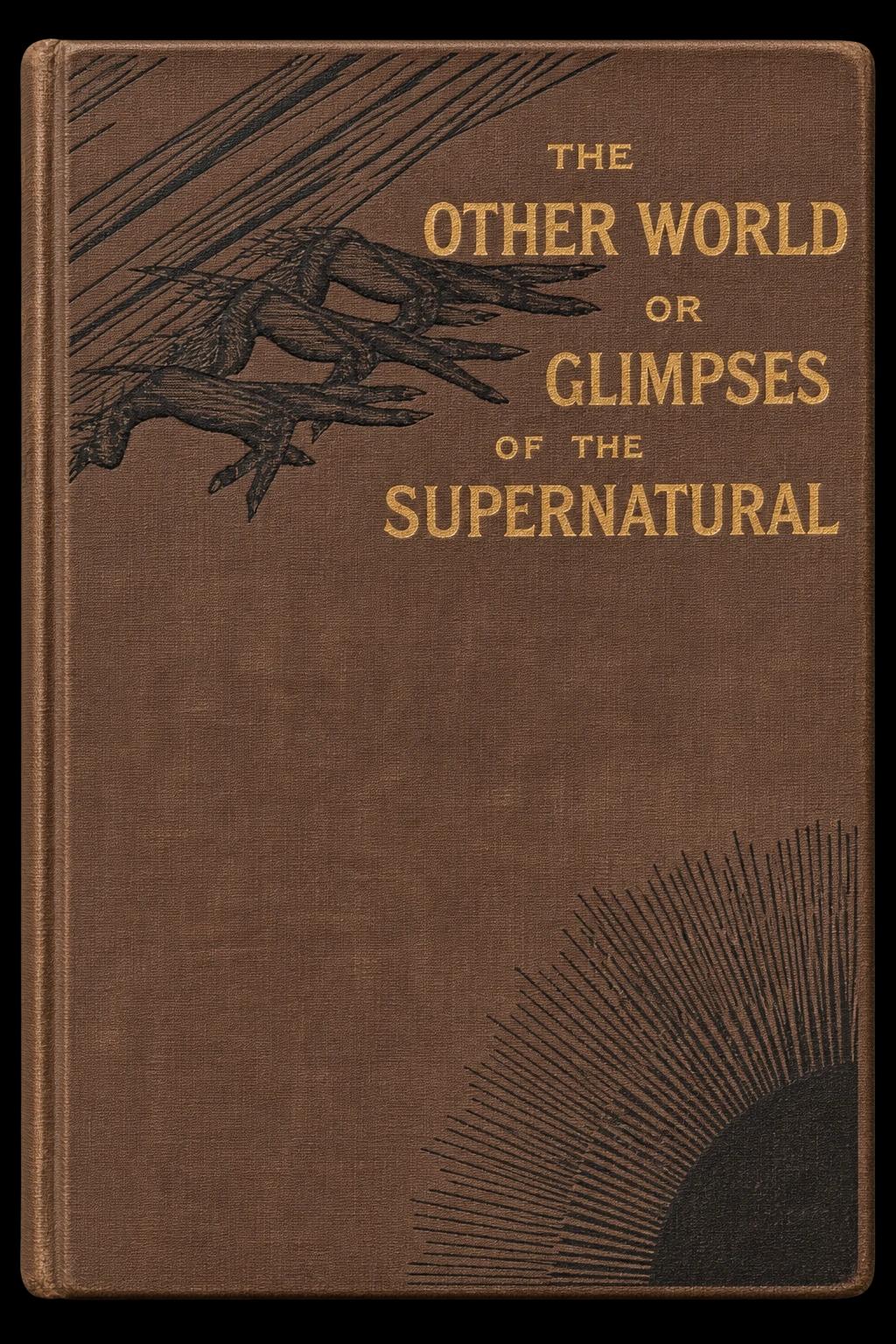
The Other World
Reading note
The separately titled account draws on exact passages in the consulted Library edition.
Sources
See references (7)
- Johannes Vermeer, A Lady Writing, c. 1665, National Gallery of Art 1962.10.1 ↗National Gallery of Art, Washington. Gift of Harry Waldron Havemeyer and Horace Havemeyer, Jr., in memory of their father, Horace Havemeyer. Own catalogue explicitly states that the media is free and in the public domain. The writing scene contextualises a personal object; it does not depict psychometry.
- William and Elizabeth M. F. Denton, The Soul of Things (1863), printed p. 35 ↗Exact 1863 Walker, Wise and Company, Boston edition, title page and printed page visually checked against Internet Archive scan soulofthings00dent. Authorial account of alleged object-associated knowledge, not independent replication.Return to text ↑
- William and Elizabeth M. F. Denton, The Soul of Things (1863), printed p. 36 ↗Exact 1863 Boston edition. Printed p. 36 visually checked; archive leaf 42 is distinct from printed pagination. Passage describes extension to mineral, fossil and archaeological specimens. Only these selected passages are examined, not a completed crawl of the book.Return to text ↑
- Psychometric Society, What is Psychometrics? ↗The society’s own overview of quantitative measurement in psychology, education and the social sciences, directly consulted to distinguish that field from the esoteric object-reading sense of psychometry.Return to text ↑
- The Other World, printed p. 143, Reader page 444Frederick George Lee, editor, The Other World; or, Glimpses of the Supernatural, two volumes, Henry S. King and Co., London, 1875. Exact consulted Library edition IMJ-0657-E001. Narratives and embedded quotations are attributed to this compilation; an original author is not represented as independently consulted merely because Lee quotes them. Reader positions are verified separately from printed pagination.Read this page in The Other World ↗Return to text ↑
- The Other World, Reader page 449Frederick George Lee, editor, The Other World; or, Glimpses of the Supernatural, two volumes, Henry S. King and Co., London, 1875. Exact consulted Library edition IMJ-0657-E001. Narratives and embedded quotations are attributed to this compilation; an original author is not represented as independently consulted merely because Lee quotes them. Reader positions are verified separately from printed pagination.Read this page in The Other World ↗Return to text ↑
- The Other World, Reader page 448Frederick George Lee, editor, The Other World; or, Glimpses of the Supernatural, two volumes, Henry S. King and Co., London, 1875. Exact consulted Library edition IMJ-0657-E001. Narratives and embedded quotations are attributed to this compilation; an original author is not represented as independently consulted merely because Lee quotes them. Reader positions are verified separately from printed pagination.Read this page in The Other World ↗Return to text ↑