Green Man
Green Man can mean a foliate face, a pub sign or a figure in seasonal folklore. See how Dion Fortune joins the name to Pan and Jack-in-the-Green.
In this article
A face in leaves and a figure in a procession
A Green Man can be a face framed by leaves or shown with foliage growing from its mouth. Medieval buildings preserve many such carvings. The name also appears on pub signs and in folklore. Jack-in-the-Green is a May procession figure in which a person wears a frame covered in greenery. [1][2]
In 1939, Lady Raglan used the name Green Man for foliate carvings and proposed links with seasonal customs. Earlier writers had already connected the Green Man of pub signs with Jack-in-the-Green and May Day. Those proposals help explain how the name travelled between objects and customs. [1][2]
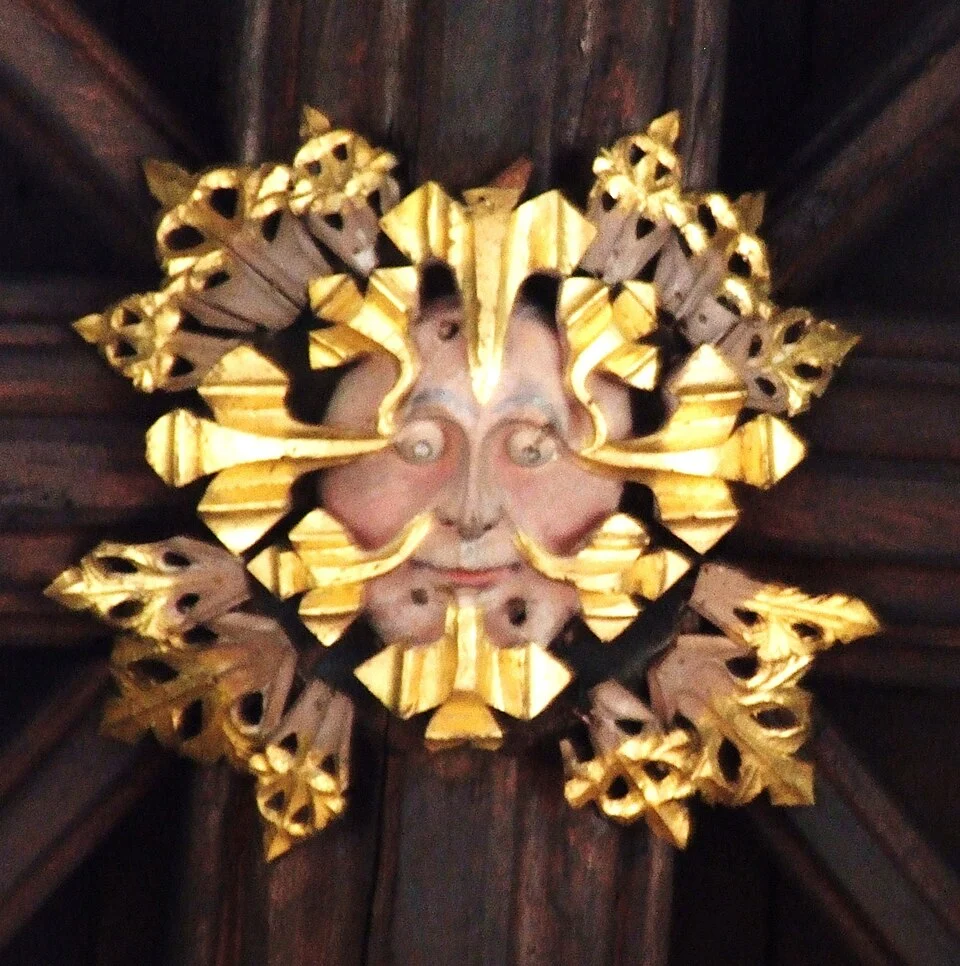
A foliate head on a sixteenth-century ceiling boss at St Helen Witton Church in Cheshire. The image belongs to the fabric of a building.
Photograph by RLamb, 2010, St Helen Witton Church, Northwich, Cheshire. Via Wikimedia Commons. · Image source ↗ · Public Domain
Pan and the public-house sign in The Goat-Foot God
In Dion Fortune’s The Goat-Foot God, Hugh mentions an inn called The Green Man. Mona identifies the name with Pan. She brings in Jack-in-the-Green and a wood spirit to explain how she imagines a British Pan. [5][6]
At Monks Farm, the name has a counterpart in the landscape. The narrator gives Pan the rough ground, bracken and woodland that Mona values and that a landowner might see as uncultivated waste. [7][8]
What the carving, costume and inn sign share
Raglan starts from a church carving, while Mona starts from an inn sign. Both bring in seasonal folklore. The foliage gives readers a visible feature to compare, while the carving and the procession each have their own history. [1][2][6][8]
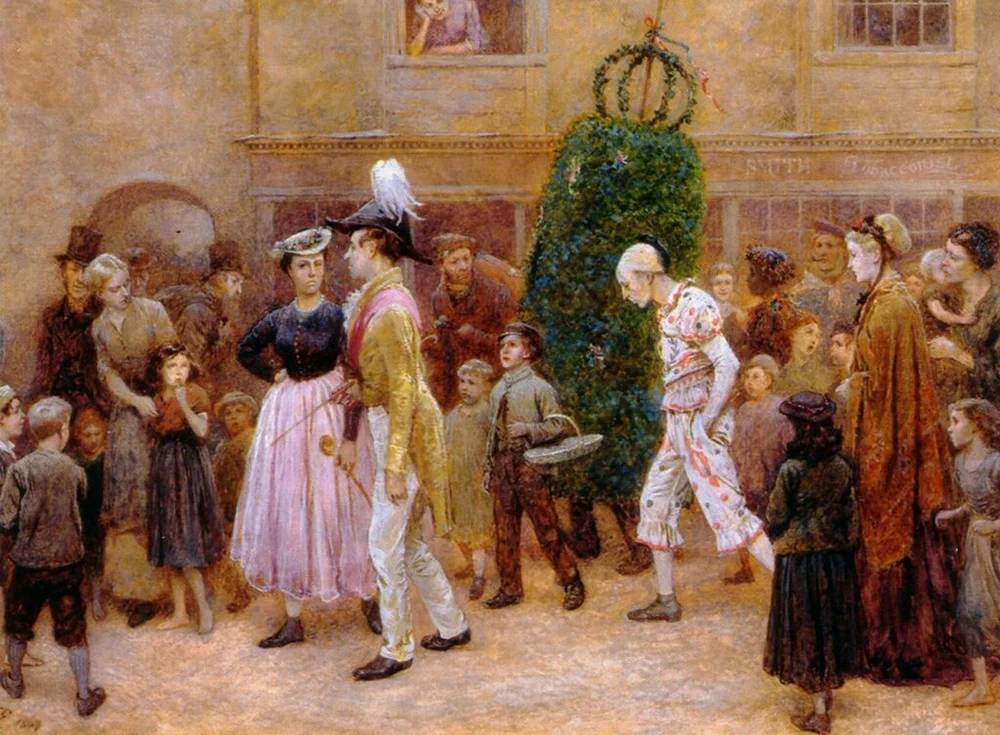
Charles Green’s Jack in the Green, 1869, shows a performer inside a frame of greenery during a May Day procession.
Charles Green, Jack in the Green, 1869. American Folklife Center, Library of Congress, digital reproduction. · Image source ↗ · Public Domain
Read further in the library
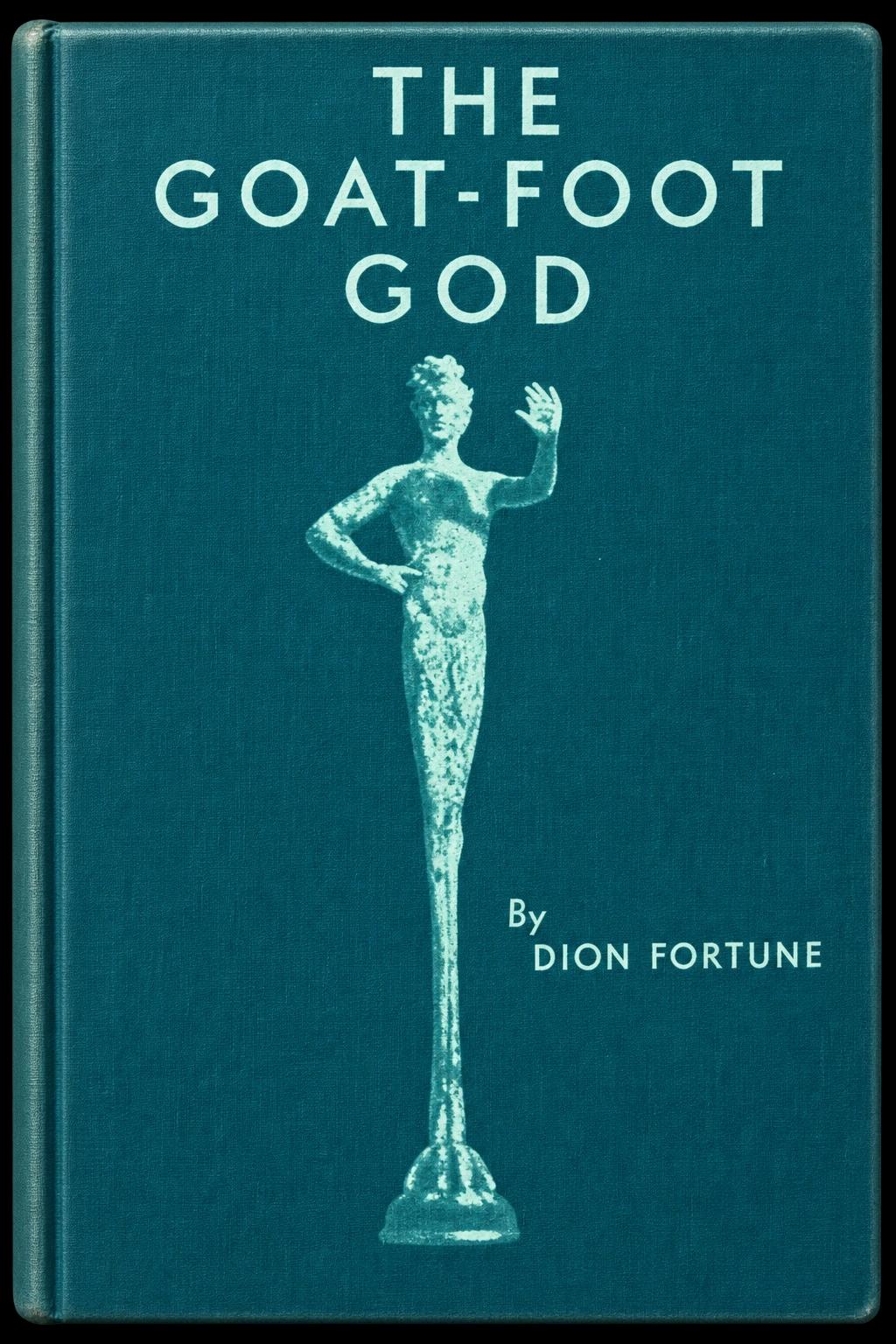
The Goat-Foot God
Reading note
The separately titled account draws on exact passages in the consulted Library edition.
Sources
See references (8)
- Lady Raglan, “The Green Man in Church Architecture,” pp. 45–57 ↗Lady Raglan, “The Green Man in Church Architecture,” Folklore 50, no. 1 (March 1939), pp. 45–57.Return to text ↑
- Stephen Winick, Green Man Connections: Jack in the Green and More ↗Stephen Winick, “Green Man Connections: Jack in the Green and More,” American Folklife Center, Library of Congress, 2023, with early festival and sign references.Return to text ↑
- Foliate head on a roof boss at St Helen Witton Church ↗Photograph by RLamb, 2010, St Helen Witton Church, Northwich, Cheshire. Via Wikimedia Commons.
- Jack in the Green ↗Charles Green, Jack in the Green, 1869. American Folklife Center, Library of Congress, digital reproduction.
- The Goat-Foot God, Reader page 154Dion Fortune, The Goat-Foot God. Undated digital Library edition IMJ-0643-E001. Numbered references use the Library Reader sequence.Read this page in The Goat-Foot God ↗Return to text ↑
- The Goat-Foot God, Reader page 155Dion Fortune, The Goat-Foot God. Undated digital Library edition IMJ-0643-E001. Numbered references use the Library Reader sequence.Read this page in The Goat-Foot God ↗Return to text ↑
- The Goat-Foot God, Reader page 196Dion Fortune, The Goat-Foot God. Undated digital Library edition IMJ-0643-E001. Numbered references use the Library Reader sequence.Read this page in The Goat-Foot God ↗Return to text ↑
- The Goat-Foot God, Reader page 197Dion Fortune, The Goat-Foot God. Undated digital Library edition IMJ-0643-E001. Numbered references use the Library Reader sequence.Read this page in The Goat-Foot God ↗Return to text ↑