God-letters
God Letters are Crowley’s proposed symbolic links among divine names, sounds and letters. Read his examples and compare the letter groups in Sefer Yetzirah.
In this article
Can a divine name carry meaning in its sound?
God Letters is Aleister Crowley’s name for a proposed set of links among sounds, letters and divine names. He asks whether pronouncing a letter or grouping it with others can suggest a quality associated with a name. His letter explores several examples and leaves the larger proposal open. [3][4][5][6][7][8]
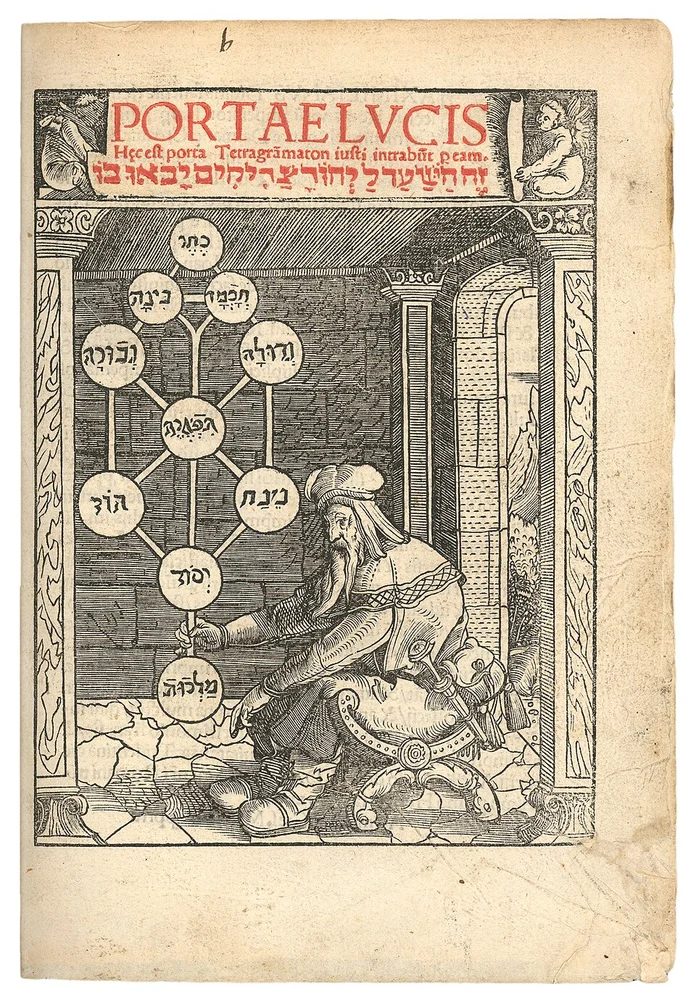
This 1516 Latin edition of Porta Lucis depicts a tree of the sefirot with Hebrew lettering. Crowley’s use of letters to connect gods, sounds and planets belongs to a later interpretive tradition.
Joseph Gikatilla, Porta Lucis, abridged Latin translation by Paulus Ricius (Johann Miller, Augsburg, 1516). University Library of Nijmegen, via Wikimedia Commons. · Image source ↗ · Public Domain
Sefer Yetzirah, the letters of formation
Sefer Yetzirah groups the twenty-two Hebrew letters into three mothers, seven doubles and twelve simples. The groups take part in its account of formation. Later chapters relate the letters to features of the world, the year and the person. [1]
Magick Without Tears by Aleister Crowley
In Magick Without Tears, Crowley begins with the sounds of vowels. He considers AUM and sounds used in ritual language. The vowel examples let him describe qualities he personally associates with pronunciation. [3][4][5]
He finds consonants harder to group. Working with Hebrew letters, he looks for links with planets and names. He gives more weight to some groupings than others and leaves the reader to judge how persuasive the examples are. [5][6][7][8]
Letters in creation and in magical names
Sefer Yetzirah gives groups of letters a place in the order of the world. Crowley experiments with which sounds might help him understand a name. The uncertainty he reports is part of the example, because his argument depends on what a particular grouping can explain. [1][4][5][6][7][8]
Read further in the library
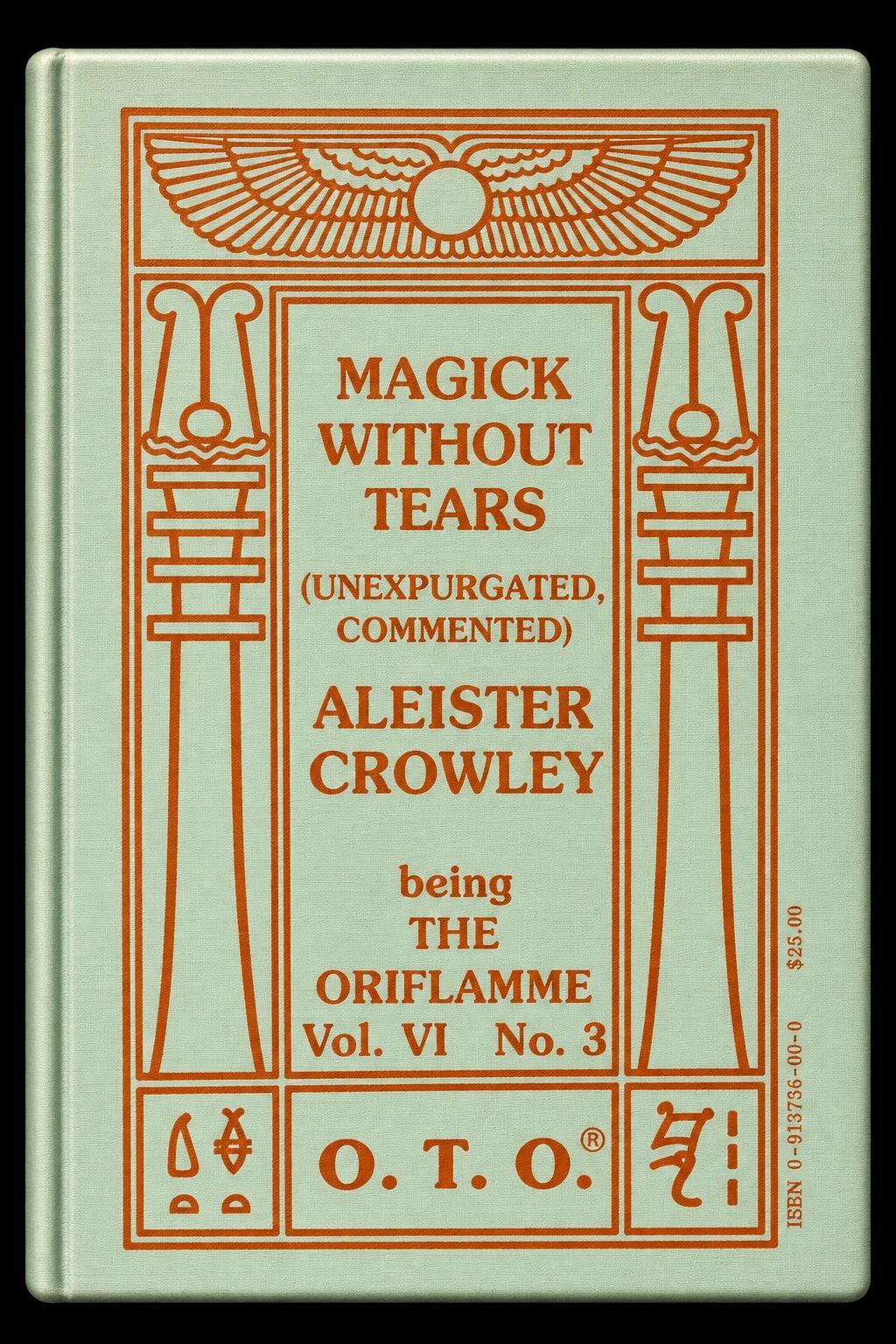
Magick Without Tears
Reading note
The separately titled account draws on exact passages in the consulted Library edition.
Sources
See references (8)
- Sefer Yetzirah, chapters 1–2 and 6, letters of formation ↗Sefer Yetzirah, Hebrew text and translation hosted by Sefaria.Return to text ↑
- Tree of the sefirot on the title page of Porta Lucis ↗Joseph Gikatilla, Porta Lucis, abridged Latin translation by Paulus Ricius (Johann Miller, Augsburg, 1516). University Library of Nijmegen, via Wikimedia Commons.
- Magick Without Tears, Reader page 273Aleister Crowley, Magick Without Tears, undated digital Library edition IMJ-0641-E001. Links use the current Library Reader sequence.Read this page in Magick Without Tears ↗Return to text ↑
- Magick Without Tears, Reader page 274Aleister Crowley, Magick Without Tears, undated digital Library edition IMJ-0641-E001. Links use the current Library Reader sequence.Read this page in Magick Without Tears ↗Return to text ↑
- Magick Without Tears, Reader page 275Aleister Crowley, Magick Without Tears, undated digital Library edition IMJ-0641-E001. Links use the current Library Reader sequence.Read this page in Magick Without Tears ↗Return to text ↑
- Magick Without Tears, Reader page 276Aleister Crowley, Magick Without Tears, undated digital Library edition IMJ-0641-E001. Links use the current Library Reader sequence.Read this page in Magick Without Tears ↗Return to text ↑
- Magick Without Tears, Reader page 277Aleister Crowley, Magick Without Tears, undated digital Library edition IMJ-0641-E001. Links use the current Library Reader sequence.Read this page in Magick Without Tears ↗Return to text ↑
- Magick Without Tears, Reader page 278Aleister Crowley, Magick Without Tears, undated digital Library edition IMJ-0641-E001. Links use the current Library Reader sequence.Read this page in Magick Without Tears ↗Return to text ↑