Gaokerena
What is Gaokerena in Zoroastrian tradition? Read how the tree of white Hōm is linked to immortality and the final renewal of the world.
In this article
The white Hōm and the renewal of life
Gaokerena is the sacred tree of white Hōm in Zoroastrian cosmology. It grows in the cosmic ocean. At the final renewal of the world, white Hōm is used to make a drink that gives the resurrected human race immortality. [4][2][3]
Bundahishn and Greater Bundahishn
In E. W. West’s translation of the Bundahishn, the tree grows in the wide-formed ocean near the tree of all seeds. In B. T. Anklesaria’s translation of the Greater Bundahishn, Sōshyant and his companions prepare the drink of immortality with white Hōm as part of the restoration of the dead. [2][3]
Man the Grand Symbol of the Mysteries by Manly P. Hall
In Man the Grand Symbol of the Mysteries, Manly P. Hall draws on Friedrich Windischmann’s account of the tree, which he calls Gogard. He singles out its connection with health and the life of the resurrected. [4]
Hall places the Gogard beside the Tree of Life in Paradise and brings Yggdrasil into the same chapter. Those comparisons follow the broad association of sacred trees with the continuance of life. [4][5]
Why the drink matters
Hall’s wider comparison brings out the association of trees with life. The Greater Bundahishn gives that association a particular form: even after the dead are raised, the drink is needed to make their renewed life immortal. [4][5][2][3]
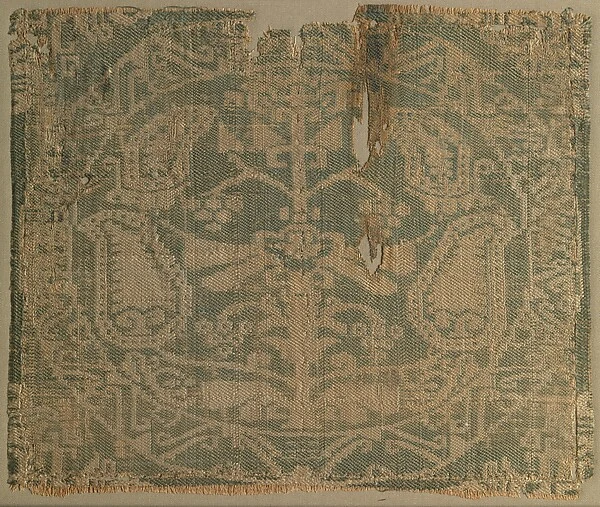
This seventh- to ninth-century textile uses a branching design that the Metropolitan Museum traces to Sasanian forms. It provides regional context for tree imagery.
Roundel with Central Asian-style “Candelabra Tree”, The Metropolitan Museum of Art, object 446864. Open Access, CC0. · Image source ↗ · CC0
See references (4)
In the library
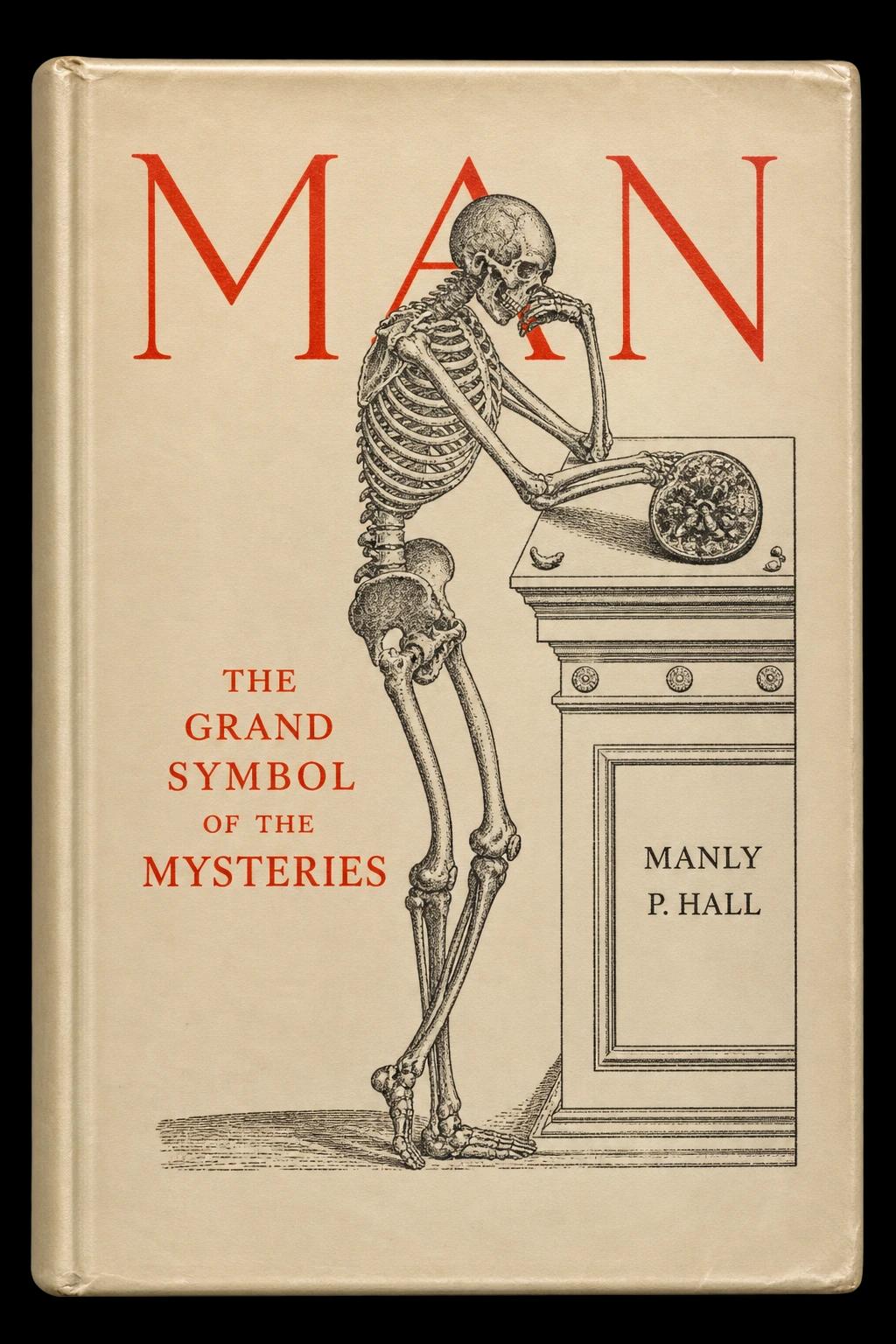
Man the Grand Symbol of the Mysteries
Reading note
The separately titled account draws on exact passages in the consulted Library edition.
Sources
See references (5)
- Roundel with Central Asian-style Candelabra Tree ↗Roundel with Central Asian-style “Candelabra Tree”, The Metropolitan Museum of Art, object 446864. Open Access, CC0.
- Bundahishn, E. W. West translation, chapters 9.5–6 and 18.1–3 ↗Bundahishn, chapter 18, translated by E. W. West. Avesta: Zoroastrian Archives.
- Greater Bundahishn, B. T. Anklesaria translation, chapter 34.23, printed pp. 290–291 ↗Greater Bundahishn, chapter 34, translated by B. T. Anklesaria. Avesta: Zoroastrian Archives.
- Man the Grand Symbol of the Mysteries, printed p. 281, Reader page 275Manly P. Hall, Man the Grand Symbol of the Mysteries, Fourth Edition, The Philosophers Press, Los Angeles, 1937. Lumitheca Library edition IMJ-0603-E001.Read this page in Man the Grand Symbol of the Mysteries ↗
- Man the Grand Symbol of the Mysteries, printed p. 282, Reader page 276Manly P. Hall, Man the Grand Symbol of the Mysteries, Fourth Edition, The Philosophers Press, Los Angeles, 1937. Lumitheca Library edition IMJ-0603-E001.Read this page in Man the Grand Symbol of the Mysteries ↗