Gandharvas
Gandharvas are celestial beings associated with music. Discover their part in a Vedic wedding hymn, Indra’s court and a Buddhist account of Pañcasikha.
In this article
Who are the Gandharvas?
Gandharvas are celestial beings known as musicians in Hindu epic and art. They often perform while Apsaras dance. In other accounts they take part in conflicts or serve a ritual role. A related Pāli term, gandhabba, names the company to which the musician Pañcasikha belongs. [5][6][7][1][3]
The Gandharva in Rigveda 10.85.40–41
In Rigveda 10.85.40–41, translated by Ralph T. H. Griffith, the Gandharva appears between Soma and Agni in a wedding sequence that ends with the human spouse. This passage gives the figure a place in marriage ritual. [1]
Indian Myth and Legend by Donald A. Mackenzie
In Indian Myth and Legend, Donald A. Mackenzie describes Gandharvas as singers and instrumentalists who accompany the Apsaras. He also gives them places in forests and mountains, and powers such as illusion. His comparisons with European elves are part of his own reading. [5][6]
Arjuna learns musical and martial arts in Indra’s city. Elsewhere Duryodhana’s party encounters Gandharvas and Apsaras in a forest. A dispute escalates into battle and capture, and the Pandavas intervene to free him. [8][7][9]
Mackenzie also distinguishes an earlier singular Gandharva, associated with Soma and divine knowledge, from the groups who appear in the epics. [6]
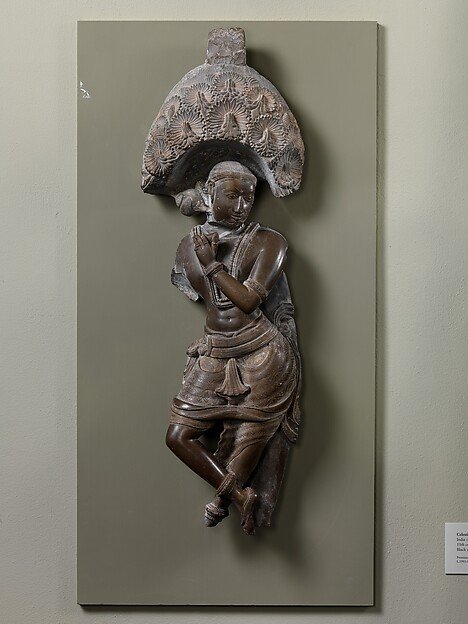
A celestial musician plays the flute on this eleventh-century temple bracket from Karnataka.
The Metropolitan Museum of Art, Gift of Florence and Herbert Irving, in honor of Philippe de Montebello, 2008, 2008.537. Open Access CC0; resized and converted to JPEG. · Image source ↗ · CC0
Pañcasikha’s music in Digha Nikaya 21
In Dīgha Nikāya 21, Pañcasikha accompanies Sakka with a harp made of wood-apple timber. He plays before the Buddha and sings about his beloved, drawing on Buddhist images as he sings. In Bhikkhu Sujato’s translation, the Buddha notices how the strings and voice suit each other. The Pāli identifies Pañcasikha as a gandhabbadevaputta. [2][3]
What celestial music can do
The wedding hymn gives a Gandharva a place in the sequence of marriage. The epic gives music a place in a warrior’s education. Pañcasikha takes a personal song into the presence of the Buddha. The forest battle in Mackenzie’s account shows how far the group’s actions can extend beyond performing. [6][1][2][3][5][7][9]
See references (7)
- Rigveda 10.85.40–41, translated by Ralph T. H. Griffith
- Digha Nikaya 21.1.2–1.6.4, translated by Bhikkhu Sujato
- Digha Nikaya 21.1.2 and 1.4, Pali text
- Indian Myth and Legend, Reader page 134
- Indian Myth and Legend, Reader page 136
- Indian Myth and Legend, Reader page 345
- Indian Myth and Legend, Reader page 346
Read further in the library
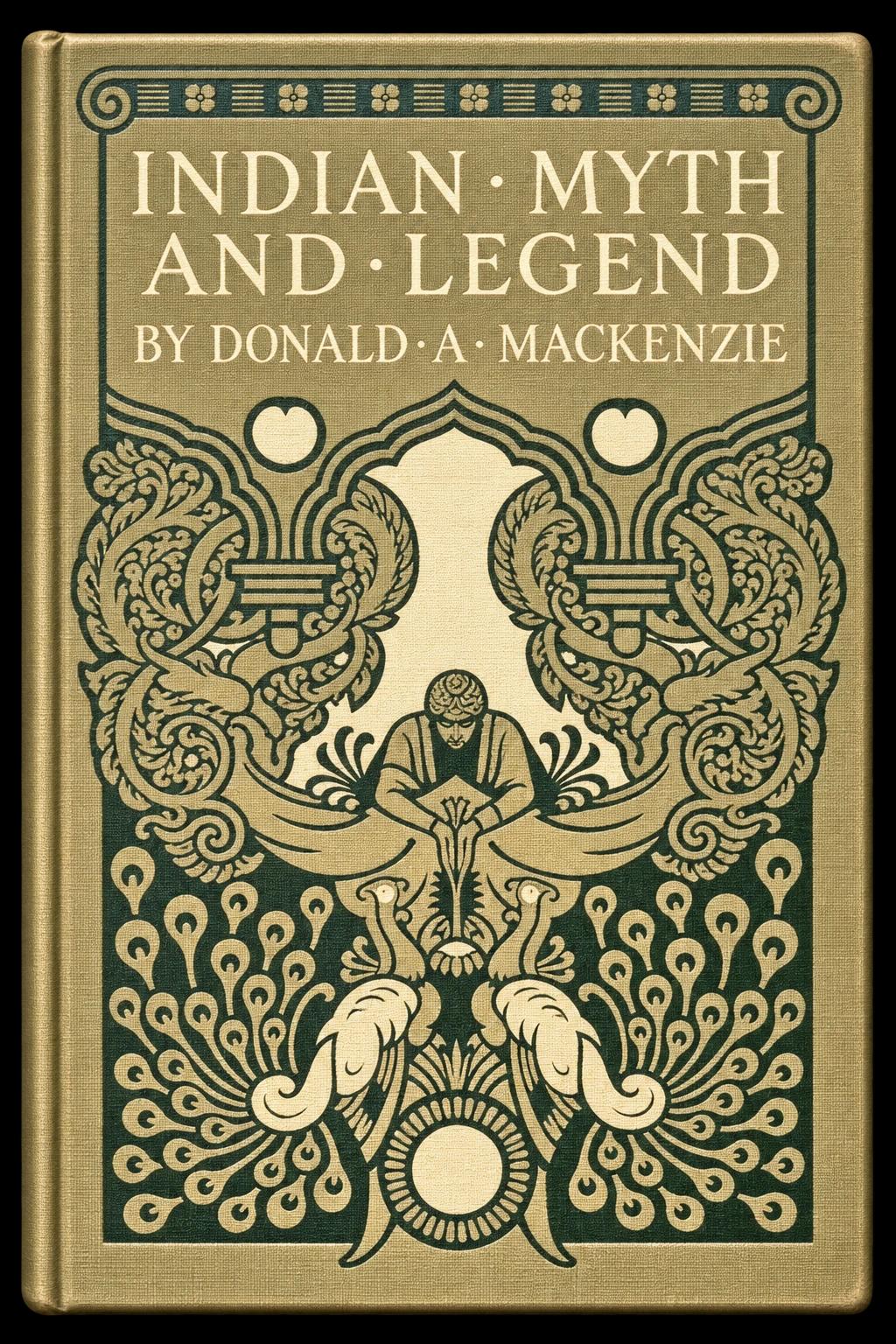
Indian Myth and Legend
Reading note
The separately titled account draws on exact passages in the consulted Library edition.
Sources
See references (9)
- Rigveda 10.85.40–41, translated by Ralph T. H. Griffith ↗Only verses 40–41 are used for the Gandharva’s place in a ritual sequence with Soma, Agni and the human spouse. The sequence is not used as a universal description of marriage.Return to text ↑
- Digha Nikaya 21.1.2–1.6.4, translated by Bhikkhu Sujato ↗Opening Pañcasikha episode directly consulted in SuttaCentral’s published Bilara English data, through the Buddha’s response to the balance of voice and strings. The interactive site did not expose the text to the browser tool. Sujato’s English choice centaur is not adopted as a universal physical description of Gandharvas.Return to text ↑
- Digha Nikaya 21.1.2 and 1.4, Pali text ↗Relevant Pali segments directly checked in SuttaCentral’s published Bilara root text, including gandhabbadevaputta and the playing of the instrument. Only the inspected segments support the terminology comparison.Return to text ↑
- Celestial Musician (Gandharva), 11th century ↗The Metropolitan Museum of Art, Gift of Florence and Herbert Irving, in honor of Philippe de Montebello, 2008, 2008.537. Open Access CC0; resized and converted to JPEG.
- Indian Myth and Legend, Reader page 134Donald A. Mackenzie, Indian Myth and Legend, Gresham Publishing Company Limited, London, undated consulted impression. Library edition IMJ-0649-E001. Persistent PageIDs and current Reader positions verified against the supplied PDF and cached Reader manifest. Embedded translations are Mackenzie’s presentation unless a separately consulted primary text is named.Read this page in Indian Myth and Legend ↗Return to text ↑
- Indian Myth and Legend, Reader page 136Donald A. Mackenzie, Indian Myth and Legend, Gresham Publishing Company Limited, London, undated consulted impression. Library edition IMJ-0649-E001. Persistent PageIDs and current Reader positions verified against the supplied PDF and cached Reader manifest. Embedded translations are Mackenzie’s presentation unless a separately consulted primary text is named.Read this page in Indian Myth and Legend ↗Return to text ↑
- Indian Myth and Legend, Reader page 345Donald A. Mackenzie, Indian Myth and Legend, Gresham Publishing Company Limited, London, undated consulted impression. Library edition IMJ-0649-E001. Persistent PageIDs and current Reader positions verified against the supplied PDF and cached Reader manifest. Embedded translations are Mackenzie’s presentation unless a separately consulted primary text is named.Read this page in Indian Myth and Legend ↗Return to text ↑
- Indian Myth and Legend, Reader page 342Donald A. Mackenzie, Indian Myth and Legend, Gresham Publishing Company Limited, London, undated consulted impression. Library edition IMJ-0649-E001. Persistent PageIDs and current Reader positions verified against the supplied PDF and cached Reader manifest. Embedded translations are Mackenzie’s presentation unless a separately consulted primary text is named.Read this page in Indian Myth and Legend ↗Return to text ↑
- Indian Myth and Legend, Reader page 346Donald A. Mackenzie, Indian Myth and Legend, Gresham Publishing Company Limited, London, undated consulted impression. Library edition IMJ-0649-E001. Persistent PageIDs and current Reader positions verified against the supplied PDF and cached Reader manifest. Embedded translations are Mackenzie’s presentation unless a separately consulted primary text is named.Read this page in Indian Myth and Legend ↗Return to text ↑