Fudō Myōō, the Immovable Wisdom King
Fudō Myōō, also called Acala, is an Esoteric Buddhist protector pictured with a sword and lasso. Two tales collected by Richard Gordon Smith show different ways people honor him.
In this article
Who is Fudō Myōō?
Fudō Myōō is a fierce guardian in Japanese Esoteric Buddhism, understood as an emanation of Dainichi Nyorai. His name means the Immovable One. The raised sword cuts through ignorance, and the lasso restrains forces that obstruct awakening. The Heian sculpture gives his immovability a physical form in its firm stance. [1]
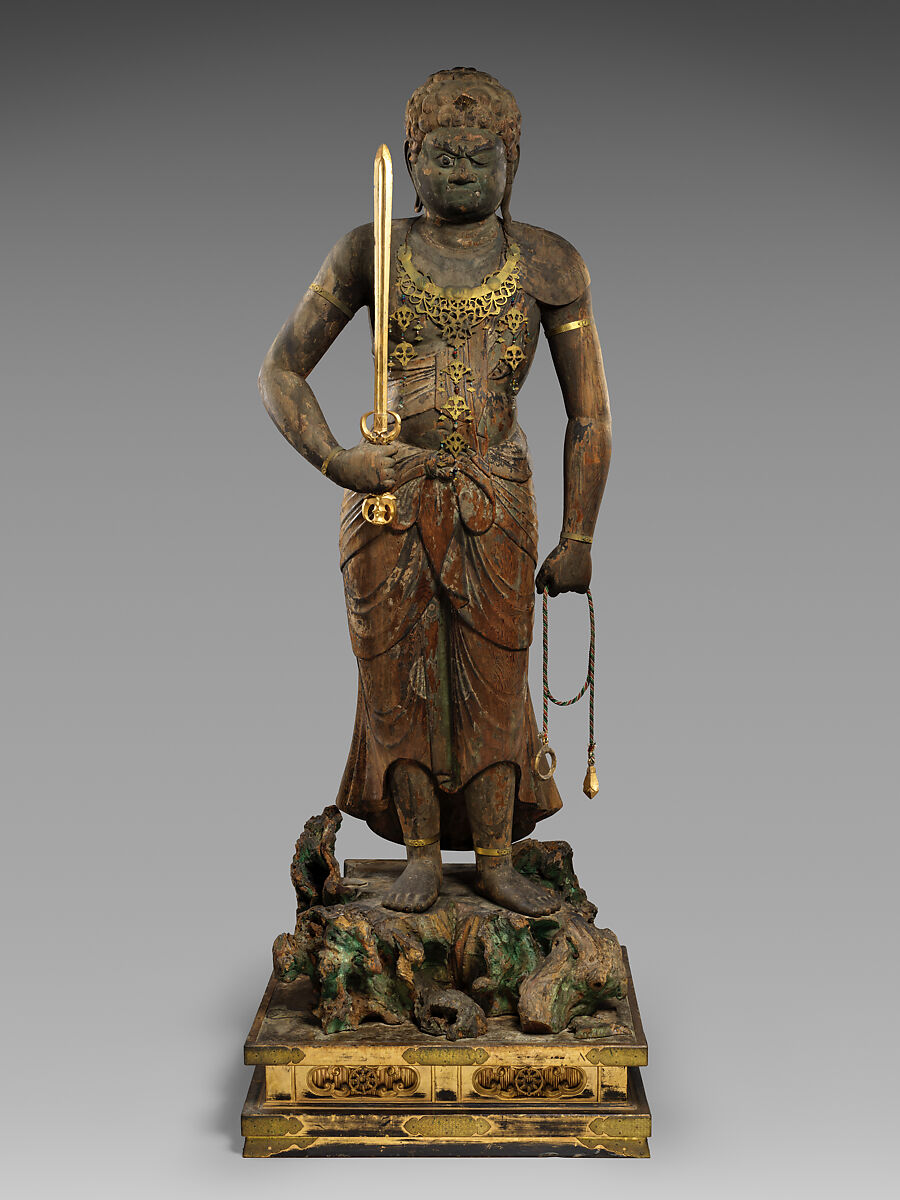
This twelfth-century temple sculpture shows Fudō’s raised sword and looped lasso.
Unidentified Japanese sculptor, Fudō Myōō (Achala Vidyaraja), 12th century. The Metropolitan Museum of Art. Public domain. · Image source ↗ · Public Domain
In Ancient Tales and Folk-lore of Japan
In Richard Gordon Smith’s Amakusa legend, the fish disappear and a diver named Sankichi brings a sword up from the sea. The village builds a shrine to Fudō to house it. The tale credits the return of the fish to the sword’s spirit being at rest. [2][3][4]
In Smith’s story of Masakuni, O Ai prays to Fudō for her father’s sight. A physician restores sight in Masakuni’s remaining eye and the family sees Fudō’s mercy in the encounter. Masakuni presents one new sword to Fudō and another to the physician. [5][6][7]
See references (6)
- Ancient Tales and Folklore of Japan, printed p. 111, Reader page 167
- Ancient Tales and Folklore of Japan, printed p. 114, Reader page 170
- Ancient Tales and Folklore of Japan, printed p. 115, Reader page 171
- Ancient Tales and Folklore of Japan, printed p. 159, Reader page 229
- Ancient Tales and Folklore of Japan, printed p. 160, Reader page 230
- Ancient Tales and Folklore of Japan, printed p. 161, Reader page 231
How the accounts compare
The sword enters the Amakusa story as an object to safeguard a fishing community. Masakuni makes a sword as an offering of thanks. In the sculpture, the sword belongs to the Wisdom King himself and expresses the work of cutting through ignorance. [2][3][4][5][6][7][1]
See references (7)
- Fudō Myōō (Achala Vidyaraja)
- Ancient Tales and Folklore of Japan, printed p. 111, Reader page 167
- Ancient Tales and Folklore of Japan, printed p. 114, Reader page 170
- Ancient Tales and Folklore of Japan, printed p. 115, Reader page 171
- Ancient Tales and Folklore of Japan, printed p. 159, Reader page 229
- Ancient Tales and Folklore of Japan, printed p. 160, Reader page 230
- Ancient Tales and Folklore of Japan, printed p. 161, Reader page 231
In the library
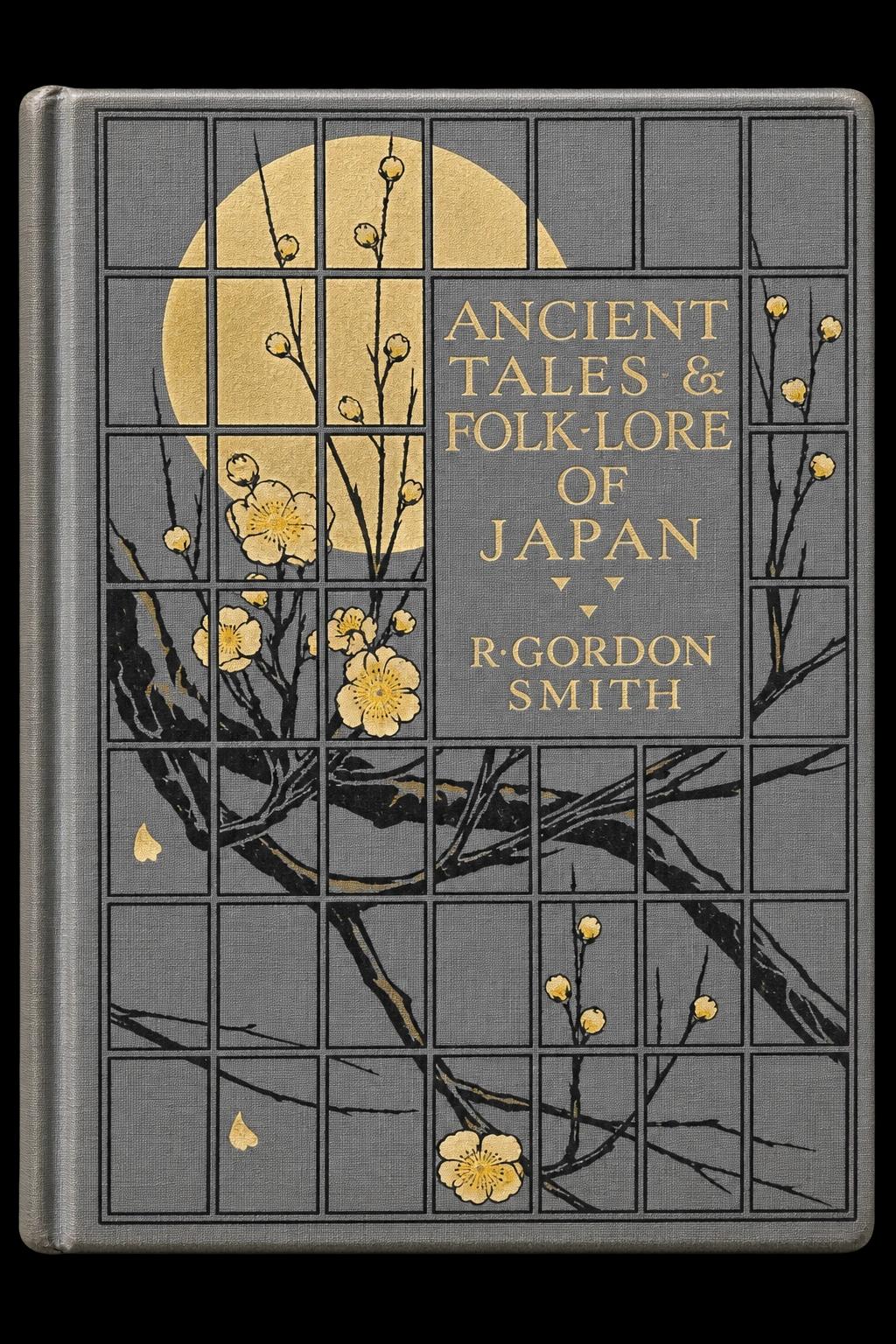
Ancient Tales and Folk-lore of Japan
Reading note
Read Richard Gordon Smith’s separately attributed tale in its Library edition.
Sources
See references (8)
- Fudō Myōō (Achala Vidyaraja) ↗The Metropolitan Museum of Art
- Ancient Tales and Folklore of Japan, printed p. 111, Reader page 167Richard Gordon Smith, Ancient Tales and Folklore of Japan. A. & C. Black, London, 1908. Lumitheca Library edition IMJ-0588-E001.Read this page in Ancient Tales and Folk-lore of Japan ↗
- Ancient Tales and Folklore of Japan, printed p. 114, Reader page 170Richard Gordon Smith, Ancient Tales and Folklore of Japan. A. & C. Black, London, 1908. Lumitheca Library edition IMJ-0588-E001.Read this page in Ancient Tales and Folk-lore of Japan ↗
- Ancient Tales and Folklore of Japan, printed p. 115, Reader page 171Richard Gordon Smith, Ancient Tales and Folklore of Japan. A. & C. Black, London, 1908. Lumitheca Library edition IMJ-0588-E001.Read this page in Ancient Tales and Folk-lore of Japan ↗
- Ancient Tales and Folklore of Japan, printed p. 159, Reader page 229Richard Gordon Smith, Ancient Tales and Folklore of Japan. A. & C. Black, London, 1908. Lumitheca Library edition IMJ-0588-E001.Read this page in Ancient Tales and Folk-lore of Japan ↗
- Ancient Tales and Folklore of Japan, printed p. 160, Reader page 230Richard Gordon Smith, Ancient Tales and Folklore of Japan. A. & C. Black, London, 1908. Lumitheca Library edition IMJ-0588-E001.Read this page in Ancient Tales and Folk-lore of Japan ↗
- Ancient Tales and Folklore of Japan, printed p. 161, Reader page 231Richard Gordon Smith, Ancient Tales and Folklore of Japan. A. & C. Black, London, 1908. Lumitheca Library edition IMJ-0588-E001.Read this page in Ancient Tales and Folk-lore of Japan ↗
- Fudō Myōō (Achala Vidyaraja) ↗Unidentified Japanese sculptor, Fudō Myōō (Achala Vidyaraja), 12th century. The Metropolitan Museum of Art. Public domain.