Dreams of flight
Dreams of flight are the sensation of flying in sleep. Explore Flammarion’s past-life interpretation and J. S. M. Ward’s account of dream memory.
In this article
Understanding dreams of flight
Dreams of flight are dreams in which a person seems to rise, glide or travel through the air. In Camille Flammarion’s Lumen, the narrator takes his flying dreams as memories of an earlier life. When Quaerens recognises the same sensation, he asks what it can tell him about his own past. [2][3][4][5]
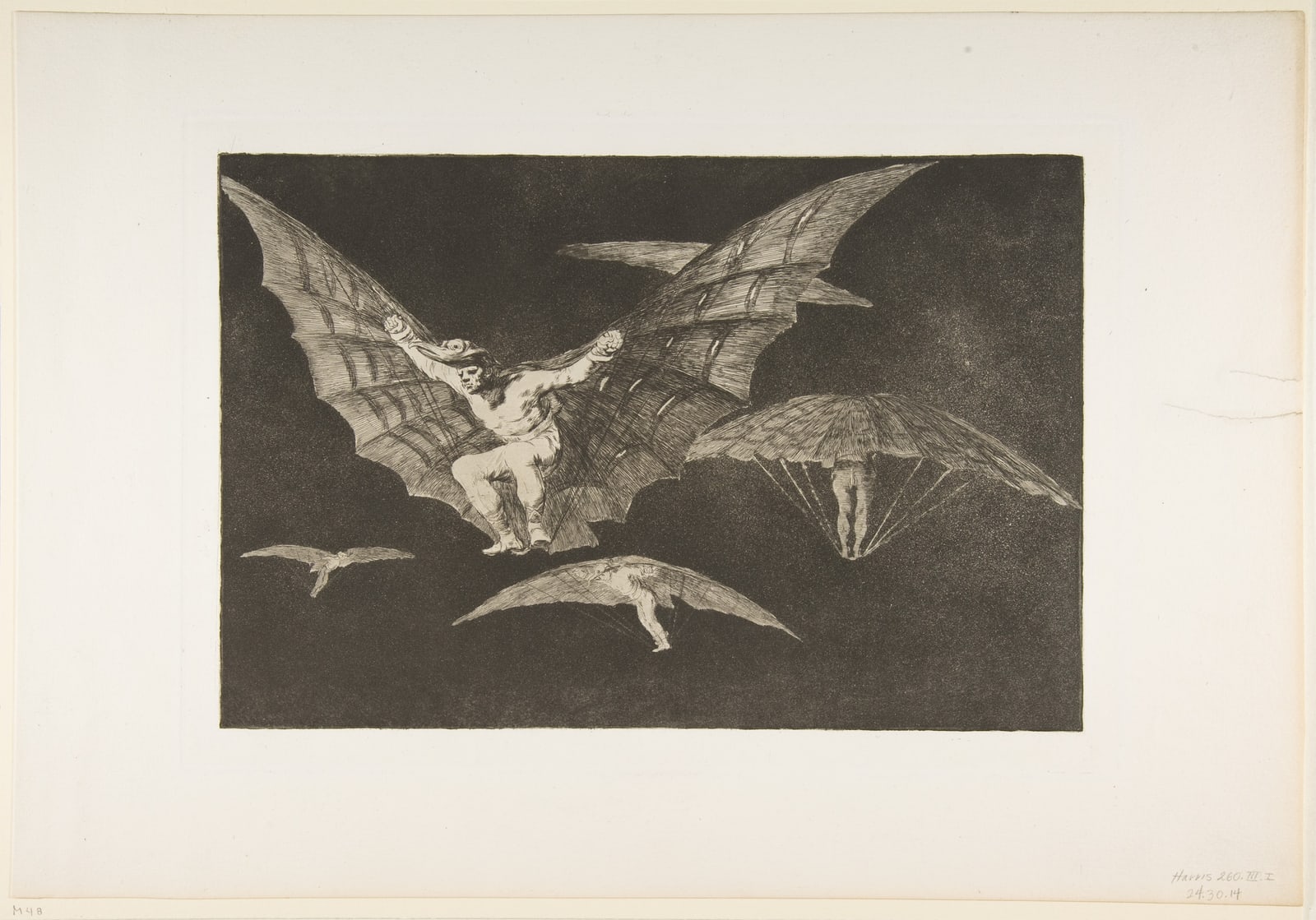
Francisco Goya, A Way of Flying (ca. 1815–16, published 1864). Goya’s figures fly with wings strapped to their bodies. Flammarion imagines a traveller who needs only to leap.
The Metropolitan Museum of Art, 24.30.14, Harris Brisbane Dick Fund, 1924. Official object API identifies the image as public domain; CC0 Open Access. · Image source ↗ · CC0
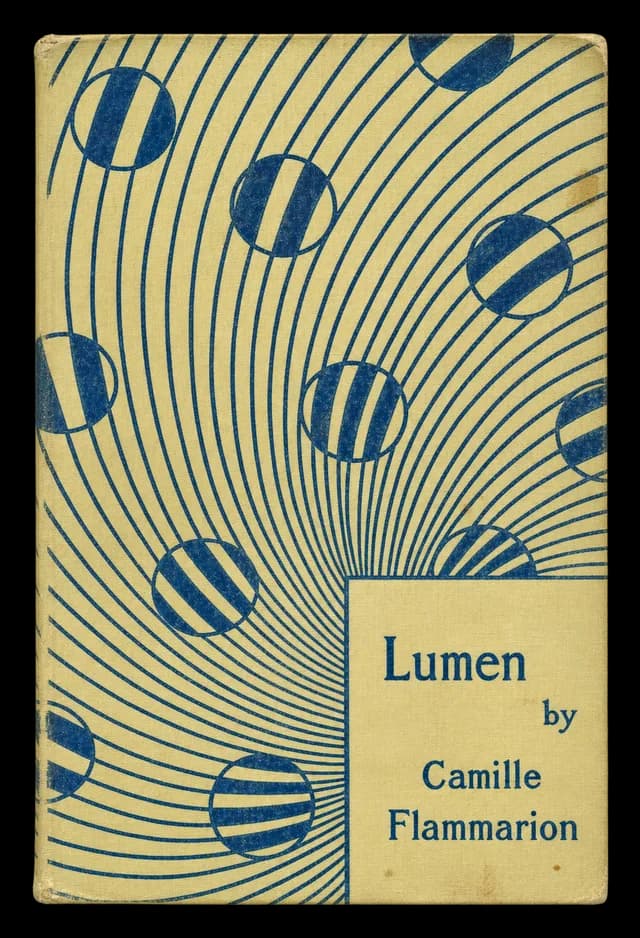
Lumen by Camille Flammarion
In Lumen, Camille Flammarion describes an earlier life in which flight begins with a leap. The traveller can glide, turn and land upright by moving his limbs. His experiences in the basket of a balloon felt different: he was being carried and did not feel himself flying. [3][4][5]
The narrator takes the ease of flight in his dreams as a trace of the earlier embodiment he claims to recognise. Quaerens has also flown in dreams and asks whether he once lived on the same world in Virgo. Lumen answers that the ability to fly could belong to inhabitants of many worlds. [4][5][6][7][8]
Can flying dreams prove a past life?
In the dialogue, a similar flying dream gives Quaerens a reason to ask about a previous life. Lumen still has no way to identify Virgo from the dream. The narrator’s own interpretation depends on the longer history he claims to have recovered. [4][5][6]
Dream memory in Gone West by J. S. M. Ward
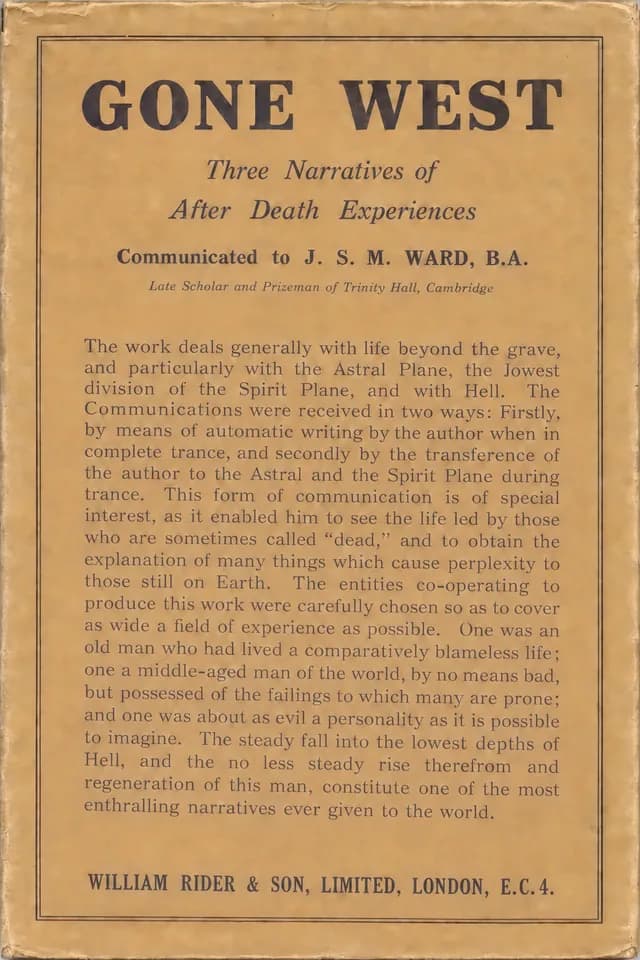
In Gone West, J. S. M. Ward describes a supposed visit by living people to the astral world. A note says Carrie remembered much of the meeting on waking, though she thought it was a dream. [9][10][11][12]
A former life and a present encounter
Flammarion traces a repeated dream to a former embodiment. Ward traces a partial recollection to an encounter said to occur during sleep. The difference lies in when the remembered experience is supposed to have happened. [9][10][11][12][4][5][6]
Read further in the library
Sources
See references (12)
- A Way of Flying, from "The Disparates" (Follies / Irrationalities) ↗The Metropolitan Museum of Art, 24.30.14, Harris Brisbane Dick Fund, 1924. Official object API identifies the image as public domain; CC0 Open Access.
- Lumen, Reader page 155Camille Flammarion, Lumen, authorised English translation by A. A. M. and R. M., Dodd, Mead and Company, New York, 1897. Exact selected Library edition IMJ-0398-E001. Lumen and Quaerens are speakers in the dialogue; claims made by the narrator are attributed to this text. Original PageIDs and current Reader positions are verified separately from printed pagination.Read this page in Lumen ↗Return to text ↑
- Lumen, Reader page 156Camille Flammarion, Lumen, authorised English translation by A. A. M. and R. M., Dodd, Mead and Company, New York, 1897. Exact selected Library edition IMJ-0398-E001. Lumen and Quaerens are speakers in the dialogue; claims made by the narrator are attributed to this text. Original PageIDs and current Reader positions are verified separately from printed pagination.Read this page in Lumen ↗Return to text ↑
- Lumen, Reader page 157Camille Flammarion, Lumen, authorised English translation by A. A. M. and R. M., Dodd, Mead and Company, New York, 1897. Exact selected Library edition IMJ-0398-E001. Lumen and Quaerens are speakers in the dialogue; claims made by the narrator are attributed to this text. Original PageIDs and current Reader positions are verified separately from printed pagination.Read this page in Lumen ↗Return to text ↑
- Lumen, printed p. 152, Reader page 158Camille Flammarion, Lumen, authorised English translation by A. A. M. and R. M., Dodd, Mead and Company, New York, 1897. Exact selected Library edition IMJ-0398-E001. Lumen and Quaerens are speakers in the dialogue; claims made by the narrator are attributed to this text. Original PageIDs and current Reader positions are verified separately from printed pagination.Read this page in Lumen ↗Return to text ↑
- Lumen, printed p. 153, Reader page 159Camille Flammarion, Lumen, authorised English translation by A. A. M. and R. M., Dodd, Mead and Company, New York, 1897. Exact selected Library edition IMJ-0398-E001. Lumen and Quaerens are speakers in the dialogue; claims made by the narrator are attributed to this text. Original PageIDs and current Reader positions are verified separately from printed pagination.Read this page in Lumen ↗Return to text ↑
- Lumen, Reader page 160Camille Flammarion, Lumen, authorised English translation by A. A. M. and R. M., Dodd, Mead and Company, New York, 1897. Exact selected Library edition IMJ-0398-E001. Lumen and Quaerens are speakers in the dialogue; claims made by the narrator are attributed to this text. Original PageIDs and current Reader positions are verified separately from printed pagination.Read this page in Lumen ↗Return to text ↑
- Lumen, Reader page 161Camille Flammarion, Lumen, authorised English translation by A. A. M. and R. M., Dodd, Mead and Company, New York, 1897. Exact selected Library edition IMJ-0398-E001. Lumen and Quaerens are speakers in the dialogue; claims made by the narrator are attributed to this text. Original PageIDs and current Reader positions are verified separately from printed pagination.Read this page in Lumen ↗Return to text ↑
- Gone West, printed p. 78, Reader page 91J. S. M. Ward, Gone West: Three Narratives of After-Death Experiences, third impression, William Rider & Son, London, 1920, as reproduced in Geoff Cutler’s December 2009 digital transcription. Ward’s introduction is distinct from the supplied 1974 foreword.Read this page in Gone West ↗Return to text ↑
- Gone West, printed p. 79, Reader page 92J. S. M. Ward, Gone West: Three Narratives of After-Death Experiences, third impression, William Rider & Son, London, 1920, as reproduced in Geoff Cutler’s December 2009 digital transcription. Ward’s introduction is distinct from the supplied 1974 foreword.Read this page in Gone West ↗Return to text ↑
- Gone West, printed p. 80, Reader page 93J. S. M. Ward, Gone West: Three Narratives of After-Death Experiences, third impression, William Rider & Son, London, 1920, as reproduced in Geoff Cutler’s December 2009 digital transcription. Ward’s introduction is distinct from the supplied 1974 foreword.Read this page in Gone West ↗Return to text ↑
- Gone West, printed p. 81, Reader page 94J. S. M. Ward, Gone West: Three Narratives of After-Death Experiences, third impression, William Rider & Son, London, 1920, as reproduced in Geoff Cutler’s December 2009 digital transcription. Ward’s introduction is distinct from the supplied 1974 foreword.Read this page in Gone West ↗Return to text ↑