The draught of remembrance
Steiner’s draught of remembrance makes knowledge a living habit of action. Compare it with Eunoe, Dante’s stream restoring remembrance of good.
In this article
Understanding the concept
The draught of remembrance is Rudolf Steiner’s name for spiritual knowledge that has become a habit of action. Someone who has made a truth their own can act on it without first stopping to call it to mind. [5]
Knowledge of the Higher Worlds by Rudolf Steiner
Rudolf Steiner introduces remembrance after the draught of forgetfulness, which helps the student approach a fresh experience. The second draught concerns what spiritual knowledge becomes through practice: a capacity to act on what one knows as part of ordinary conduct. [6][5]
Steiner compares the ease he has in mind to eating or drinking. The analogy closes an account of initiation that has already tested courage, self-control and presence of mind. This final passage asks how knowledge will show itself in life after it is acquired. [5][7][8][9]
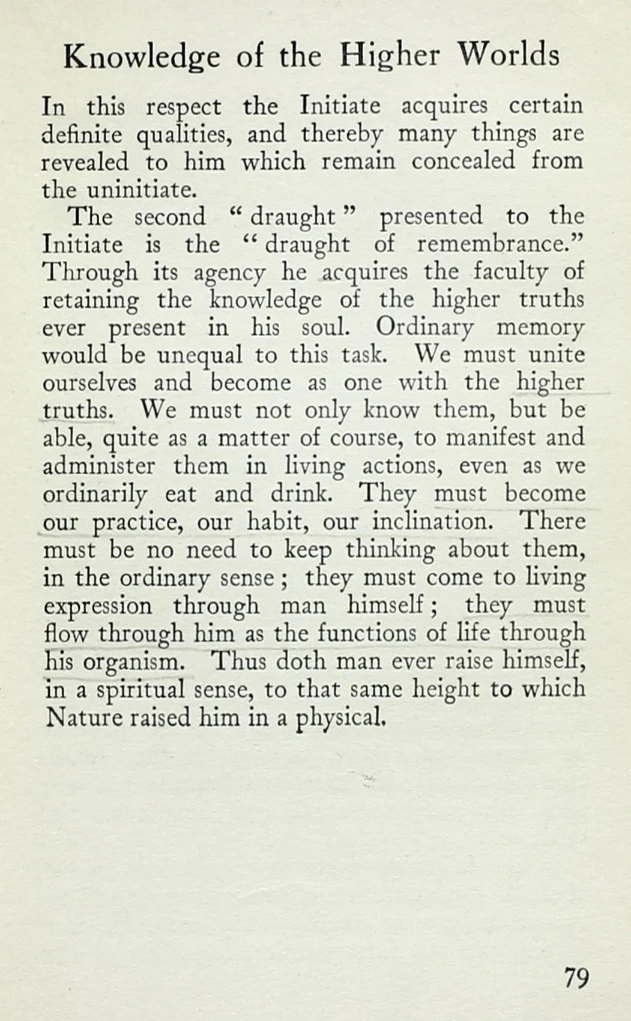
Steiner describes truths becoming habitual in conduct. Knowledge of the Higher Worlds, printed p. 79, Library reader p. 83.
Rudolf Steiner, G. Metaxa translation, edited by Harry Collison. Historical public-domain source facsimile from the exact checksum-verified Library edition. Repository date 1932; the inspected title page is undated. · Image source ↗ · Public Domain
See references (5)
- Knowledge of the Higher Worlds and Its Attainment, Reader page 83
- Knowledge of the Higher Worlds and Its Attainment, Reader page 82
- Knowledge of the Higher Worlds and Its Attainment, Reader page 70
- Knowledge of the Higher Worlds and Its Attainment, Reader page 76
- Knowledge of the Higher Worlds and Its Attainment, Reader page 80
The Divine Comedy by Dante Alighieri
In Dante Alighieri’s Purgatory, Eunoe renews the pilgrim’s remembrance of good. In Canto XXXIII, Matilda leads him towards its water. He returns ready to ascend, like a plant putting out fresh leaves in Henry Francis Cary’s translation. [1][2][3]
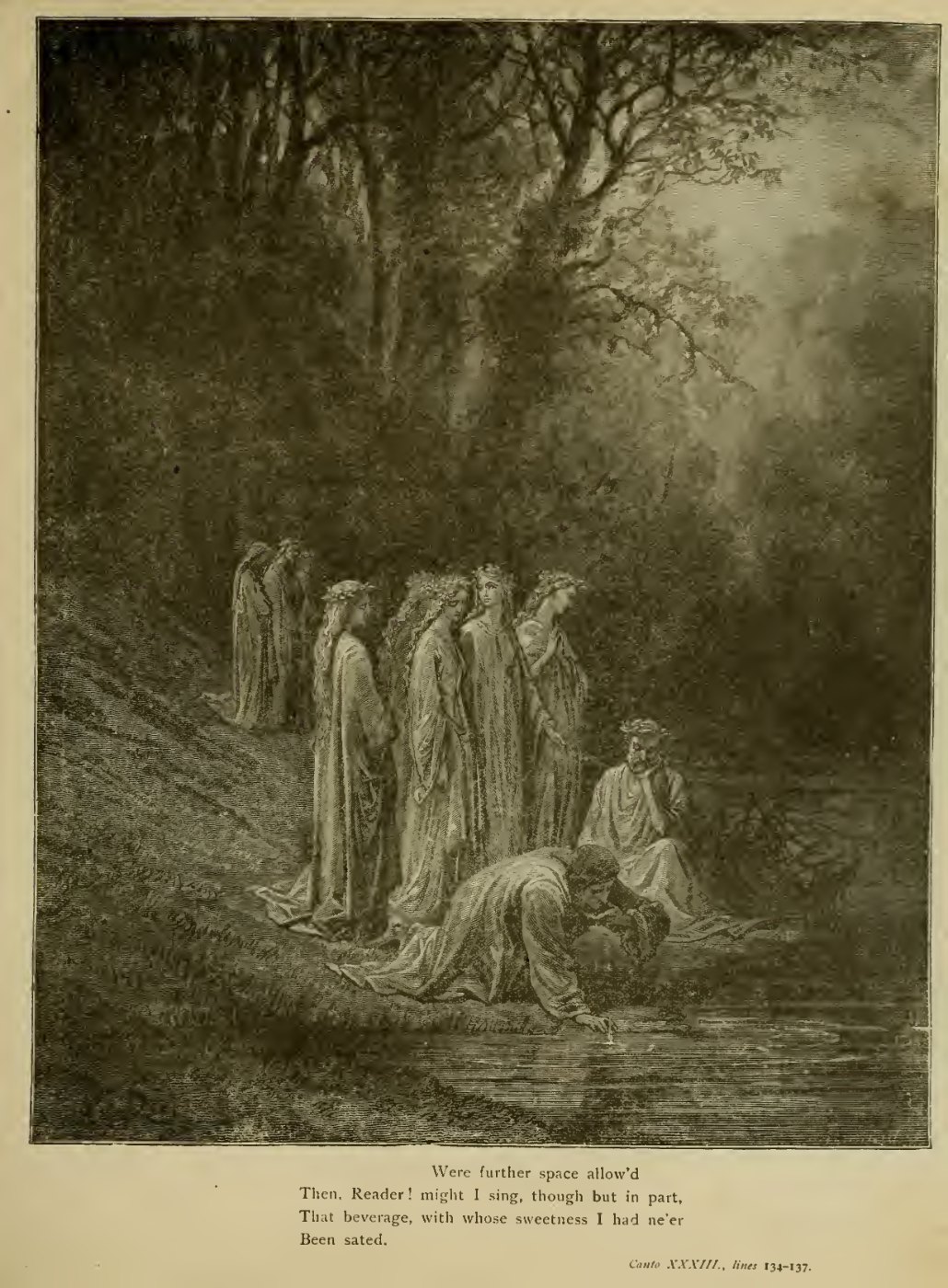
Dante at Eunoe, illustrated by Gustave Doré. The Cary edition captions the scene with Dante’s wish to say more about the sweetness of the drink.
Design by Gustave Doré. Purgatory and Paradise, Henry Francis Cary translation, Thompson & Thomas, Chicago, 1901. Public Domain. · Image source ↗ · Public Domain
What remembrance restores
Eunoe renews the good in Dante’s memory as he prepares to ascend. Steiner is interested in a different kind of retention, knowledge persisting in what the student does. In both works the partner to forgetting is something the person is meant to carry forward. [1][2][3][6][5]
See references (5)
- Purgatory and Paradise, Purgatory XXVIII, Reader page 171
- Purgatory and Paradise, Purgatory XXXIII, Reader page 201
- Purgatory and Paradise, Purgatory XXXIII, Reader page 202
- Knowledge of the Higher Worlds and Its Attainment, Reader page 83
- Knowledge of the Higher Worlds and Its Attainment, Reader page 82
Read further in the library
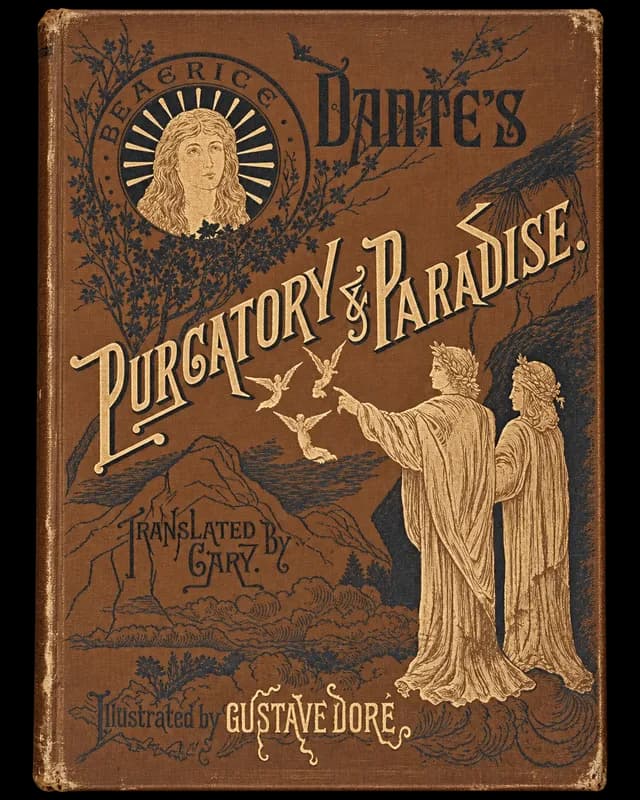
Purgatory and Paradise: The Vision of Dante
Reading note
Separately attributed primary Library account, cited on exact verified Reader leaves.
Knowledge of the Higher Worlds and Its Attainment
Reading note
The separately titled account draws on exact passages in the consulted Library edition.
Sources
See references (9)
- Purgatory and Paradise, Purgatory XXVIII, Reader page 171Dante Alighieri, The Divine Comedy, translated by Henry Francis Cary. Inferno: undated New Edition, Thompson & Thomas, Chicago. Purgatory and Paradise: New Edition, Thompson & Thomas, Chicago, 1901. Designs by Gustave Doré.Return to text ↑
Examine the original Library page
Existing stable Reader citation retained on the exact current page. Current Reader position reconciled; historical numbering is not reused.
Remembrance back of every good deed done
Open the original page in Purgatory and Paradise: The Vision of Dante ↗Scan leaf 175 · Dante Alighieri; translated by Henry Francis Cary; illustrated by Gustave Doré
- Purgatory and Paradise, Purgatory XXXIII, Reader page 201Dante Alighieri, The Divine Comedy, translated by Henry Francis Cary. Inferno: undated New Edition, Thompson & Thomas, Chicago. Purgatory and Paradise: New Edition, Thompson & Thomas, Chicago, 1901. Designs by Gustave Doré.Read this page in Purgatory and Paradise: The Vision of Dante ↗Return to text ↑
- Purgatory and Paradise, Purgatory XXXIII, Reader page 202Dante Alighieri, The Divine Comedy, translated by Henry Francis Cary. Inferno: undated New Edition, Thompson & Thomas, Chicago. Purgatory and Paradise: New Edition, Thompson & Thomas, Chicago, 1901. Designs by Gustave Doré.Return to text ↑
Examine the original Library page
Existing stable Reader citation retained on the exact current page. Current Reader position reconciled; historical numbering is not reused.
made apt for mounting to the stars
Open the original page in Purgatory and Paradise: The Vision of Dante ↗Scan leaf 206 · Dante Alighieri; translated by Henry Francis Cary; illustrated by Gustave Doré
- Purgatory and Paradise, Purgatory XXXIII, Reader page 191Dante Alighieri, The Divine Comedy, translated by Henry Francis Cary. Inferno: undated New Edition, Thompson & Thomas, Chicago. Purgatory and Paradise: New Edition, Thompson & Thomas, Chicago, 1901. Designs by Gustave Doré.Read this page in Purgatory and Paradise: The Vision of Dante ↗
- Knowledge of the Higher Worlds and Its Attainment, Reader page 83Rudolf Steiner, Knowledge of the Higher Worlds and Its Attainment, authorized English translation by G. Metaxa, edited by Harry Collison, Anthroposophic Press, New York City. Exact Library edition IMJ-0513-E001. No publication year is visible on the inspected title page; the repository assigns 1932. Claims of supersensible perception remain attributed to Steiner.Read this page in Knowledge of the Higher Worlds and Its Attainment ↗Return to text ↑
- Knowledge of the Higher Worlds and Its Attainment, Reader page 82Rudolf Steiner, Knowledge of the Higher Worlds and Its Attainment, authorized English translation by G. Metaxa, edited by Harry Collison, Anthroposophic Press, New York City. Exact Library edition IMJ-0513-E001. No publication year is visible on the inspected title page; the repository assigns 1932. Claims of supersensible perception remain attributed to Steiner.Read this page in Knowledge of the Higher Worlds and Its Attainment ↗Return to text ↑
- Knowledge of the Higher Worlds and Its Attainment, Reader page 70Rudolf Steiner, Knowledge of the Higher Worlds and Its Attainment, authorized English translation by G. Metaxa, edited by Harry Collison, Anthroposophic Press, New York City. Exact Library edition IMJ-0513-E001. No publication year is visible on the inspected title page; the repository assigns 1932. Claims of supersensible perception remain attributed to Steiner.Read this page in Knowledge of the Higher Worlds and Its Attainment ↗Return to text ↑
- Knowledge of the Higher Worlds and Its Attainment, Reader page 76Rudolf Steiner, Knowledge of the Higher Worlds and Its Attainment, authorized English translation by G. Metaxa, edited by Harry Collison, Anthroposophic Press, New York City. Exact Library edition IMJ-0513-E001. No publication year is visible on the inspected title page; the repository assigns 1932. Claims of supersensible perception remain attributed to Steiner.Read this page in Knowledge of the Higher Worlds and Its Attainment ↗Return to text ↑
- Knowledge of the Higher Worlds and Its Attainment, Reader page 80Rudolf Steiner, Knowledge of the Higher Worlds and Its Attainment, authorized English translation by G. Metaxa, edited by Harry Collison, Anthroposophic Press, New York City. Exact Library edition IMJ-0513-E001. No publication year is visible on the inspected title page; the repository assigns 1932. Claims of supersensible perception remain attributed to Steiner.Read this page in Knowledge of the Higher Worlds and Its Attainment ↗Return to text ↑