Daoist Internal Alchemy (Neidan): Essence, Breath and Spirit
Daoist internal alchemy, or neidan, describes cultivation through images of refining, circulating and combining what traditions call essence, breath and spirit. The elixir names the culmination of an inner transformation.
In this article
What is Daoist internal alchemy?
Daoist internal alchemy, or neidan, uses the language of furnaces and elixirs to describe transformation within the practitioner. Its traditions speak of refining essence, breath and spirit. What the elixir is and how it is brought to completion vary across texts. [7][8]
In The Secret of the Golden Flower
In the Chinese text translated by Richard Wilhelm and rendered into English by Cary F. Baynes, seed-water is the foundation, spirit-fire drives the work, and thought-earth supplies its substance and is associated with the Heavenly Heart. Other passages speak of a seed pearl and of forming the elixir. Each image tells the reader something about the process. [2][3][4][5]
Wilhelm observes in his exposition that the text explains the earlier stages of inner rebirth more fully than the later ones. The change in detail helps account for the shift from concrete images of gathering and refining to shorter accounts of what follows. [1]
See references (5)
- The Secret of the Golden Flower, printed p. 8, Reader page 16
- The Secret of the Golden Flower, printed p. 28, Reader page 35
- The Secret of the Golden Flower, printed p. 34, Reader page 39
- The Secret of the Golden Flower, printed p. 68, Reader page 67
- The Secret of the Golden Flower, printed p. 70, Reader page 69
The elixir in Awakening to Reality
In poem nine of Awakening to Reality, Zhang Boduan questions whether bodily exertion and breath techniques can amount to the Way. Fabrizio Pregadio explains how writers in that tradition could understand the elixir as present in one’s fundamental nature. The Golden Flower’s seed pearl gives a different image of something brought into form through cultivation. [6][7][2][3]
The furnace in a Ming woodcut
A small figure tends a furnace beside the meditator in this woodcut from the Xingming guizhi. The Wellcome catalogue explains that the cauldron and furnace signify work involving the head and abdomen. The work that the seated figure undertakes inwardly is pictured as a task beside him. [8][2]
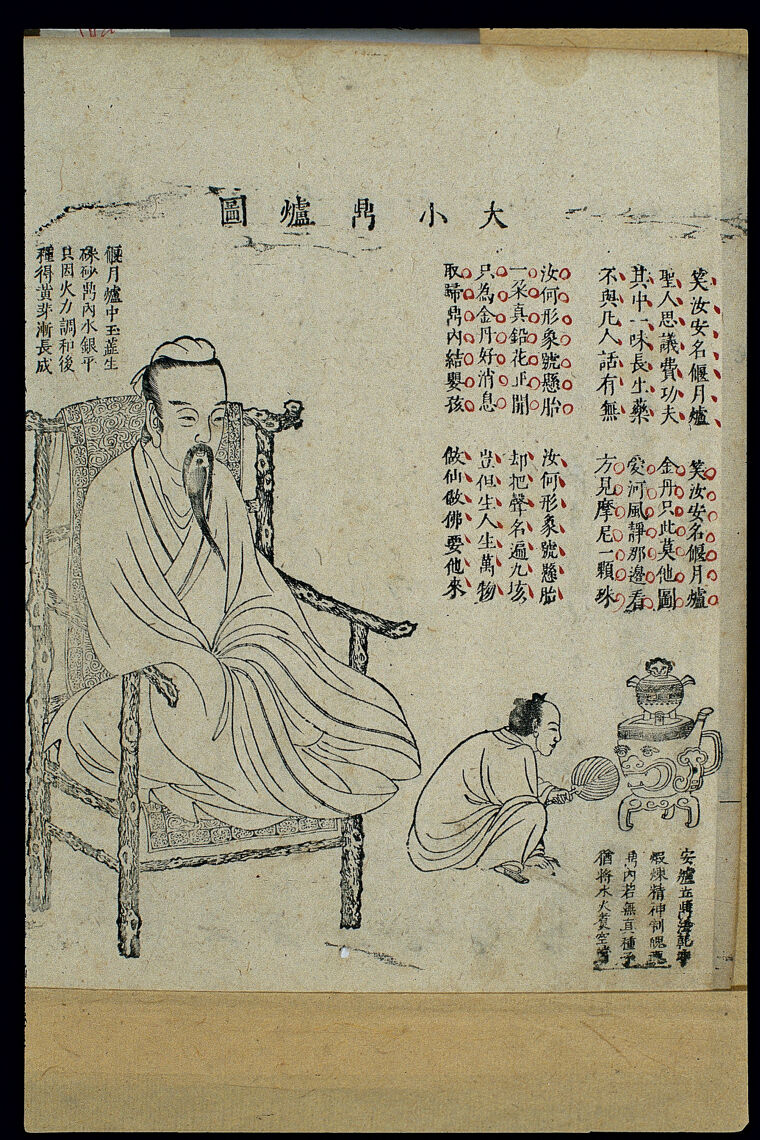
The cauldron and furnace in the Xingming guizhi, a Daoist internal-alchemy text published in 1615.
Wellcome Collection, L0038973. Public Domain Mark. · Image source ↗ · Public Domain
In the library
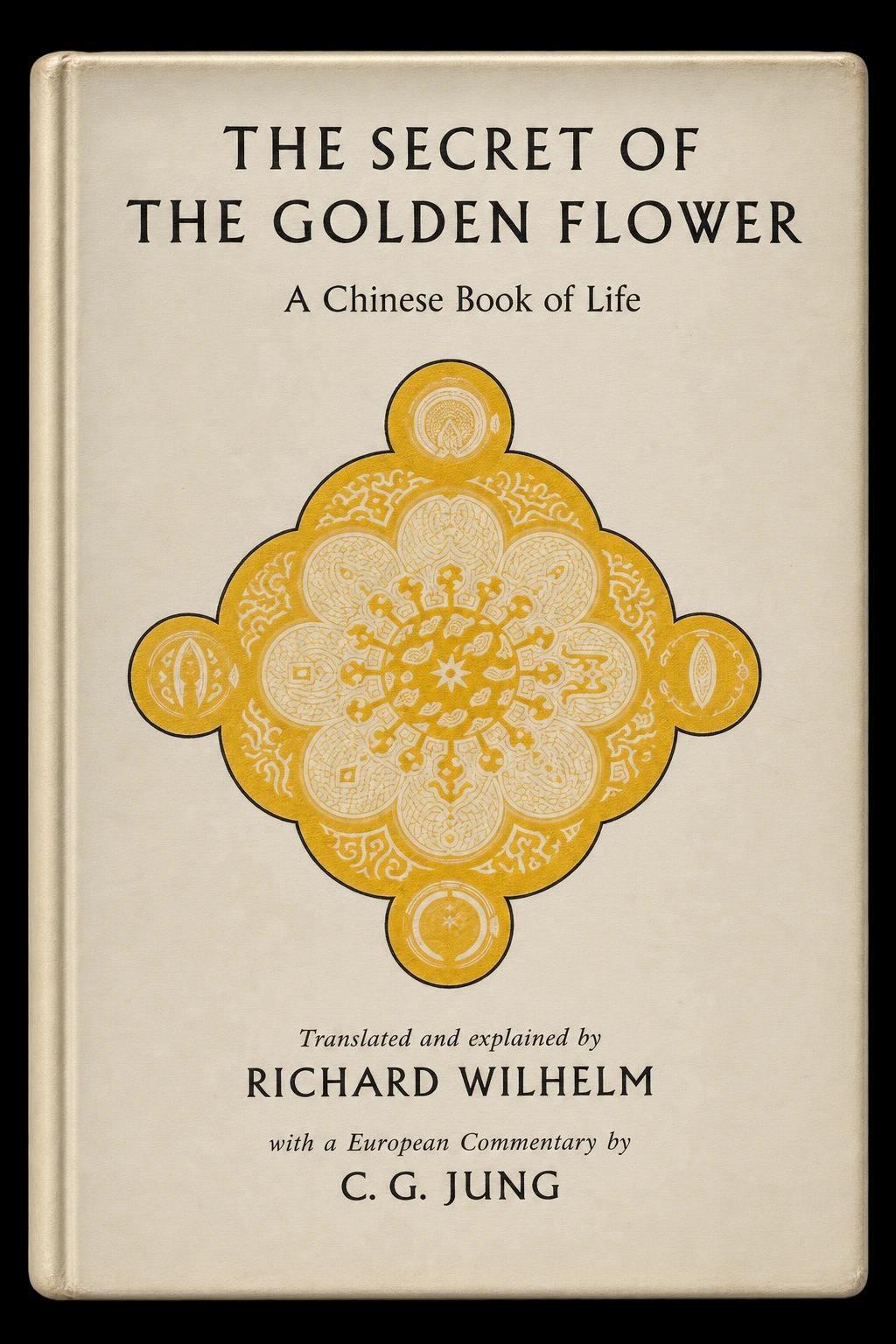
The Secret of the Golden Flower
Reading note
Read the specific account of Daoist internal alchemy in the Wilhelm–Baynes edition.
Sources
See references (8)
- The Secret of the Golden Flower, printed p. 8, Reader page 16The Secret of the Golden Flower: A Chinese Book of Life. Chinese text translated and explained by Richard Wilhelm, English translation by Cary F. Baynes, with separate commentary by C. G. Jung. London, Kegan Paul, Trench, Trubner & Co. Lumitheca Library edition IMJ-0596-E001.Read this page in The Secret of the Golden Flower ↗
- The Secret of the Golden Flower, printed p. 28, Reader page 35The Secret of the Golden Flower: A Chinese Book of Life. Chinese text translated and explained by Richard Wilhelm, English translation by Cary F. Baynes, with separate commentary by C. G. Jung. London, Kegan Paul, Trench, Trubner & Co. Lumitheca Library edition IMJ-0596-E001.Read this page in The Secret of the Golden Flower ↗
- The Secret of the Golden Flower, printed p. 34, Reader page 39The Secret of the Golden Flower: A Chinese Book of Life. Chinese text translated and explained by Richard Wilhelm, English translation by Cary F. Baynes, with separate commentary by C. G. Jung. London, Kegan Paul, Trench, Trubner & Co. Lumitheca Library edition IMJ-0596-E001.Read this page in The Secret of the Golden Flower ↗
- The Secret of the Golden Flower, printed p. 68, Reader page 67The Secret of the Golden Flower: A Chinese Book of Life. Chinese text translated and explained by Richard Wilhelm, English translation by Cary F. Baynes, with separate commentary by C. G. Jung. London, Kegan Paul, Trench, Trubner & Co. Lumitheca Library edition IMJ-0596-E001.Read this page in The Secret of the Golden Flower ↗
- The Secret of the Golden Flower, printed p. 70, Reader page 69The Secret of the Golden Flower: A Chinese Book of Life. Chinese text translated and explained by Richard Wilhelm, English translation by Cary F. Baynes, with separate commentary by C. G. Jung. London, Kegan Paul, Trench, Trubner & Co. Lumitheca Library edition IMJ-0596-E001.Read this page in The Secret of the Golden Flower ↗
- Zhang Boduan, Awakening to Reality (Wuzhen pian), poem 9 ↗Fabrizio Pregadio’s translation, Golden Elixir Press
- Fabrizio Pregadio, Taoist Internal Alchemy and the Awakening to Reality, part 3, The Elixir ↗Fabrizio Pregadio, Golden Elixir Press
- Chinese woodcut: Daoist internal alchemy (3) ↗Wellcome Collection, L0038973. Public Domain Mark.