Crossing the Abyss
Crossing the Abyss in Thelema marks the passage from Exempt Adept to Master of the Temple. Compare Crowley’s letters, grade descriptions and visionary account.
In this article
What is Crossing the Abyss?
Crossing the Abyss is the passage from Exempt Adept towards Master of the Temple in Aleister Crowley’s Thelema. The Abyss marks a break between grades. Crowley says the adept must give up what they have attained and the sense of being the person who owns those attainments. [1][4][5][6]
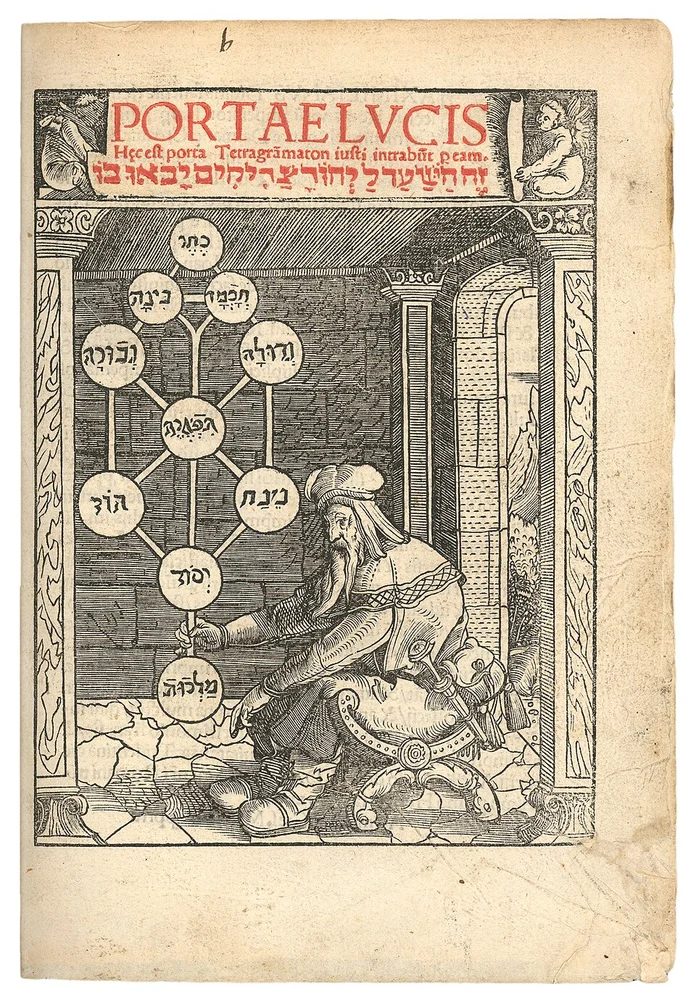
A 1516 Latin edition of Porta Lucis shows the sefirot as a tree. Crowley later uses this inherited diagrammatic vocabulary to describe an initiatory threshold.
Joseph Gikatilla, Porta Lucis, abridged Latin translation by Paulus Ricius (Johann Miller, Augsburg, 1516). University Library of Nijmegen, via Wikimedia Commons. · Image source ↗ · Public Domain
One Star in Sight by Aleister Crowley
In One Star in Sight, Aleister Crowley places the Babe of the Abyss between Exempt Adept and Master of the Temple. The former identity and its attainments fall away before the new grade begins. [1]
The Vision and the Voice by Aleister Crowley
In the fourteenth Aethyr of The Vision and the Voice, the seer passes through a veil and encounters hooded figures whose robes resemble pyramids. The landscape gives visible form to the passage that the grade descriptions set out more directly. [2]
Magick Without Tears by Aleister Crowley
In Magick Without Tears, Crowley distinguishes the crossing from an isolated trance. A trance may interrupt ordinary experience and then pass. By crossing, the person is supposed to find that the character of ordinary experience has changed permanently. [7][4][5][6]
In another letter, Crowley imagines the former personality still doing useful work. He gives examples such as the work of a poet or a warrior. The change concerns how the person relates to the work and the achievements they once called their own. [5][6][8]
A grade, a vision and an enduring change
One Star in Sight names the figure who links the two grades. The Vision and the Voice gives that change a landscape of veils and pyramids. The letters ask how a person would recognise its effects after the visionary experience itself has ended. [1][2][4][5][6]
Read further in the library
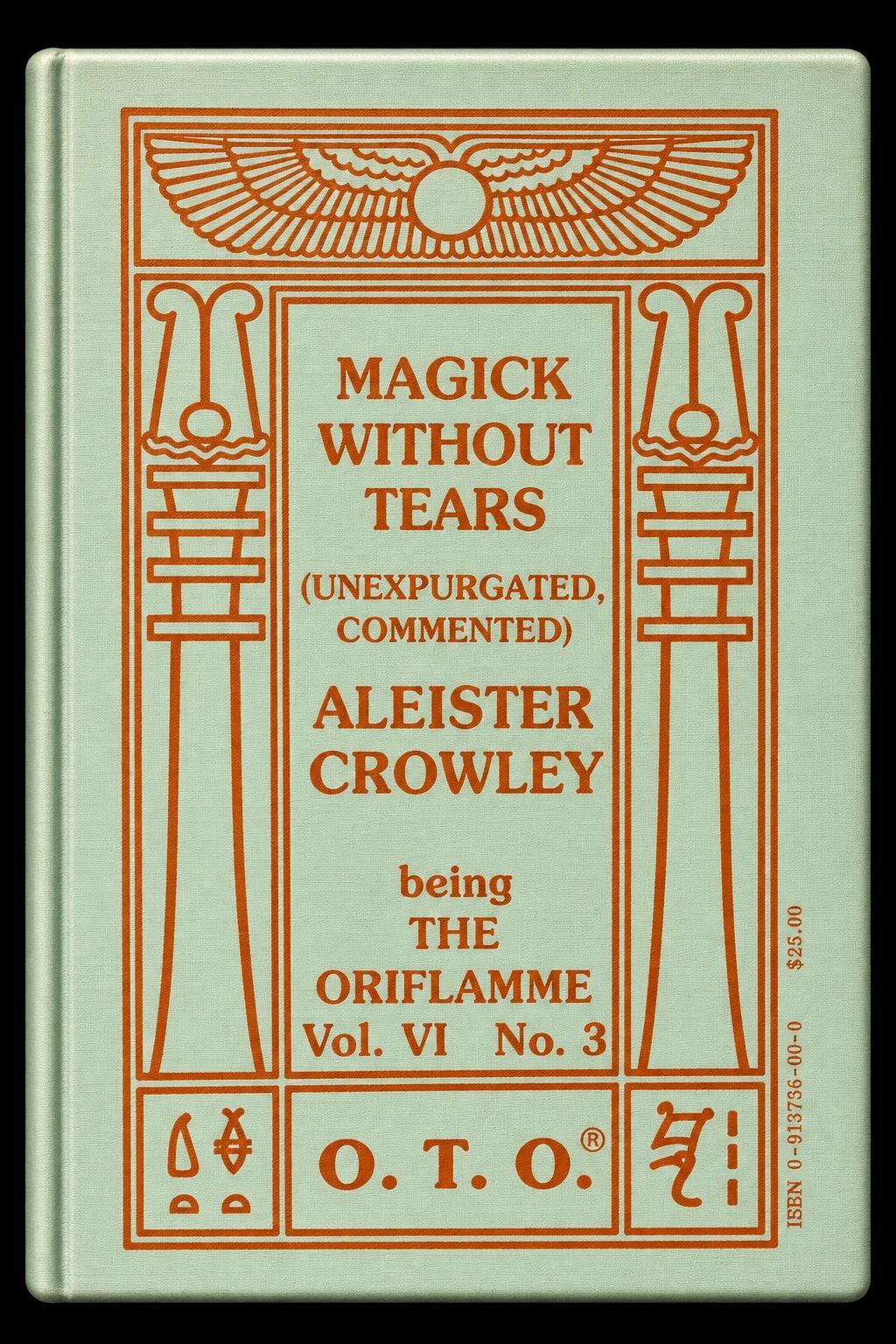
Magick Without Tears
Reading note
The separately titled account draws on exact passages in the consulted Library edition.
Sources
See references (8)
- One Star in Sight, table of grades and the Adeptus Exemptus and Magister Templi passages ↗Aleister Crowley, One Star in Sight, Book 4, appendix II. Hermetic Library transcription.Return to text ↑
- The Vision and the Voice, 14th Aethyr, UTI ↗Aleister Crowley, The Vision and the Voice, 14th Aethyr. Hermetic Library transcription.Return to text ↑
- Tree of the sefirot on the title page of Porta Lucis ↗Joseph Gikatilla, Porta Lucis, abridged Latin translation by Paulus Ricius (Johann Miller, Augsburg, 1516). University Library of Nijmegen, via Wikimedia Commons.
- Magick Without Tears, Reader page 76Aleister Crowley, Magick Without Tears, undated digital Library edition IMJ-0641-E001. Links use the current Library Reader sequence.Read this page in Magick Without Tears ↗Return to text ↑
- Magick Without Tears, Reader page 210Aleister Crowley, Magick Without Tears, undated digital Library edition IMJ-0641-E001. Links use the current Library Reader sequence.Read this page in Magick Without Tears ↗Return to text ↑
- Magick Without Tears, Reader page 211Aleister Crowley, Magick Without Tears, undated digital Library edition IMJ-0641-E001. Links use the current Library Reader sequence.Read this page in Magick Without Tears ↗Return to text ↑
- Magick Without Tears, Reader page 75Aleister Crowley, Magick Without Tears, undated digital Library edition IMJ-0641-E001. Links use the current Library Reader sequence.Read this page in Magick Without Tears ↗Return to text ↑
- Magick Without Tears, Reader page 212Aleister Crowley, Magick Without Tears, undated digital Library edition IMJ-0641-E001. Links use the current Library Reader sequence.Read this page in Magick Without Tears ↗Return to text ↑