Consciousness in Dreamless Sleep
Can experience continue in dreamless sleep? Compare what sleepers report on awakening with Steiner’s account of awareness beyond ordinary dreams.
In this article
Understanding the concept
Consciousness in dreamless sleep asks whether a person can experience something during sleep without remembering ordinary dream images. Someone may remember nothing, or remember that they experienced something while being unable to say what it was. The difference matters when sleep is discussed through what can be recalled afterwards. [1]
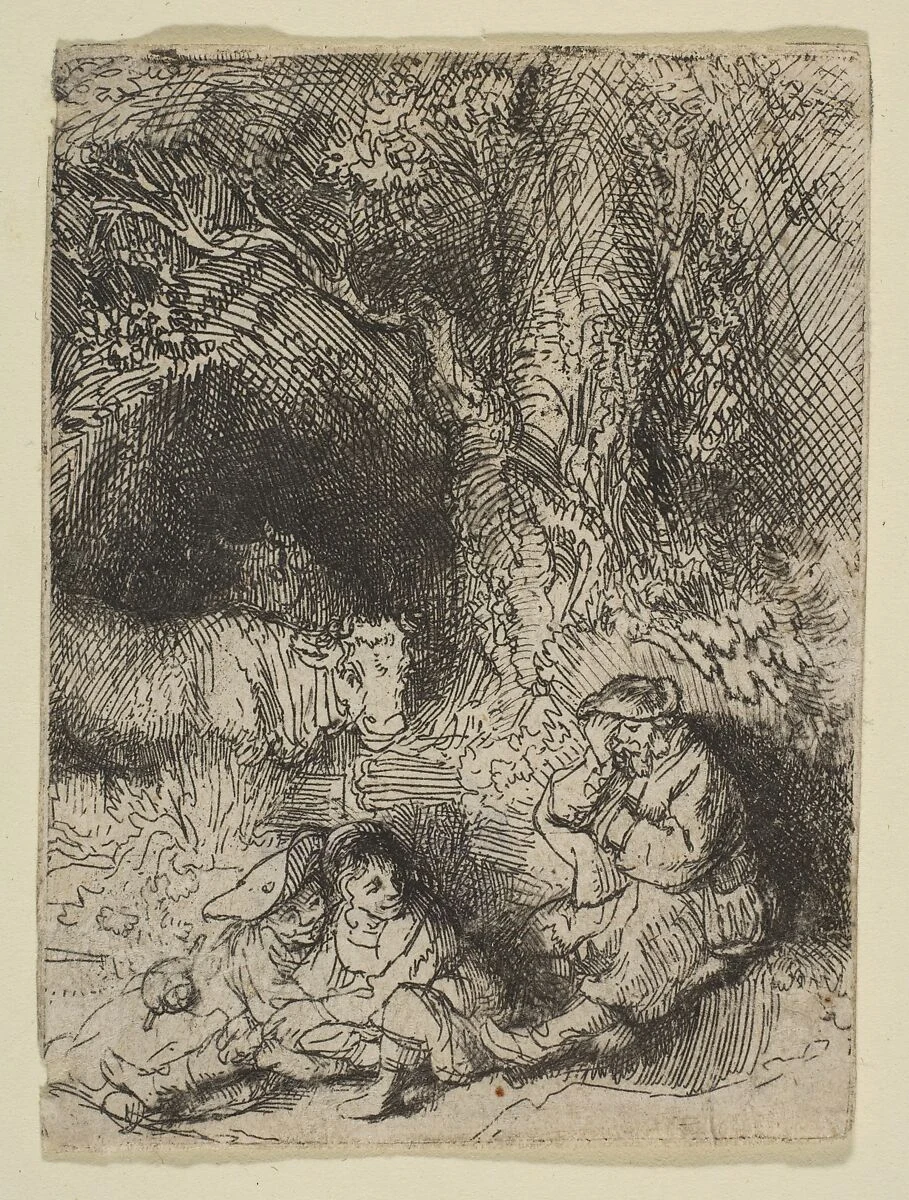
Rembrandt, The Sleeping Herdsman, c. 1644. The etching shows a sleeper from the outside.
Rembrandt van Rijn. Etching and drypoint. The Metropolitan Museum of Art, Rogers Fund and Bequest of Ida Kammerer, in memory of Frederick Kammerer, M.D., by exchange; 1972.628. Public Domain, Open Access. · Image source ↗ · Public Domain
Experience and recall in sleep research
In 2017, Francesca Siclari and colleagues woke people during REM and non-REM sleep and asked what had just been happening for them. They distinguished reports of a remembered dream, reports of experience whose content was forgotten, and reports of no experience. [1]
The responses describe what participants could report immediately after waking. The study uses that difference to compare brain activity around reported experience and a reported absence of experience. [1]
Initiation and Its Results by Rudolf Steiner
Rudolf Steiner’s Initiation and Its Results separates waking, dreaming sleep and deep dreamless sleep. After describing changes in dream life, he proposes a further stage in which isolated conscious experiences appear within what had previously seemed wholly unconscious. [2][3][4]
Steiner compares the first experiences of this deeper sleep with hearing tones or words. In his account, dreaming had been more like seeing. Both descriptions use a familiar sense to give the reader an idea of what he means. [5][6]
Recall is initially scanty. A person may wake knowing that something occurred without being able to recover its nature. Steiner recommends patience within his account of training, contrasting the gradual recovery of experience with an attempt to force it. [6][7]
The book distinguishes unfamiliar experiences from others that seem related to a problem in waking life. In the latter case, something previously approached as an idea is said to acquire a living, sonorous character. Steiner expects the experience to be related back to ordinary concerns rather than left as an unrelated marvel. [7][8][9]
He nevertheless qualifies its authority. Sleep experiences should not be treated as wholly reliable knowledge until the proposed higher state can also be entered during waking life. He also warns against constructing a complete system out of a few disconnected impressions. [10][11]
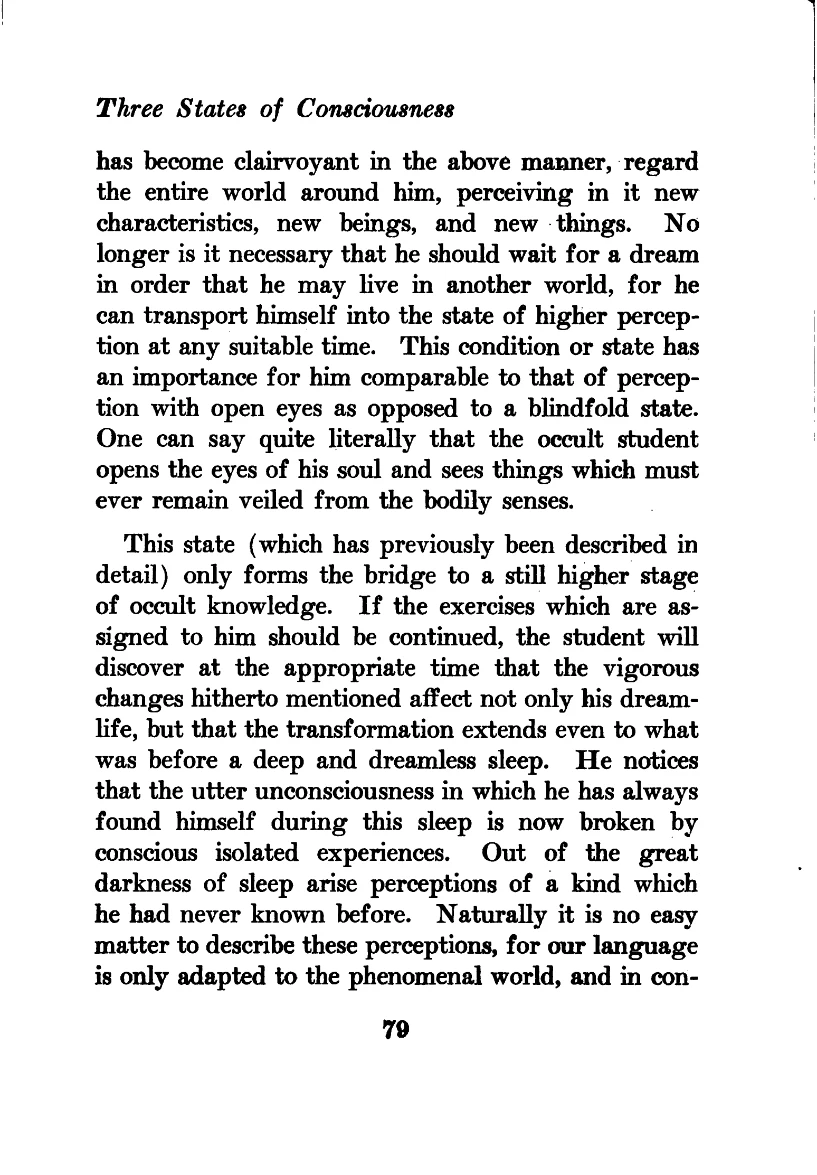
Source facsimile: Initiation and Its Results (1909), printed p. 79, Reader page 77.
Rudolf Steiner, Initiation and Its Results, Clifford Bax translation, First American Edition, 1909. Public-domain historical page from the checksum-verified Library PDF. · Image source ↗ · Public Domain
See references (10)
- Initiation and Its Results, printed p. 77, Reader page 75
- Initiation and Its Results, printed p. 78, Reader page 76
- Initiation and Its Results, printed p. 79, Reader page 77
- Initiation and Its Results, printed p. 80, Reader page 78
- Initiation and Its Results, printed p. 81, Reader page 79
- Initiation and Its Results, printed p. 82, Reader page 80
- Initiation and Its Results, printed p. 83, Reader page 81
- Initiation and Its Results, printed p. 84, Reader page 82
- Initiation and Its Results, printed p. 86, Reader page 84
- Initiation and Its Results, printed p. 87, Reader page 85
Knowledge of the Higher Worlds by Rudolf Steiner
Rudolf Steiner distinguishes waking, dreaming sleep and dreamless sleep. He describes the proposed extension into dreamless sleep as isolated experiences emerging where the student previously remembered no awareness. Their initial occurrence is separate from the fuller continuity of consciousness described later. [19][20][21]
He uses hearing as an analogy for the first experiences, speaking of tones and words where the dream chapter had emphasized pictures. The surrounding discussion says that ordinary language expresses these spiritual experiences only approximately. The terms do not require a claim that ordinary sounds reached a sleeping ear. [21][22][23]
Some experiences are said to remain unfamiliar, while others concern questions the student had considered during daily life. Steiner advises composure and patience when recall is slight or intermittent. He also warns against forcing disconnected impressions into a complete spiritual system. [23][24][25][26]
The stated criterion again includes waking life. Experiences during sleep should not be treated as fully valid knowledge until the relevant mode of awareness can be carried into waking consciousness. The chapter’s metaphysical interpretation therefore goes beyond the simple report that someone recalls an experience after apparently dreamless sleep. [27][26]
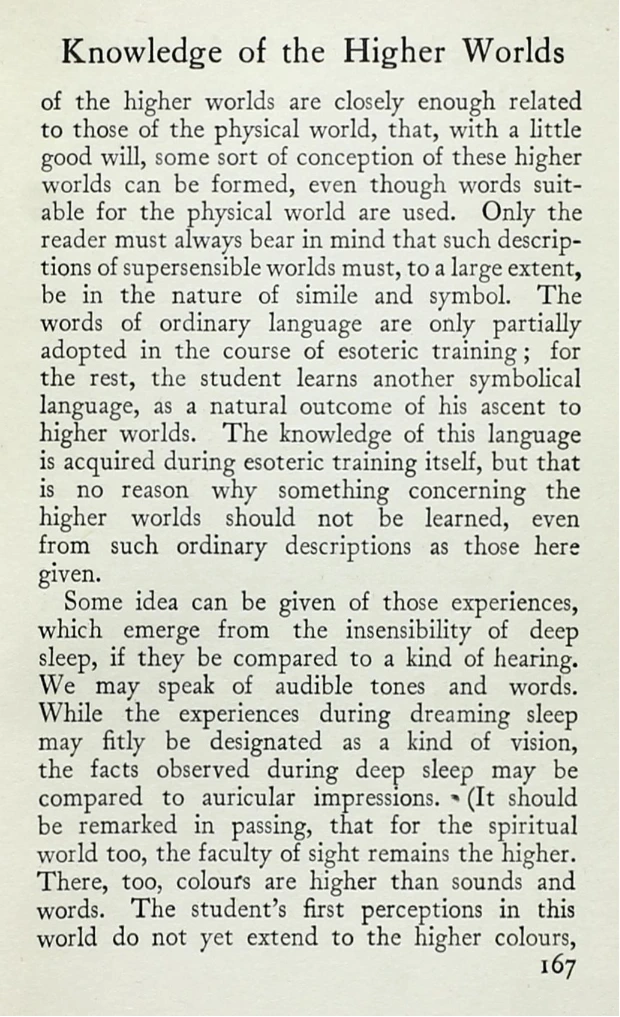
Source facsimile: Knowledge of the Higher Worlds, Reader page 171. The descriptions of deep-sleep experience use hearing as a comparison, with ordinary language treated as approximate.
Rudolf Steiner, G. Metaxa translation, edited by Harry Collison. Historical public-domain source facsimile from the exact checksum-verified Library edition. Repository date 1932; the inspected title page is undated. · Image source ↗ · Public Domain
See references (9)
- Knowledge of the Higher Worlds and Its Attainment, Reader page 168
- Knowledge of the Higher Worlds and Its Attainment, Reader page 169
- Knowledge of the Higher Worlds and Its Attainment, Reader page 170
- Knowledge of the Higher Worlds and Its Attainment, Reader page 171
- Knowledge of the Higher Worlds and Its Attainment, Reader page 172
- Knowledge of the Higher Worlds and Its Attainment, Reader page 173
- Knowledge of the Higher Worlds and Its Attainment, Reader page 174
- Knowledge of the Higher Worlds and Its Attainment, Reader page 176
- Knowledge of the Higher Worlds and Its Attainment, Reader page 175
The Angels’ Diary and Celestion Study of Man by Effie M. Shirey and Charles Samson
Celestion Study of Man, published under the names of Effie M. Shirey and Charles Samson, assigns spiritual activity during bodily sleep to a subconscious mind of the soul. Its account distinguishes that inward mind from the impressions ordinarily expressed through the brain. [13][14][15][16]
What can be experienced and what can be recalled
The laboratory study identifies sleep stages through recordings and asks about experience and recall. Steiner distinguishes waking, dreaming and dreamless sleep in a different account of experience. His two editions present related GA 10 material and take occasional impressions as an early stage, with sustained awareness still to come. [2][4][6][12][7][11][18][21][27][26][1]
Celestion Study of Man gives the soul an activity that continues while the body sleeps. Steiner describes how the learner might come to remember isolated experiences on waking. The books give awareness and recollection different roles. [13][14][15][16][4][6][7][10]
See references (16)
- Francesca Siclari and colleagues, The neural correlates of dreaming (2017), Methods and Figure 1
- Initiation and Its Results, printed p. 77, Reader page 75
- Initiation and Its Results, printed p. 79, Reader page 77
- Initiation and Its Results, printed p. 81, Reader page 79
- Initiation and Its Results, printed p. 82, Reader page 80
- Initiation and Its Results, printed p. 86, Reader page 84
- Initiation and Its Results, printed p. 87, Reader page 85
- Initiation and Its Results, printed p. 88, Reader page 86
- The Angels’ Diary and Celestion Study of Man, Reader page 115
- The Angels’ Diary and Celestion Study of Man, Reader page 117
- The Angels’ Diary and Celestion Study of Man, Reader page 126
- The Angels’ Diary and Celestion Study of Man, Reader page 127
- Rudolf Steiner Archive: GA 10 publication and translation history
- Knowledge of the Higher Worlds and Its Attainment, Reader page 170
- Knowledge of the Higher Worlds and Its Attainment, Reader page 176
- Knowledge of the Higher Worlds and Its Attainment, Reader page 175
Read further in the library

Initiation and Its Results
Reading note
The separately titled account draws on exact passages in the consulted Library edition.

The Angels’ Diary and Celestion Study of Man
Reading note
Separately attributed comparison with exact previously researched Library passages.

Knowledge of the Higher Worlds and Its Attainment
Reading note
The separately titled account draws on exact passages in the consulted Library edition.
Sources
See references (27)
- Francesca Siclari and colleagues, The neural correlates of dreaming (2017), Methods and Figure 1 ↗Francesca Siclari and colleagues. Nature Neuroscience 20 (2017), 872–878. DOI 10.1038/nn.4545. Consulted the indexed abstract and figure captions, with categories cross-checked against the funding agency’s research summary. Full publisher methods text was not accessible in this research pass.Return to text ↑
- Initiation and Its Results, printed p. 77, Reader page 75Rudolf Steiner, Initiation and Its Results: A Sequel to The Way of Initiation, translated by Clifford Bax. First American Edition, 1909. Macoy Publishing and Masonic Supply Co., New York; Max Gysi, London. Claims of clairvoyant perception and subtle organs remain attributed. References identify the exact consulted Library edition.Read this page in Initiation and Its Results ↗Return to text ↑
- Initiation and Its Results, printed p. 78, Reader page 76Rudolf Steiner, Initiation and Its Results: A Sequel to The Way of Initiation, translated by Clifford Bax. First American Edition, 1909. Macoy Publishing and Masonic Supply Co., New York; Max Gysi, London. Claims of clairvoyant perception and subtle organs remain attributed. References identify the exact consulted Library edition.Read this page in Initiation and Its Results ↗Return to text ↑
- Initiation and Its Results, printed p. 79, Reader page 77Rudolf Steiner, Initiation and Its Results: A Sequel to The Way of Initiation, translated by Clifford Bax. First American Edition, 1909. Macoy Publishing and Masonic Supply Co., New York; Max Gysi, London. Claims of clairvoyant perception and subtle organs remain attributed. References identify the exact consulted Library edition.Read this page in Initiation and Its Results ↗Return to text ↑
- Initiation and Its Results, printed p. 80, Reader page 78Rudolf Steiner, Initiation and Its Results: A Sequel to The Way of Initiation, translated by Clifford Bax. First American Edition, 1909. Macoy Publishing and Masonic Supply Co., New York; Max Gysi, London. Claims of clairvoyant perception and subtle organs remain attributed. References identify the exact consulted Library edition.Read this page in Initiation and Its Results ↗Return to text ↑
- Initiation and Its Results, printed p. 81, Reader page 79Rudolf Steiner, Initiation and Its Results: A Sequel to The Way of Initiation, translated by Clifford Bax. First American Edition, 1909. Macoy Publishing and Masonic Supply Co., New York; Max Gysi, London. Claims of clairvoyant perception and subtle organs remain attributed. References identify the exact consulted Library edition.Read this page in Initiation and Its Results ↗Return to text ↑
- Initiation and Its Results, printed p. 82, Reader page 80Rudolf Steiner, Initiation and Its Results: A Sequel to The Way of Initiation, translated by Clifford Bax. First American Edition, 1909. Macoy Publishing and Masonic Supply Co., New York; Max Gysi, London. Claims of clairvoyant perception and subtle organs remain attributed. References identify the exact consulted Library edition.Read this page in Initiation and Its Results ↗Return to text ↑
- Initiation and Its Results, printed p. 83, Reader page 81Rudolf Steiner, Initiation and Its Results: A Sequel to The Way of Initiation, translated by Clifford Bax. First American Edition, 1909. Macoy Publishing and Masonic Supply Co., New York; Max Gysi, London. Claims of clairvoyant perception and subtle organs remain attributed. References identify the exact consulted Library edition.Read this page in Initiation and Its Results ↗Return to text ↑
- Initiation and Its Results, printed p. 84, Reader page 82Rudolf Steiner, Initiation and Its Results: A Sequel to The Way of Initiation, translated by Clifford Bax. First American Edition, 1909. Macoy Publishing and Masonic Supply Co., New York; Max Gysi, London. Claims of clairvoyant perception and subtle organs remain attributed. References identify the exact consulted Library edition.Read this page in Initiation and Its Results ↗Return to text ↑
- Initiation and Its Results, printed p. 86, Reader page 84Rudolf Steiner, Initiation and Its Results: A Sequel to The Way of Initiation, translated by Clifford Bax. First American Edition, 1909. Macoy Publishing and Masonic Supply Co., New York; Max Gysi, London. Claims of clairvoyant perception and subtle organs remain attributed. References identify the exact consulted Library edition.Read this page in Initiation and Its Results ↗Return to text ↑
- Initiation and Its Results, printed p. 87, Reader page 85Rudolf Steiner, Initiation and Its Results: A Sequel to The Way of Initiation, translated by Clifford Bax. First American Edition, 1909. Macoy Publishing and Masonic Supply Co., New York; Max Gysi, London. Claims of clairvoyant perception and subtle organs remain attributed. References identify the exact consulted Library edition.Read this page in Initiation and Its Results ↗Return to text ↑
- Initiation and Its Results, printed p. 88, Reader page 86Rudolf Steiner, Initiation and Its Results: A Sequel to The Way of Initiation, translated by Clifford Bax. First American Edition, 1909. Macoy Publishing and Masonic Supply Co., New York; Max Gysi, London. Claims of clairvoyant perception and subtle organs remain attributed. References identify the exact consulted Library edition.Read this page in Initiation and Its Results ↗Return to text ↑
- The Angels’ Diary and Celestion Study of Man, Reader page 115Effie M. Shirey and Charles Samson, The Angels’ Diary and Celestion Study of Man (1903), communicated through Elizabeth Maud Weatherhead according to the volume’s acknowledgment. Accounts below refer to the exact retained Library edition IMJ-0055-E001.Read this page in The Angels’ Diary and Celestion Study of Man ↗Return to text ↑
- The Angels’ Diary and Celestion Study of Man, Reader page 117Effie M. Shirey and Charles Samson, The Angels’ Diary and Celestion Study of Man (1903), communicated through Elizabeth Maud Weatherhead according to the volume’s acknowledgment. Accounts below refer to the exact retained Library edition IMJ-0055-E001.Read this page in The Angels’ Diary and Celestion Study of Man ↗Return to text ↑
- The Angels’ Diary and Celestion Study of Man, Reader page 126Effie M. Shirey and Charles Samson, The Angels’ Diary and Celestion Study of Man (1903), communicated through Elizabeth Maud Weatherhead according to the volume’s acknowledgment. Accounts below refer to the exact retained Library edition IMJ-0055-E001.Read this page in The Angels’ Diary and Celestion Study of Man ↗Return to text ↑
- The Angels’ Diary and Celestion Study of Man, Reader page 127Effie M. Shirey and Charles Samson, The Angels’ Diary and Celestion Study of Man (1903), communicated through Elizabeth Maud Weatherhead according to the volume’s acknowledgment. Accounts below refer to the exact retained Library edition IMJ-0055-E001.Read this page in The Angels’ Diary and Celestion Study of Man ↗Return to text ↑
- The Metropolitan Museum of Art, The Sleeping Herdsman by Rembrandt, ca. 1644, object 391761 ↗Official collection record: title, attribution, medium, date and Public Domain reuse status checked. The artwork supplies a historical representation of sleep, not a measurement of a sleeper’s awareness.
- Rudolf Steiner Archive: GA 10 publication and translation history ↗Steiner Online Library, Rudolf Steiner Archive, GA 10 bibliography. Used only for publication relationships, not independent confirmation of spiritual claims.Return to text ↑
- Knowledge of the Higher Worlds and Its Attainment, Reader page 168Rudolf Steiner, Knowledge of the Higher Worlds and Its Attainment, authorized English translation by G. Metaxa, edited by Harry Collison, Anthroposophic Press, New York City. Exact Library edition IMJ-0513-E001. No publication year is visible on the inspected title page; the repository assigns 1932. Claims of supersensible perception remain attributed to Steiner.Read this page in Knowledge of the Higher Worlds and Its Attainment ↗Return to text ↑
- Knowledge of the Higher Worlds and Its Attainment, Reader page 169Rudolf Steiner, Knowledge of the Higher Worlds and Its Attainment, authorized English translation by G. Metaxa, edited by Harry Collison, Anthroposophic Press, New York City. Exact Library edition IMJ-0513-E001. No publication year is visible on the inspected title page; the repository assigns 1932. Claims of supersensible perception remain attributed to Steiner.Read this page in Knowledge of the Higher Worlds and Its Attainment ↗Return to text ↑
- Knowledge of the Higher Worlds and Its Attainment, Reader page 170Rudolf Steiner, Knowledge of the Higher Worlds and Its Attainment, authorized English translation by G. Metaxa, edited by Harry Collison, Anthroposophic Press, New York City. Exact Library edition IMJ-0513-E001. No publication year is visible on the inspected title page; the repository assigns 1932. Claims of supersensible perception remain attributed to Steiner.Read this page in Knowledge of the Higher Worlds and Its Attainment ↗Return to text ↑
- Knowledge of the Higher Worlds and Its Attainment, Reader page 171Rudolf Steiner, Knowledge of the Higher Worlds and Its Attainment, authorized English translation by G. Metaxa, edited by Harry Collison, Anthroposophic Press, New York City. Exact Library edition IMJ-0513-E001. No publication year is visible on the inspected title page; the repository assigns 1932. Claims of supersensible perception remain attributed to Steiner.Read this page in Knowledge of the Higher Worlds and Its Attainment ↗Return to text ↑
- Knowledge of the Higher Worlds and Its Attainment, Reader page 172Rudolf Steiner, Knowledge of the Higher Worlds and Its Attainment, authorized English translation by G. Metaxa, edited by Harry Collison, Anthroposophic Press, New York City. Exact Library edition IMJ-0513-E001. No publication year is visible on the inspected title page; the repository assigns 1932. Claims of supersensible perception remain attributed to Steiner.Read this page in Knowledge of the Higher Worlds and Its Attainment ↗Return to text ↑
- Knowledge of the Higher Worlds and Its Attainment, Reader page 173Rudolf Steiner, Knowledge of the Higher Worlds and Its Attainment, authorized English translation by G. Metaxa, edited by Harry Collison, Anthroposophic Press, New York City. Exact Library edition IMJ-0513-E001. No publication year is visible on the inspected title page; the repository assigns 1932. Claims of supersensible perception remain attributed to Steiner.Read this page in Knowledge of the Higher Worlds and Its Attainment ↗Return to text ↑
- Knowledge of the Higher Worlds and Its Attainment, Reader page 174Rudolf Steiner, Knowledge of the Higher Worlds and Its Attainment, authorized English translation by G. Metaxa, edited by Harry Collison, Anthroposophic Press, New York City. Exact Library edition IMJ-0513-E001. No publication year is visible on the inspected title page; the repository assigns 1932. Claims of supersensible perception remain attributed to Steiner.Read this page in Knowledge of the Higher Worlds and Its Attainment ↗Return to text ↑
- Knowledge of the Higher Worlds and Its Attainment, Reader page 176Rudolf Steiner, Knowledge of the Higher Worlds and Its Attainment, authorized English translation by G. Metaxa, edited by Harry Collison, Anthroposophic Press, New York City. Exact Library edition IMJ-0513-E001. No publication year is visible on the inspected title page; the repository assigns 1932. Claims of supersensible perception remain attributed to Steiner.Read this page in Knowledge of the Higher Worlds and Its Attainment ↗Return to text ↑
- Knowledge of the Higher Worlds and Its Attainment, Reader page 175Rudolf Steiner, Knowledge of the Higher Worlds and Its Attainment, authorized English translation by G. Metaxa, edited by Harry Collison, Anthroposophic Press, New York City. Exact Library edition IMJ-0513-E001. No publication year is visible on the inspected title page; the repository assigns 1932. Claims of supersensible perception remain attributed to Steiner.Read this page in Knowledge of the Higher Worlds and Its Attainment ↗Return to text ↑