Astral Body and Etheric Double
In Theosophy, the astral body carries feeling and desire, while the etheric double belongs to the physical body. Compare Besant and Leadbeater.
In this article
Distinguish the terms by author and function
Later Theosophical writers distinguish the two bodies by plane and function. To understand how a book uses either term, look at where the author places that body and what it is said to do.
Etheric double
In The Ancient Wisdom, Besant places it within the physical plane. It corresponds to and interpenetrates the dense body and figures in her account of vitality.
Besant on the physical planeAstral body
Besant places this vehicle on the astral plane and associates it with feeling and desire. She describes the etheric and astral bodies as interpenetrating the dense body.
Earlier usage
In his manual on the astral plane, Leadbeater explains that what he calls the etheric double had also been called the astral body. In a quotation, keep the original label and check what it denotes there.
Leadbeater’s terminology in the Reader
The etheric double in Besant’s physical plane
In The Ancient Wisdom, Annie Besant describes the physical body in two parts. The dense part consists of what her system classes as solid, liquid and gaseous matter. The etheric double uses matter from the finer subdivisions of the same plane. It interpenetrates the dense body and corresponds to its organisation. That location is the quickest way to recognise how Besant is using the term.
Besant gives the double a role in the distribution of vitality. She treats that role as part of her explanation of the relation between the subtler and denser parts of the person. Her description belongs to the Theosophical account of the physical plane, whose scheme includes subdivisions and functions with meanings specific to the book.
The astral body in Besant’s account of desire
Besant’s next chapter treats the astral plane and the vehicle she associates with feeling and desire. In her account, the astral body interpenetrates the physical body during ordinary life. Emotional change and the capacity for experience on the astral plane belong to the work she assigns this vehicle. They supply a practical distinction when a passage uses the word body for several things at once.
Besant also discusses what these bodies are supposed to do during sleep and after death. Read those examples in the order the book gives them. They illustrate the author’s distinctions between functions, and the same situation can involve more than one named part of the person. A label taken from a single sentence can lose that relation.
Why the term astral body can change meaning
C. W. Leadbeater alerts readers of The Astral Plane to earlier terminology. A writer might have used astral body for the vehicle his manual assigns to the etheric part of the physical plane. The resemblance suggested by the word double encouraged overlapping terms. The difference appears when an author explains what the body consists of, which plane it belongs to and how it functions.
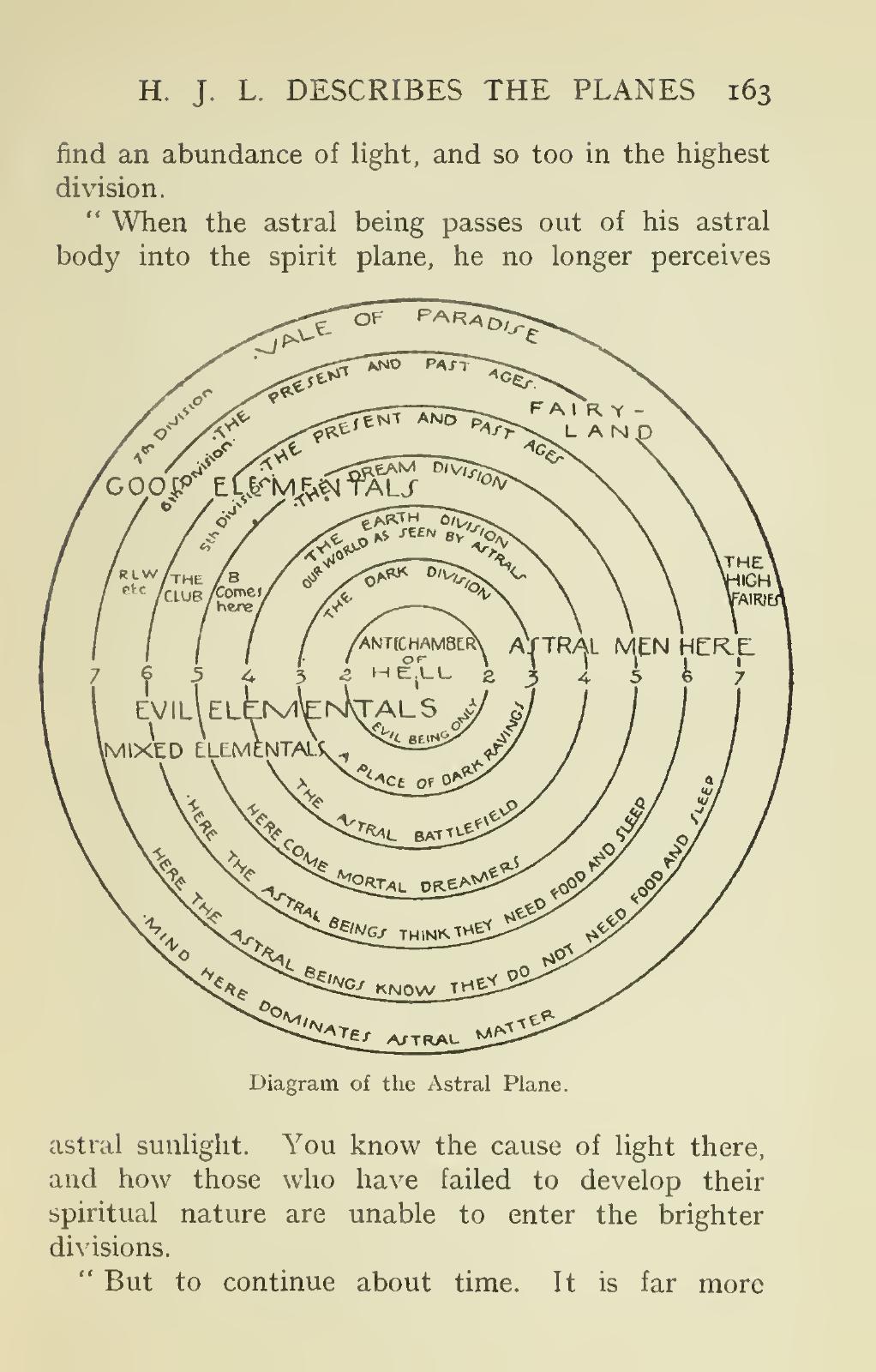
When comparing two quotations, keep the writer’s own word and identify the function in the surrounding paragraph. Ward’s concentric figure also deserves its own attribution. Its regions describe a geography of the astral plane in his book. Besant’s paired chapters describe bodies and their functions. Looking at the question each source is trying to answer makes the diagrams and terminology easier to compare.
The etheric double in Annie Besant’s The Ancient Wisdom
Annie Besant’s The Ancient Wisdom, chapter I, divides the physical body in two. The dense body consists of solids, liquids and gases. The finer etheric double occupies the same space and is said to carry life-currents to the denser body. For Besant, a body can be invisible and still belong to the physical plane. [3]
Besant gives the astral body a different role. It belongs to the plane of feeling and desire. The distinction becomes easier to follow in her account of sleep, when she says the etheric double stays with the body in bed and the astral body can act elsewhere. [3]
The astral body in Thought-Forms
In Thought-Forms, Besant and Leadbeater describe the desire-body as composed of astral matter. Emotions change its colours and vibrations. A sudden feeling briefly alters its appearance; repeated feelings gradually shape its usual response. The astral body thus gives the authors a way to describe both a passing mood and a lasting emotional disposition. [2][6][7]
The illustrated clouds in Thought-Forms show a further distinction. The authors describe them as forms generated by feeling. Their astral body is the vehicle through which a person feels, while a thought-form is something the vehicle can produce. [2]
Thought-Forms also assigns thinking a mental body. Besant and Leadbeater distinguish forms arising in mental matter from forms involving desire and astral matter. The same word thought-form can cover products of either kind. [2]
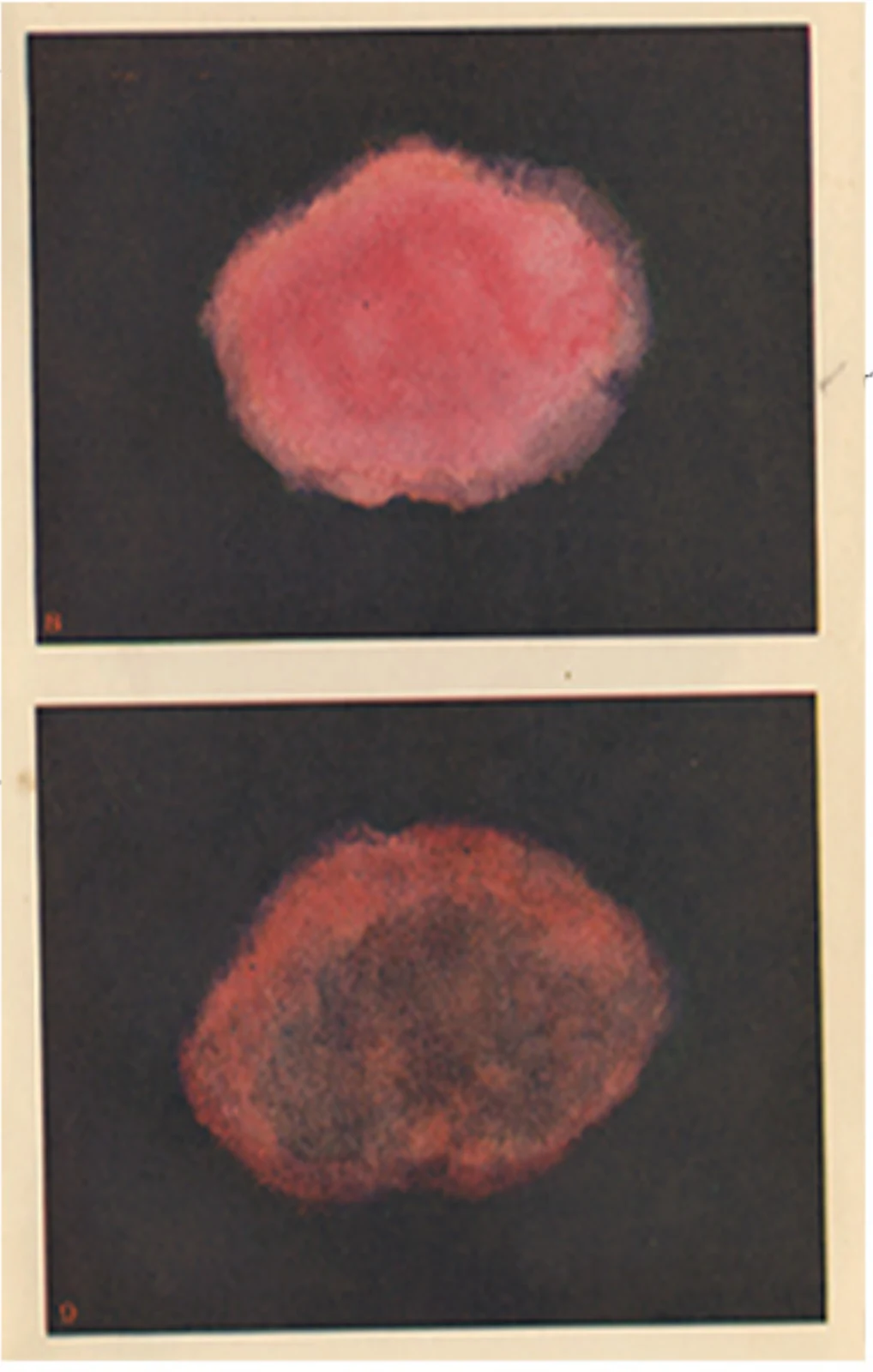
Figures 8 and 9 in Thought-Forms. Besant and Leadbeater use two cloud shapes to illustrate different kinds of affection. These are their illustrations of the forms feelings produce.
Annie Besant and C. W. Leadbeater, Thought-Forms (1901). Historical public-domain plate retained from the Library edition. The artists’ interpretation is part of the book’s account. · Image source ↗ · Public Domain
Sleep in Annie Besant’s Man and His Bodies
In Man and His Bodies, Annie Besant describes the astral body outside the dense body during sleep. The etheric double stays with the dense body. The sleeping person’s astral awareness can vary, and an experience may leave no memory on waking. [4]
Leadbeater’s change of terms in The Astral Plane
In The Astral Plane, C. W. Leadbeater explains that astral once served as a broader term for what lay beyond ordinary sight. Older Theosophists sometimes used it for a finer physical body. His term etheric double reserves a name for that counterpart and leaves astral body for the vehicle of desire. [1][8]
The bodies also interpenetrate: different kinds of matter occupy the same space in Leadbeater’s description. Their distinction depends on the plane and function assigned to each, rather than on each body having a separate location. Seeing a figure surrounded by an aura therefore leaves open a crucial question: which part of the author’s larger model is being represented? [1][9]
Read further in the library
The Astral Plane
Reading note
Leadbeater explicitly explains the terminology used to distinguish the etheric double from the astral body.
Thought-Forms
Reading note
Besant and Leadbeater describe the desire-body and its role in emotional forms and habits.
Sources
See references (9)
- The Astral Plane, Scenery, pp. 10–13 ↗C. W. Leadbeater; 1895 editionReturn to text ↑
- Thought-Forms, The Difficulty of Representation and The Two Effects of Thought ↗Annie Besant and C. W. Leadbeater; first published 1901; Gutenberg text includes later reprint informationReturn to text ↑
- Annie Besant, The Ancient Wisdom, chapter I, printed pp. 49–54 ↗Annie Besant; first published 1897Return to text ↑
- Annie Besant, Man and His Bodies (1896), The Physical Body and The Astral Body ↗Annie Besant; text hosted by the Theosophical Society in Australia, Newcastle Lodge; fourth edition, 1909Return to text ↑
- Thought-Forms, figures 8 and 9 on affection, Reader page 23Exact source retained from the earlier attributed Astral body account.Read this page in Thought-Forms ↗
- Thought-Forms, the description of the desire-body, Reader page 11Exact source retained from the earlier attributed Astral body account.Read this page in Thought-Forms ↗Return to text ↑
- Thought-Forms, the passage on emotion and habit, Reader page 13Exact source retained from the earlier attributed Astral body account.Read this page in Thought-Forms ↗Return to text ↑
- The Astral Plane by Charles Webster Leadbeater, Reader page 17Earlier exact Library reference and quotation retained without replacing its identity.Return to text ↑
Examine the original Library page
co extensive with that physical body he clearly distinguishes the etheric double : while the universal life-fluid as it is absorbed and specialized, as it circulates
Open the original page in The Astral Plane ↗Scan leaf 24 · C. W. Leadbeater
- The Astral Plane by Charles Webster Leadbeater, Reader page 19Earlier exact Library reference and quotation retained without replacing its identity.Return to text ↑
Examine the original Library page
the mould upon which the physical body is built up
Open the original page in The Astral Plane ↗Scan leaf 26 · C. W. Leadbeater