Choronzon
Choronzon is a figure of dispersion at the Abyss in Thelema. Compare Crowley’s letters with the shifting voices of the tenth Aethyr.
In this article
What does Choronzon represent?
Choronzon is a figure of dispersion at the Abyss in Aleister Crowley’s Thelema. Dispersion means that what seemed to have unity scatters into separate forms. In Crowley’s visionary record, successive voices and claims give that scattering a presence the reader can follow. [1][2][4][5]
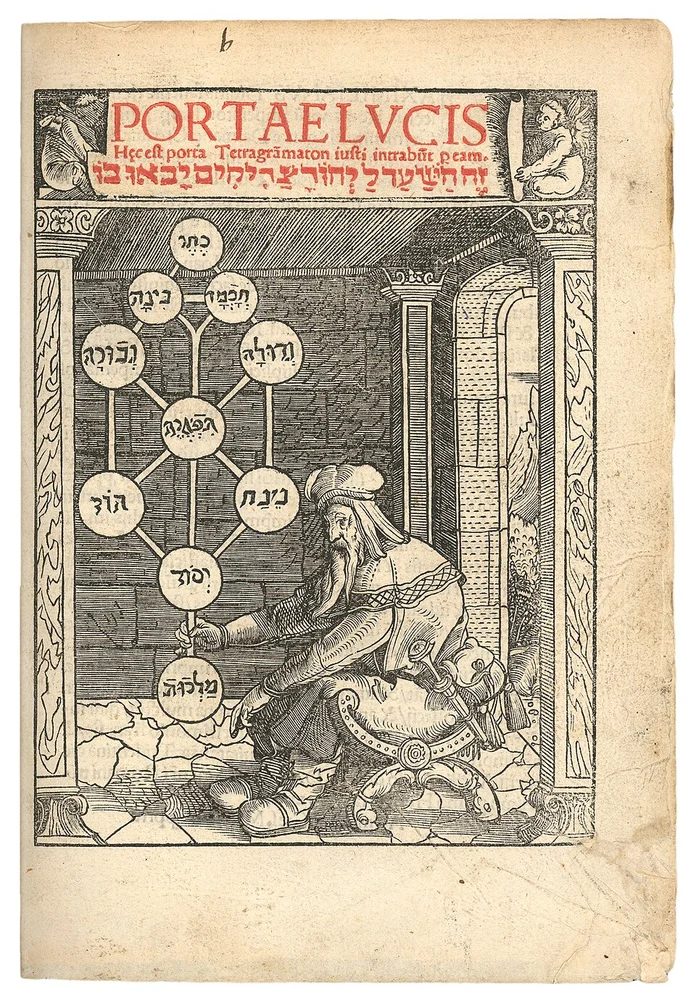
This 1516 tree of the sefirot shows an earlier diagrammatic tradition. The Abyss and Choronzon belong to Crowley’s later esoteric interpretation.
Joseph Gikatilla, Porta Lucis, abridged Latin translation by Paulus Ricius (Johann Miller, Augsburg, 1516). University Library of Nijmegen, via Wikimedia Commons. · Image source ↗ · Public Domain
The Vision and the Voice by Aleister Crowley
In the tenth Aethyr of The Vision and the Voice, Aleister Crowley records Choronzon speaking in changing voices and assuming different forms. Statements made in one voice give way to other claims. The changes are how the account makes dispersion felt. [1]
Magick Without Tears by Aleister Crowley
In Magick Without Tears, Crowley quotes visionary passages when explaining Crossing the Abyss. One image joins Choronzon to a ruined sanctuary and offerings that have lost their purpose. Crowley uses the image to warn about clinging to a position of power. [6][4][5][7]
The letter puts the quoted voices inside Crowley’s later explanation of initiation. It reuses the earlier visions to explain a spiritual failure he thinks can follow when an adept tries to preserve a separate identity. [8][9][4][5]
The shifting voice and Crowley’s later interpretation
The tenth Aethyr makes the voice hard to hold to a single identity. The letters use Choronzon to explain how Crowley thinks an adept might lose their way at the Abyss. The two texts differ in whether they present a voice or interpret its role. [1][2][4][5][7]
Read further in the library
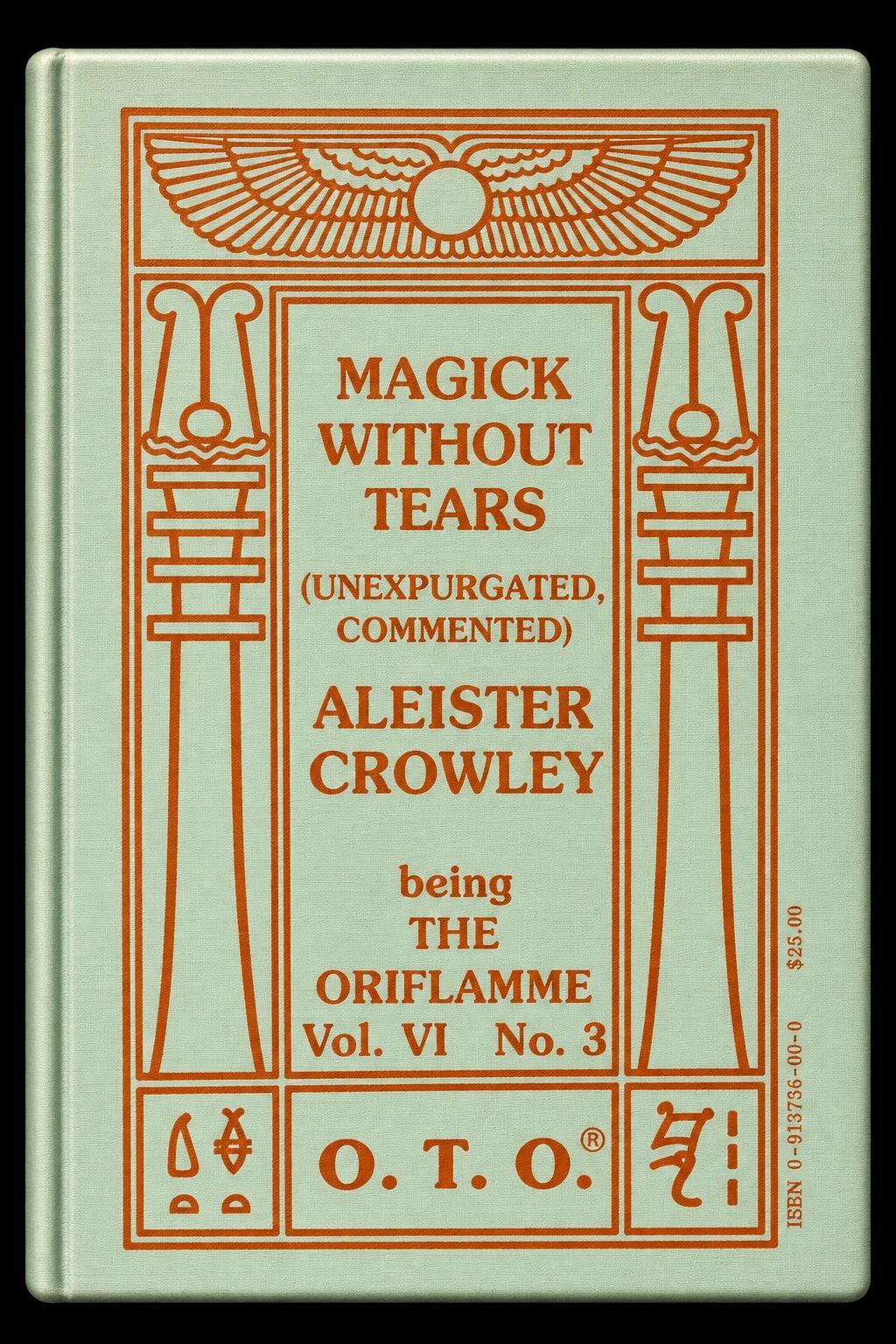
Magick Without Tears
Reading note
The separately titled account draws on exact passages in the consulted Library edition.
Sources
See references (9)
- The Vision and the Voice, 10th Aethyr, ZAX, opening dialogue ↗Aleister Crowley, The Vision and the Voice. Hermetic Library transcription.Return to text ↑
- The Vision and the Voice, 3rd Aethyr, ZON, Babalon and the crown ↗Aleister Crowley, The Vision and the Voice. Hermetic Library transcription.Return to text ↑
- Tree of the sefirot on the title page of Porta Lucis ↗Joseph Gikatilla, Porta Lucis, abridged Latin translation by Paulus Ricius (Johann Miller, Augsburg, 1516). University Library of Nijmegen, via Wikimedia Commons.
- Magick Without Tears, Reader page 80Aleister Crowley, Magick Without Tears, undated digital Library edition IMJ-0641-E001. Links use the current Library Reader sequence.Read this page in Magick Without Tears ↗Return to text ↑
- Magick Without Tears, Reader page 81Aleister Crowley, Magick Without Tears, undated digital Library edition IMJ-0641-E001. Links use the current Library Reader sequence.Read this page in Magick Without Tears ↗Return to text ↑
- Magick Without Tears, Reader page 79Aleister Crowley, Magick Without Tears, undated digital Library edition IMJ-0641-E001. Links use the current Library Reader sequence.Read this page in Magick Without Tears ↗Return to text ↑
- Magick Without Tears, Reader page 82Aleister Crowley, Magick Without Tears, undated digital Library edition IMJ-0641-E001. Links use the current Library Reader sequence.Read this page in Magick Without Tears ↗Return to text ↑
- Magick Without Tears, Reader page 75Aleister Crowley, Magick Without Tears, undated digital Library edition IMJ-0641-E001. Links use the current Library Reader sequence.Read this page in Magick Without Tears ↗Return to text ↑
- Magick Without Tears, Reader page 76Aleister Crowley, Magick Without Tears, undated digital Library edition IMJ-0641-E001. Links use the current Library Reader sequence.Read this page in Magick Without Tears ↗Return to text ↑