Cat’s Cradle as Sympathetic Magic
Why does Crowley use cat’s cradle as sympathetic magic in Moonchild? Compare the fictional net with W. W. Rouse Ball and Caroline Furness Jayne.
In this article
Why does cat’s cradle appear in a book about magic?
A string figure is a pattern made by arranging a loop around the hands. Aleister Crowley’s Moonchild turns a familiar game into an example of sympathetic magic, the belief that resemblance or connection lets an action on one thing affect another. [4][5][1][2]
String Figures and How to Make Them by Caroline Furness Jayne
Caroline Furness Jayne credits Alfred Cort Haddon with passing on an account of the Torres Strait game. She gives its name as Lewer and glosses it as food. Her drawings show how the players hold and release the loop. [2][3]
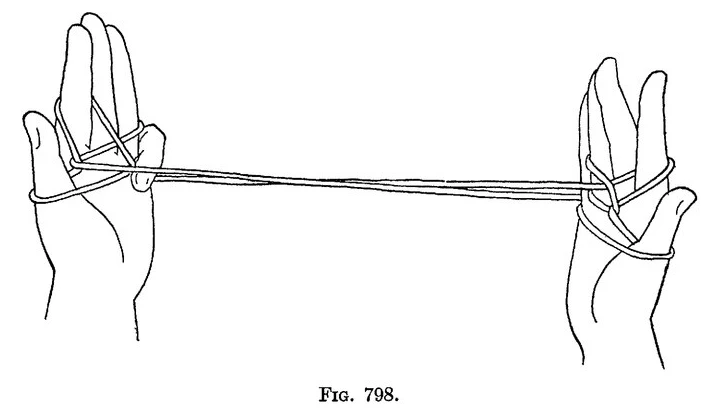
Figure 798 from Caroline Furness Jayne’s account of the Torres Strait game “Will You Have a Yam?”, printed p. 353.
Caroline Furness Jayne, String Figures, 1906, in the 1962 unabridged reprint. · Image source ↗ · Public Domain
Mathematical Recreations and Essays by W. W. Rouse Ball
W. W. Rouse Ball refers to Jayne’s account. One player offers a loop representing a yam. The other has to seize it before it disappears. The surprise comes from the arrangement of the string and the timing of its release. [1]
Moonchild by Aleister Crowley
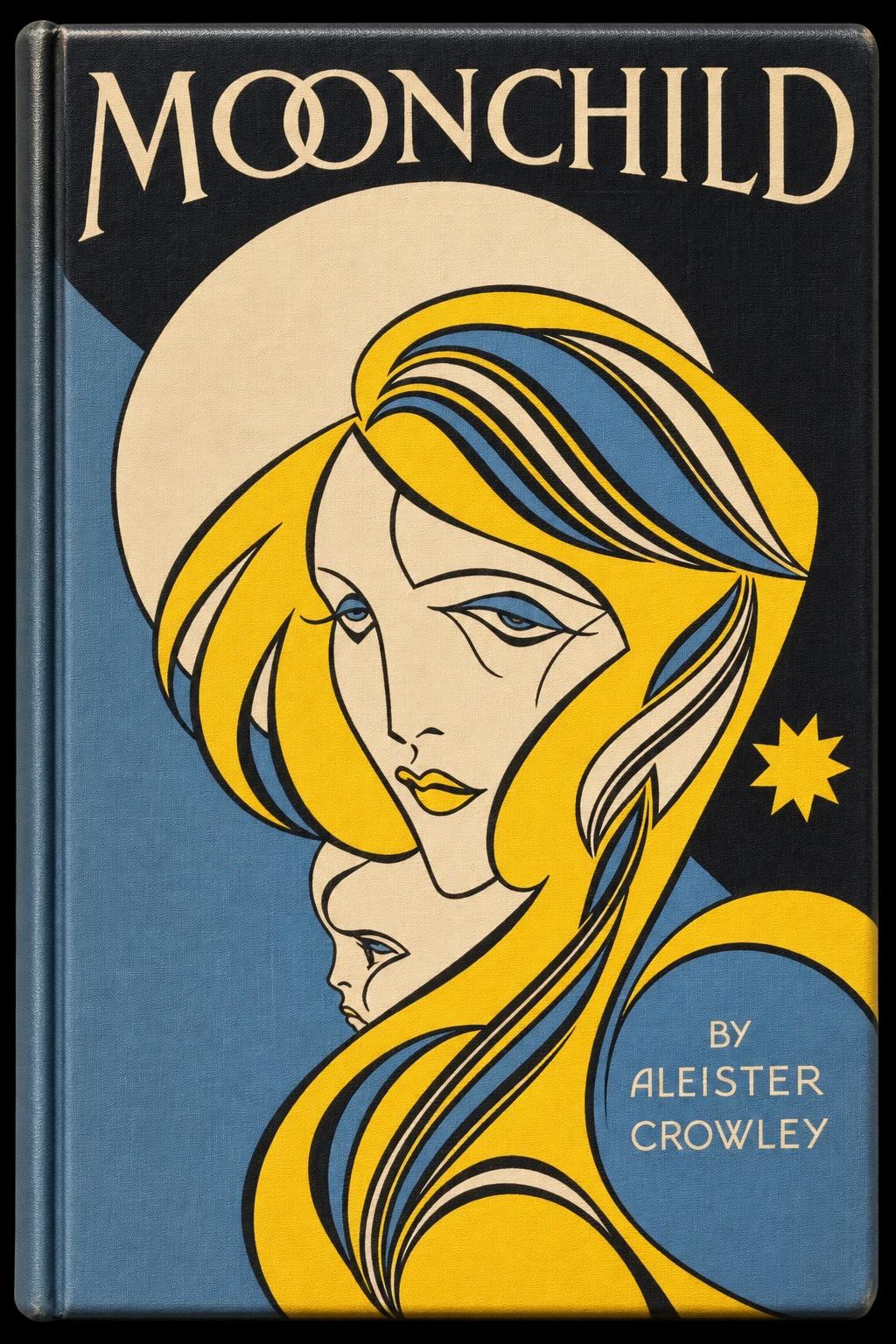
In Aleister Crowley’s Moonchild, Arthwait reasons that if a mesh can catch a fish or a butterfly, a carefully chosen string figure might act on something he cannot touch. The narrator sends readers to W. W. Rouse Ball for the patterns and jokingly complains that Ball left out their magical theory. [6][4][7]
Arthwait chooses the Elusive Yam because an intricate loop can vanish with a tug. His efforts lack a direct connection to the people he wants to affect. The episode ends with Arthwait in quarantine, as he and the other characters interpret the resulting illness differently. [4][5][7]
A disappearing loop in play and fiction
For Jayne and Ball the disappearance is part of a game between two people. Crowley borrows it for a character trying to affect someone far away. The same trick with string serves a different purpose in his plot. [1][3][4][5][7]
In the library
Moonchild
Reading note
The separately titled account draws on exact passages in the consulted Library edition.
Sources
See references (7)
- Mathematical Recreations and Essays, 7th ed., printed p. 376 ↗W. W. Rouse Ball, Mathematical Recreations and Essays, 7th edition, Macmillan, 1917.
- String Figures and How to Make Them, “Will You Have a Yam?”, printed p. 352 ↗Caroline Furness Jayne, String Figures, 1906, in the 1962 unabridged reprint.
- String Figures and How to Make Them, printed p. 353, figure 798 ↗Caroline Furness Jayne, String Figures, 1906, in the 1962 unabridged reprint.
- Moonchild, Reader page 222Aleister Crowley, Moonchild (Liber LXXXI, The Butterfly Net), Library digital transcription IMJ-0629-E001.Read this page in Moonchild ↗
- Moonchild, Reader page 223Aleister Crowley, Moonchild (Liber LXXXI, The Butterfly Net), Library digital transcription IMJ-0629-E001.Read this page in Moonchild ↗
- Moonchild, Reader page 221Aleister Crowley, Moonchild (Liber LXXXI, The Butterfly Net), Library digital transcription IMJ-0629-E001.Read this page in Moonchild ↗
- Moonchild, Reader page 224Aleister Crowley, Moonchild (Liber LXXXI, The Butterfly Net), Library digital transcription IMJ-0629-E001.Read this page in Moonchild ↗