Buddhist Renunciation
Buddhist renunciation means relinquishing attachments and, in its formal sense, leaving household life to practise as a monastic.
In this article
What does renunciation mean in Buddhism?
Buddhist renunciation means letting go of attachments that sustain suffering. In accounts of going forth, it can involve leaving household life to follow the Buddhist path. Stories about such departures also ask what they mean for the people who remain. [1][4][5]
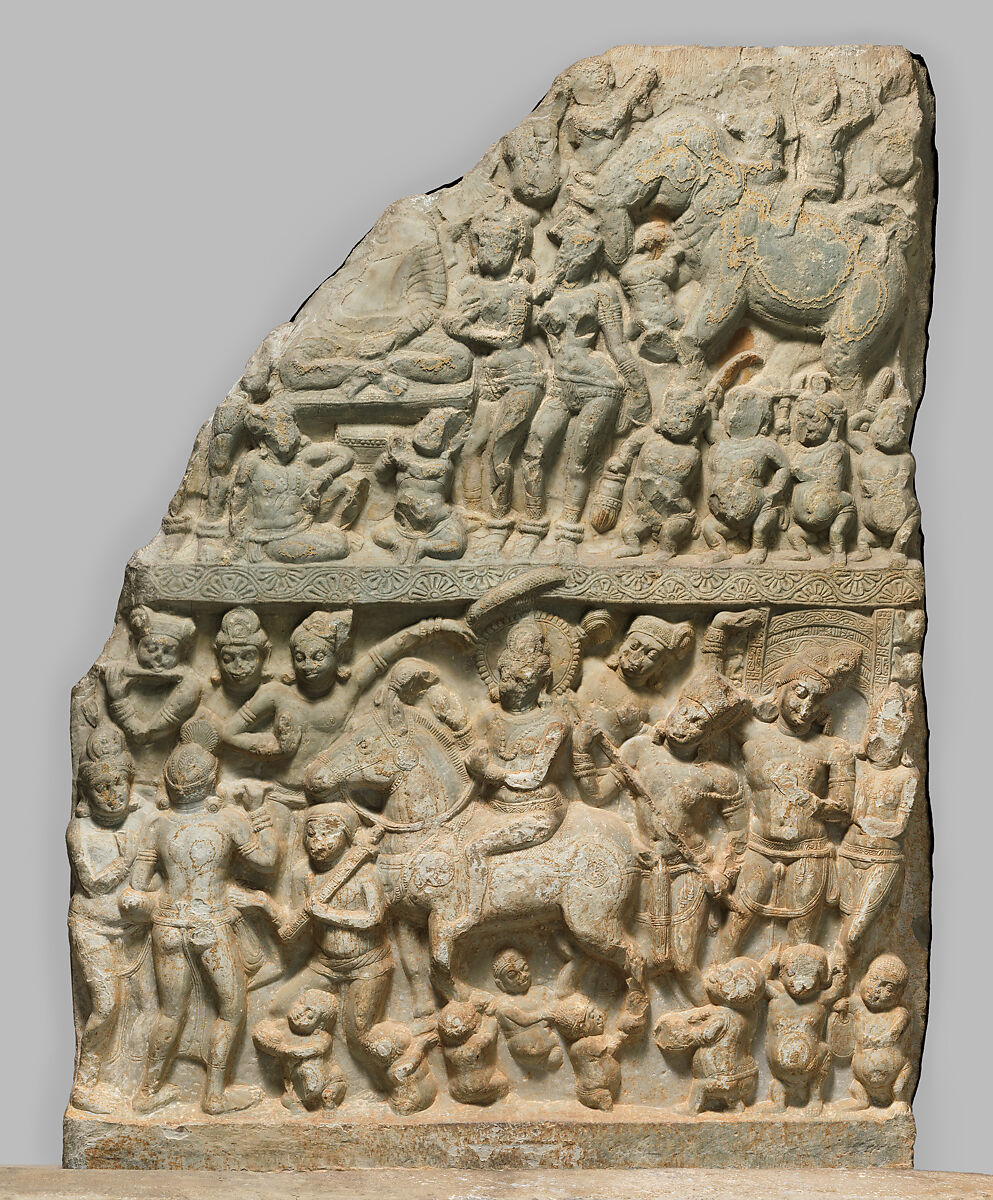
In the lower scene of this drum panel from India, Siddhartha rides out as he leaves his life of privilege. The upper scene shows him resisting Māra.
Unidentified artist from Nagarjunakonda, Drum panel with scenes of the Great Departure and Temptation of the Buddha, first half of the 3rd century CE. The Metropolitan Museum of Art. Public domain. · Image source ↗ · Public Domain
In Ancient Tales and Folk-lore of Japan
In Richard Gordon Smith’s The Story of Kato Sayemon, the storyteller Matsuzaki compares Sayemon’s departure with the Buddha’s. Sayemon becomes a monk at Kōyasan and refuses to recognise his son. Smith quotes Edwin Arnold’s The Light of Asia, then questions whether Sayemon’s conduct merits the comparison. [2][3][4][5]
Smith raises a similar question at the close of A Story of Mount Kanzanrei. Another separation prompts him to ask what makes someone’s leaving comparable to the Buddha’s renunciation. His emphasis is on what the person’s choice costs others. [6]
See references (5)
- Ancient Tales and Folklore of Japan, printed p. 75, Reader page 115
- Ancient Tales and Folklore of Japan, printed p. 78, Reader page 120
- Ancient Tales and Folklore of Japan, printed p. 80, Reader page 122
- Ancient Tales and Folklore of Japan, printed p. 81, Reader page 123
- Ancient Tales and Folklore of Japan, printed p. 214, Reader page 302
What is a departure meant to accomplish?
In the Ariyapariyesanā Sutta, translated by Ṭhānissaro Bhikkhu, the future Buddha leaves home while his parents grieve. He describes his aim as release from birth, ageing and death. The discourse centres the reason for going forth. Smith’s dispute with his storyteller centres the responsibility of the one who goes. [2][4][5][6][1]
See references (5)
- The Noble Search (MN 26), translated by Ṭhānissaro Bhikkhu
- Ancient Tales and Folklore of Japan, printed p. 75, Reader page 115
- Ancient Tales and Folklore of Japan, printed p. 80, Reader page 122
- Ancient Tales and Folklore of Japan, printed p. 81, Reader page 123
- Ancient Tales and Folklore of Japan, printed p. 214, Reader page 302
In the library
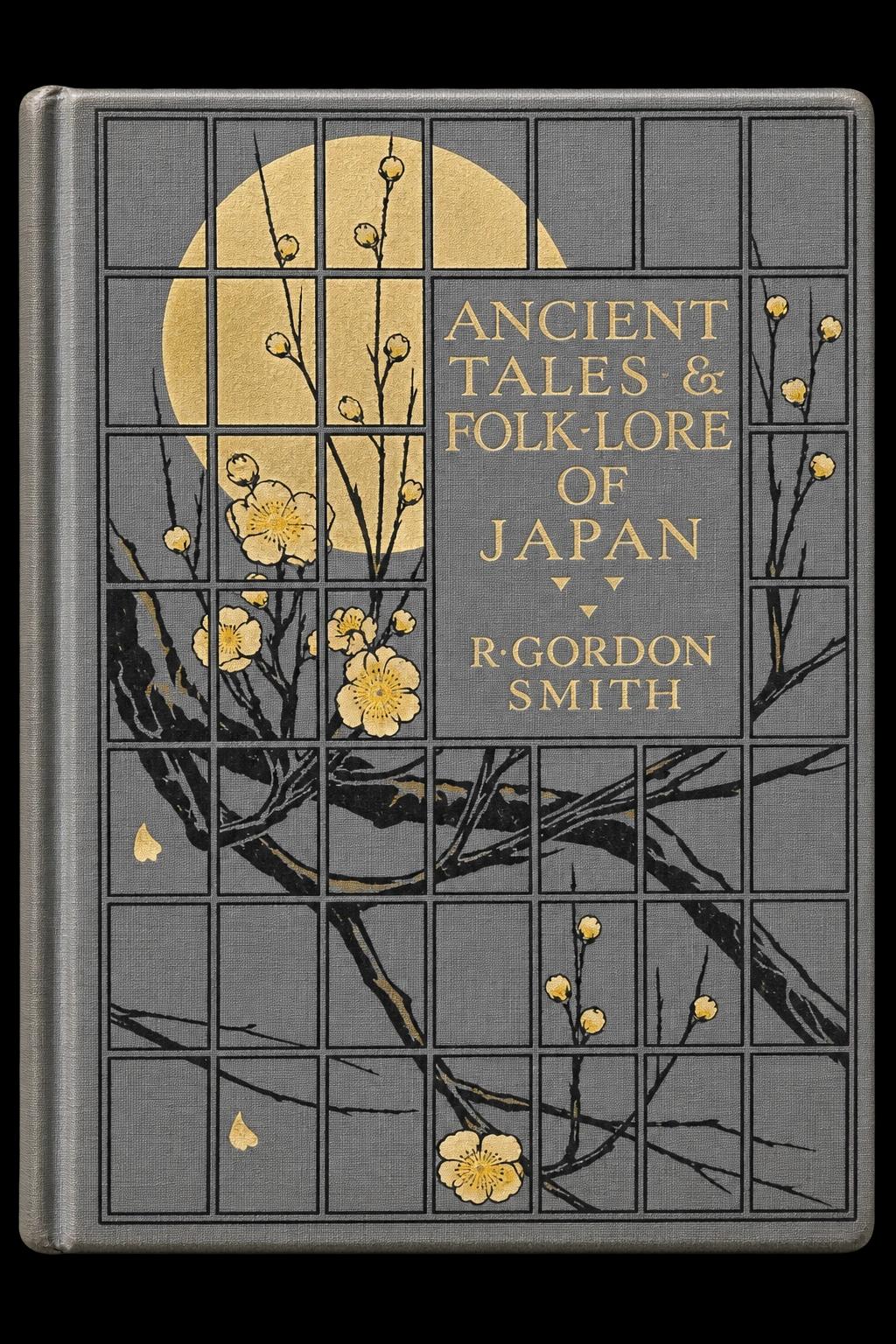
Ancient Tales and Folk-lore of Japan
Reading note
Read Richard Gordon Smith’s account in the verified 1908 Library edition.
Sources
See references (7)
- The Noble Search (MN 26), translated by Ṭhānissaro Bhikkhu ↗Dhammatalks
- Ancient Tales and Folklore of Japan, printed p. 75, Reader page 115Richard Gordon Smith, Ancient Tales and Folklore of Japan. A. & C. Black, London, 1908. Lumitheca Library edition IMJ-0588-E001.Read this page in Ancient Tales and Folk-lore of Japan ↗
- Ancient Tales and Folklore of Japan, printed p. 78, Reader page 120Richard Gordon Smith, Ancient Tales and Folklore of Japan. A. & C. Black, London, 1908. Lumitheca Library edition IMJ-0588-E001.Read this page in Ancient Tales and Folk-lore of Japan ↗
- Ancient Tales and Folklore of Japan, printed p. 80, Reader page 122Richard Gordon Smith, Ancient Tales and Folklore of Japan. A. & C. Black, London, 1908. Lumitheca Library edition IMJ-0588-E001.Read this page in Ancient Tales and Folk-lore of Japan ↗
- Ancient Tales and Folklore of Japan, printed p. 81, Reader page 123Richard Gordon Smith, Ancient Tales and Folklore of Japan. A. & C. Black, London, 1908. Lumitheca Library edition IMJ-0588-E001.Read this page in Ancient Tales and Folk-lore of Japan ↗
- Ancient Tales and Folklore of Japan, printed p. 214, Reader page 302Richard Gordon Smith, Ancient Tales and Folklore of Japan. A. & C. Black, London, 1908. Lumitheca Library edition IMJ-0588-E001.Read this page in Ancient Tales and Folk-lore of Japan ↗
- Drum panel with scenes of the Great Departure and Temptation of the Buddha ↗Unidentified artist from Nagarjunakonda, Drum panel with scenes of the Great Departure and Temptation of the Buddha, first half of the 3rd century CE. The Metropolitan Museum of Art. Public domain.