Bhūtaśuddhi
Bhūtaśuddhi is the ritual purification of the elements. Explore how Tantra connects the elements, their dissolution and the renewed body.
In this article
Purifying the elements
Bhūtaśuddhi is the ritual purification of the elements that make up the body. In the Tantric texts discussed here, the practitioner dissolves those elements into one another and renews the body for worship. The elements are understood as principles of embodied existence. [2][3][4]
The Serpent Power in Arthur Avalon’s translation
In The Serpent Power, Arthur Avalon describes how the Devībhāgavata Purāṇa brings the individual self into union with Kuṇḍalinī and dissolves gross principles into subtler ones. In another account of the rite, nectar refreshes the body after meditation at the navel, heart and brow centres. [3][4]
In Avalon’s account of ascent through the lotuses, water dissolves into fire at Maṇipūra, the navel centre. At Anāhata, the heart centre, fire dissolves into air. Air in turn dissolves into space at Viśuddha. The element associated with each lotus provides the next stage of absorption. [5][6][7]
Kālīcaraṇa’s commentary on Pūrṇānanda describes a related reversal. As Kuṇḍalinī ascends, the letters are gathered back in reverse order. The dissolution involves the powers of sound associated with the centres as well as the elements. [8][9]

Plate IV shows Maṇipūra, the navel lotus. In Avalon’s sequence, water is absorbed into fire at this centre.
Illustrator unrecorded. The Serpent Power, Plate IV. Library facsimile, compared with the 1924 second edition. · Image source ↗ · Public Domain
See references (7)
- The Serpent Power, printed p. 263, Reader page 277
- The Serpent Power, printed p. 264, Reader page 278
- The Serpent Power, printed p. 236, Reader page 250
- The Serpent Power, printed p. 237, Reader page 251
- The Serpent Power, printed p. 238, Reader page 252
- The Serpent Power, printed p. 473, Reader page 499
- The Serpent Power, printed p. 479, Reader page 505
Distinctions and comparisons
Laya Yoga also traces a progressive absorption into subtler principles. The account of bhūtaśuddhi emphasizes what happens after dissolution, when the practitioner’s body is renewed for worship. In Avalon’s discussion of yoga, absorption belongs to the path toward liberation. [10][6][3][4]
In the library
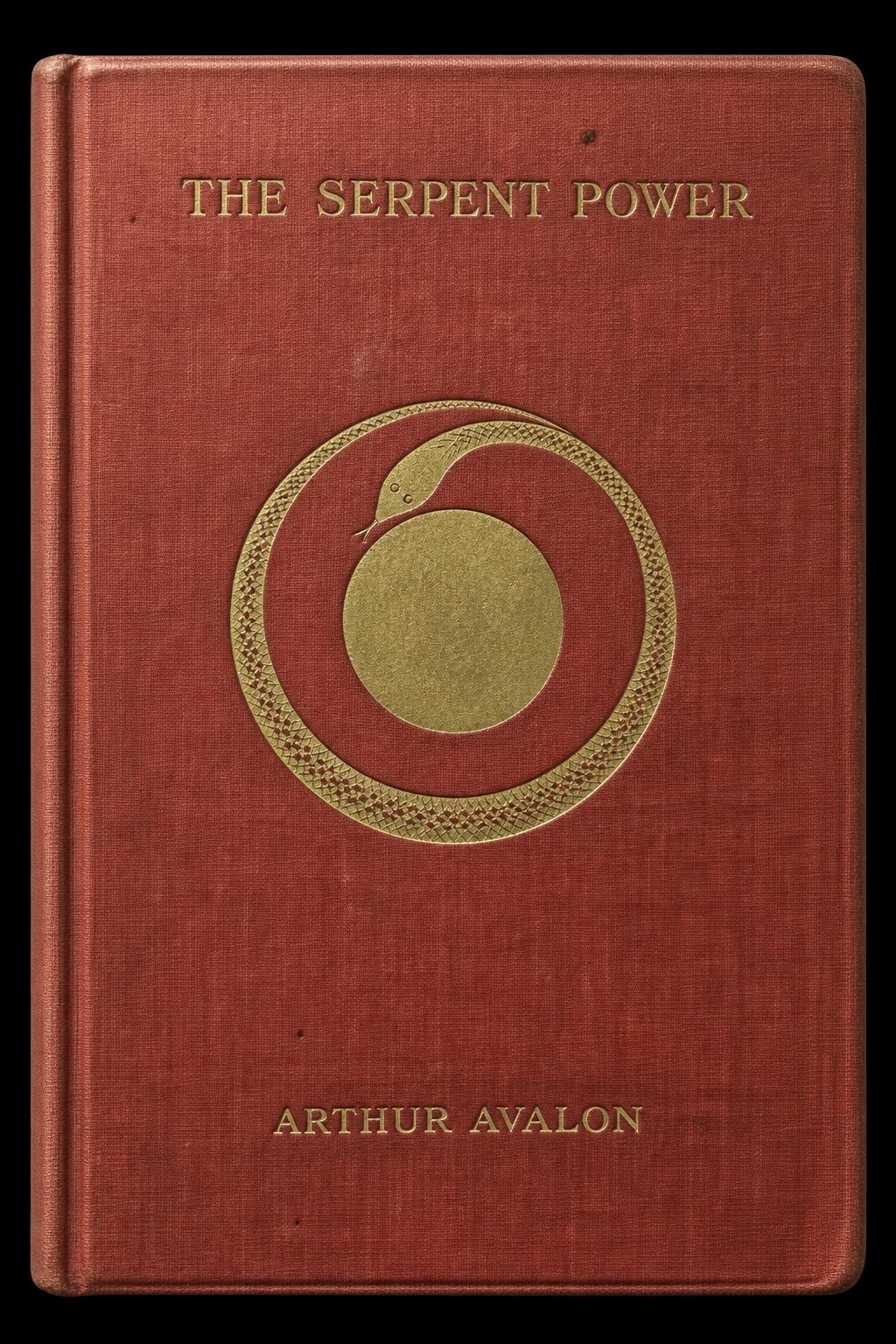
The Serpent Power
Reading note
Separately attributed primary Library account, cited on exact verified Reader leaves.
Sources
See references (10)
- The Serpent Power, Plate IV, Reader page 386Illustrator unrecorded. The Serpent Power, Plate IV. Library facsimile, compared with the 1924 second edition.Read this page in The Serpent Power ↗
- The Serpent Power, Reader page 18Arthur Avalon (Sir John Woodroffe), The Serpent Power, fifth enlarged edition, Ganesh & Co., Madras, 1953. Includes Pūrṇānanda’s Ṣaṭ-cakra-nirūpaṇa, Pādukā-pañcaka and Kālīcaraṇa’s commentary. Exact Library edition IMJ-0608-E001.Read this page in The Serpent Power ↗
- The Serpent Power, printed p. 263, Reader page 277Arthur Avalon (Sir John Woodroffe), The Serpent Power, fifth enlarged edition, Ganesh & Co., Madras, 1953. Includes Pūrṇānanda’s Ṣaṭ-cakra-nirūpaṇa, Pādukā-pañcaka and Kālīcaraṇa’s commentary. Exact Library edition IMJ-0608-E001.Read this page in The Serpent Power ↗
- The Serpent Power, printed p. 264, Reader page 278Arthur Avalon (Sir John Woodroffe), The Serpent Power, fifth enlarged edition, Ganesh & Co., Madras, 1953. Includes Pūrṇānanda’s Ṣaṭ-cakra-nirūpaṇa, Pādukā-pañcaka and Kālīcaraṇa’s commentary. Exact Library edition IMJ-0608-E001.Read this page in The Serpent Power ↗
- The Serpent Power, printed p. 236, Reader page 250Arthur Avalon (Sir John Woodroffe), The Serpent Power, fifth enlarged edition, Ganesh & Co., Madras, 1953. Includes Pūrṇānanda’s Ṣaṭ-cakra-nirūpaṇa, Pādukā-pañcaka and Kālīcaraṇa’s commentary. Exact Library edition IMJ-0608-E001.Read this page in The Serpent Power ↗
- The Serpent Power, printed p. 237, Reader page 251Arthur Avalon (Sir John Woodroffe), The Serpent Power, fifth enlarged edition, Ganesh & Co., Madras, 1953. Includes Pūrṇānanda’s Ṣaṭ-cakra-nirūpaṇa, Pādukā-pañcaka and Kālīcaraṇa’s commentary. Exact Library edition IMJ-0608-E001.Read this page in The Serpent Power ↗
- The Serpent Power, printed p. 238, Reader page 252Arthur Avalon (Sir John Woodroffe), The Serpent Power, fifth enlarged edition, Ganesh & Co., Madras, 1953. Includes Pūrṇānanda’s Ṣaṭ-cakra-nirūpaṇa, Pādukā-pañcaka and Kālīcaraṇa’s commentary. Exact Library edition IMJ-0608-E001.Read this page in The Serpent Power ↗
- The Serpent Power, printed p. 473, Reader page 499Arthur Avalon (Sir John Woodroffe), The Serpent Power, fifth enlarged edition, Ganesh & Co., Madras, 1953. Includes Pūrṇānanda’s Ṣaṭ-cakra-nirūpaṇa, Pādukā-pañcaka and Kālīcaraṇa’s commentary. Exact Library edition IMJ-0608-E001.Read this page in The Serpent Power ↗
- The Serpent Power, printed p. 479, Reader page 505Arthur Avalon (Sir John Woodroffe), The Serpent Power, fifth enlarged edition, Ganesh & Co., Madras, 1953. Includes Pūrṇānanda’s Ṣaṭ-cakra-nirūpaṇa, Pādukā-pañcaka and Kālīcaraṇa’s commentary. Exact Library edition IMJ-0608-E001.Read this page in The Serpent Power ↗
- The Serpent Power, printed p. 222, Reader page 236Arthur Avalon (Sir John Woodroffe), The Serpent Power, fifth enlarged edition, Ganesh & Co., Madras, 1953. Includes Pūrṇānanda’s Ṣaṭ-cakra-nirūpaṇa, Pādukā-pañcaka and Kālīcaraṇa’s commentary. Exact Library edition IMJ-0608-E001.Read this page in The Serpent Power ↗