Anima and Animus in Jung’s Analytical Psychology
Anima and animus are figures in C. G. Jung’s account of unconscious life. He used them to explain how unfamiliar feelings or judgments can take on a recognizable character in dreams, fantasies and relationships.
In this article
What are anima and animus?
Anima and animus are C. G. Jung’s terms for figures that can give a personality to unconscious tendencies in dreams, fantasies and relationships. In his historical model, he called the anima feminine in men and the animus masculine in women. He used the terms to explain why a mood or opinion might seem to have a voice of its own. [2][4][5][6]
Anima and animus in Jung’s Golden Flower commentary
Richard Wilhelm uses animus and anima to render the Chinese terms hun and po in the edition translated into English by Cary F. Baynes. Jung brings his own use of those words into the commentary. He also uses logos for the discrimination and clarity he associates with hun in a man, so the two vocabularies only partly overlap. [1][2][3]
In Jung’s account, a mood can appear as a figure and settled opinions can seem to speak with several voices. He treats these figures as psychic personifications, forms through which a person can encounter tendencies that otherwise register as moods or judgments. [4][5]
See references (5)
- The Secret of the Golden Flower, printed p. 114, Reader page 113
- The Secret of the Golden Flower, printed p. 115, Reader page 114
- The Secret of the Golden Flower, printed p. 116, Reader page 115
- The Secret of the Golden Flower, printed p. 117, Reader page 116
- The Secret of the Golden Flower, printed p. 118, Reader page 117
The pair in Aion
In Aion, Jung develops the pair in relation to projection. Someone can experience a figure from a dream or fantasy as if it described another person, while the figure also expresses part of their own psychic life. The chapter puts more weight on how that process shapes relationships. [6][5]
Personification in a Renaissance engraving
Marcantonio Raimondi’s engraving gives love, war and desire recognisable figures in Venus, Mars and Cupid. Their names and attributes come from classical mythology. The scene offers a visual example of personification. [7][5]
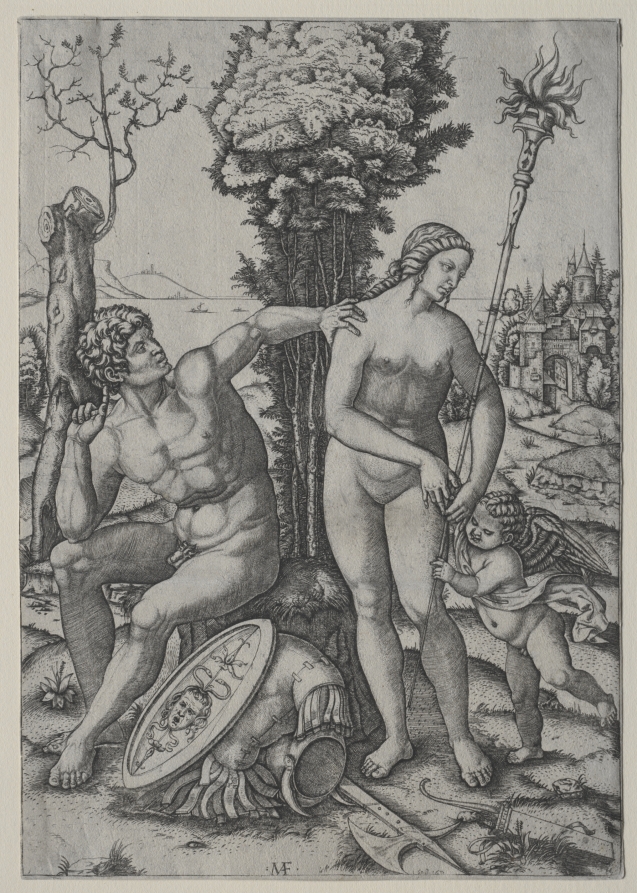
Marcantonio Raimondi, Venus, Mars and Cupid, 1508. The engraving uses paired mythic figures to depict the encounter of war and love.
Cleveland Museum of Art, Gift of Leonard C. Hanna Jr., 1924.333. CC0. · Image source ↗ · CC0
In the library
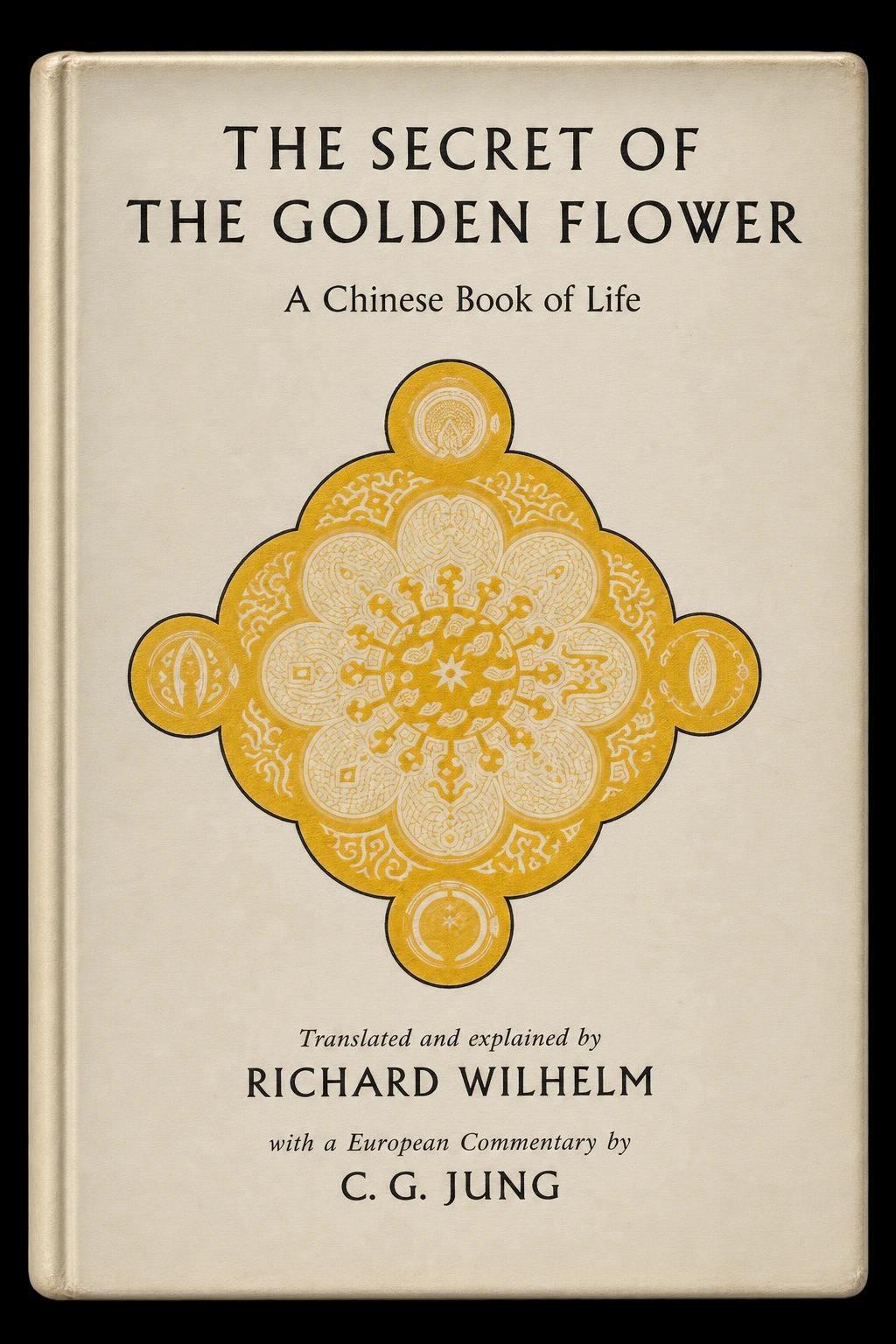
The Secret of the Golden Flower
Reading note
Read the account of Anima and Animus in Jung’s commentary in the Wilhelm and Baynes edition.
Sources
See references (7)
- The Secret of the Golden Flower, printed p. 114, Reader page 113The Secret of the Golden Flower: A Chinese Book of Life. Chinese text translated and explained by Richard Wilhelm, English translation by Cary F. Baynes, with separate commentary by C. G. Jung. London, Kegan Paul, Trench, Trubner & Co. Lumitheca Library edition IMJ-0596-E001.Read this page in The Secret of the Golden Flower ↗
- The Secret of the Golden Flower, printed p. 115, Reader page 114The Secret of the Golden Flower: A Chinese Book of Life. Chinese text translated and explained by Richard Wilhelm, English translation by Cary F. Baynes, with separate commentary by C. G. Jung. London, Kegan Paul, Trench, Trubner & Co. Lumitheca Library edition IMJ-0596-E001.Read this page in The Secret of the Golden Flower ↗
- The Secret of the Golden Flower, printed p. 116, Reader page 115The Secret of the Golden Flower: A Chinese Book of Life. Chinese text translated and explained by Richard Wilhelm, English translation by Cary F. Baynes, with separate commentary by C. G. Jung. London, Kegan Paul, Trench, Trubner & Co. Lumitheca Library edition IMJ-0596-E001.Read this page in The Secret of the Golden Flower ↗
- The Secret of the Golden Flower, printed p. 117, Reader page 116The Secret of the Golden Flower: A Chinese Book of Life. Chinese text translated and explained by Richard Wilhelm, English translation by Cary F. Baynes, with separate commentary by C. G. Jung. London, Kegan Paul, Trench, Trubner & Co. Lumitheca Library edition IMJ-0596-E001.Read this page in The Secret of the Golden Flower ↗
- The Secret of the Golden Flower, printed p. 118, Reader page 117The Secret of the Golden Flower: A Chinese Book of Life. Chinese text translated and explained by Richard Wilhelm, English translation by Cary F. Baynes, with separate commentary by C. G. Jung. London, Kegan Paul, Trench, Trubner & Co. Lumitheca Library edition IMJ-0596-E001.Read this page in The Secret of the Golden Flower ↗
- Aion, chapter 3, “The Syzygy: Anima and Animus,” §§ 26–35 ↗C. G. Jung, translated by R. F. C. Hull, Collected Works 9, Part 2. Princeton University Press.
- Venus, Mars and Cupid ↗Cleveland Museum of Art, Gift of Leonard C. Hanna Jr., 1924.333. CC0.