Adhikāra
Adhikāra means qualification for a teaching or practice. Learn what readiness and guidance from a guru mean in The Serpent Power.
In this article
What makes a practitioner ready?
Adhikāra is the qualification to receive a teaching or undertake a practice. In the Tantric texts discussed here, readiness involves conduct, self-discipline and the preparation a particular practice demands. A teacher then transmits the method to the prepared student. [2][3][4]
The Serpent Power in Arthur Avalon’s translation
In The Serpent Power, Arthur Avalon quotes the Gandharva Tantra on who is qualified to study and practise Tantra. It calls for discernment, control of the senses, abstention from injury and a commitment to doing good, alongside fidelity to particular teachings. [2]
In verse 50 of the Ṣaṭ-cakra-nirūpaṇa, Pūrṇānanda puts ethical restraints and observances before instruction in awakening Kuṇḍalinī. Verse 64 returns to those preparations and names the dīkṣā-guru, the teacher who gives initiation. It also emphasizes a steady mind. [3][4]
The introductory verse of the Pādukā-pañcaka presents the guru as the focus of meditation in the thousand-petalled lotus. The hymn shows another setting in which the teacher matters to the practitioner. [3][4][5]
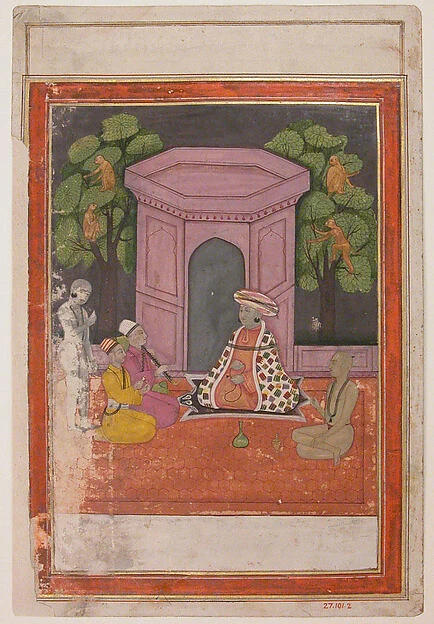
An eighteenth-century painting shows a Hindu saint with two disciples and two musicians on a rooftop. The scene depicts the gathering of a teacher and disciples.
The Metropolitan Museum of Art, 27.101.2. Gift of Joseph Breck, 1927. · Image source ↗ · CC0
Distinctions and comparisons
The Gandharva Tantra describes the qualities a student brings. Pūrṇānanda describes how a prepared student learns a particular method from an initiating teacher. Together they distinguish eligibility for a practice from receiving it. [2][3][4]
In the library
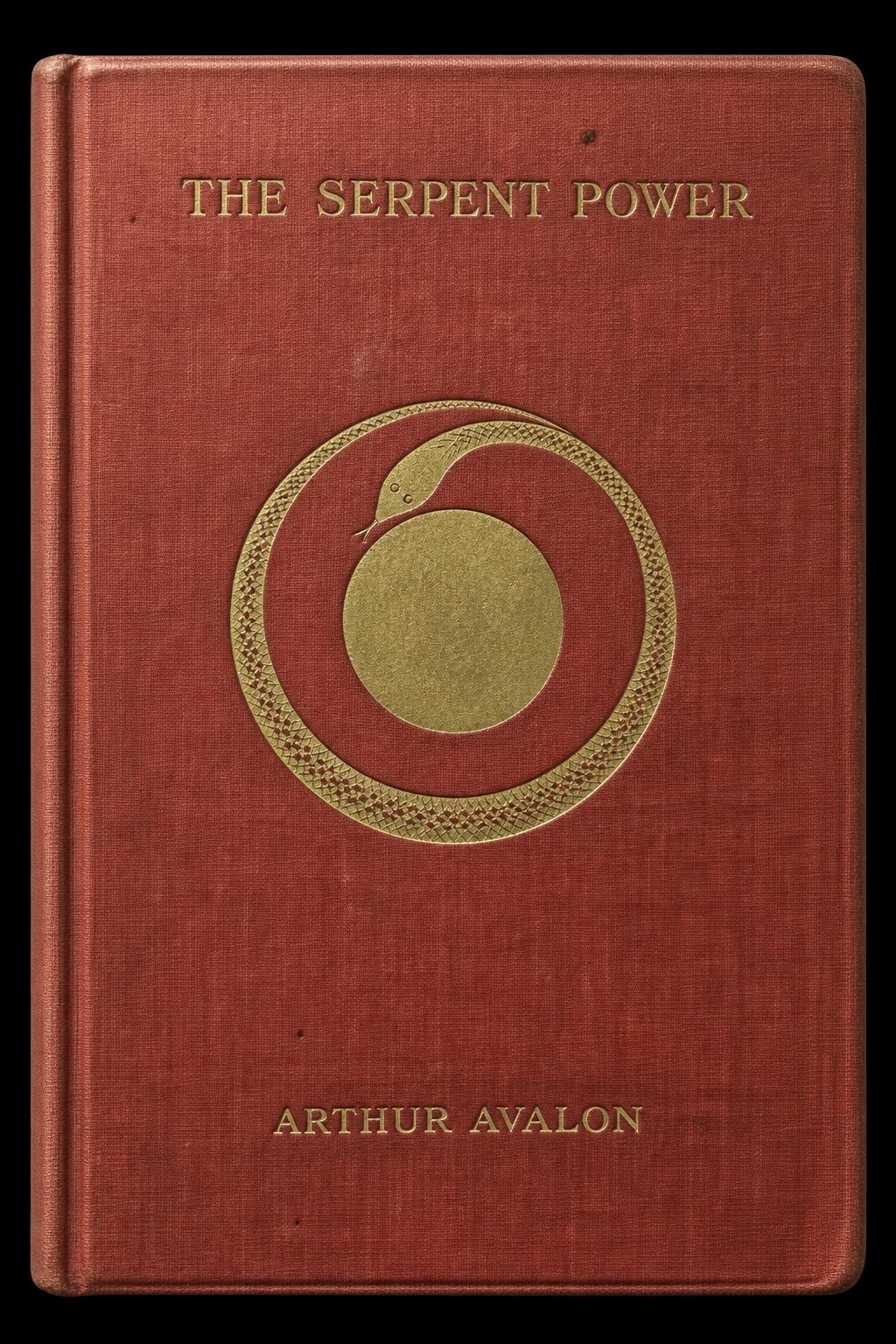
The Serpent Power
Reading note
The separately titled account draws on exact passages in the consulted Library edition.
Sources
See references (5)
- Hindu Saint with Two Disciples and Two Musicians on a Rooftop in the Evening ↗The Metropolitan Museum of Art, 27.101.2. Gift of Joseph Breck, 1927.
- The Serpent Power, printed p. 13, Reader page 30Arthur Avalon (Sir John Woodroffe), The Serpent Power, fifth enlarged edition, Ganesh & Co., Madras, 1953. Includes Pūrṇānanda’s Ṣaṭ-cakra-nirūpaṇa, Pādukā-pañcaka and Kālīcaraṇa’s commentary. Exact Library edition IMJ-0608-E001.Read this page in The Serpent Power ↗
- The Serpent Power, printed p. 460, Reader page 484Arthur Avalon (Sir John Woodroffe), The Serpent Power, fifth enlarged edition, Ganesh & Co., Madras, 1953. Includes Pūrṇānanda’s Ṣaṭ-cakra-nirūpaṇa, Pādukā-pañcaka and Kālīcaraṇa’s commentary. Exact Library edition IMJ-0608-E001.Read this page in The Serpent Power ↗
- The Serpent Power, printed p. 486, Reader page 513Arthur Avalon (Sir John Woodroffe), The Serpent Power, fifth enlarged edition, Ganesh & Co., Madras, 1953. Includes Pūrṇānanda’s Ṣaṭ-cakra-nirūpaṇa, Pādukā-pañcaka and Kālīcaraṇa’s commentary. Exact Library edition IMJ-0608-E001.Read this page in The Serpent Power ↗
- The Serpent Power, Reader page 517Arthur Avalon (Sir John Woodroffe), The Serpent Power, fifth enlarged edition, Ganesh & Co., Madras, 1953. Includes Pūrṇānanda’s Ṣaṭ-cakra-nirūpaṇa, Pādukā-pañcaka and Kālīcaraṇa’s commentary. Exact Library edition IMJ-0608-E001.Read this page in The Serpent Power ↗